Review
Volume 39; Suppl. 1
11 min
Molecular diagnostics in immunocompromised patients: promises, pitfalls, and practical strategies
Diagnóstico molecular en pacientes inmunocomprometidos: promesas, limitaciones y estrategias prácticas
Marta Rua1,2 , Manuel Pina-Sánchez1,2, Francisco Javier Candel3, Jose Luis del Pozo1,2,4*
1Department of Clinical Microbiology, Clínica Universidad de Navarra, Pamplona, Spain
2Instituto de Investigación Sanitaria de Navarra (IdiSNA), Pamplona, Spain
3Clinical Microbiology and Infectious Diseases, IdISSC & IML Health Research Institutes, Hospital Clínico Universitario San Carlos, Madrid, Spain
4Infectious Diseases Division, Clínica Universidad de Navarra, Pamplona, Spain
*Correspondence:
*Jose Luis del Pozo. jdelpozo@unav.es
Publication:
09/11/2026
Metrics
351
Views
75
Downloads
Share
Share
Abstract (EN)
Infections remain a leading cause of morbidity and mortality in immunocompromised patients, frequently presenting with atypical clinical manifestations and a broad spectrum of potential pathogens. Advances in molecular diagnostics, particularly multiplex PCR panels and metagenomic next-generation sequencing, have substantially improved pathogen detection rates and reduced time to diagnosis. Nevertheless, their routine clinical implementation remains challenging. Key limitations include: the inability to reliably distinguish colonization from active infection, high costs, and the risk of over-interpretation in the absence of clinical correlation. This mini-review provides an etiological framework for infections in immunocompromised hosts, critically examines the indications and limitations of current molecular diagnostic platforms, and proposes integrated multimodal strategies to optimize clinical decision-making and antimicrobial stewardship.
Keywords (EN):
Immunocompromised host
Multiplex PCR
Metagenomics
Infection
Abstract (ES)
Las infecciones son una de las principales causas de morbimortalidad en pacientes inmunodeprimidos y se presentan frecuentemente con manifestaciones clínicas atípicas y un amplio espectro de microorganismos causales. Los avances en el diagnóstico molecular, en particular los paneles de PCR múltiple y la secuenciación metagenómica de nueva generación, han mejorado sustancialmente la capacidad de detección de patógenos y han reducido el tiempo hasta el diagnóstico. Sin embargo, su implementación clínica rutinaria continúa siendo un reto: las limitaciones principales incluyen la incapacidad para distinguir de forma fiable la colonización de la infección activa, el elevado coste económico y el riesgo de sobreinterpretación en ausencia de correlación clínica. Esta minirrevisión proporciona un marco etiológico de las infecciones en el paciente inmunodeprimido, analiza de forma crítica las indicaciones y limitaciones de las plataformas de diagnóstico molecular disponibles y propone estrategias multimodales integradas para optimizar la toma de decisiones clínicas y el uso racional de los antimicrobianos.
Keywords (ES):
Paciente inmunosuprimido
PCR multiplex
Metagenómica
Infección
Introduction
The immunocompromised host presents one of the most complex diagnostic scenarios in infectious diseases. Advances in transplantation, oncology, immunomodulatory therapies, and critical care have expanded the at-risk population while altering classical host-pathogen interactions [1]. In this population, infections frequently present with attenuated inflammatory responses, atypical radiologic findings, and features that overlap with non-infectious complications such as drug toxicity or immune-related adverse events.
Traditional microbiological techniques often fail to provide timely or definitive etiological diagnoses, particularly in patients receiving antimicrobial prophylaxis or empirical broad-spectrum therapy. Although molecular diagnostic tools have emerged as critical assets in this setting, their optimal utility requires a thorough understanding of their respective strengths and limitations. This review summarizes molecular microbiological diagnoses targeting pathogens associated with specific immune deficiencies. Additionally, we discuss the advantages and limitations of multimodal strategies designed to maximize clinical benefit.
Etiological framework in the immunocompromised patient
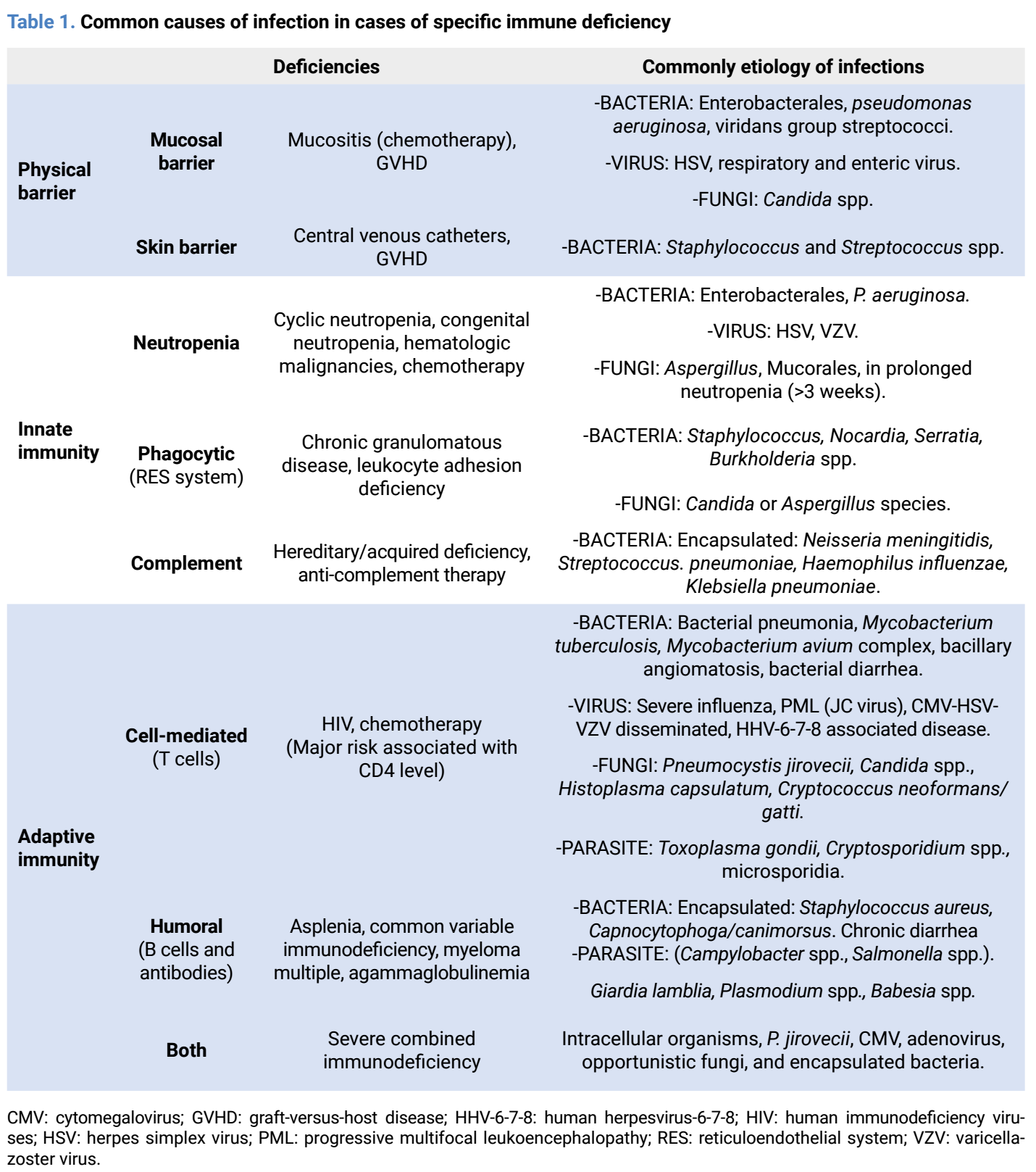
The infection risk and potential pathogens in an immunocompromised patient are primarily determined by the type, severity, and duration of the immune dysfunction [1] (Table 1). For instance, cell-mediated immunity defects predispose patients to viral infections and intracellular pathogens, whereas neutropenia and mucosal barrier disruption favor invasive bacterial and fungal infections.
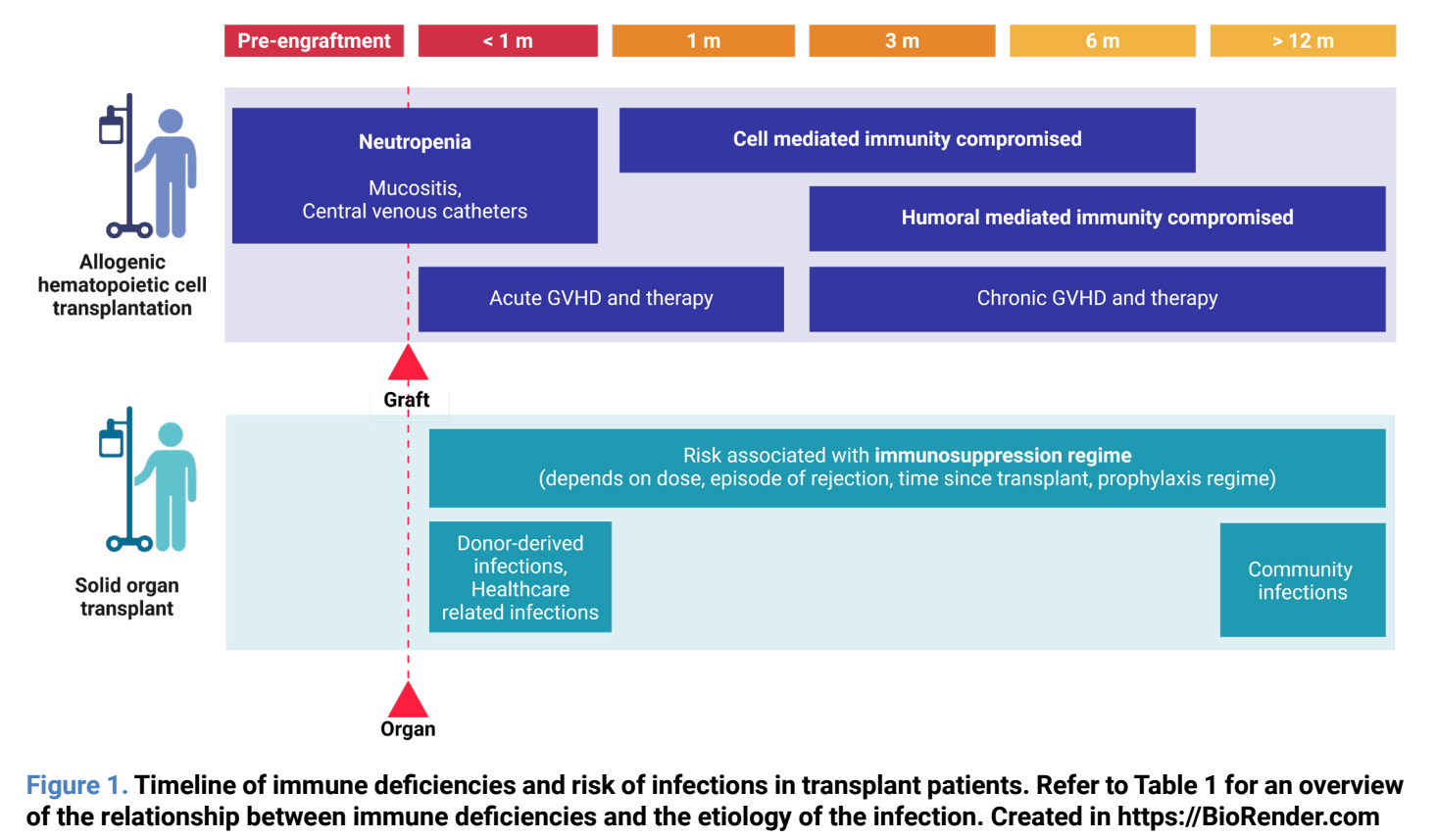
Organ transplant patients needed maintenance immunosuppressive therapy in order to help prevent acute rejection. The maintenance regimen generally consists of a combination of immunosuppressive agents that possess different mechanisms of action. The immunosuppression level is progressively diminished over time, thereby reducing the risk of infection and malignancy while ensuring sufficient suppression to prevent organ rejection (Figure 1). The occurrence of graft versus host disease (GVHD) post-transplantation remains the most important factor influencing outcome following allogeneic blood and marrow transplantation. Allograft rejection in allogeneic blood and marrow transplant recipients is prevented and treated with a prophylactic regimen of immunosuppressive therapy.
Because the immunosuppression profile shapes these distinct vulnerabilities, clinical consensus emphasizes that microbiological diagnosis must be individualized and guided by the specific immune deficiency. The concept of generalized immunodeficiency has been rendered obsolete by the advent of targeted therapies, such as checkpoint inhibitors and novel immunomodulators [2]. Accurately characterizing this immunological profile is critical to rationally selecting both the target pathogens and the optimal diagnostic modalities.
Respiratory tract infections dominate severe clinical presentations, particularly in critically ill patients, where viral, bacterial, and fungal pathogens frequently coexist. Gastrointestinal infections are similarly prevalent, featuring a high burden of polymicrobial and opportunistic etiologies, especially among transplant recipients and hematological patients. This etiological complexity of the infections and the vulnerability of patients require diagnostic approaches capable of rapidly detecting multiple pathogens while accounting for prior antimicrobial exposure and host immune status.
Diagnostic challenges in the immunocompromised host
Several factors complicate microbiological diagnosis in immunocompromised patients, including low pathogen burdens, blunted inflammatory responses, frequent colonization, and high rates of polymicrobial infections [3]. Conventional cultures often lack the necessary sensitivity and require prolonged incubation times, delaying targeted therapy. Moreover, true infection differentiation from colonization is particularly challenging in respiratory and gastrointestinal specimens.
Managing infections in this heterogeneous population is uniquely challenging, as delayed or missed diagnoses drastically compromise survival outcomes. Distinguishing active infectious processes from non-infectious mimics, such as tumor lysis syndrome, drug toxicity, or hemophagocytic lymphohistiocytosis, remains a critical hurdle in clinical practice.
Microbiological culture or histopathological examination remains the gold standard in many cases. However, invasive procedures are frequently warranted to obtain samples, and they pose significant risks to patients, including complications such as severe bleeding in patients with thrombocytopenia. These limitations have driven the adoption of rapid molecular diagnostics as vital adjuncts, rather than replacements, to classical methods.
Role of molecular diagnosis, multiplex PCR and syndromic panels
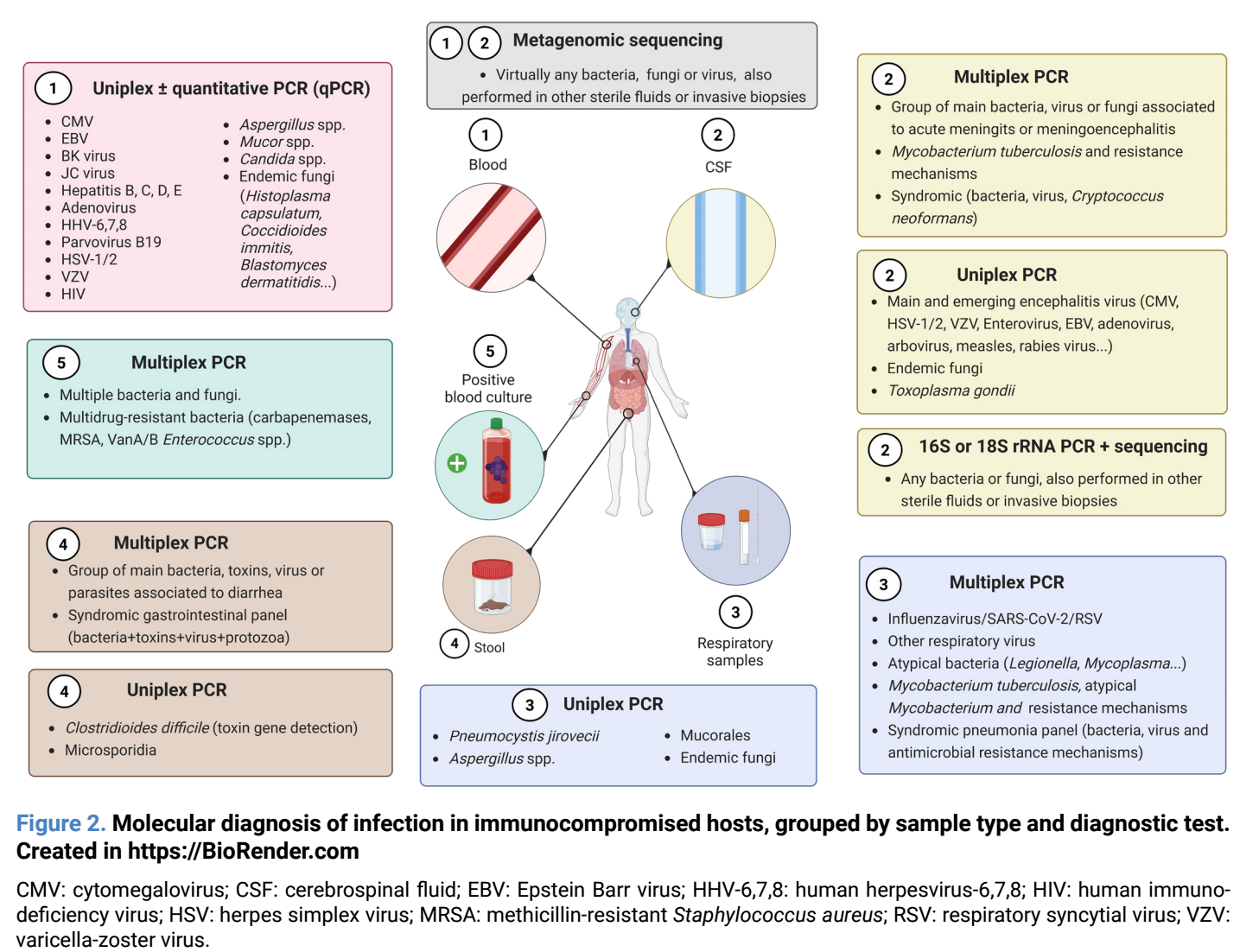
Multiplex PCR has emerged as a revolutionary diagnostic modality that enables the simultaneous amplification of multiple genetic targets. These assays can be designed as syndromic panels or grouped by specific microbial classes. They require minimal sample volumes and are compatible with a variety of samples (Figure 2). Clinical evidence supports the routine implementation of rapid multiplex PCR. A recent meta-analysis demonstrated that multiplex testing for respiratory viruses significantly reduces time-to-result, shortens hospital stays, and improves both appropriate antiviral utilization and infection control practices [4]. Real-world studies confirm that syndromic panels safely modify empirical therapy, primarily through timely de-escalation, thereby fostering antimicrobial stewardship and potentially reducing in-hospital mortality [5].
In immunocompromised individuals, who are susceptible to an exceptionally broad spectrum of pathogens (Table 1), syndromic panels facilitate rapid identification with high negative predictive values. This rapid turnaround accelerates antimicrobial de-escalation, optimizes clinical outcomes and infection control measures, and alleviates the challenge of limited sample volumes, which is particularly relevant in pediatric patients.
Some clinical applications and limitations by system are pointed out. In lung transplant recipients, the turnaround time for multiplex pneumonia panels is approximately 2.3 hours, compared to 21.2 hours for conventional methods [6]. While useful for obtaining rapid preliminary results and bypassing the false negatives associated with blunted serological responses, these panels have limitations. Reported sensitivities vary widely (58%-94%), and they are restricted to predefined targets, potentially failing to detect critical pathogens in this population, such as Candida spp., Aspergillus spp., and uncommon or emerging Gram-negative rods. Replacing conventional stool tests with multiplex PCR panels significantly increases the diagnostic yield of infectious diarrhea in hematopoietic stem cell transplant recipients without increasing overall testing costs [7]. This increased detection is driven primarily by pathogens like enteropathogenic Escherichia coli, norovirus, and Yersinia enterocolitica. Identifying an infectious etiology in these patients has been directly associated with shorter hospitalizations and more targeted therapeutic interventions. The added value of multiplex panels for the detection of viruses and bacteria in cerebrospinal fluid appears to be limited, and they cannot replace uniplex PCR in the diagnosis of viruses in central nervous system infections when high suspicion of viral encephalitis is present [5,8].
Although uniplex PCR assays generally offer superior analytical sensitivity compared to multiplex platforms, relying on sequential uniplex testing can delay diagnosis and escalate healthcare costs when multiple pathogens must be investigated concurrently [9]. In addition, quantitative uniplex PCR remains indispensable for post-transplant surveillance. It is the gold standard for monitoring viral replication or reactivation (e.g., CMV, EBV, BKV, adenovirus, or HHV-6) to guide preemptive therapeutic strategies [2,10].
Metagenomic next-generation sequencing: promise and pitfalls
Metagenomic next-generation sequencing (mNGS) offers an unbiased approach to pathogen detection by analyzing all nucleic acids present within a clinical specimen. This modality is uniquely suited for diagnosing complex conditions such as fever of unknown origin, invasive fungal infections, and culture-negative sepsis, enabling the rapid identification of rare or atypical pathogens missed by conventional methods [2,11]. Furthermore, plasma-based mNGS has emerged as a non-invasive “liquid biopsy,” offering a compelling alternative to tissue biopsies in hemodynamically unstable patients. Across various systemic infections, including respiratory, central nervous system, and gastrointestinal, mGS can elucidate both pathogen identity and genomic characteristics, potentially streamlining targeted therapeutic interventions and optimizing infection control [12,13].
Despite its clinical promise, widespread implementation of mNGS is constrained by substantial pitfalls. Prolonged turnaround times, intricate bioinformatic workflows, high costs, and the inability to definitively differentiate active infection from colonization remain major obstacles. Consequently, the routine clinical utility of plasma-based mNGS is currently limited, and its adoption requires careful context-specific interpretation. For instance, the clinical relevance of positive mNGS results in immunocompromised pediatric patients with known mucosal barrier damage remains poorly defined. Patients presenting with non-infectious diarrhea have tested positive for gastrointestinal commensals via mNGS without any correlation to clinical presentation or traditional microbiological findings [14]. Predictive specificity was improved by restricting results to a group of relevant pathogens, selecting a higher concentration threshold, and excluding patients with high risk for false-positive results. In a prospective cohort study, false-positive results were associated with gastrointestinal disturbance and prior administration of high-dose cytarabine [13]. Therefore, while ongoing advances in bioinformatics and sequencing technologies are expected to reduce costs and turnaround times, mNGS is currently reserved for selected scenarios where conventional and targeted molecular diagnostics have failed or when highly unexpected pathogens are suspected.
Integrated diagnostic strategies
Optimal diagnosis in immunocompromised patients necessitates a multimodal approach that seamlessly integrates clinical assessment, radiological findings, host immune status, biomarkers, and microbiological techniques [15]. Molecular assays should be deployed selectively, guided by specific clinical syndromes and underlying immune deficits, and interpreted by multidisciplinary teams.
To unlock maximum clinical utility, these diagnostic strategies must be implemented directly within institutional antimicrobial consensus-based protocols and antimicrobial stewardship programs, robust clinical and economic impact metrics, and continuous educational programs. This structured framework ensures rational, cost-effective utilization aligned with the core principles of therapeutic optimization.
Conclusions
Molecular diagnostics have transformed the etiological workup of infections in immunocompromised hosts, offering unprecedented speed and diagnostic breadth. Yet their full clinical potential can only be realized through careful result interpretation and systematic integration into structured diagnostic algorithms. Effective implementation requires dedicated escalation and de-escalation protocols grounded in antimicrobial stewardship principles, as well as sustained collaboration between infectious disease specialists and clinical microbiologists. Looking ahead, consensus-driven indications, rigorous cost-effectiveness evaluations, and targeted institutional training programs will be essential to ensure that these powerful tools translate into meaningful patient outcomes rather than diagnostic noise.
Funding
No funding was received for the research, authorship, and/or publication of this article.
Author contributions
Conceptualisation: F.J.C., J.L.D.P.; Methodology: M.R., M.P.S., J.L.D.P.; Writing – original draft: M.R., J.L.D.P.; Writing – review & editing: M.R., M.P.S., F.J.C., J.L.D.P. All authors have read and approved the final version of the manuscript.
Conflicts of interest
No commercial, financial, or personal conflicts of interest were identified in relation to the research, authorship, and/or publication of this article.
AI statement
No artificial intelligence tools were used in the writing, analysis, interpretation, or review of this article.
References
- Dropulic LK, Lederman HM. Overview of infections in the immunocompromised host. Microbiol Spectr. 2016;4(4). Available from: https://doi.org/10.1128/microbiolspec.DMIH2-0026-2016
- Deinhardt-Emmer S, Chousterman BG, Schefold JC, Flohé SB, Skirecki T, Kox M, et al. Sepsis in patients who are immunocompromised: diagnostic challenges and future therapies. Lancet Respir Med. 2025;13(7):623-37. Available from: https://doi.org/10.1016/S2213-2600(25)00124-9
- Dumas G, Joseph A, Zafrani L. Diagnostic tests for infections in critically ill immunocompromised patients. Intensive Care Med. 2024;50(11):1920-2. Available from: https://doi.org/10.1007/s00134-024-07647-6
- Vos LM, Weehuizen JM, Hoepelman AIM, Kaasjager KHAH, Riezebos-Brilman A, Oosterheert JJ. More targeted use of oseltamivir and in-hospital isolation facilities after implementation of a multifaceted strategy including a rapid molecular diagnostic panel for respiratory viruses in immunocompromised adult patients. J Clin Virol. 2019;116:11-7. Available from: https://doi.org/10.1016/j.jcv.2019.04.003
- Candel FJ, Salavert M, Cantón R, del Pozo JL, Galán-Sánchez F, Navarro D, et al. The role of rapid multiplex molecular syndromic panels in the clinical management of infections in critically ill patients: an experts-opinion document. Crit Care. 2024;28(1):440. Available from: https://doi.org/10.1186/s13054-024-05224-3
- Lombardi A, Renisi G, Liparoti A, Bobbio C, Bandera A. Application of syndromic panels for respiratory tract infections in lung transplantation: a critical review on current evidence and future perspectives. Transpl Infect Dis. 2026;28(1). Available from: https://doi.org/10.1111/tid.14448
- Rogers WS, Westblade LF, Soave R, Jenkins SG, van Besien K, Singh HK, et al. Impact of a multiplexed polymerase chain reaction panel on identifying diarrheal pathogens in hematopoietic cell transplant recipients. Clin Infect Dis. 2020;71(7):1693-700. Available from: https://doi.org/10.1093/cid/ciz1068
- Olie SE, Andersen CØ, van de Beek D, Brouwer MC. Molecular diagnostics in cerebrospinal fluid for the diagnosis of central nervous system infections. Clin Microbiol Rev. 2024;37(4). Available from: https://doi.org/10.1128/cmr.00021-24
- Serapide F, Pallone R, Quirino A, Marascio N, Barreca GS, Davoli C, et al. Impact of multiplex PCR on diagnosis of bacterial and fungal infections and choice of appropriate antimicrobial therapy. Diagnostics (Basel). 2025;15(8):1044. Available from: https://doi.org/10.3390/diagnostics15081044
- Ljungman P, Alain S, Chemaly RF, Einsele H, Galaverna F, Hirsch HH, et al. Recommendations from the 10th European Conference on Infections in Leukaemia for the management of cytomegalovirus in patients after allogeneic haematopoietic cell transplantation and other T-cell-engaging therapies. Lancet Infect Dis. 2025;25(8). Available from: https://doi.org/10.1016/S1473-3099(25)00069-6
- Li J, Zhou CE, Wei SC, Wang LN, Shi MW, Sun CP, et al. Diagnostic value of metagenomic next-generation sequencing for pneumonia in immunocompromised patients. Can J Infect Dis Med Microbiol. 2022;2022:58845 68. Available from: https://doi.org/10.1155/2022/5884568
- Zhao Y, Zhang W, Zhang X. Application of metagenomic next-generation sequencing in the diagnosis of infectious diseases. Front Cell Infect Microbiol. 2024;14:1458316. Available from: https://doi.org/10.3389/fcimb.2024.1458316
- Wolf J, Goggin KP, Inaba Y, Allison KJ, Ahmed AA, Maron G, et al. Predicting bloodstream infection by plasma cell-free metagenomic sequencing: a prospective cohort study. Lancet Microbe. 2026;7(4):101312. Available from: https://doi.org/10.1016/j.lanmic.2025.101312
- LehmanAC,GorenLR,EvansMD,TolesO,DrozdovD,Andrews SL, et al. Clinical performance of plasma metagenomic sequencing in immunocompromised pediatric patients. J Pediatric Infect Dis Soc. 2024;13(5):276-81. Available from: https://doi.org/10.1093/jpids/piae024
- Castejon-Ramirez S, Maron G. Targeted strategies for pediatric cancer and post-transplant fever: the role of host and pathogen biomarkers. Curr Opin Infect Dis. 2025;38(5):477-86. Available from: https://doi.org/10.1097/QCO.0000000000001132
Explore
Articles
Volumes
About the journal
Most read
Recomendaciones para la prevención y el tratamiento de las infecciones respiratorias en adultos mayores institucionalizados
Revista Española de Quimioterapia
Características epidemiológicas de pacientes con aislamientos de Enterobacterales productores de carbapenemasas-NDM en un hospital de alta complejidad
Revista Española de Quimioterapia
Acute infectious gastroenteritis in childhood: the role of rapid multiplex molecular syndromic panels in diagnosis and clinical management
Revista Española de Quimioterapia
Review on the management of intra-abdominal candidiasis
Revista Española de Quimioterapia
Eravacycline: From broad-spectrum coverage to novel clinical applications
Revista Española de Quimioterapia