Original
February 2026, Volume 39, nº 1
19 min
A rapid surveillance of pneumonia in hospitalized patients: an opportunity for intervention
Una vigilancia rápida de la neumonía en pacientes hospitalizados: una oportunidad para la intervención
Marina Fayos1,2* , Emilio Bouza1,2,3,4 , Almudena Burillo1,2,3, Alicia Galar1,2 , Ana Álvarez-Uría1,2, Patricia Muñoz1,2,3,4
1Hospital General Universitario Gregorio Marañón, Madrid, España
2Instituto de Investigación Sanitaria Gregorio Marañón (IISGM), Madrid, España
3Universidad Complutense de Madrid, Madrid, España
4CIBER de Enfermedades Respiratorias (CIBERES), Madrid, España
Correction notice: This article was corrected on 29 July 2026. See the Corrigendum.
*Correspondence:
Marina Fayos. marina.fayos.perez@gmail.com
Receipt Date:
29/09/2025
Acceptance Date:
11/11/2025
Publication Date:
07/01/2026
How to cite
Fayos M, Bouza E, Burillo A, Galar A, Álvarez-Uría A, Muñoz P. A rapid surveillance of pneumonia in hospitalized patients: an opportunity for intervention. Rev Esp Quimioter. 2026;39(1):39-48. Available from: https://doi.org/10.37201/req/104.2025. Erratum in: Rev Esp Quimioter. 2026;39(5). Available from: https://doi.org/10.37201/req/243.2026
Metrics
344
Views
54
Downloads
Share
Share
Abstract (EN)
Most evaluations of the burden of pneumonia in hospitalized patients are partial and concern specific subgroups of patients. However, few studies allow for the assessment of the global scope of the problem and the potential for intervention with guidance that could improve its diagnosis and treatment. This descriptive study conducted in a tertiary-care center aimed to determine the prevalence of pneumonia in hospitalized adults, to characterize its origins and etiology, and to evaluate the feasibility of a telematic intervention to advise on its diagnosis and treatment. A prevalence study was performed on the 653 adult inpatients admitted in July 2025. The pneumonia prevalence per 1,000 admitted patients was overall 36.8, community-acquired 24.5, nosocomial non-ventilator-associated 9.2, and nosocomial ventilator-associated 3.1. An etiological agent was identified in 29.2% of cases. In a critical review of the cases, opportunities to optimize either diagnosis or treatment were detected in 100% of pneumonia patients. After 30 days of dynamic follow-up of the selected cohort, overall mortality was 16.7%.
Keywords (EN):
Prevalence
Intervention
Non-ventilator hospital-acquired pneumonia
Assessment
Pneumonia
Abstract (ES)
La mayor parte de las evaluaciones sobre la carga de neumonía en pacientes hospitalizados son parciales y conciernen a subgrupos específicos de pacientes. Sin embargo, son escasos los estudios que permiten conocer la dimensión global del problema y valorar las posibilidades de intervenir con consejos que puedan mejorar su diagnóstico y tratamiento. Este estudio descriptivo en un centro de tercer nivel tuvo como objetivo determinar la prevalencia de neumonía en adultos hospitalizados, conocer sus orígenes y etiología, y valorar las posibilidades que habría de una intervención telemática para aconsejar sobre su diagnóstico y tratamiento. Se realizó un estudio de prevalencia de los 653 pacientes adultos ingresados en el mes de julio de 2025. La prevalencia de neumonía por 1000 pacientes ingresados fue, respectivamente: global 36,8, comunitaria 24,5, nosocomial no relacionada con la ventilación mecánica 9,2 y nosocomial asociada a la ventilación mecánica 3,1. Se logró identificar el agente etiológico en el 29,2% de los casos. En la evaluación crítica de los casos, se detectaron oportunidades para optimizar el diagnóstico o el tratamiento en el 100% de los pacientes con neumonía. Después de un seguimiento dinámico de la cohorte seleccionada, durante 30 días, se observó una mortalidad global del 16,7%.
Keywords (ES):
Prevalencia
Neumonía hospitalaria no asociada a ventilación mecánica
Neumonía
Intervención
Evaluación
Introduction
Pneumonia represents one of the most frequent and severe infectious complications in hospitalized patients [1], with an estimated prevalence of 4-6% [2,3] and associated with high morbidity and mortality. Although community-acquired pneumonia (CAP) requiring hospitalization is widely studied and recognized, nosocomial pneumonia, especially non-ventilator hospital-acquired pneumonia (NV-HAP), poses a significant diagnostic and epidemiological burden [4]. Few studies evaluate the workload and global characteristics of patients with pneumonia of any origin in hospitalized patients, their etiologies, and the opportunities for intervention with diagnostic and/or therapeutic advice. Moreover, a limited number of prospective studies have applied homogeneous methodologies and comparable definitions of pneumonia [2,3], which hinders direct comparison across series. Most available data focus on specific subgroups of patients rather than on the overall prevalence of pneumonia among hospitalized adults [5-8]. The prevalence of NV-HAP is particularly poorly understood, as is the proportion it represents among pneumonias of other origins. The availability of baseline data would allow an appropriate assessment of advisory interventions for these patients and their real impact. Clinical practice guidelines do not propose systematic follow-up models for hospitalized patients with any form of pneumonia, nor indications to intervene with telematic advice to responsible physicians. Monitoring could help to optimize resources and adjust preventive protocols [9], with particular benefit in immunocompromised patients [10], individuals with cardiopulmonary diseases [11], those admitted for acute respiratory infections [9,12], or those undergoing invasive procedures [13,14]. The primary objective of the present study is to determine the prevalence of pneumonia in adult patients hospitalized in a 1,200-bed institution. Secondary objectives include identifying deviations in clinical management with opportunities for advice to improve diagnosis and treatment.
Materials and methods
This descriptive cross-sectional study, focused on the prevalence of pneumonias, was conducted in a tertiary general hospital with a total capacity of 1,204 beds. The study population included all patients over 18 years of age admitted to the institution during the defined research period, encompassing both immunocompetent and immunocompromised individuals. A single investigator, a postdoctoral associate physician specialized in infectious diseases, carried out the prevalence cross-section through a rapid and systematic telematic review of the records of all admitted adult patients. The prevalence survey was conducted on a single cross-section, completed over 12 non-consecutive days during July 2025, following the European Centre for Disease Prevention and Control (ECDC) surveillance study recommendations [15]. A total of 300 vacant beds corresponding to seasonal ward closures during the summer months, as well as 163 beds allocated to pediatric patients and 88 beds located in a center specializing in chronic rehabilitation admission, were excluded from the analysis. After these exclusions, from a total of 1,204 institutional beds, 653 adult acute-care beds were finally analyzed. Data were collected electronically using a basic form (Data Set 1), recording essential demographic and clinical information. We included all patients with active pneumonia using the following criteria: radiologic infiltrate compatible with pneumonia, not explained by another cause, plus at least one of the following clinical features: fever, leukocytosis or leukopenia, or purulent sputum, dyspnea, respiratory failure, pleuritic chest pain, or crackles. Episodes of pneumonia that had already resolved and did not require any further antibiotic therapy at the time of enrollment were excluded. In patients with active pneumonia at the time of the study, a second set of variables was applied to classify cases as community-acquired pneumonia (CAP), ventilator-associated pneumonia (VAP), or non-ventilator hospital-acquired pneumonia (NV-HAP). According to the latest guidelines, CAP includes pneumonia criteria present within the first 48 hours of admission. VAP is defined as episodes arising after 48 hours of mechanical ventilation (MV) initiation or as pneumonia appearing within 48 hours after extubation [16]. NV-HAP is defined as pneumonia occurring at least 48 hours after admission [4, 17-20]. In patients receiving MV, episodes occurring within the first 48 hours after MV initiation are classified as CAP if MV starts within the first 48 hours of admission or as NV-HAP if MV starts after 48 hours of admission [21]. All patients with a diagnosis of pneumonia underwent a third evaluation of the records (third data set) that included a detailed analysis of the diagnostic criteria used, the attempts to determine the etiologic agent, and microbiological analysis in cases where a specific cause was identified. To assign an overall evaluation to each patient and identify potential areas for improvement, we designed diagnostic and therapeutic quality scales specifically for this study, based on the main international clinical guidelines for pneumonia [4,18,19, 22, 23]. Each scale consisted of five items scored from 0 to 2 points, yielding a total score from 0 to 10, with higher values indicating better adherence to evidence-based clinical standards. The items included in each scale are detailed in Table 1.
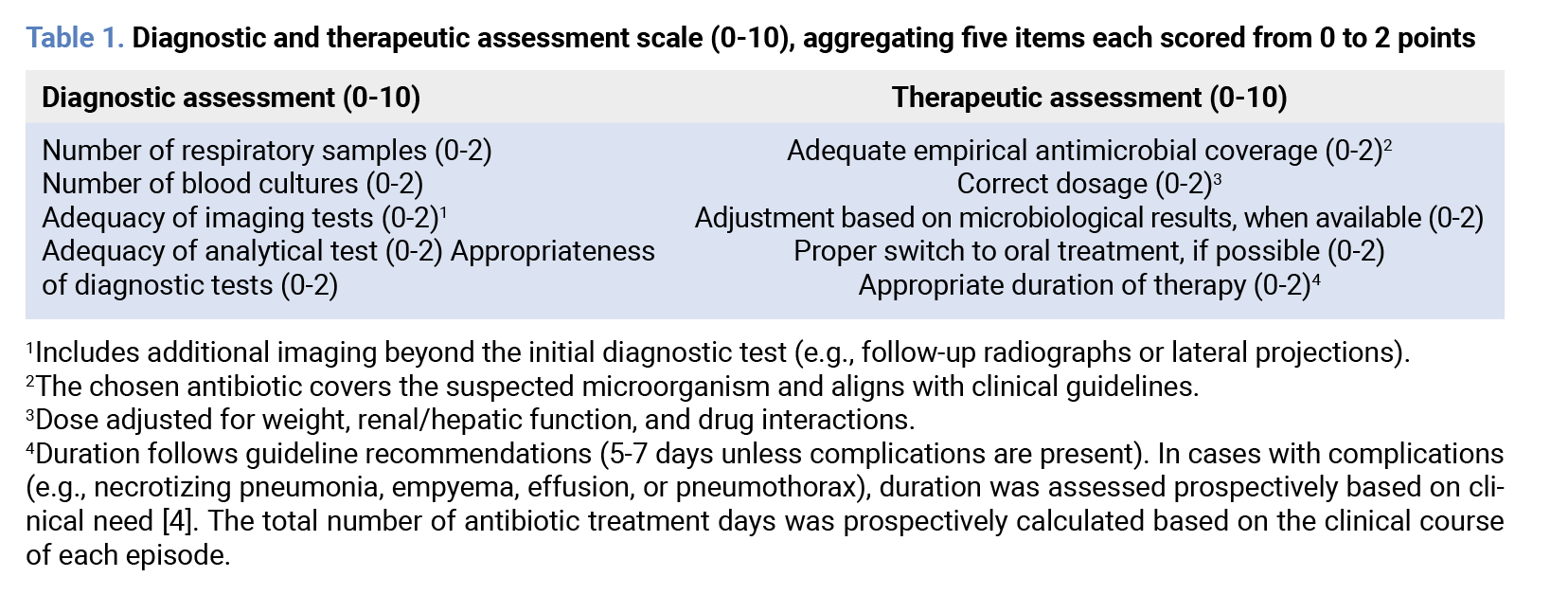 Finally, a prospective follow-up of the dynamic cohort of all pneumonia patients was conducted to analyze clinical evolution, complications, length of stay, and 30‑day mortality from enrollment. These variables were collected prospectively, with data gathered 30 days after the initial classification and assessment of each case. In addition, the mean hospitalization cost per episode was calculated, broadly estimating an average cost of €700 per day per patient in the acute wards and €2,500 per day in the intensive care units (ICU). Statistical analysis. Quantitative data were presented as medians with absolute ranges or interquartile ranges (Q1-Q3). Qualitative variables were summarized using absolute and relative frequencies, along with 95% confidence intervals (CI).
Results
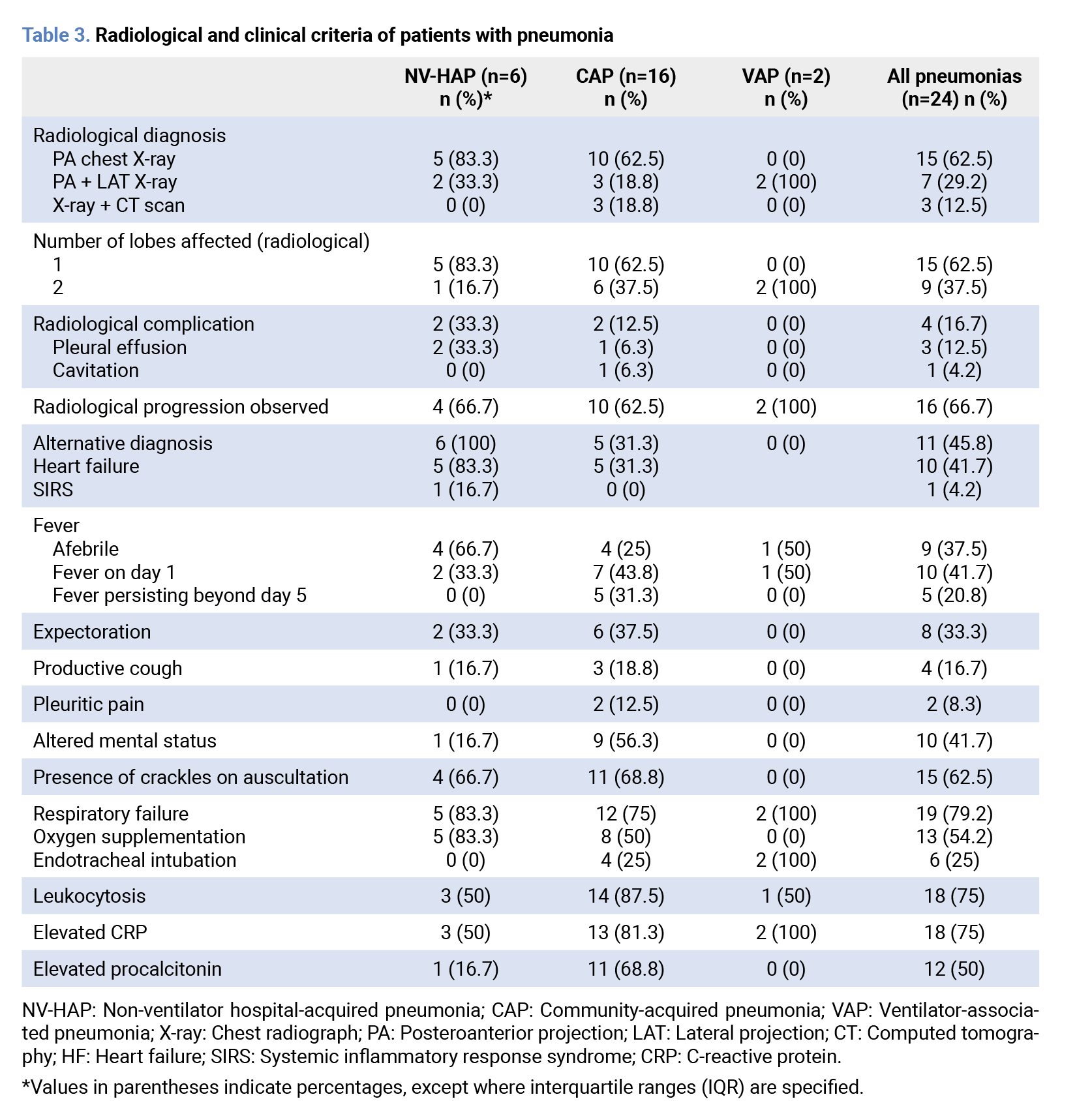
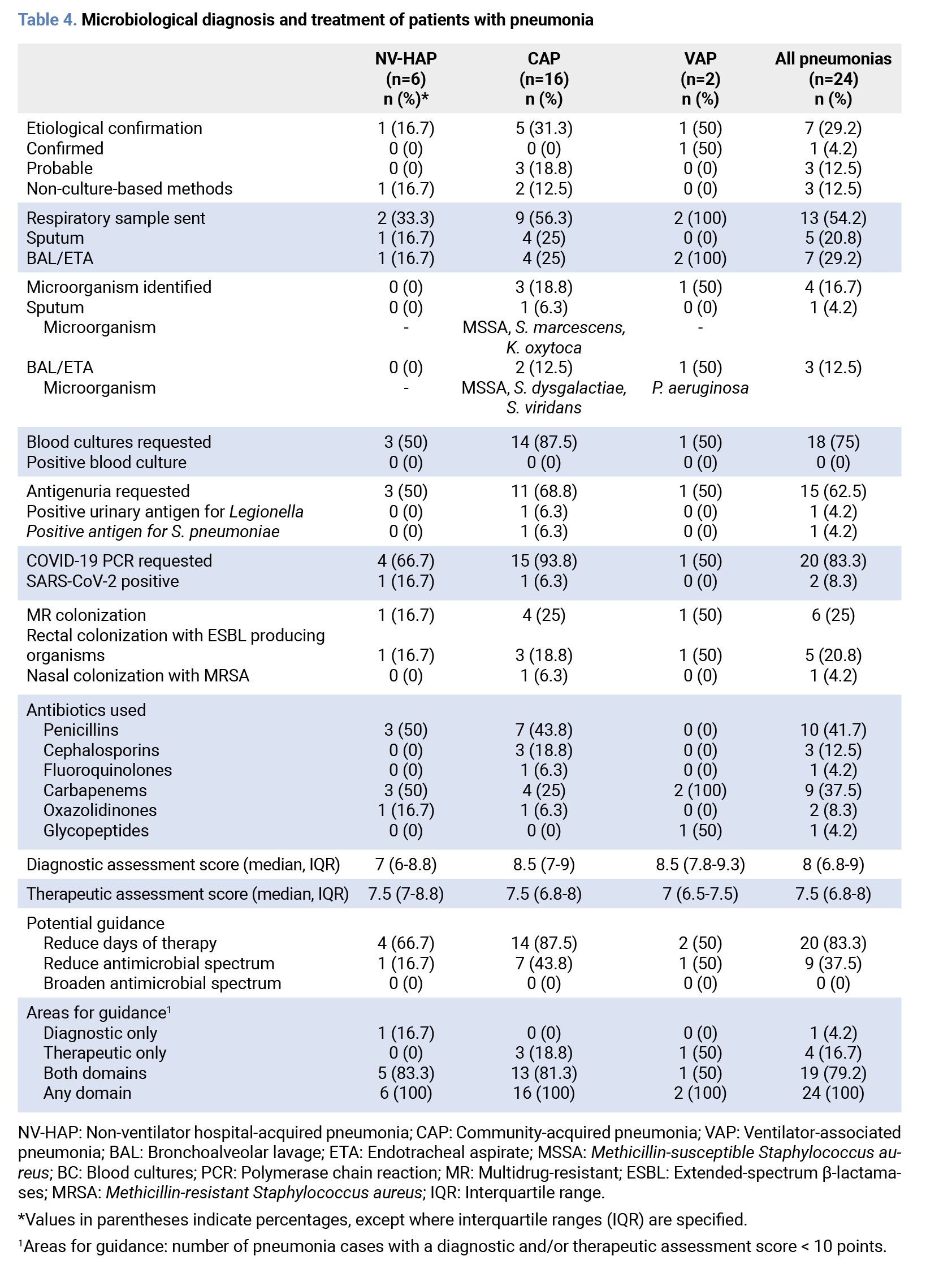
Overall prevalence and clinical characteristics. During a 12-working-day period in July 2025, a single investigator reviewed a total of 653 adult inpatients at the institution. Of these, 24 patients met the diagnostic criteria for pneumonia, representing a prevalence of 36.8 per 1,000 survey beds. The median age in this group was 67.4 years (95% CI 57 - 87.4). Table 2 details the clinical characteristics of patients with pneumonia and their distribution by reason and admission service. Most pneumonia cases occurred in patients hospitalized in medical wards (66.7%), with 41.7% occurring in the internal medicine service. 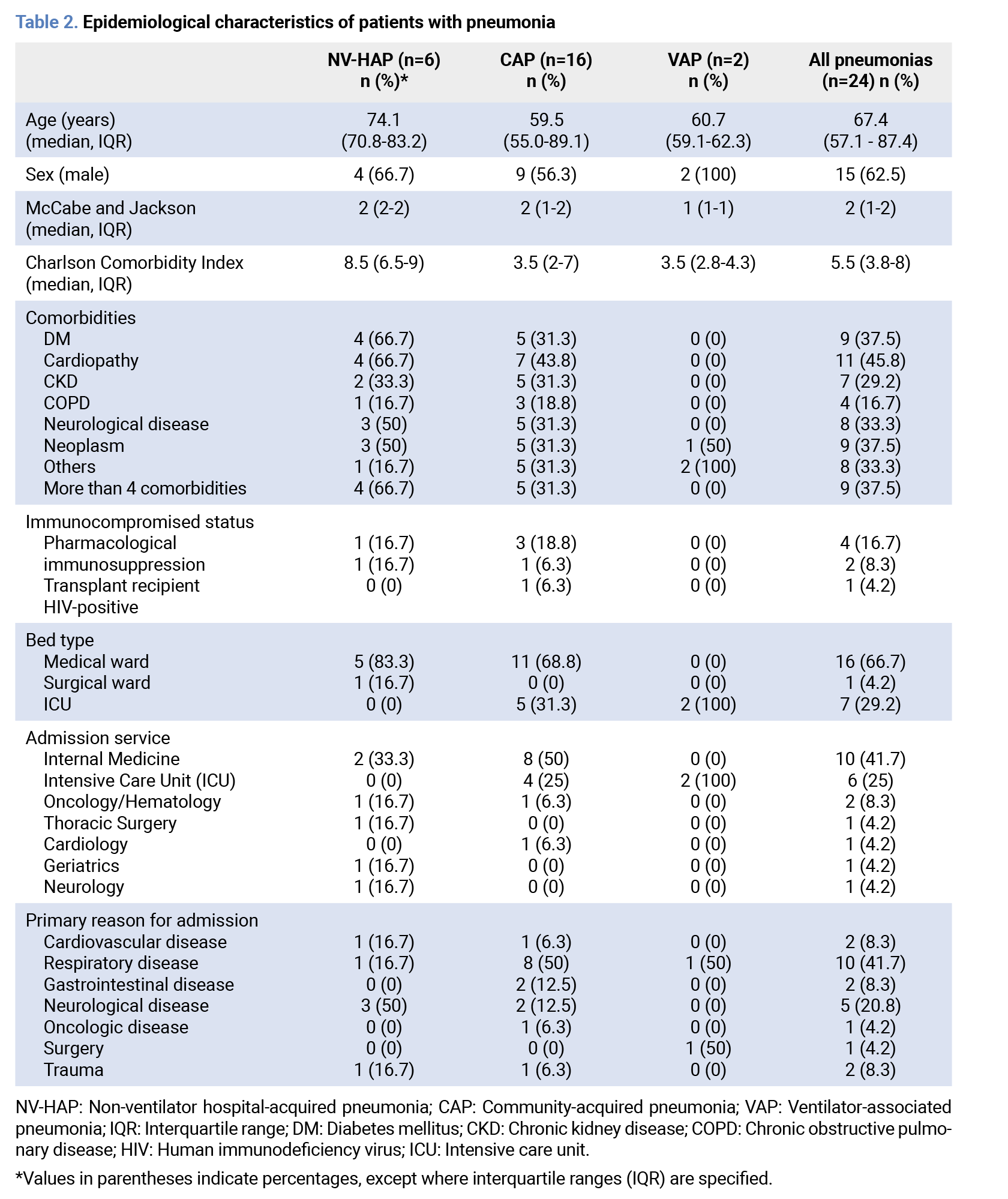 Radiologic and clinical criteria observed in pneumonia cases are specified in Table 3. The majority of cases (62.5%) were identified by a single posteroanterior (PA) projection on chest radiography, with 16.7% showing radiologic complications such as effusion or cavitation. Clinically, the most frequent sign was respiratory failure, present in 79.2% of patients. Microbiological sampling was attempted via respiratory cultures in 54.2%, blood cultures in 75%, antigen testing in 62.5%, and PCR for respiratory viruses in 83.3%. Microbiological confirmation was obtained in 29.2% of all pneumonias (Table 4). The most frequent microorganisms were methicillin-susceptible Staphylococcus aureus (MSSA) in respiratory samples (n=2) and coronavirus detected by PCR (n=2) (Table 4).
 Assessment of a possible intervention. A quantitative assessment of the quality of diagnosis and treatment was performed on a 1-10 scale for each pneumonia case (Table 4). The median diagnostic value was 8 (IQR 6.8-9), and the therapeutic value was 7.5 (IQR 6.8-8). Specifically, in empirical treatment, antibiotic therapy could have been stopped days earlier in 83.3% of all cases, and antimicrobial coverage could have been reduced in 37.5% of cases. Globally, 100% of patients had a diagnostic and/or therapeutic score below 10, indicating room for improvement in at least one of these areas.
 Prognosis. Table 5 presents clinical evolution and 30-day prognosis in the selected cohort of all pneumonia patients. Mortality was 16.7%, with a median hospital stay of 12 days and an estimated cost of €13,200 per admission. In addition, six cases of pneumonia (25%) with the development of complications during the episode were observed prospectively: parapneumonic effusion (n = 2), hemothorax (n = 1), necrotizing pneumonia (n = 1), abscess formation (n=1), and catheter-associated bacteremia (n = 1).
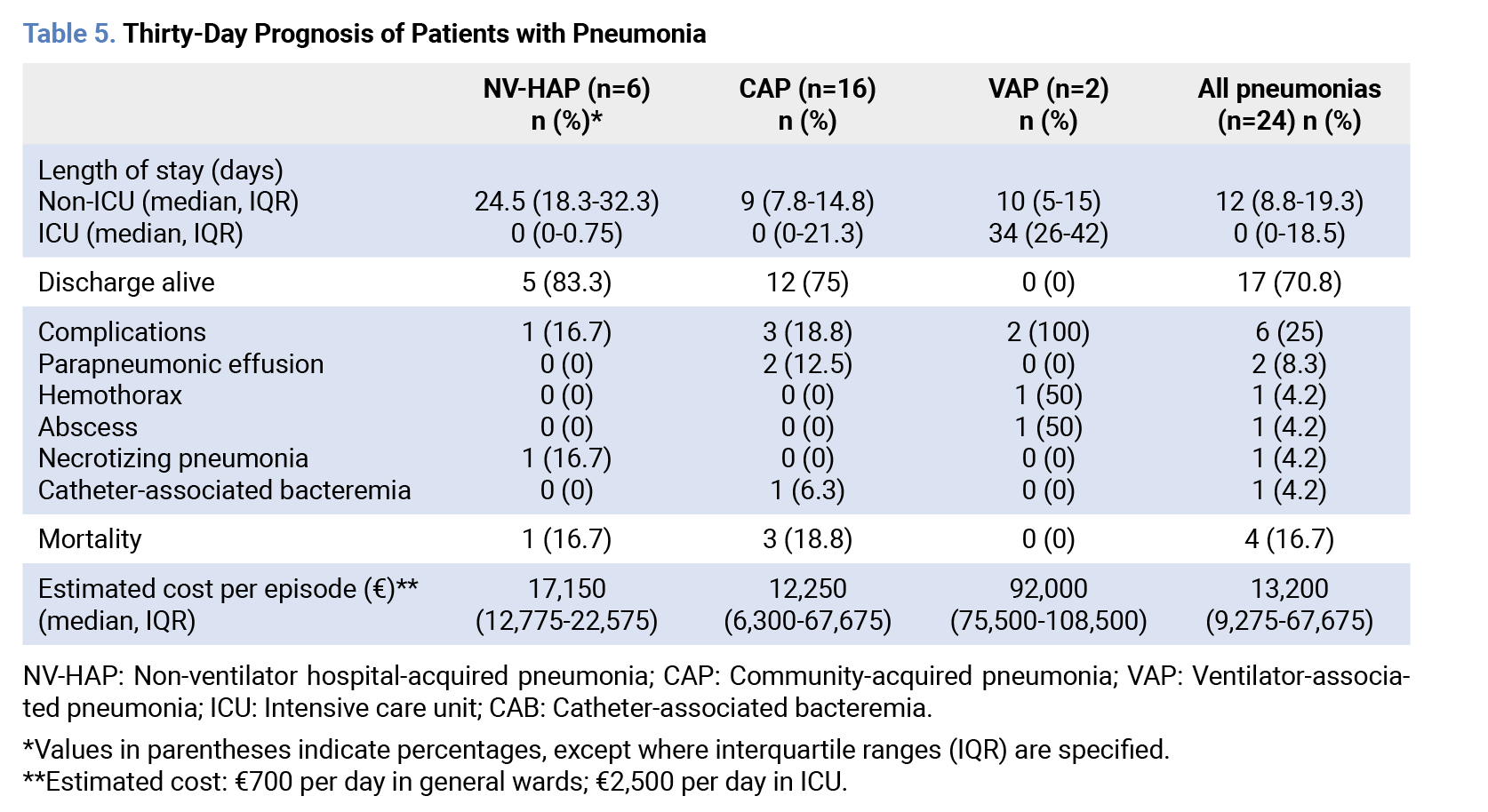 NV-HAP results. Of all hospitalized pneumonias, 25% (n = 6) were NV-HAP, with a median age of 74.1 years (IQR 70.8-83.2) and a median Charlson index of 8.5 (IQR 6.5-9). The NV-HAP prevalence relative to total hospitalized patients was 9.2 per 1,000 patients (n=6) (Table 2). Clinically, 66.7% remained afebrile during the episode, and 83.3% had respiratory failure. Of NV-HAP patients, 83.3% had an alternative or concomitant diagnosis of heart failure. Analytically, 50% had leukocytosis and elevated C-reactive protein (CRP), and 16.7% had an elevated procalcitonin in the first 3 days of the episode (Table 3). In this group, blood cultures were requested in 50% of cases and respiratory samples in 33.3%, with negative results in all cases. SARS-CoV-2 was identified as the etiologic agent in one case by PCR (Table 3). NV-HAP had the lowest diagnostic assessment compared with other pneumonias, with a median of 7 (IC 6-8.8). Potential areas for improvement were identified in all patients, both in diagnostic and therapeutic areas. Regarding treatment, 66.7% could have been advised to provide fewer days of antibiotic therapy, and in 16.7% antibiotic coverage could have been reduced (Table 4). Regarding prognosis, this group had the longest admissions on the non-ICU ward compared with other pneumonias, with a median hospital stay of 24.5 days and an estimated cost of €17,150 per episode (Table 5).
Discussion
Our study indicates that it is possible to conduct with limited resources surveillance of the total burden that hospitalized patients with pneumonia represent within an institution. In our case, 37/1,000 hospitalized patients had pneumonia, and on the day of the study, 100% of pneumonia patients would have benefited from diagnostic or therapeutic advice. Our study, performed by a single person over 12 days, showed operability under limited conditions and the possibility of being repeated biannually to reduce seasonal bias.
The seriousness of hospitalized pneumonia is undisputed, with reported in-hospital mortality ranging from 7% to 22% [2, 24, 25]. Nevertheless, information on the total burden of pneumonia in hospitalized patients remains partial or fragmented in studies in which the type [6], age [7], or comorbidity [8] are selected as central issues. Regarding the global burden of pneumonias, a retrospective US study (2001-2014) reported a prevalence of approximately 4.4% at the national level [2] and 6.2% in New York City [3], figures similar to those observed in our study (36.8/1,000). However, data on hospitalized pneumonia remain limited, particularly in Europe, where comparable series are scarce. The available American studies [2,3] were based on retrospective continuous surveillance using administrative discharge databases. Their reliance on coded diagnoses may have led to inaccurate estimation of pneumonia cases and underrepresentation of nosocomial subtypes. Differences in case definitions, hospital settings, and observation periods likely explain the variability in reported rates.
In contrast, our point-prevalence design, based on direct clinical record review, provides validated data and a more accurate assessment of diagnostic and therapeutic practices. We are aware that our study was performed in a month (July) with fewer cases of patients hospitalized with pneumonia [26-29], and, in our opinion, studies like ours could be performed with semiannual intervals to evaluate seasonal variations and address the efficacy of interventions [30-34]. While only severity indices that measure mortality or severity are used for the management of pneumonias [35-38], we did not find validated tools recommended to assess diagnostic accuracy or therapeutic approaches in hospital pneumonia as provided by clinical guidelines [4,18,39]. We propose a bespoke quality index to assess diagnostic and therapeutic interventions. In 100% of analyzed cases, opportunities to optimize diagnosis or treatment were identified: in 83.3% antibiotics could have been shortened, and in 37.5% antibiotic coverage could have been reduced, which would have improved resource efficiency [30]. Although 25% of patients had local complications, treatment duration was assessed considering the required duration for each complication, making it unlikely that these complications biased the evaluation of overall treatment duration.
These findings have relevant clinical implications. Implementing structured diagnostic and therapeutic assessment tools in routine practice could help promote timely microbiological testing, more appropriate antibiotic selection, and shorter treatment durations, thereby supporting antimicrobial stewardship initiatives. Such evaluations could also facilitate targeted interventions within hospital infection control initiatives. Scientific societies support periodic surveillance of hospital infections through systems that enable rapid, coordinated interventions between infection control staff and the clinical team [15,30], with demonstrated benefit and cost-effectiveness [31-34], especially in critically ill and immunocompromised patients [10,40]. For example, influenza surveillance in hospitalized patients during viral seasons can reduce nosocomial infection rates from 17% to 9% and shorten hospital stays [41]. However, we don’t know of any proposals specifically applied to patients hospitalized with pneumonia. Of particular concern, in our opinion, are the patients with NV-HAP, who represent the most common form of hospital-acquired pneumonias.
This group had the longest hospital stay outside the ICU and would particularly benefit from diagnostic and therapeutic advice, given its higher severity and poorer diagnosis. Limitations of the study include seasonality, which would need to be addressed with a second study, and the fact that it was conducted at a single center. This may have affected the number of cases recorded, limiting extrapolation to other times of the year. Although a total sample of 600 hospitalized patients was analyzed, the number of pneumonia cases detected is not large enough to perform formal statistical significance testing. However, these limitations do not prevent the study from achieving our primary objective: to evaluate the feasibility of surveillance in a descriptive, objective, and guideline-consistent way of the magnitude of pneumonia in a general hospital during a summer month and to assess the potential for an intervention.
In the future, it is important to assess the feasibility of performing this procedure continuously in institutions capable of clinical interventions, or at least twice a year if continuous assessment is not possible. Our model has proven feasible and, with relative ease, has provided the dimension of the problem and the opportunities for intervention within it. We intend to repeat the same study during the winter months and subsequently evaluate the effectiveness of a rapid interventional counseling system.
Conclusion
This study reveals that there is a substantial burden of pneumonia in a tertiary-care hospital. An etiological agent could be identified in less than one-third of episodes, highlighting the limited yield of microbiological testing. Diagnostic and therapeutic evaluations revealed that all patients presented opportunities for improvement, mainly regarding the duration and spectrum of antibiotic therapy.
These findings support the feasibility of rapid single-observer surveillance in a tertiary hospital and its potential value for designing targeted interventions to optimize pneumonia diagnosis and treatment.
Funding
This study was funded by Instituto de Investigación Sanitaria Gregorio Marañón (IiSGM).
Author contributions
Conceptualization, M.F, E.B, and P.M.; methodology, M.F, E.B, A.B, A.G, A.A-U and P.M.; software, M.F, E.M and A.B.; validation, M.F, E.B, A.B, A.G, A.A-U and P.M.; writing and original draft preparation, M.F, E.B, and P.M; review and editing, M.F, E.B, A.B, A.G, A.A-U and P.M; supervision, E.B and P.M. All authors have read and agreed to the published version of the manuscript.
Conflict of interest
The authors declare no conflicts of interest regarding this manuscript.
AI statement
No artificial intelligence tools were used in the writing, analysis, interpretation, or review of this article.
References
- Munro SC, Baker D, Giuliano KK, Sullivan SC, Haber J, Jones BE, et al. Nonventilator hospital-acquired pneumonia: A call to action. Infect Control Hosp Epidemiol. 2021;42(8):991-6. Available from: https://doi.org/10.1017/ice.2021.239
- Hayes BH, Haberling DL, Kennedy JL, Varma JK, Fry AM, Vora NM. Burden of Pneumonia-Associated Hospitalizations: United States, 2001-2014. Chest. 2018;153(2):427-37. Available from: https://doi.org/10.1016/j.chest.2017.09.041
- Corrado RE, Lee D, Lucero DE, Varma JK, Vora NM. Burden of Adult Community-acquired, Health-care-Associated, Hospital-Acquired, and Ventilator-Associated Pneumonia: New York City, 2010 to 2014. Chest. 2017;152(5):930-42. Available from: https://doi.org/10.1016/j.chest.2017.04.162
- Kalil AC, Metersky ML, Klompas M, Muscedere J, Sweeney DA, Palmer LB, et al. Management of Adults With Hospital-acquired and Ventilator-associated Pneumonia: 2016 Clinical Practice Guidelines by the Infectious Diseases Society of America and the American Thoracic Society. Clin Infect Dis. 2016;63(5):e61-e111. Available from: https://doi.org/10.1093/cid/ciw353
- Bergin SP, Coles A, Calvert SB, Farley J, Powers JH, Zervos MJ, et al. PROPHETIC: Prospective Identification of Pneumonia in Hospitalized Patients in the ICU. Chest. 2020;158(6):2370-80. Available from: https://doi.org/10.1016/j.chest.2020.06.034
- Tsoumani E, Carter JA, Salomonsson S, Stephens JM, Bencina G. Clinical, economic, and humanistic burden of community acquired pneumonia in Europe: a systematic literature review. Expert Rev Vaccines. 2023;22(1):876-84. Available from: https://doi.org/10.1080/14760584.2023.2261785
- Shi T, Denouel A, Tietjen AK, Lee JW, Falsey AR, Demont C, et al. Global and Regional Burden of Hospital Admissions for Pneumonia in Older Adults: A Systematic Review and Meta-Analysis. J Infect Dis. 2020;222(Suppl 7):S570-S6. Available from: https://doi.org/10.1093/infdis/jiz053
- de Miguel-Diez J, Albaladejo-Vicente R, Hernandez-Barrera V, Ji Z, Lopez-Herranz M, Jimenez-Garcia R, et al. Hospital admissions for community-acquired, ventilator-associated and nonventilator hospital-acquired pneumonia in COPD patients in Spain (2016-2017). Eur J Intern Med. 2020;79:93-100. Available from: https://doi.org/10.1016/j.ejim.2020.06.028
- Ambrosioni J, Bridevaux PO, Wagner G, Mamin A, Kaiser L. Epidemiology of viral respiratory infections in a tertiary care centre in the era of molecular diagnosis, Geneva, Switzerland, 2011-2012. Clin Microbiol Infect. 2014;20(9):O578-84. Available from: https://doi.org/10.1111/1469-0691.12525
- Valentine JC, Hall L, Verspoor KM, Worth LJ. The current scope of healthcare-associated infection surveillance activities in hospitalized immunocompromised patients: a systematic review. Int J Epidemiol. 2019;48(6):1768-82. Available from: https://doi.org/10.1093/ije/dyz162
- Uyeki TM, Bernstein HH, Bradley JS, Englund JA, File TM, Fry AM, et al. Clinical Practice Guidelines by the Infectious Diseases Society of America: 2018 Update on Diagnosis, Treatment, Chemoprophylaxis, and Institutional Outbreak Management of Seasonal Influenzaa. Clin Infect Dis. 2019;68(6):e1-e47. Available from: https://doi.org/10.1093/cid/ciy866
- Bourgeois M, Ausselet N, Gerard V, de Canniere L, Scius N, Michaux I, et al. Severe influenza/respiratory syncytial virus infections and hospital antimicrobial stewardship opportunities: impact of a 4-year surveillance including molecular diagnosis. Infect Control Hosp Epidemiol. 2020;41(10):1184-9. Available from: https://doi.org/10.1017/ice.2020.260
- McDonald EG, Dendukuri N, Frenette C, Lee TC. Time-Series Analysis of Health Care-Associated Infections in a New Hospital With All Private Rooms. JAMA Intern Med. 2019;179(11):1501-6. Available from: https://doi.org/10.1001/jamainternmed.2019.2798
- Richet H. Seasonality in Gram-negative and healthcare-associated infections. Clin Microbiol Infect. 2012;18(10):934-40. Available from: https://doi.org/10.1111/j.1469-0691.2012.03954.x
- European Centre for Disease Prevention and Control (ECDC). Point prevalence survey of healthcare-associated infections and antimicrobial use in European acute care hospitals 2016. Stockholm: ECDC; 2016.
- European Centre for Disease Prevention and Control (ECDC). European surveillance of healthcare-associated infections in intensive care units. Technical document. Stockholm: ECDC; 2010.
- National Institute for Health and Care Excellence (NICE). Pneumonia in adults: diagnosis and management. London: NICE; 2023.
- Torres A, Niederman MS, Chastre J, Ewig S, Fernandez-Vandellos P, Hanberger H, et al. International ERS/ESICM/ESCMID/ALAT guidelines for the management of hospital-acquired pneumonia and ventilator-associated pneumonia: Guidelines for the management of hospital-acquired pneumonia (HAP)/ventilator-associated pneumonia (VAP) of the European Respiratory Society (ERS), European Society of Intensive Care Medicine (ESICM), European Society of Clinical Microbiology and Infectious Diseases (ESCMID) and Asociacion Latinoamericana del Torax (ALAT). Eur Respir J. 2017;50(3). Available from: https://doi.org/10.1183/13993003.00582-2017
- Torres A, Barberán J, Ceccato A, Martin-Loeches I, Ferrer M, Menéndez R, et al. Neumonía intrahospitalaria. Normativa de la Sociedad Española de Neumología y Cirugía Torácica (SEPAR). Actualización 2020. Archivos de Bronconeumología. 2020;56:11-9. Available from: https://doi.org/10.1016/j.arbres.2020.01.015
- Leone M, Bouadma L, Bouhemad B, Brissaud O, Dauger S, Gibot S, et al. Hospital-acquired pneumonia in ICU. Anaesth Crit Care Pain Med. 2018;37(1):83-98. Available from: https://doi.org/10.1016/j.accpm.2017.11.006
- Di Pasquale M, Aliberti S, Mantero M, Bianchini S, Blasi F. Non-Intensive Care Unit Acquired Pneumonia: A New Clinical Entity? Int J Mol Sci. 2016;17(3):287. Available from: https://doi.org/10.3390/ijms17030287
- Metlay JP, Waterer GW, Long AC, Anzueto A, Brozek J, Crothers K, et al. Diagnosis and Treatment of Adults with Community-acquired Pneumonia. An Official Clinical Practice Guideline of the American Thoracic Society and Infectious Diseases Society of America. Am J Respir Crit Care Med. 2019;200(7):e45-e67. Available from: https://doi.org/10.1164/rccm.201908-1581ST
- Martin-Loeches I, Torres A, Nagavci B, Aliberti S, Antonelli M, Bassetti M, et al. ERS/ESICM/ESCMID/ALAT guidelines for the management of severe community-acquired pneumonia. Eur Respir J. 2023;61(4). Available from: https://doi.org/10.1183/13993003.00735-2022
- Vaughn VM, Dickson RP, Horowitz JK, Flanders SA. Community-Acquired Pneumonia: A Review. JAMA. 2024;332(15):1282-95. Available from: https://doi.org/10.1001/jama.2024.14796
- Venditti M, Falcone M, Corrao S, Licata G, Serra P, Study Group of the Italian Society of Internal M. Outcomes of patients hospitalized with community-acquired, health care-associated, and hospital-acquired pneumonia. Ann Intern Med. 2009;150(1):19-26. Available from: https://doi.org/10.7326/0003-4819-150-1-200901060-00005
- Magill SS, O’Leary E, Janelle SJ, Thompson DL, Dumyati G, Nadle J, et al. Changes in Prevalence of Health Care-Associated Infections in U.S. Hospitals. N Engl J Med. 2018;379(18):1732-44. Available from: https://doi.org/10.1056/NEJMoa1801550
- Schwab F, Gastmeier P, Hoffmann P, Meyer E. Summer, sun and sepsis-The influence of outside temperature on nosocomial bloodstream infections: A cohort study and review of the literature. PLoS One. 2020;15(6):e0234656. Available from: https://doi.org/10.1371/journal.pone.0234656
- Eber MR, Shardell M, Schweizer ML, Laxminarayan R, Perencevich EN. Seasonal and temperature-associated increases in gram-negative bacterial bloodstream infections among hospitalized patients. PLoS One. 2011;6(9):e25298. Available from: https://doi.org/10.1371/journal.pone.0025298
- Blot K, Hammami N, Blot S, Vogelaers D, Lambert ML. Seasonal variation of hospital-acquired bloodstream infections: A national cohort study. Infect Control Hosp Epidemiol. 2022;43(2):205-11. Available from: https://doi.org/10.1017/ice.2021.85
- Canton R. Role of the microbiology laboratory in infectious disease surveillance, alert and response. Clin Microbiol Infect. 2005;11(Suppl 1):3-8. Available from: https://doi.org/10.1111/j.1469-0691.2005.01081.x
- Rice S, Carr K, Sobiesuo P, Shabaninejad H, Orozco-Leal G, Kontogiannis V, et al. Economic evaluations of interventions to prevent and control health-care-associated infections: a systematic review. Lancet Infect Dis. 2023;23(7):e228-e39. Available from: https://doi.org/10.1016/S1473-3099(22)00877-5
- Pollard J, Agnew E, Pearce-Smith N, Pouwels KB, Salant N, Robotham JV, et al. Umbrella review of economic evaluations of interventions for the prevention and management of healthcare-associated infections in adult hospital patients. J Hosp Infect. 2025;158:47-60. Available from: https://doi.org/10.1016/j.jhin.2025.01.006
- Tchouaket Nguemeleu E, Beogo I, Sia D, Kilpatrick K, Seguin C, Baillot A, et al. Economic analysis of healthcare-associated infection prevention and control interventions in medical and surgical units: systematic review using a discounting approach. J Hosp Infect. 2020;106(1):134-54. Available from: https://doi.org/10.1016/j.jhin.2020.07.004
- Raschka S, Dempster L, Bryce E. Health economic evaluation of an infection prevention and control program: are quality and patient safety programs worth the investment? Am J Infect Control. 2013;41(9):773-7. Available from: https://doi.org/10.1016/j.ajic.2012.10.026
- Iftikhar S, Waagsbo B. Assessment of disease severity in hospitalized community-acquired pneumonia by the use of validated scoring systems. BMC Pulm Med. 2025;25(1):100. Available from: https://doi.org/10.1186/s12890-025-03550-y
- Noguchi S, Katsurada M, Yatera K, Nakagawa N, Xu D, Fukuda Y, et al. Utility of pneumonia severity assessment tools for mortality prediction in healthcare-associated pneumonia: a systematic review and meta-analysis. Sci Rep. 2024;14(1):12964. Available from: https://doi.org/10.1038/s41598-024-63618-3
- Fartoukh M, Maitre B, Honore S, Cerf C, Zahar JR, Brun-Buisson C. Diagnosing pneumonia during mechanical ventilation: the clinical pulmonary infection score revisited. Am J Respir Crit Care Med. 2003;168(2):173-9. Available from: https://doi.org/10.1164/rccm.200212-1449OC
- Carmo TA, Ferreira IB, Menezes RC, Telles GP, Otero ML, Arriaga MB, et al. Derivation and Validation of a Novel Severity Scoring System for Pneumonia at Intensive Care Unit Admission. Clin Infect Dis. 2021;72(6):942-9. Available from: https://doi.org/10.1093/cid/ciaa183
- National Healthcare Safety Network (NHSN). Pneumonia events. Atlanta (GA): Centers for Disease Control and Prevention, Division of Healthcare Quality Promotion; 2024.
- Karampatakis T, Tsergouli K, Iosifidis E, Antachopoulos C, Karapanagiotou A, Karyoti A, et al. Impact of active surveillance and infection control measures on carbapenem-resistant Gram-negative bacterial colonization and infections in intensive care. J Hosp Infect. 2018;99(4):396-404. Available from: https://doi.org/10.1016/j.jhin.2018.05.010
- Quiros-Gonzalez V, Rodriguez-Perez P, Haro-Perez AM, Jimenez-Rodriguez MM, Maderuelo-Fernandez JA, Eiros JM. Real-time surveillance systems: Applicability for the control of influenza in acute care. Influenza Other Respir Viruses. 2020;14(3):331-9. Available from: https://doi.org/10.1111/irv.12720
Explore
Articles
Volumes
About the journal
Most read
Recomendaciones para la prevención y el tratamiento de las infecciones respiratorias en adultos mayores institucionalizados
Revista Española de Quimioterapia
Acute infectious gastroenteritis in childhood: the role of rapid multiplex molecular syndromic panels in diagnosis and clinical management
Revista Española de Quimioterapia
Características epidemiológicas de pacientes con aislamientos de Enterobacterales productores de carbapenemasas-NDM en un hospital de alta complejidad
Revista Española de Quimioterapia
Review on the management of intra-abdominal candidiasis
Revista Española de Quimioterapia
Neoscytalidium dimidiatum: a rare locally acquired deep cutaneous infection in a renal transplant recipient
Revista Española de Quimioterapia