Review
February 2026, Volume 39, nº 1
83 min
Causes and consequences of undervaccination in adults
Ángel Gil-de-Miguel1,† , José Antonio Navarro-Alonso2,†, María Pilar Arrazola-Martínez3,4,5, David Cantarero6, Manuel Arellano7, Alejandro Cremades-Bernabéu8,9, María Fernández-Prada10,11,12, Ruth Gil-Prieto1, Diego Gracia13, Elena Martínez-Palancar13, Jaime Jesús Pérez-Martín12,14, Esther Redondo-Margüello15, Nieves Sebastián16, Natividad Tolosa-Martínez17, Emilio Bouza4,13,18,19,*
1Medicina Preventiva y Salud Pública, Universidad Rey Juan Carlos, Madrid, España
2Área de Inmunización, Ministerio de Sanidad, Madrid, España
3Servicio de Medicina Preventiva, Hospital Universitario 12 de Octubre, Madrid, España
4Facultad de Medicina, Universidad Complutense de Madrid, Madrid, España
5Departamento de Medicina Preventiva, Salud Pública e Historia de la Ciencia, Universidad Complutense de Madrid, Madrid, España
6Grupo de I+D+I en Economía Pública y de la Salud, Facultad de Ciencias Económicas y Empresariales, Universidad de Cantabria, Cantabria, España
7Plataforma de Organizaciones de Pacientes (POP), España
8Coordinación y Promoción de la Salud, Dirección General de Salud Pública de la Comunidad Valenciana, Valencia, España
9Comité Asesor de Vacunas de ANENVAC, Valencia, España
10Servicio de Medicina Preventiva y Salud Pública, Hospital Vital Álvarez Buylla, Asturias, España
11Facultad de Ciencias de la Salud, Universidad de Oviedo, Oviedo, España
12Asociación Española de Vacunología, España
13Fundación de Ciencias de la Salud, Madrid, España
14Servicio de Prevención de la Región de Murcia, Murcia, España
15Servicio de Medicina Familiar y Comunitaria, Unidad Técnica del Centro de Salud y Vacunación Internacional, Madrid Salud, Ayuntamiento de Madrid, Madrid, España
16Sección en iSanidad, España
17Servicio Medicina Preventiva, Hospital Universitario y Politécnico La Fe, Valencia, España
18CIBER de Enfermedades Respiratorias (CIBERES CB06/06/0058), España
19Servicio de Microbiología y Enfermedades Infecciosas, Hospital General Universitario Gregorio Marañón, Madrid, España
†Both authors contributed equally to this work
http://www.doi.org/10.37201/req/106.2025
Receipt Date:
07/10/2025
Acceptance Date:
16/10/2025
Publication Date:
10/11/2025
How to cite
Gil-de-Miguel Á, Navarro-Alonso JA, Arrazola-Martínez MA, Cantarero D, Arellano M, Cremades-Bernabéu A, et al. Causes and consequences of undervaccination in adults. Rev Esp Quimioter 2025; 39(1):1-29. Available from: http://www.doi.org/10.37201/req/106.2025
Metrics
681
Views
112
Downloads
Share
Share
Abstract (EN)
Despite progress in adult vaccination schedules, coverage rates remain suboptimal in Spain. This opinion paper, authored by a multidisciplinary group of experts, analyzes the causes and consequences of adult undervaccination, covering clinical, social, economic, and ethical aspects. Over 10 million individuals aged 65+ are targeted for vaccination, along with adults with chronic illnesses. However, coverage remains low, with significant disparities across vaccines, regions, and risk groups. The causes of the “vaccination gap” include lack of training among healthcare professionals, organizational barriers, misinformation, low-risk perception among the public, and weak institutional engagement. This situation leads to increased morbidity, mortality, and avoidable costs for the healthcare system. Universal adult vaccination could significantly reduce these burdens. The document outlines structured solutions: targeted professional training, multicomponent strategies, centralized vaccination registries, effective public awareness campaigns, improved access, and integration of vaccination across all healthcare levels. The key role of healthcare workers, patient organizations, and the media is emphasized in improving vaccination coverage.
Keywords (EN):
Vaccination strategies
Undervaccination
Vaccination coverage
Adult vaccination
Risk groups
Cost-effectiveness
Preventable morbidity
Vaccine hesitancy
Public health
Recommended vaccines
Introduction
Vaccination is one of the most effective and cost-effective interventions in the history of public health. Thanks to it, millions of lives have been saved, and many diseases have been controlled, eliminated, or even eradicated. However, paradoxically, the success of vaccines has led to a decreased perception of risk regarding many infectious diseases preventable with this method. This circumstance, combined with multiple individual, social, organizational, and structural factors, has fuelled a growing phenomenon of vaccine hesitancy or refusal, with profound implications for collective health, especially in the adult population [1-5]. Over the last few decades, the availability of vaccines for adults has improved extraordinarily, with unquestionable results. Despite this, vaccination coverage rates in this age group are still suboptimal, well below those achieved in paediatric age. This “vaccine gap,” the gap between what is possible and what is achieved, has serious consequences in terms of morbidity, mortality, and social costs [6-9]. For these reasons, the Board of Trustees of the Health Sciences Foundation has raised several questions on the subject and has convened a group of experts in different aspects of this problem. An approach structured by renowned professionals from multiple disciplines has been used: preventive medicine, microbiology, public health, infectious diseases, health economics, primary care, sociology, bioethics, and health management. Where scientific evidence is still lacking, it has been supplied with opinion. Although the problem is universal in dimension, this work also aims to analyse, propose solutions, and provoke an informed debate that contributes to the improvement of vaccination policies and practices in our country. The following document reflects the collective opinion of this working group on the questions asked.What vaccines are available for adults in Spain at the present time?
The vaccines available for Spanish adults have been evolving since the first vaccination schedule of the Interterritorial Health Council came into force in 1996, which already contemplated the administration of booster doses against tetanus every ten years [10]. Previously, in 1990, it was already recommended that all the AA.CC. include routine influenza vaccination in those over 65 years of age [11]. A wide variety of influenza vaccines are now available for adults. In addition to conventional vaccines produced in embryonated eggs, there are vaccines generated in cell culture, vaccines adjuvanted with MF59, high-antigenic-load vaccines, vaccines produced on messenger RNA platforms, and recombinant vaccines in which hemagglutinin is expressed through a baculovirus vector infecting insect cells. Universal influenza vaccines, capable of neutralising all types and subtypes of the virus, including highly pathogenic avian viruses, are expected to become available soon [12]. In 2004, the Working Group on Adult Vaccination of the Vaccination Programmes and Registry Division published its recommendations, which were later endorsed by the Public Health Commission in Spain [13]. The document addressed the recommended vaccines for adults, including diphtheria and tetanus; pertussis for healthcare workers caring for premature infants and hospitalised newborns; influenza; 23-valent pneumococcal vaccine (polysaccharide vaccine) for immunosuppressed individuals and residents of nursing homes; hepatitis A and B for people included in risk groups; measles (MMR vaccine) for those born after 1971; occupational vaccines (chickenpox for susceptible health workers), rabies for pre- and post-exposure; and, finally, traveller’s vaccines (yellow fever, bivalent A+C meningococcal polysaccharide, ACYW quadrivalent meningococcal polysaccharide, cholera, Japanese and Central European encephalitis, poliomyelitis and typhoid fever). Regarding the prophylaxis of pneumococcal disease, vaccines are available covering 13, 15, 20 and 21 serotypes, and regarding the prophylaxis of invasive meningococcal disease, the available vaccines include one to five serogroups conjugated with carrier proteins to improve the immune response. An update to adult vaccination recommendations was published in 2009 [14]; in 2017, one relating to vaccinations in healthcare workers [15]; and in 2018, vaccination recommendations were updated for risk groups, which, among others, recommend the vaccine against Haemophilus influenzae type b infections in individuals with anatomical or functional asplenias [16,17]. Subsequently, in 2021, provisional recommendations for vaccination against shingles with the HZ/su vaccine were established, and the definitive ones in 2023 [18], and measles vaccination recommendations for healthcare workers in 2024 [19]. During the same year, the Human Papillomavirus (HPV) Vaccination Recommendations Working Group [20] established new vaccination guidelines against infections caused by this virus, including the vaccination of at-risk individuals of both sexes up to 45 years of age, with one or two doses depending on the age at receipt of the first dose, as well as for men and women with certain situations of immunosuppression. Available vaccines include the bivalent formulation (genotypes 16 and 18) and the nonavalent formulation (genotypes 6, 11, 16, 18, 31, 33, 45, 52, and 58). An important milestone in adult vaccination in Spain was the 2019 approval by the Interterritorial Council of the National Health System of the first common lifelong vaccination schedule, aimed at changing the paradigm of a vaccination being exclusively associated with children and adolescents [21]. Since the beginning of the SARS-CoV-2 pandemic, the Ministry of Health has been regularly publishing vaccination updates [22]. Those used to date have been messenger RNA platforms, non-replicating adenoviral vectors, and recombinant proteins. Although not included to date in the Interterritorial Health Council’s adult vaccination schedule, three vaccines against respiratory syncytial virus infections have been marketed and are available in Spain: one messenger RNA platform and two recombinant protein vaccines [23]. Conclusion The first vaccine that was recommended for adults in Spain was the influenza vaccine around 1990, followed by the tetanus vaccine in 1996, although it was not until 2004 that a document endorsed by the Public Health Commission was published that contemplated the recommendation of vaccination against other immunopreventable diseases, such as diphtheria, pneumococcal disease, and vaccines for immunodeficiencies, for the work environment, and for the traveller, all of which are financed by the National Health System. Between 2009 and 2024, the recommendations for adult vaccination have been periodically updated, including groups at special risk. As an example of new additions are the vaccines against herpes zoster and HPV and those of the respiratory syncytial virus that could be recommended for certain segments of the population in the not too distant future.What are the numbers of people who are indicated to receive these vaccines?
There has never been clear information on the number of people who need to be vaccinated in Spain, but since the creation in 1991 of the Vaccine Report of the Ministry of Health [24], large groups susceptible to vaccination have been identified. It has been 20 years since the first adult vaccination schedules were introduced in 2005 [13], which have now been integrated into the lifelong vaccination schedule [25], focusing vaccination on age groups and indicating systematic vaccination in the population aged 65 or older (which represents almost 10 million inhabitants according to 2024 INE data, i.e. nearly 20% of the population living in Spain), with some modifications in some autonomous communities (AA.CC.) that have lowered the age to 60 years for pneumococcal and influenza vaccination. Therefore, the population to be vaccinated by age is currently more than 10 million people, a growing figure since it is estimated that by 2050 the population over 65 years of age may be 33% of the total Spanish population. In addition, in 2018, the Ministry of Health published a new document focused on the vaccination of patients under 65 years of age but in risk situations [26]. This group includes, on the one hand, patients with immunosuppression, whether primary or secondary, related to diseases such as cancer, HIV, or transplant recipients, or to immunosuppressive treatments. A second group comprises individuals with chronic diseases (cardiovascular, renal, respiratory, liver, etc.) or those with certain chronic habits such as smoking or alcoholism. Regarding this second group of vaccines, no specific figures are available [27], but they may be very high, since in our environment 49.3% of men and 59.1% of women aged 15 years and over report a perceived disease or chronic health problem, and these percentages increase with age, being higher in women across all age groups [28]. In any case, not all of these conditions merit vaccination [6]. Finally, we would like to highlight that all these data are related to the socioeconomic level of the population and the perceived state of health, since health problems are closely related to social determinants. Thus, in the lower social classes and in those households with lower incomes, the perception of health status is worse, which is associated with a higher frequency of chronic diseases [29].Conclusion
The vaccination and immunisation calendar of the NHS recommends vaccination throughout life, and specifically for those over 65 years of age, which means that almost 10 million inhabitants in our country should receive vaccines against influenza, pneumococcus, herpes zoster, or tetanus-diphtheria. To this, vaccines against respiratory syncytial virus (RSV) will need to be added in the future. In addition, there are adults between 18 and 64 years of age with certain chronic diseases who must be vaccinated because they have risk factors for some infections for which we have vaccines.What is the proportion of vaccines that are actually administered to our adult population?
Measuring actual vaccination coverage is an important part of evaluating vaccination programs and is useful for decision-making [21,30-32]. Coverage should be defined according to the target population, either by age or risk groups, and although it has traditionally been taken as an outcome indicator, the ideal would be to assess the reduced disease burden through vaccination as an outcome indicator, while vaccine coverage should be taken as a process indicator. In Spain, the Objectives of the Vaccination Programmes (July 2023) have recently been established, which set health objectives in a generic way (e.g., reducing mortality and morbidity associated with shingles and the impact of the disease on people over 65 years of age), establishing vaccination coverage targets as indicators, with the goal of achieving certain values of coverage, including four adult population indicators (influenza, pneumococcus, Td and Shingles) [33]. Although the establishment of these indicators by age groups is a step forward, it would be desirable to have vaccination indicators based on risk conditions contemplated in the Interterritorial Council of the National Health System (CISNS) vaccination recommendations. The Ministry of Health only provides vaccination data in adults regarding influenza, COVID-19 and mpox. Influenza vaccination coverage in people over 64 years of age during the last five available seasons ranges from 54.6% in 2019 to 69.48% in 2021 (Table 1). Coverage data are also provided for other age groups and specific populations, such as pregnant women and healthcare personnel [34].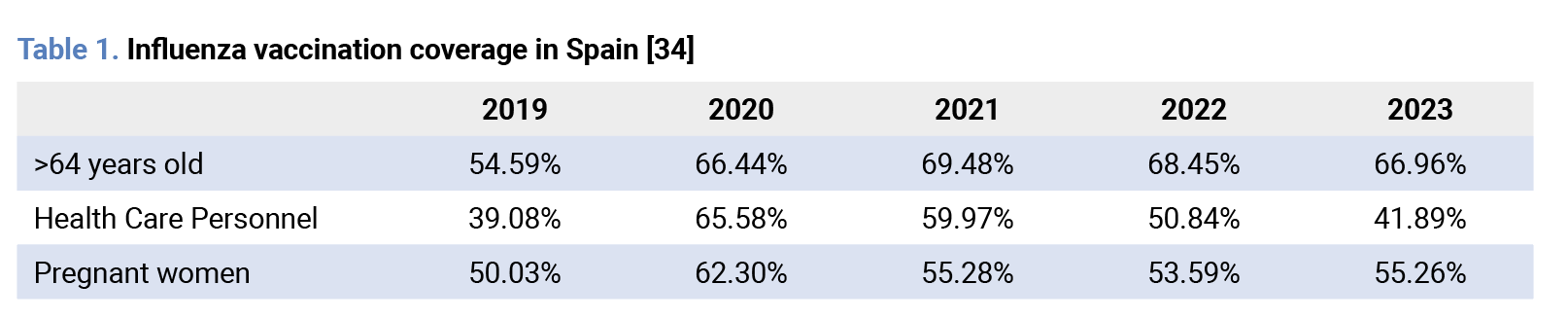 The COVID-19 vaccination data by age groups are very complete, as vaccination began in 2020 and have been updated to November 2024 with the data from the 2024-25 campaign, showing values of 49.1% in people aged over 80 years, 35% in those aged 70-79, and 17.8% in those aged 60-69 [35]. In the case of mpox, it is not possible to speak of coverage since only the doses administered are contemplated [36].
The data of the different AA.CC. are also no more complete than those provided by the Ministry, basically publishing those of influenza. Some AA.CC. have published data on vaccination against herpes zoster and pneumococcus in the adult population. In the case of pneumococcus, coverage ranges from 43% in the 65-year-old cohort in Castilla y León to over 70% in some cohorts between 70 and 80 years old in Andalusia [37,38]. The data on herpes zoster with a complete vaccination regimen in individuals aged 65 years range from 25% recorded in Andalusia to 47.2% in the Community of Madrid [39].
Regarding vaccination coverage in risk groups, neither the Ministry nor the AA.CC. provide official data, except in exceptional cases in Andalusia and the Region of Murcia, although work has been carried out on this issue at least since 2020, and several AA.CC. provide the Ministry with vaccination coverage data for patients with HIV and/or diabetes.
The absence of official data on vaccination coverage in the adult population has led to various research studies that shed some light on such coverage, especially in risk groups; thus, for example, regarding influenza, between 2017 and 2020 coverage levels of 40-50% have been reported among patients with cerebrovascular disease, cardiovascular disease, diabetes and cancer [40,41], and with similar figures between 2014 and 2017 [41]. The other vaccine for which data are available, thanks to published studies, is the pneumococcal vaccine, although in this case the data are usually regional in scope. Thus, a study conducted in Catalonia in 2015 estimated coverage of 35.5% in the 60-69 age group, 72% between 70 and 79 and 79.5% in those aged 80 and over. In the group aged 50 years and older with at-risk pathology, coverage was 59.2% in asplenic patients, cochlear implants, cerebrospinal fluid fistulas or immunosuppression and 48.3% in patients with chronic cardiovascular, respiratory, liver disease, alcoholism, diabetes or smoking [42]. In the Community of Madrid, a study was carried out in 2010 among COPD patients, observing influenza vaccination coverage in patients aged 40-59 years of 19.5%, reaching 75.8% in those over 60 years of age [43].
Data on adult vaccination coverage for pneumococcus and shingles, as well as on coverage in risk groups, remain scarce and partial. This situation is expected to improve when the new Vaccination and Immunization Information System (SIVAIN) is implemented, which will centralize the registration of vaccines and immunizations administered in Spain [44].
Conclusion
Data on vaccination coverage among adults in Spain are scarce and mainly focused on influenza and COVID-19. Flu vaccine coverage increased during the pandemic, although it did not reach the target level of 75%. In the past two years, a decrease of almost three percent in coverage has been observed. The remaining available data on vaccination against pneumococcus, shingles and in risk groups are generally partial and concerning, since the general trend points to coverage of around 50%. The data are better among older age, even those in risk.
What are the main reasons and motives for the “vaccine gap” in adults? Are they the same for all vaccines?
The main reasons why adult vaccination coverage remains below expectation and why it is so difficult to achieve the objectives are multifactorial [45]. These factors can be divided into those related to healthcare professionals, the health administration, and the patients themselves. Some of them are summarized in Table 2.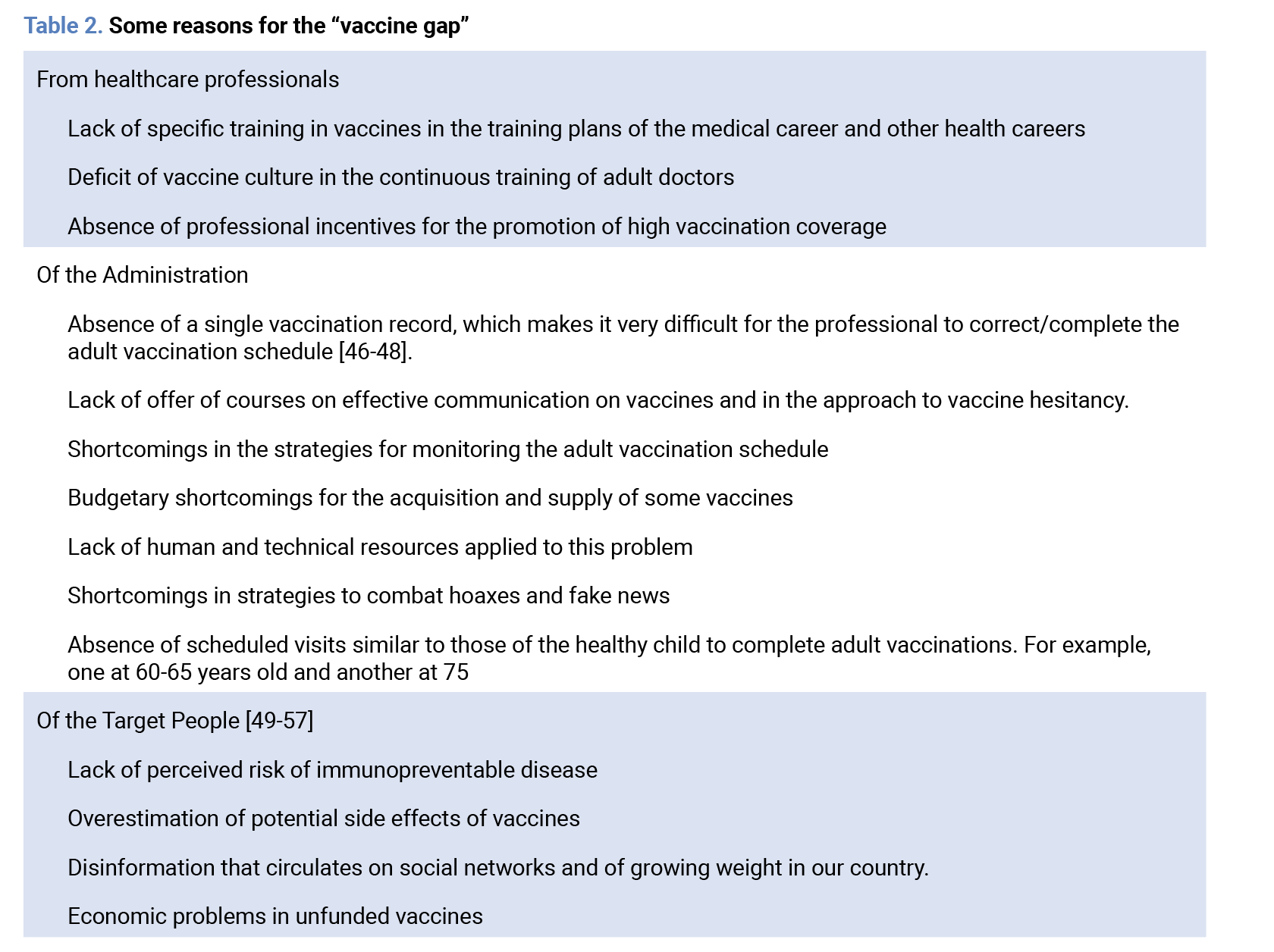 In addition to the main general problems, each vaccine may present certain differential points, generally linked to the perception of low disease severity RISK (as with flu in the traditional way, or COVID-19 at present) or to vaccine fatigue (COVID-19 being one of the vaccines with the highest vaccine hesitancy); however, there is greater acceptance of other vaccines such as pneumococcus (first of all because it is associated with pneumonia and is perceived as a more serious disease, and secondly because it does not involve as much vaccine fatigue because it does not require annual revaccinations).
In addition, adults often do not perceive the need for vaccination, do not consider themselves a risk group, or are unaware that safe and effective vaccines exist for certain immunopreventable diseases. Many physicians who treat adults do not proactively provide this information or correct misconceptions. All of this leads to an individual decision towards vaccination not being easy and greater reluctance to be manifested, especially with the growing exposure, through social networks, to false myths, hoaxes, and misinformation.
Conclusion
The reasons for the “vaccine gap in adults” are multifactorial and can be divided between those that depend on professionals, the administration, and the target population. They highlight the inadequate training in vaccines of professionals, the absence of integrated care circuits between primary and hospital care, the bureaucratization of the vaccination act by the administration, and the absence of risk perception in the target population. Economic aspects are a cross-cutting problem at all three levels.What are the real or potential risks of not vaccinating adults?
Non-vaccination among adults entails real and potential risks, both individually and collectively, as well as generating considerable economic and social consequences [58]. At the individual level, the main risk that adults have if they are not vaccinated is the acquisition of immunopreventable diseases. In addition, some infections that may seem harmless in childhood, such as chickenpox, tend to be more serious in adulthood. With age and immunosenescence, the risk of varicella-zoster virus reactivation increases and its complications can be debilitating, severely affecting quality of life. In older adults, especially if they have comorbidities, influenza virus infection [59], Streptococcus pneumoniae (pneumococcus), SARS-CoV-2, or RSV can lead to serious complications that can lead to hospitalization and even death [58]. All of these infections can be prevented with specific vaccines. Vaccination of adults not only protects the individual but is also a critical component of achieving herd immunity. When a significant proportion of the population is vaccinated, the circulation of microorganisms decreases, thus protecting vulnerable populations who cannot be vaccinated for medical reasons, such as immunocompromised people, those allergic to vaccine components, or infants who have not yet completed their vaccination series [58]. Under-vaccination in adults can favour the reappearance of diseases that were controlled or almost eradicated. For example, measles outbreaks have been documented in developed countries in recent years where vaccination coverage has declined [60]. Non-vaccination has significant economic consequences. Vaccine-preventable diseases generate costs associated with medical treatment, hospitalizations, loss of work productivity, and absenteeism [61]. In addition, during outbreak situations, health system resources must be diverted to contain the spread of the disease, thereby affecting the care of other health problems. According to a 2016 study, each dollar invested in vaccination can save between $3 and $10 in healthcare expenses [62]. The reasons for low vaccination coverage in adults have already been discussed in this paper and in the literature [63,64]. The COVID-19 pandemic demonstrated the risks of not getting vaccinated. Unvaccinated individuals had much higher rates of hospitalization and death from COVID-19 compared to vaccinated people [65]. Vaccination not only helped reduce the severity of cases but also contributed to decreasing pressure on health systems and enabling the progressive return to economic and social activities. In the context of international travel, the lack of vaccination can expose adults to diseases endemic in other countries, such as yellow fever, measles, or hepatitis A. Moreover, unvaccinated travelers may facilitate the introduction of these diseases into their home countries as imported infections [66].Conclusion
The absence of vaccination in adults implies real and serious risks, both individually and collectively. The re-emergence of preventable diseases, increased vulnerability to serious complications, pressure on health systems, and economic losses are just some potential consequences. Vaccination should not only be considered an act of personal protection but also as an act of social responsibility.What could 100% vaccination compliance in the Spanish adult population mean in terms of a reduction in morbidity, mortality, and social costs in our environment?
One hundred percent vaccination compliance in the Spanish adult population could have a significant impact on reducing morbidity, mortality, and social expenditure. In terms of reducing morbidity, vaccination prevents and/or reduces serious complications in diseases such as influenza, pneumonia, shingles, or human papillomavirus (HPV), and other infections that can cause serious complications [16]. This is because vaccines stimulate the immune system to recognize and fight off specific pathogens before they can cause disease. By eliminating or reducing the incidence of these diseases, morbidity in the adult population is reduced [67]. In addition, some infectious diseases can trigger chronic complications. For example, hepatitis B can lead to cirrhosis and liver cancer. Vaccination prevents these diseases and therefore their long-term complications. Moreover, vaccines have proven effective in preventing deaths from infectious diseases. For example, the flu vaccine can significantly reduce mortality in older adults and people with chronic diseases [68]. Universal vaccination may prevent thousands of deaths each year. As an example, in the United States, a study estimated that COVID-19 vaccines prevented about 140,000 deaths from the start of vaccination to May 2021 [4,69]. Without the vaccines, approximately 709,000 deaths would have been recorded instead of 570,000 recorded. In Europe, according to the World Health Organization (WHO), vaccines have reduced deaths caused by the pandemic by at least 57% and have saved more than 1.4 million lives [70,71]. Most of these people were 60 years of age or older. WHO also reported a 62% reduction in mortality among people aged 80 years and older, 57% among people aged 70 to 79 years, and a 54% reduction in mortality among people aged 60 to 69 years. Even in the 25-49 age group, vaccination resulted in a 48% reduction in mortality [70]. These data underscore the crucial role of vaccines in the fight against COVID-19 and their ability to reduce mortality. In Spain, adult mortality from respiratory diseases is significant. For example, in 2022, 1,018 deaths from influenza were recorded [72], although this number can vary significantly from year to year, influenced by factors such as strain virulence and vaccination rates. In 2023, there were 10,280 deaths from pneumonia [73], a figure that has shown an increase in recent years, partly due to factors such as pollution and the aging of the population. More recently, RSV infection in adults has also gained importance, since, although RSV was traditionally better known to affect children, it has also been shown to be a frequent cause of disease in adults. In the 2021-2023 seasons, an estimated 10,360 hospitalizations for RSV occurred among adults aged over 65 years [74]. In-hospital mortality associated with RSV infection increases exponentially with age, posing a serious risk to older adults, particularly frail and high-risk patients [75-77]. Vaccination also protects the most vulnerable groups, such as the elderly and people with chronic diseases, who are at higher risk of dying from infections. Full vaccination compliance would ensure that these groups are protected, reducing mortality in the general population [10]. Disease prevention through vaccination has a major impact on reducing economic and social costs. It results in significant savings in healthcare costs by reducing the need for hospitalisations, medical treatments, and intensive care. Moreover, vaccination reduces absenteeism, thereby increasing the productivity of the active population. By reducing the incidence of infectious diseases, pressure on the health system decreases, allowing resources to be allocated to other critical areas. This improves the efficiency and responsiveness of the healthcare system. The cost of hospitalisation in adults in Spain varies according to the different diseases. For example, the direct cost associated with flu hospitalisations in Spain exceeds 45 million euros per year [78]. In the case of hospitalisations due to RSV infection, the average annual expenditure is 12.1 million euros [79,80]. Moreover, vaccination not only reduces economic costs but also social costs, as it contributes to a better quality of life by preventing diseases that can cause disability and deterioration of health. A healthier population is a happier and more productive population. Universal vaccination promotes health equity, ensuring that all individuals, regardless of socioeconomic status, have access to protection against infectious diseases [81,82]. This is essential for building a fairer and more equitable society, perfectly aligning with the fulfillment of the Sustainable Development Goals (SDGs) of the United Nations 2030 agenda.Conclusion
A hundred percent vaccination compliance in the Spanish adult population could have a profound impact on reducing morbidity and mortality, as well as on the economic and social costs associated with infectious diseases. Vaccination not only protects individual health, but also strengthens public health and the economy, contributing to a healthier and more equitable society.What are the possible solutions to the low adult vaccination coverage?
Vaccination coverage in adults is clearly susceptible to improvement, both outside and inside Spain, and requires the establishment of coordinated and well-planned strategies to increase the acceptability and adherence to recommendations by the population. The main factor influencing vaccine uptake in the adult population is the recommendation of the healthcare professionals [52,83-85], particularly when there is a strong relationship of trust between professionals and also within institutions [86,87]. The strategies most widely used to date, often based on those used successfully in the paediatric population, have achieved suboptimal vaccination coverage in adults, which requires in-depth reflection to establish new strategies to achieve greater acceptance by both professionals and the target population [88]. The strategies that have shown the greatest impact so far are the so-called multicomponent strategies, which use several elements in combination to achieve greater adherence to vaccines [89-91]. Following the previous classification, they could be divided as follows:Strategies aimed at professionals
The involvement of the different profiles of health professionals in the vaccination of adults, beyond the functions of each of them, is very diverse and is also influenced by the type of user. It is important to remember that, in many cases, the vaccines will be aimed at healthy people. Thus, in the hospital, nursing home, or occupational risk prevention setting, an unequal involvement can be found with a more therapeutic approach in terms of addressing vaccination recommendations. Identifying specific adult vaccination managers in the centres, who can be trained in a more specific way, who can serve as a liaison with vaccination leaders (public health), and who can carry out team sessions/seminars is another strategy that could reduce situations of insecurity for professionals. In the field of primary care, in most cases, nurses and midwives have taken a leading role in implementing vaccination strategies, particularly those focused on active recruitment. The potential increase in the population with doubts about vaccination, the increase in what has come to be called infoxication, and the growing number of vaccines indicated for adults make the skills required by professionals to provide clear and concise information increasingly demanding. The information should be supported by protocols with diagrams and infographics, based on evidence, to minimize the lack of confidence expressed by some vaccination candidates. Strategies in this regard should not be limited merely to providing information but should also focus on improving training, including communication skills training [83,91-99]. Given that the recommendation by the professional is identified as one of the main reasons for people to get vaccinated, strategies aimed at facilitating a proactive attitude among professionals can potentially achieve a greater impact in the short term. Reinforcing teamwork, as well as the common message between the different professionals in the field, will be a fundamental requirement to avoid generating doubts in patients. In this sense, there are several simple proposals for the protocolization of vaccine recommendations, such as the AIMS approach proposed by Parrish [93,94,96,100], which begins with a presumptive first phase (Anunciar/Anounce) that has shown a significant impact on improving the confidence of the professional and increasing coverage [101] and, in those cases with doubts, continuing with a conversational phase based, for example, on the motivational interview or following the stages of Inquire, Mirror, and Secure. This type of approach has been shown to be effective in increasing trust in the professional-patient relationship. The lack of time and the care of health systems could be corrected with simple reminder strategies, such as placing posters in the consultation rooms, visible to users and patients, encouraging them to ask the healthcare professional (for example, “If you are over 65 years old, I have good news for your health. Ask”Strategies aimed at the population
The main strategies aimed at the population will be those that allow the recruitment of people susceptible to vaccination who may be opportunistic (in any contact with professionals, such as in consultation on demand, follow-up, tests (Sintrom, hearing loss…), cures, home care…) [102,103] or through active recruitment (reminder letters, SMSs, telephone calls, through population health assets (especially useful in vulnerable populations)…) [85,86,95,104-106]. In cases where initial awareness is desired, with the fundamental objective of promoting the self-identification of people as potential recipients of the vaccine, especially in advance of one-way recruitment methods with limited information such as SMS or letters, the use of mass media (radio, local televisions, bands in rural areas...) and social media messages can be effective. In such cases, the information must be subjected to an assessment and evaluation of its relevance and adequacy to the population to which it is addressed. These activities should include, at the end, clear and simple information indicating the next steps to access vaccination or obtain further details. Other strategies for the recruitment and information of the healthy population to refer them to health centres for vaccination can focus on community-based activities, through collaboration with other health agents such as pharmacies, municipal health departments, patient associations, the elderly, etc.Strategies of health institutions
Among the strategies that institutions must promote or maintain are, among others, those related to information systems that allow the generation of fluid and timely information to feed information to professionals on coverage, impact, lists for active recruitment, etc. [105] and that help make decisions that are proportionate, feasible, relevant, and in a timely manner. They must also establish all the organizational strategies related to the action protocols, as well as the vaccination recommendations subject to funding, carrying out the necessary information and training activities aimed at both professionals and the population, ensuring the acquisition and logistics of vaccines, providing specific information to those responsible for vaccination in the centres. [h4] [/h4]Conclusion
Improving vaccination coverage in the adult population requires a comprehensive approach based on multicomponent strategies that consider the characteristics of the population groups to which they are directed. They must be supported by the collaboration of different health agents and can be classified as those aimed at professionals, the population, and health institutions, which facilitate accessibility to both information and vaccines.How can healthcare workers be convinced of the need for vaccination against infections that can be transmitted to patients?
The need to prevent the spread of certain diseases to patients with diseases or risk conditions and to co-workers, as well as to protect an essential service for the community (given the high absenteeism that can occur during epidemics), makes vaccination programs aimed at health care workers an essential part of occupational health strategies in health centres. In Spain, vaccination coverage in healthcare workers is not always adequate. This is mainly due to a low perception of disease risk and doubts regarding the effectiveness and safety of certain vaccines (e.g., influenza vaccine) for healthcare personnel. Convincing healthcare workers of the need for vaccination against infections transmissible to patients requires a strategy based on scientific evidence, empathy, and education, using a multifaceted approach that addresses both their concerns and the importance of their role in protecting public health [107-109]. Some key strategies include: 1. Evidence-based information on the benefits of vaccination▪ Studies that demonstrate the effectiveness and safety of vaccines.
▪ Explain how vaccination protects both professionals and patients, especially those who are immunocompromised.
▪ Data on the reduction of nosocomial outbreaks of immunopreventable diseases in hospitals with high vaccination coverage. Positive impact of vaccination on disease prevention and transmission reduction.
2. Ethics and professional responsibility
▪ Lead by example; it is difficult to propose a preventive treatment to the population that, at the same time, health professionals reject.
▪ Patient protection. Vaccination can prevent health workers from being a source of contagion for the patients they serve, for other workers, and for the community.
◦ To reinforce the ethical responsibility of the health care provider in the prevention of nosocomial infections and the protection of vulnerable patients.
◦ Remember that vaccination is an essential measure to guarantee the safety of your patients.
▪ Personal protection. Vaccination protects health workers from the risk of contracting certain communicable diseases.
◦ Inform about risks of exposure to infectious diseases in the work environment.
◦ Highlight how vaccination protects health workers from getting sick and transmitting infections to their families and communities.
3. Combating myths and fears—addressing specific concerns
▪ Health education. Effective communication.
▪ Address doubts with clear, evidence-based information.
◦ Safety: detailed information on vaccine development and approval processes, explaining safety surveillance systems and monitoring of adverse events. Report on the (low) incidence of serious side effects.
◦ Efficacy: data on the efficacy and effectiveness of vaccines in preventing diseases and their complications.
◦ Vaccine components: Provide detailed information on vaccine components and their functions. Debunk myths about harmful components.
▪ Offer spaces for dialogue with experts in vaccination and infectious diseases for health workers to express their concerns and questions.
▪ Use clear and accessible language.
▪ Continuous training
◦ Offer training programs on immunization and infectious diseases.
◦ Regularly update staff on the latest vaccination recommendations and progress.
4. Testimonials and real experiences
▪ Share real cases of outbreaks in hospitals and how they affected patients and staff.
▪ Use testimonials from vaccinated peers that explain their positive experience.
5. Implementation strategies
▪ Facilitating access to vaccination: Implementing vaccination campaigns in the workplace. Offer free and accessible vaccination, with flexible schedules in the workplace.
▪ Awareness campaigns on the importance of vaccination.
▪ Have the perspective of the health workers to whom the strategy is addressed.
▪ Personalised information to workers on the convenience of getting vaccinated using new communication technologies (social networks, mobile phone messages, etc.).
6. Recognition and motivation
▪ Leadership and example
◦ Encourage leaders and healthcare personnel to get vaccinated and promote vaccination among their colleagues.
◦ Recognize the effort of healthcare personnel who are vaccinated. Create symbolic incentives or recognition for those who will be vaccinated.
▪ Promote an environment of vaccination culture within the health team.
▪ Offer support and resources to address any mild side effects.
7. Institutional and regulatory policies
▪ Develop institutional policies that encourage the vaccination of healthcare personnel as a standard of hospital safety.
▪ Promote vaccination as a standard of safety and quality in health care. Vaccination is one more aspect of occupational safety and health.
▪ Periodic review of the vaccination status of health personnel by the Occupational Risk Prevention Services of health centres.
▪ Vaccination record of health personnel to monitor compliance with recommendations.
With a combination of education, easy access, positive reinforcement, and professional accountability, the vaccination rate among healthcare workers could be increased and the risk of transmission of infections to patients reduced. These strategies would increase the confidence of health workers in vaccination and promote a culture of safety and protection for both them and their patients.
Conclusion
Healthcare workers are more exposed and at greater risk of contracting vaccine-preventable diseases. In addition, they can act as a source of infection to patients with diseases or risk conditions and to co-workers. It is important to prevent these risks and also to avoid significant absenteeism from work in the event of outbreaks of these diseases. Convincing healthcare workers of the importance of vaccination as a preventive measure requires a strategy based on scientific evidence, empathy, education, and professional responsibility. An approach that addresses both their concerns and the importance of their role in protecting public health will increase their confidence in vaccination and foster a culture of safety and security for both them and their patients.Are the low vaccination rates by health care professionals the same at all levels and in all AA.CC.?
The low rates of influenza vaccination among health professionals are not distributed homogeneously either among the different professional strata or among the AA.CC. [110]. The evidence available in Spain shows relevant differences both by professional category and by geographical location [111]. In this sense, according to data from the Ministry of Health’s vaccination coverage exploitation platform (SIVAMIN) influenza vaccination coverage for healthcare professionals in the 2023/2024 campaign (latest available data) was 41.89% overall, while in campaigns such as 2020/2021 or 2021/2022 it had been 65.58% and 59.97%, respectively. The influence of the COVID-19 pandemic and the high perception of vulnerability, high risk of exposure, and also the fear of possible flu-COVID-19 co-infection and its complications were some of the variables that explained this positive attitude of the healthy population towards influenza vaccination during the pandemic [112]. AA.CC. such as Castilla-La Mancha or the Basque Country, stood out in 2020 for achieving an anti-flu coverage in this group of 94.12% and 76.99%, respectively, with the Valencian Community and Asturias also reaching 94.47% and 79.85%, respectively, in the following campaign. In general, in the last 2023/2024 campaign, no autonomous community exceeded 60%. Table 3 shows coverage from 2017 to 2023 and its geographical distribution.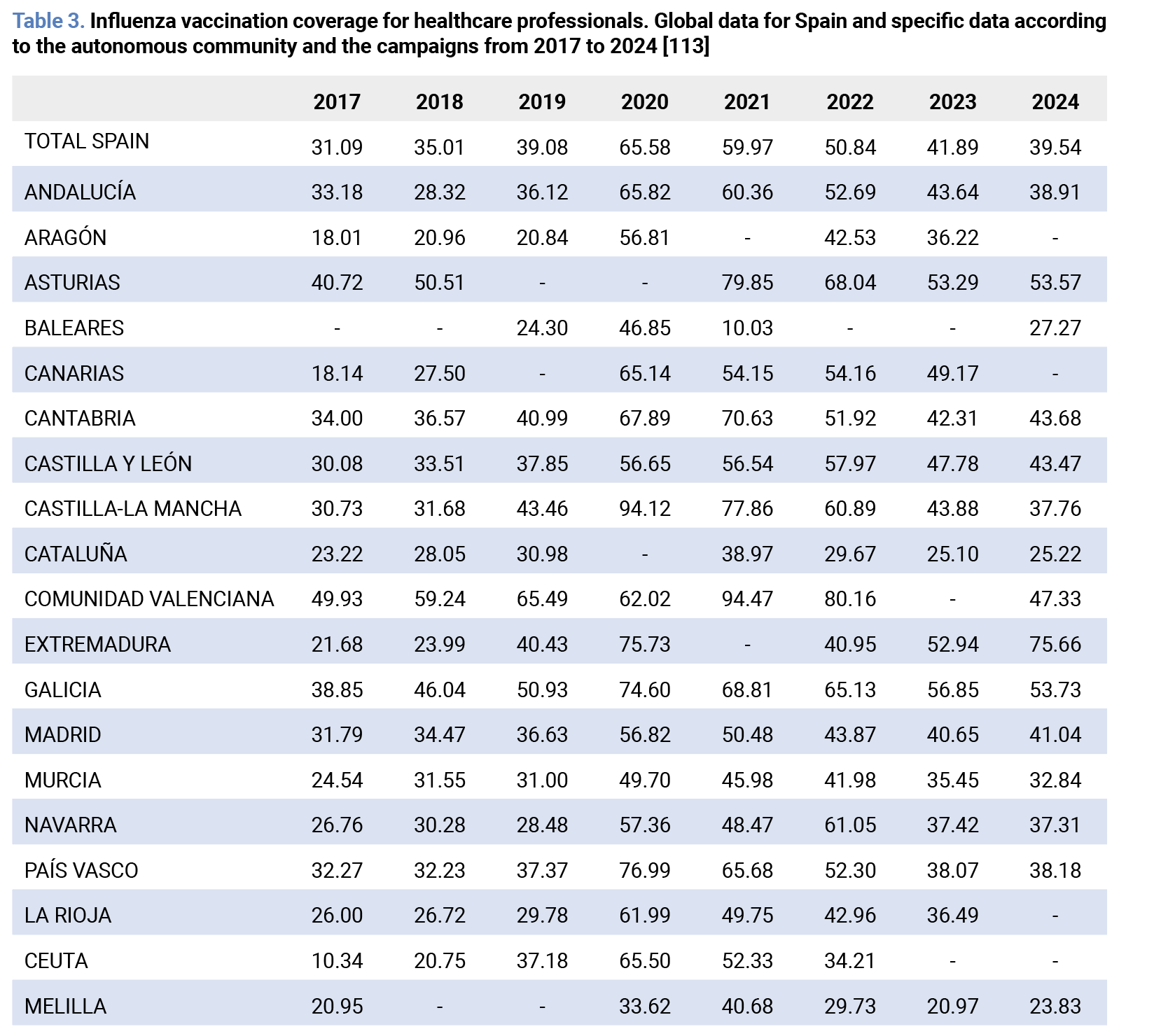 Apart from the COVID-19 pandemic and its impact on influenza vaccination coverage in healthcare workers, it should be noted that the results also reflect the different promotion strategies and the resources allocated to the vaccination of this group. Some AA.CC. have implemented more intensive campaigns, with vaccination mechanisms in situ, personalized reminders, or institutional incentives, which has resulted in superior coverage. Others, on the other hand, have not developed differentiated policies for this group, obtaining considerably lower rates.
As for the differences between professional groups, there are no official data, although there are publications by different authors at the national level that determine that coverage varies strikingly according to the professional status and encourage research and adaptation of awareness strategies according to the group. That is, doctors tend to have the highest vaccination rates, while nurses, technicians, and auxiliary staff show significantly lower rates. This disparity may be due to multiple individual, organizational, and sociocultural factors that affect risk perception, vaccine knowledge, and attitude toward public health policies. Specifically:
1. Perception of personal and professional risk:
Clinicians have a higher perception of biohazard and a greater understanding of the clinical consequences of influenza on both vulnerable patients and themselves. On the other hand, some groups, such as auxiliary or administrative staff, may not identify themselves as a population at risk, and do not perceive vaccination as a necessary or priority measure in their workplace [114].
2. Level of training and access to scientific evidence:
Training in immunology, epidemiology, and public health is more in-depth in the medical community, which facilitates the understanding of the efficacy and safety of the vaccine. On the other hand, other professionals may have doubts about the adverse effects, the annual effectiveness of the vaccine or the need for revaccination, a fact that negatively influences its adherence.
3. Personal attitudes and beliefs:
Individual beliefs also play a crucial role. Some studies indicate that vaccine hesitancy is not always due to misinformation but to cultural factors, previous negative experiences, or institutional mistrust. These attitudes may be more widespread among non-medical personnel, especially when they are not accompanied by specific educational interventions.
4. Vaccine availability and accessibility:
The internal logistics of the health centre can favour or hinder vaccination. In many hospitals, medical services have greater time flexibility or immediate access to vaccination points, while nurses or auxiliaries may encounter more logistical obstacles (shifts, overload, lack of time).
5. Professional exemplarity and institutional culture:
Professional self-demand and a sense of responsibility towards patients may be more marked in certain groups. The figure of the doctor as an institutional reference contributes to greater adherence, while at other levels there may not be that cultural or social pressure to act as a model of prevention. The lack of targeted campaigns also exacerbates this difference [115].
6. Organizational factors and institutional leadership:
The active promotion of vaccination, including messages adapted to each professional profile, vaccination in situ in shifts, or symbolic incentives, can increase global coverage. When these measures are applied homogeneously, the differences between classes tend to be reduced [109].
Conclusion
The low rates of influenza vaccination among health care professionals are not homogeneous and vary significantly according to the professional sector and the Autonomous Community. Differences in vaccination rates are due to a complex interplay of factors, including risk perception, level of knowledge about vaccine efficacy and safety, personal beliefs, and logistical factors. Influenza vaccination not only protects health professionals but also contributes to the sustainability of the health system by maintaining healthcare capacity during influenza epidemics.What is the situation in the face of some of the above questions in other large nations?
Unlike childhood immunizations that, in general, reach high coverage rates, those of adults are at much lower figures despite the fact that vaccination programs for the elderly should be a “component of adult care” [7]. The factors contributing to this coverage are similar in all countries in our socioeconomic environment: the lack of internalization of the importance of vaccination by the population and the health care system, confusion about the different recommendations, and the reluctance and doubts of the population for personal, political, and cultural reasons. This complex mix, together with the safety of the vaccines, constitutes what has been called the “heel of vaccination” [116]. In European countries, it is usually the technical committees (NITAG) that recommend to the ministries of health the inclusion of vaccines in the vaccination schedule, with budgets for prevention in relation to health expenditures ranging from 10% in Austria to 2.7% in Norway. The number of vaccines recommended, fully or partially funded, for the general population or for risk groups aged 18 and over ranges from three in Denmark to 16 in Greece [117]. Despite the significant heterogeneity of the data, it is estimated that 77% of European countries spend less than 0.5% of their budget on immunizations on health [118], despite the fact that there are studies that suggest that for every euro spent on adult vaccines, a return of 19 euros is generated in the social and health economy [119]. An important aspect is that in the European Union, the population’s confidence in vaccines in 2022 (81.5%) has decreased compared to 2020 (91.8%) and is at levels similar to those of 2018 (89.6%), although more than 90% of health workers agree that vaccines are important. The countries in which the population’s confidence is highest are Portugal, Finland, and Spain. Slovakia, Croatia, and Latvia are the countries where it is lower [120]. At the European and global levels, data on adult vaccination coverage are very scarce, except for influenza and COVID-19, as there are difficulties with the calculation of the denominator. That is why influenza coverage is addressed, as the candidate groups for vaccination are more comparable. Regarding the first, influenza vaccination coverage in 29 EU/EEU countries for the 2021-2022 and 2023-2024 seasons [121]. Provide substantial differences between countries not only in coverage but also in the target population, which varies from those aged 50 or over to those aged 65 and over. Overall, in the three seasons there have been no major differences in coverage—less than 3% change—and the average coverage has been 45.7%, which represents a decrease of 13.3% compared to that of the 2020/2021 pandemic season. Denmark, with a coverage of 78% in this last season, stands out above the rest of the countries. Although the risk groups that are candidates for influenza vaccination are similar between countries, not all of them have coverage data. In a study in 27 European countries with diabetics aged 50 years and older, influenza vaccination coverage in the 2019/2020 and 2021/2022 seasons was 54% and 46%, respectively. Only the Netherlands and Portugal exceeded the vaccination rates of 75% recommended by the European Union [122]. All countries, except one, have recommendations for influenza vaccination in pregnancy, reaching coverage for 2023/2024 ranging from 1% to 58%. It is noteworthy that Spain for the three seasons reaches the highest coverage of the countries analysed, between 55% and 58%. In total, 23 countries have recommendations for health care workers with an average coverage for 2023/2024 of 22.1%, which is lower than the 25% and 28% of the 2022/2023 and 2021/2022 seasons, respectively, and the 52% of the 2020/2021 pandemic season. Spain is in second place after Germany for the last season analysed. For the COVID-19 vaccine, adult coverage between September 2023 and July 2024 for 28 countries in the EU/US for those aged sixty years and over was 14.0% (0.02-66-1) and 21.5% (0.03-93.9) for those aged eighty years and older [123]. As for other countries, England has the best flu vaccination coverage in those aged 65 and over, with 77.8% and 79.9% in the 2022/2023 and 2023/2024 seasons, respectively. In pregnant women it has reached 32.1% and 35.0%, respectively [124]. In the United States of America, influenza vaccination coverage in 2023/2024 for those aged 65 and over reached 69.7% and 38.2% for those aged 18 to 49 with risk factors [125]. In Canada, influenza vaccination coverage among people aged 65 years and over in the 2022/2023 season reached 70.2%, and 46.8% among those aged 18 to 64 with risk conditions. In the same population segment, pneumococcal vaccination coverage in 2023 among those aged 65 years and over was 55%. Among healthcare workers, coverage for the 2022/2023 season was 56.5% [126].Conclusion
Unlike childhood immunizations, which generally achieve high coverage rates, adult immunization coverage is much lower in other nations, despite the fact that adult vaccination programs should be a “ component of adult care”. In the absence of statistics on vaccines other than influenza, this section addresses influenza vaccination coverage, especially in those over 65 years, for whom universal denominators are available. In general, vaccination rates in this vulnerable population remain below the targets set by European authorities and by the World Health Organization. What does investment in adult vaccines currently represent within the total NHS? What would be the cost of 100% adherence to vaccines in adults in our environment? Investment in prevention within the National Health System (NHS) represents a relatively small proportion compared to total health expenditure, despite its recognized effectiveness, equity, and efficiency in the long term. Prevention, understood as the set of interventions aimed at preventing the appearance of diseases or reducing their impact, ranges from health promotion to immunization, early screening of diseases, epidemiological surveillance, education and training campaigns, etc. According to the most recent data from the Ministry of Health and OCDE (2023), total health expenditure in Spain represents approximately 10.2% of the national GDP considering the public and private parts [127-129]. Of all this, spending on prevention and public health represents around 1.5% to 2% of total health spending, i.e., it is around 1,800 and 2,500 million euros per year. However, at the European level, the average investment in prevention is around 2.8% of total health expenditure, according to data from the report “Health at a Glance: Europe” by the OCDE and the European Commission, which places Spain below the average of the surrounding countries. Within the field of prevention, expenditure is distributed among several items such as:- Vaccination programmes: as a pillar of preventive expenditure (around 400 million euros per year, considering children, adults, and logistics).- Cancer screenings (breast, colon, cervix): represent a significant part of expenditure on early diagnosis, with a budget of 200-250 million euros.- Public health (educational campaigns, promotion of healthy lifestyles, smoking cessation programmes, alcoholism and mental health): between 300 and 500 million euros per year.- Epidemiological surveillance and outbreak control: 100-150 million euros.- Prevention in occupational health and environmental surveillance: almost 100 million euros. These figures, although indicative, show a constant pattern of historical underinvestment in prevention regarding health expenditure as a whole, which tends to focus on specialised (hospital) care, which accounts for more than 60% of NHS expenditure. Numerous studies have shown that prevention generates significant social economic returns. For example, the WHO calculates that for every euro invested in prevention, between 2 and 7 euros can be saved in future health costs [71,130]. In the case of vaccines, the social return on investment (SROI) can be even higher. Therefore, prevention also contributes to reducing the pressure on hospital care, reducing waiting lists, improving work productivity, and increasing life expectancy in good health [131]. Likewise, compared to countries such as France, Germany, or the Netherlands, Spain invests less in prevention as a percentage of total health expenditure, given that Germany dedicates 3.2% of its health expenditure to prevention, France 2.6%, and Finland reaches 4%. This gap is related not only to budget differences but also to the organizational structure of health systems, prioritization by decision-makers, and the long-term strategic vision. Finally, the COVID-19 pandemic highlighted the urgent need to strengthen prevention and epidemiological surveillance systems, and one of the most important lessons was the need to increase the resilience of health systems, which necessarily involves a greater weight of prevention. National strategies such as the Health Plan 2022-2025 and the Strategic Framework for Primary Care are already advocating for strengthening investment in prevention and community health. Likewise, the WHO and the EU recommend dedicating at least 5% of health expenditure to prevention actions to achieve long-term sustainability of the system. It could also be of interest to establish a “finalist” public health budget separate from the rest of the health budget to guarantee a minimum annual investment in prevention, especially in immunization campaigns, mental health, and the fight against chronic non-communicable diseases (NCDs). In summary, investment in prevention within the Spanish NHS is clearly improvable. Although the short-term benefits are not always visible, the medium- and long-term benefits in terms of health, equity, and system sustainability more than justify a progressive and sustained increase in preventive spending. On the other hand, trying to estimate the cost of 100% adherence to vaccination in adults in our current health ecosystem would have to consider a multifactorial perspective: number of target people, type of vaccines recommended, real unit prices, aspects related to distribution, administration and monitoring logistics, etc. This hypothetical exercise of cost estimation should also focus on the vaccines currently recommended by the Ministry of Health’s lifetime vaccination schedule and assume as a plausible hypothesis complete coverage in adults over 65 years of age, as well as in those between 18 and 64 years of age with chronic pathologies or associated risk conditions. Assuming all this, the following can be argued: 1. Target population according to the National Institute of Statistics (INE), approximately 9.8 million people over 65 years of age reside in Spain in 2024. To this, we must add a group between 50 and 64 years of age with a high prevalence of chronic diseases, which represents around 50% of this type of age cohort (approximately 5 million additional people) [132]. In total, we would be considering, according to this type of exercise, about 15 million adults with a clear indication of vaccination [128]. These would be the target population figures, or target, then, for our base scenario in a hypothetical sensitivity analysis. 2. Vaccines to be considered and estimated unit costs. Based on the estimated acquisition prices in public contracts and various associated sources (including AIReF reports, the Ministry of Health’s vaccination reports, etc.) can be taken into account [133,134]. The following approximate unit costs per vaccine can be estimated:• Seasonal influenza: 10 euros per dose
• 20-valent pneumococcus: 55 euros per dose
• Recombinant herpes zoster (2 doses): 150 euros (75€/dose)
• Td (tetanus-diphtheria): 5 euros per dose
• COVID-19 (mRNA): €20 per dose
• Respiratory Syncytial Virus (RSV): €100 (estimated cost per dose).
Based on this information, and considering a basic annual adult vaccination model, the following vaccine combinations per person could be applied in this base scenario:
• Influenza (annual)
• Pneumococcus (once from the age of 65)
• Herpes zoster (two doses, from 65 years of age)
• Td (one dose every 10 years)
• COVID-19 (one annual dose)
• RSV (only in high-risk seniors, 10% of people over 65 years of age)
3. Calculation of estimated direct costs. As the question is presented, assuming 100% adherence, with the different vaccines applied according to age and risk criteria, the total estimated cost would be:
• Influenza: €15 million × €10 = €150 million/year
• COVID-19: €15 million × €20 = €300 million/year
• Td (tetanus-diphtheria): 15 million × 0.1 (one dose every 10 years) × €5 = €7.5 million/year
• Pneumococcus: €9.8 million × €55 = €539 million (one-time, annualized cost ≈ €54 million/year)
• Shingles: 9.8 million × €150 = €1,470 million (one-time cost, considered annually ≈ €147 million/year)
• RSV: €0.98 million × €100 = €98 million/year.
All this would thus mean around an estimated total cost annualized if we add all these figures in our base scenario in a hypothetical sensitivity analysis of about €756.5 million per year.
4. Indirect and organisational costs. To all these previous calculations, we should add all kinds of operational costs related to health personnel, information systems and ICT, educational, training, and prevention campaigns, logistics, storage, distribution, etc. Conservatively, it could be gauged that this type of cost based on related literature and accounting reports published in different regional health services can amount to around an additional 10-20% of the pharmaceutical cost.
In other words, the total estimated cost including logistics at the upper range would be (20%) = €756.5 million × 1.2 = €907.8 million per year. While the estimated total cost with logistics in the lower band (10%) = €756.5 million × 1.1 = €832.15 million per year. Therefore, the average total cost would be approximately €869.9 million per year.
Although this total figure may seem excessively high, it must be contrasted with all kinds of savings for possible avoided costs, such as hospitalizations, treatments, lost working days (productivity), and all kinds of social costs associated with the disease in question (difficult in any case to estimate in a simplified macro exercise as presented here without applying Markov models and associated simulations, etc.).
As an example, various studies in Europe and the United States have shown that the social return on investment (SROI) in adult vaccination can range between two and six times the total expenditure, depending on the vaccine and the risk group considered. Thus, according to the national literature in our country, it has been estimated that avoidable hospitalisations due to influenza, RSV or pneumonia exceed 500 million per year, not including the indirect social costs.
Finally, although 100% adherence would mean an investment of approximately €869.9 million per year. As we have explained above, the broad social return in potential terms, both economically and in lives and quality-adjusted life years (QALYs) gained, would more than justify it, in our opinion [67].
Conclusion
Investment in prevention in the NHS represents only between 1.5% and 2% of total health expenditure, an insufficient figure considering its proven impact on public health and long-term savings. Reinforcing this investment is key to improving the sustainability of the system, reducing inequalities, increasing healthy life expectancy and aligning with international recommendations. Betting on prevention is not an expense but a strategic and ethical investment for the future. Total adherence to vaccination in adults in Spain could imply an annual expenditure of approximately 869.9 million euros, considering only direct and indirect operational costs. However, this type of cost, beyond its budgetary impact, should be interpreted as a social investment, given that by reducing morbidity, mortality, and hospitalisations (the most expensive element of the system, and within it, transplants are often the case), the savings in health and social costs can far exceed the initial investment figures. In addition, it would have positive effects on health equity, the reduction of inequalities, and the fulfillment of the WHO’s Sustainable Development Goals-SDGs.What do patient organizations think about this issue?
With the precedent of Edward Jenner at the end of the seventeenth century with the smallpox vaccine, the massive application of vaccines, both in children and adults, has had to wait until the twentieth and early twenty-first centuries to become an incontrovertible reality in the maintenance of health. Today, 54% of the population over 15 years of age [135] has a health problem in which vaccines can play an important preventive role. Patient organisations were key, for example, during the COVID-19 pandemic, to focus on the needs of the most vulnerable and fragile people at high risk of contagion. The view of patient organisations on under-vaccination is very much in line with that of health professionals and points to the same reasons for the so-called “vaccine gap”. We follow the criteria established in 2011 by the Ministry of Health for adult vaccination [136], based on the burden of disease, the effectiveness and safety of the vaccine, the impact of the modification on the vaccination schedule, ethical aspects, and economic evaluation. The following aspects are of particular concern: 1. Lack of risk stratification due to vulnerability. The health system does not have sufficiently clear and homogeneous strategies to identify and prioritise adults at higher risk of infectious complications (multi-pathological, elderly, polymedicated, etc.). 2. Access problems. Logistical barriers persist that hinder access to vaccination in adults, especially for people with reduced mobility, in rural, institutionalized, or functionally dependent areas. Vaccination should be an integrated part of all levels of care—including hospitals, specialist consultations, and home care—and not be restricted to seasonal campaigns. 3. Inequality between AA.CC. Vaccination coverage and vaccination strategies for adults vary between territories, generating an unacceptable inequity: a person’s preventive rights should not depend on where they reside. There is a vaccination card in the ministry replicated unevenly in the AA.CC. [137]. 4. Insufficient information and training of patients and caregivers. Many adults, even those with serious chronic illnesses, do not receive clear information about the vaccines recommended for their situation. In addition, family members and caregivers, who live with vulnerable people, continue to be largely forgotten in preventive strategies. This gap has direct consequences in the prevention of infections. 5. Distrust and lack of awareness. The lack of a sustained and structured information strategy on vaccination in adults has favoured the emergence and dissemination of health hoaxes and misinformation, especially through social networks and unverified channels. These messages, which question the safety or usefulness of vaccines without a scientific basis, generate confusion and reluctance that directly affect decision-making. Combating hoaxes is not only the task of health professionals: it requires coordinated action by public administrations, the media, the associative network, and digital platforms, as well as clear and accessible campaigns that reinforce the social and ethical value of vaccination at all stages of life [138]. The consequences of all of the above are obvious and include the increase in serious preventable infections in vulnerable populations, the decompensation of chronic diseases due to concomitant infections, a serious impact on the sustainability of the health system due to hospitalizations and avoidable expenses or the reappearance of diseases already controlled, such as whooping cough in older adults. Therefore, we believe it is necessary to design and implement vaccination strategies in adults based on risk stratification, prioritizing people with complex chronic diseases, immunosuppression, dependency, or social factors of vulnerability. It must be done with criteria of territorial equity at the state level, with sufficient funding and evaluation mechanisms to guarantee compliance in all the AA.CC. [139]. Adult vaccination must be systematically integrated into the different levels of care and all health structures, such as community pharmacies. Patient organisations can also make a clear contribution to all these processes by ensuring that measures are extended to carers and relatives of vulnerable people. They can support the dissemination of truthful information, combat myths, and accompany informed decision-making processes.Conclusion
Patient associations value vaccination as a fundamental pillar of public health. However, they denounce under-vaccination in adults due to causes such as lack of vaccine culture, territorial inequity, poor training, and limited access, in addition to the absence of risk stratification, logistical problems, misinformation, and lack of effective campaigns.What is the role of the media and social networks in the situation of vaccination deficiencies in adults?
In the media, the COVID-19 pandemic marked a turning point in communication about adult vaccination. Although in the 2019 calendar, the year before the pandemic, the vaccines included were the same as today, with the exception of COVID-19, from 2020 and following in the wake of the importance of vaccination against SARS-CoV-2, the reinforcement of messages about vaccination throughout life increased. Even so, the figures indicate that vaccination in children and adolescents continues to take up more space in the media: when searching for the volume of news, there are almost 3.5 million results for children and adolescents, whereas for adult vaccination the figure drops to about 230,000. As for the topics of news on vaccination in adults, there are publications on updates in vaccination schedules and which vaccines apply to the general population, as well as specificities on recommendations for risk groups. On the other hand, it covers findings on scientific research on these vaccines or studies, also in real life, that highlight the impact of vaccination. In most cases, it is done from a positive reinforcement perspective, focusing on hospitalizations or deaths avoided thanks to immunization against certain diseases. Similarly, there are articles that, although their main topic is not vaccination, address it indirectly. It is therefore common to find informative or awareness-raising pieces about pathologies that “a priori” are usually unknown or generate confusion among the population, such as herpes zoster, whose vaccine is included in the lifetime vaccination schedule from age 65. In these cases, even when the news does not specifically deal with the vaccine, it is common for information to be provided about the pathology and its manifestations, emphasizing the symptoms that can be avoided in vaccinated people. Currently, news about COVID-19 vaccination continues to occupy a predominant place, yielding around 86,000 search results. In second place would be immunisation against influenza (20,000 results), which has also taken up more news space this season due to its high activity and virulence in certain areas; much information has also referred to the coexistence of this with other pathologies and the importance of immunisation to avoid the possible consequences of coexistence between viruses. Far fewer results are yielded by the search for pneumococcus, tetanus/diphtheria and herpes zoster, all of which are included in the vaccination schedule. In addition, in cases of emerging diseases such as monkeypox (mpox), especially when there is a greater record of cases or there is news about the vaccine, peaks in awareness and media coverage are also observed. However, although there are differences between newspapers, it can be said that there is a high frequency of topics about vaccination. Thus, in generalist newspapers, although there is a variable frequency, media such as El Español, La Vanguardia, and Infobae, which are among the ten with the largest nationwide audience, publish news about vaccination almost daily, with a representative proportion of these articles addressing adult vaccination. In the specialised media, the vast majority (Redacción Médica, Gaceta Médica, Sanidad and ConSalud) also publish daily articles on vaccination, covering a wide range of topics from vaccine policies to findings on new vaccination options. On the other hand, the presence of articles questioning vaccination is very scarce and when it does occur, it takes place in ‘niche’ media with very little audience. Across all media outlets, regardless of their target audience, a strong seasonal pattern is evident, with news peaks that begin with the arrival of autumn and the launch of campaigns mainly aimed at respiratory viruses. As winter progresses, the volume decreases, leaving room for other issues, except for cases of rebounds in some pathologies for which there are recommended vaccines. Another common point, although more marked in specialised media, is that the information that is published is sent by different entities (such as scientific societies or companies) or marked by current political events and decisions in health commissions or regional governments. One of the reasons may be that newsrooms often do not have enough staff to cover all topics with analysis and depth. Occasionally, companies also establish collaboration agreements with the media to carry out sponsored articles, often featuring expert spokespeople, to raise awareness about adult vaccination issues where information gaps persist. Following this thread and with respect to the shortcomings that may exist, the Alliance for Adult Vaccination was recently presented with the aim of offering proactive information to cover important issues that may be neglected in this area and making spokespeople for the group available to the media for any issue they need. With all of the above, although information on vaccination in adults has increased, there are still gaps to be filled that may hinder sustained awareness of this issue.Social media
It is also worth highlighting the role of social networks, with very polarized messages. The one with the most publications on vaccination is X, where anti-vaccine groups place more emphasis, especially by transmitting negative messages against vaccines. To do this, it is common for them to expose parts of speeches by political or scientific personalities out of context, trying to support the message that vaccines are not safe and have negative effects on people. On X, within this environment of polarization, it is also common for very reactive currents to emerge to specific messages or opinions. An example of this is that, when the COVID-19 vaccines appeared, there were a large number of messages questioning their use. On the other hand, with the appointment of Robert F. Kennedy as Secretary of Health and Human Services of the United States within the Donald Trump administration, given that his ‘anti-vaccine’ nature was known, the number of publications that valued the contribution of immunization and its role in public health increased. In the rest of the social networks, the tone is different, which can contribute to generating distrust in people who have some kind of predisposition to receive this type of message or do not have the knowledge to access reliable sources. The first point to take into account is that the volume of publications on adult vaccination is much lower. On Instagram, the posts tend to be more informative, with information about vaccination campaigns or messages from professionals, although with a small percentage of “deniers”, especially questioning vaccination against COVID-19. There are also not a large number of posts on TikTok, and although, as on Instagram, there are professionals raising awareness about vaccination, more with the focus on COVID-19 and flu, there is a greater presence of anti-vaccine discourses. These present different types of profiles, from younger people to other types of people who promulgate pseudoscience, trying to justify the harmful effects of vaccines with them. On LinkedIn there are more rigorous messages from public and private institutions, with authoritative voices, but even in this network aimed at professionals, there is a stronghold of messages with anti-vaccine tendencies.Conclusion
After the pandemic, information about vaccination in adults has increased in the media, with an impact on awareness. There is a marked seasonality in these news, with off-peak periods and a lack of information on topics such as coverage data, which can make it difficult for the message to penetrate society. In addition, on social networks, there is still a large presence of anti-vaccine groups that try to impose their message.What is the situation of Spanish scientific production compared to the rest of Europe in vaccines and vaccination?
A search carried out in PubMed dated April 20, 2025, in which the word “vaccine” is introduced with the limiter “MeSH Major Topic”, yields between 1944 and 2025 the number of 255,485 documents, whose evolution has shown a very significant growth throughout this period of time (Figure 1).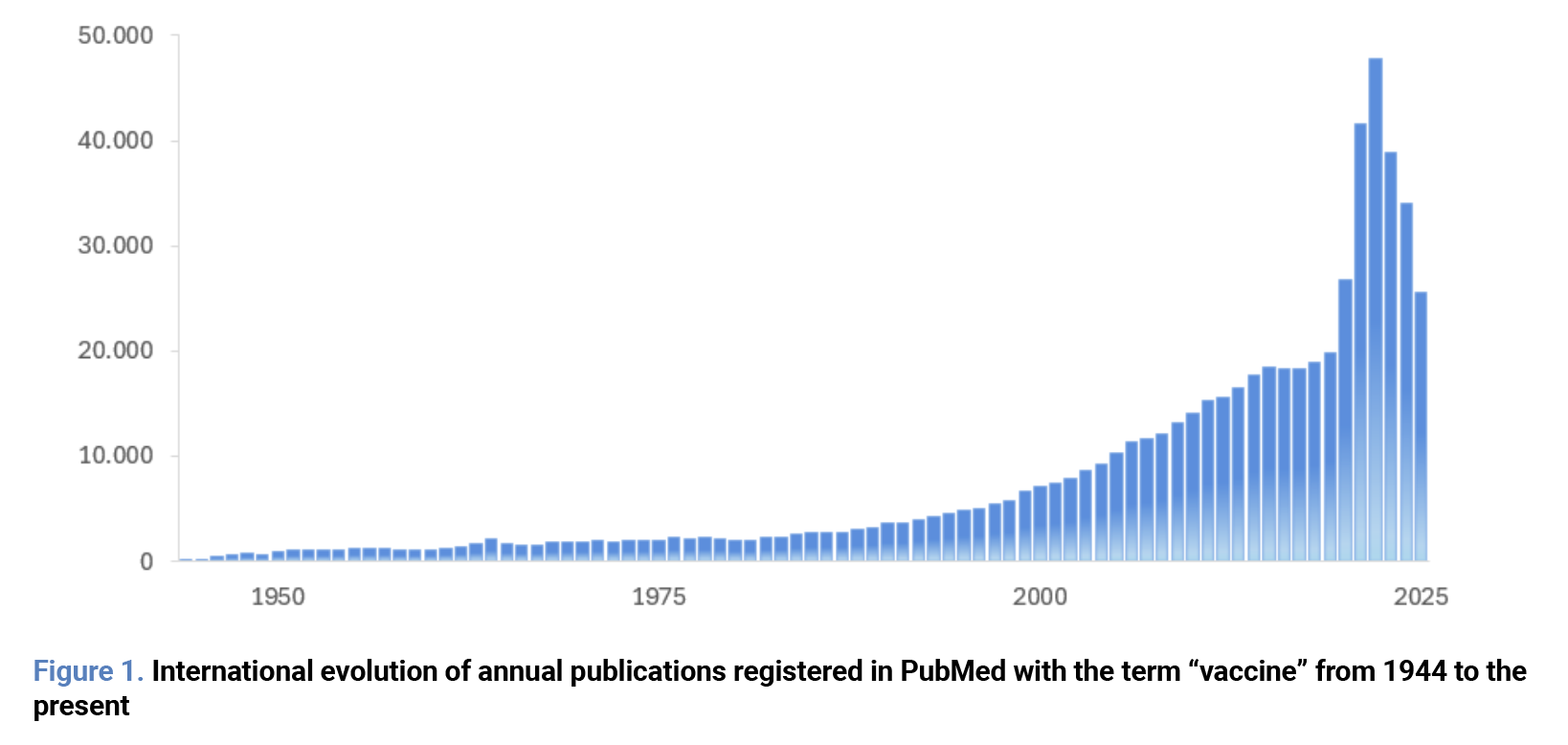 The increase in scientific production in this field that coincides with the years 2021 and 2022 is remarkable, which is undoubtedly influenced by the COVID-19 pandemic. When these figures are subdivided by the presence of the words “Spain”, “UK”, “France”, “Germany”, “Italy”, “USA” and “China”, the proportion of indexed documents from each of these nations is summarized in Table 4. Spain has produced 4,850 documents that represent a contribution of 1.89% of the total number of works. The largest contributors are the United States of America, followed by China. As for the 5 larger European nations, the proportions of articles from each of them ranged from 1.89% for Spain to 5.11% for the United Kingdom of Great Britain.
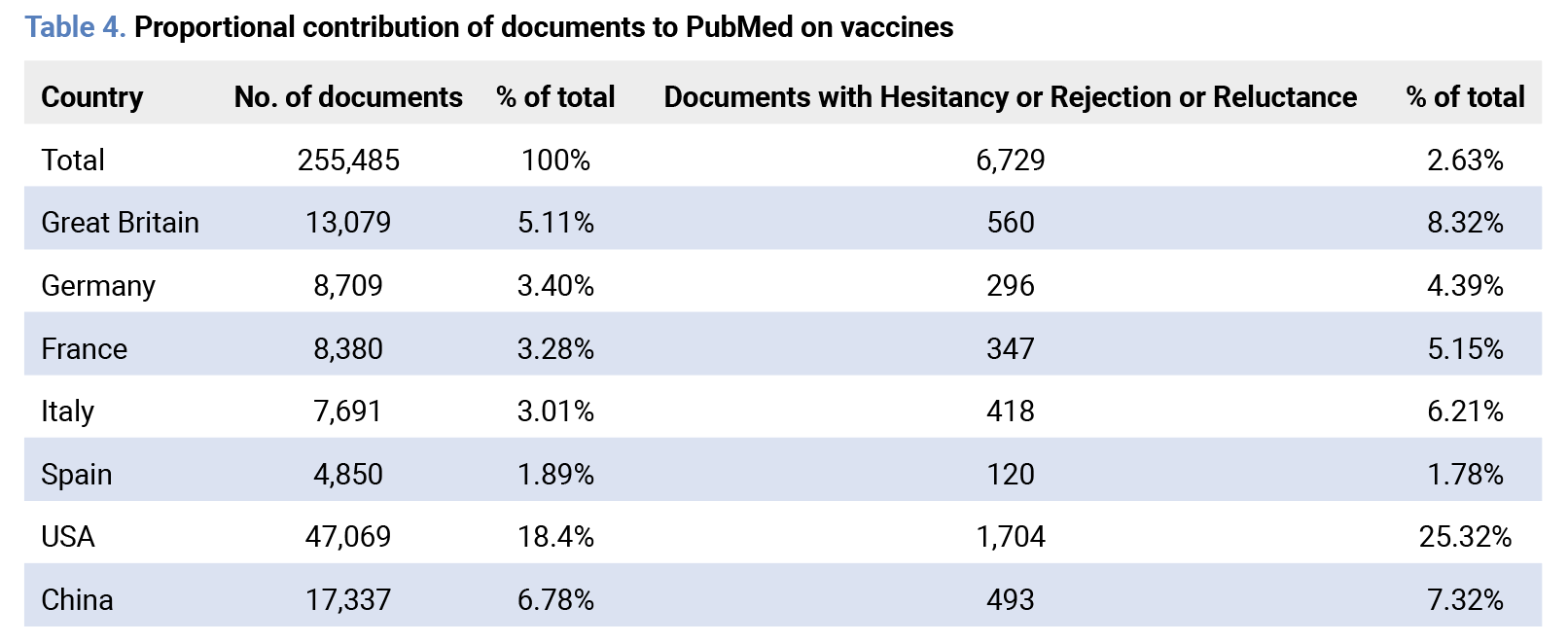 In a second search, we entered the terms “Vaccine” [MeSH Major Topic] + (Hesitancy OR Rejection OR Reluctance) (All fields), looking for articles more specifically dedicated to the refusal of vaccination, and the total documents we obtained were 6,729 (2.6% of the total documents produced on vaccines). Again, the proportion of documents with these limitations attributable to the chosen countries is summarized in Table 4 and Spain has a contribution in this group that is also close to 2% of the total.
See Figure 2 for the evolution of Spain’s production of documents on vaccines (vaccine in the MeSH Major Topic section) and those that contain a word that indicates rejection or doubt (Figure 3).
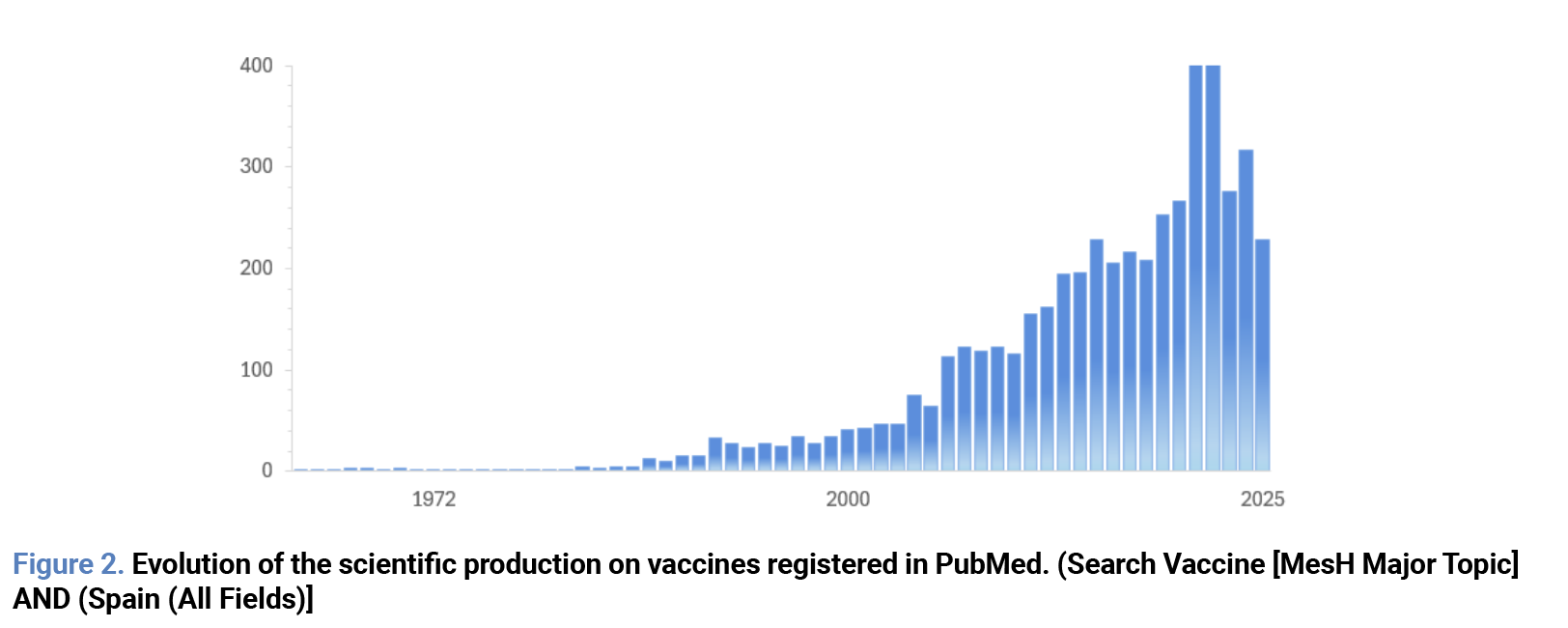
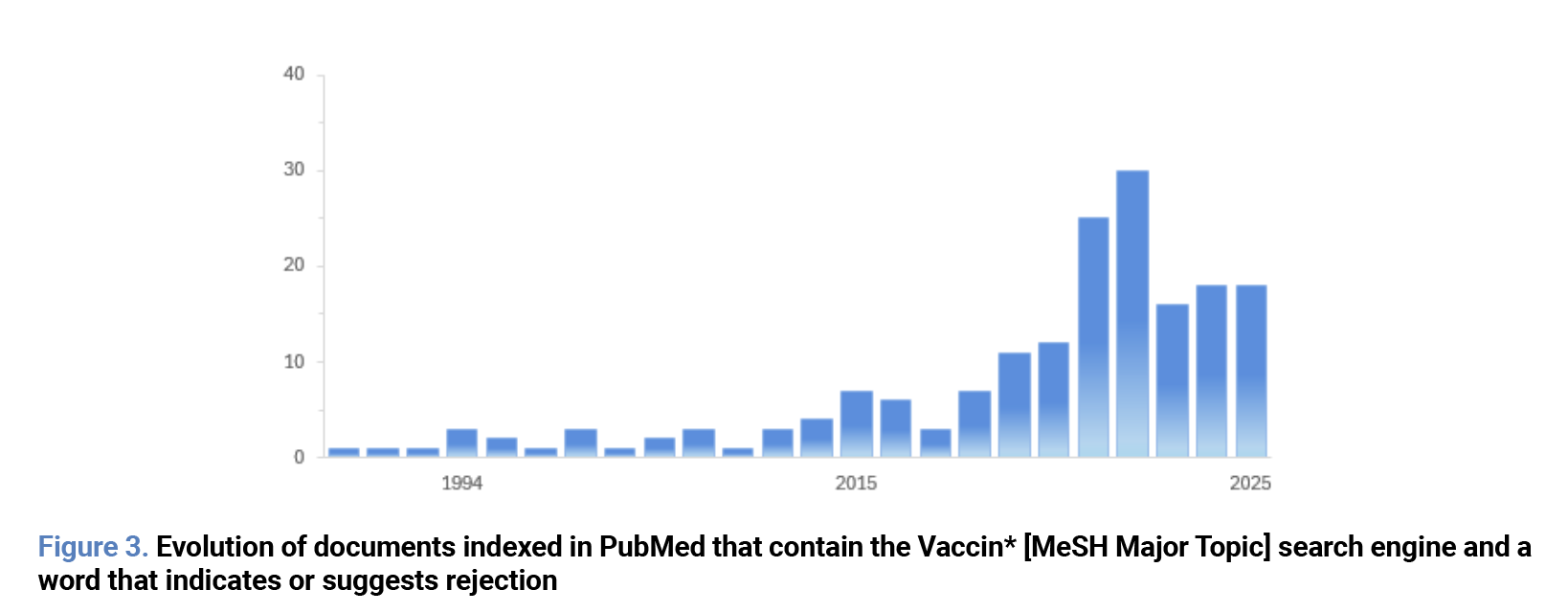
Conclusion
The scientific production in Spain registered in the PubMed search engine has risen sharply in the past two decades, but it is below that of other European and non-European nations. Recently, the number of indexed documents where articles on vaccines contain words that may express doubt, rejection, or uncertainty has increased.What are the main ethical issues in the rejection of vaccines?
The general judgment that must be made from ethics to vaccination techniques in general is that they have been and continue to be a real blessing, saving thousands of lives. The average life expectancy at birth has increased spectacularly from the eighteenth century to the present day, and this has been due not so much to advances in pharmacology and surgery, but to preventive measures in general and vaccination in particular. Vaccination has undoubtedly been a great technical advance. Technique follows its own internal logic, distinct from ethics, yet the two are intrinsically connected. As a general principle, it can be said that what is technically correct is not necessarily ethically good, but what is technically incorrect is always ethically bad. Technique is not to be confused with ethics, but it is, as the old logicians said, a “conditio sine qua non”. Throughout the history of vaccination, there have been several ethical conflicts that the pioneers of these techniques themselves faced, and not always successfully. These well-known cases can be arranged as follows: 1. The Jenner case. Jenner was the father of smallpox vaccination, which he put into practice, for the first time, in the eight-year-old boy James Phipps, the son of his gardener, a healthy person in whom the smallpox virus, an etiological agent of a serious disease with a high mortality rate, was inoculated. In addition, inoculation had to be done in children who had not yet been in contact with the virus, since once infected, they generated lifelong immunity. Obviously, Jenner’s experiment clearly conflicted with two of the four principles of bioethics: autonomy (absence of informed consent) and non-maleficence (by inoculating a healthy subject with the virus that causes severe disease). It is not surprising, therefore, that, at the highest levels, for example, in the Royal Academy of Medicine of Madrid, the correctness or not of this type of procedure was very hotly debated. The main problem was not that the subject of experimentation was a minor. In addition, the agent of a very serious and potentially fatal disease was being inoculated into a healthy subject, something that the canons of traditional ethics considered completely unacceptable. 2. The Ferrán case. Jaime Ferrán’s anti-cholera vaccine raised other types of ethical problems, which were hotly discussed in Spain and Europe in the eighties of the nineteenth century. Ferrán used non-attenuated bacteria and proclaimed that “the best vaccine is the most virulent”. This again raised the question of whether it is lawful to introduce the live microorganism of a potentially fatal disease into a healthy subject. This, which was raised for the first time in the case of smallpox vaccination, became topical again on the occasion of the cholera vaccine developed by Jaime Ferrán [140]. Needless to say, this experiment would not have passed the control of any current research ethics committee. 3. The Pasteur case. The application of the rabies vaccine developed by Pasteur with live attenuated viruses in the Alsatian child Joseph Meister in 1885 was another trial, crowned by a resounding success, but in the midst of a heated controversy. Nor would this experiment have passed the standards required by the current Clinical Research Ethics Committees. Vaccination ethics have gained renewed interest recently as a result of the COVID-19 epidemic. Today the efficacy and safety of vaccines is not in doubt. The problem that arises is whether the state can make a vaccine mandatory that, although it undoubtedly has a clear collective benefit, it can nevertheless be harmful to the individual subject. The great moral conflict of compulsory vaccination is the one that occurs between the collective or common good and the individual good. As soon as the protection of the former may jeopardize the latter, criticism arises that individual rights are being violated that seem to us inviolable, or at least a priority. But the moral obligations of human beings are not only aimed at optimizing individual benefits. We are social beings; we benefit from the social collective that, obviously, has the right to demand certain benefits by reciprocity. These must be as least harmful as possible to individual goods, and that is why vaccinations should only be made compulsory in exceptional cases. But we must all admit our obligation to contribute to the common or collective good, even assuming, in exceptional cases, vital risks. Those who do not act in this way have always been considered “unsupportive”, “profiteering”, “freeloading”, “stowaway”, “parasite” or “free-rider”, who in all these ways have been qualified. If everyone else gets vaccinated, they think, then I don’t need to, since the microorganism will have no chance of surviving and spreading. It is worth remembering that smallpox vaccination was mandatory until the eradication of the disease in 1980. The argument for requiring vaccination, even knowing that a small group of people would be highly harmed by it, was “public health”. The risk that individual health could be affected, for public health reasons, had to be assumed. It was a social benefit, a contribution to the collective good like others, including the obligation of military service or the defense of the country in the event of war. In Spain there is currently no mandatory vaccine. There is a very positive reason for doing so. The use of persuasive methods is always preferable to coercive measures, especially in our liberal societies, where it is increasingly difficult to say that someone has to suffer harm for reasons of the common good. We all understand well and are willing to collaborate in “win-win” situations, but we resist those in which the collective good demands a sacrifice, sometimes serious, very serious, of certain individuals. These are the “lose-win” situations. Someone has to lose, and we try by all means not to be us, even though we are delighted to receive the positive social consequences generated by the sacrifice of others. The paradigmatic case is that of wars. With which we become, “velis nolis”, freeloaders. The ethical consequences of this type of behaviour are evident. We receive many benefits from the collective, and for this very reason we are also obliged to contribute to the collective good with different kinds of sacrifices. Everything humanly possible must be done to ensure that these are as small as possible, not only in number but also in severity. But it is no longer so clear that the solution, when it is necessary to distribute risks, consists in entrusting everything to the voluntariness of those who, for whatever reasons, are willing to assume them freely and voluntarily. Because that, collaterally, encourages the proliferation of freeloaders. Public burdens must be distributed equitably; otherwise, they cannot be considered just. When persuasive measures do not allow health objectives to be fully covered, as is the case with some vaccines, the only right thing to do is to make them mandatory. The rest is a serious dereliction of functions. This seems to have been understood by other countries, such as France, where there are currently eleven compulsory vaccinations for children, or Italy, where the presentation of the health booklet attesting to the application of the twelve types of vaccines required by law is required upon entry into nursery or school. The argument put forward by Spanish scientific societies is that, with the current procedure, very high percentages of vaccination are achieved, even higher than those achieved in some other countries through compulsion. It is a markedly consequentialist criterion. And while consequences are an important factor in moral reasoning, they are not the only one. There are also the principles; in this case, that of justice, the equitable distribution of burdens. What is basically a pure duty of justice should not be foisted on voluntariness and altruism.Conclusion
We receive many benefits from the community, and for this very reason we are also obliged to contribute to the collective good with different types of benefits. Every effort must be made to keep them as low as possible, not only in number but also in severity. But when it is necessary to distribute risks, it is not possible to entrust everything to the voluntariness of those who, for whatever reasons, are willing to assume them freely and voluntarily. Public burdens must be distributed equitably; otherwise, they cannot be considered just. When persuasive measures do not allow health objectives to be fully covered, as is the case with several vaccines, the only correct thing to do is to make them mandatory. The rest is a serious dereliction of functions. This is particularly clear in the case of certain public professions, such as the health professions. Transparency statement For the sake of transparency, please note that GSK has assisted in the financing of this publication. Its content reflects the authors’ own opinions, criteria, conclusions, and/or findings, which may not necessarily coincide with those of GSK. GSK always recommends the use of its products in accordance with the technical data sheet approved by the health authorities. Funding For transparency purposes, we inform you that GSK has contributed to the funding of this publication. Its content reflects the authors’ own opinions, criteria, conclusions, and/or findings, which may not necessarily coincide with those of GSK. GSK always recommends the use of its products in accordance with the prescribing information approved by the health authorities. Conflicts of interest The authors declare no conflicts of interest. Author contributions All authors have contributed substantially to the conception and writing of the article. All authors have read and approved the published version of the manuscript.References
- Millat-Martínez P, Mora A, Condeminas PE, Castelló M, Alsina C, Fiestas B, et al. Exploring reported causes of vaccine hesitancy among European adolescents and parents: results of a citizen science project. BMC Public Health. 2025; 25(1):1136. Available from: https://doi.org/10.1186/s12889-025-22316-z
- Sayan Kaya FB, Doğruyol AR, Öztürk H, Canbaz S, Ören Çelik MM. Vaccine hesitancy and acceptance among hemodialysis patients: a cross-sectional study in Turkey. BMC Public Health. 2025; 25(1):1037. Available from: https://doi.org/10.1186/s12889-025-22206-4
- Drobniewski F, Ashmi M, Ahmad R, He C, Bogdanova M, Garbacz A, et al. Factors influencing vaccine hesitancy among United Kingdom adolescents in a senior high school environment and actions to address it. Hum Vaccin Immunother. 2025; 21(1):2475599. Available from: https://doi.org/10.1080/21645515.2025.2475599
- Schweitzer K. Amid Texas Measles Outbreak, Clinicians Struggle to Offset Increasing Vaccine Hesitancy. Jama. 2025; 333(15):1278-81. Available from: https://doi.org/10.1001/jama.2025.2932
- Hergott M, Andreski M, Rovers J. Vaccine hesitancy among health paraprofessionals: A mixed methods study. PLoS One. 2025; 20(1):e0312708. Available from: https://doi.org/10.1371/journal.pone.0312708
- Stravoravdi AS, Ladas AI, Frantzidis CA, Papazisis G. HAVI: A novel tool to explore vaccine hesitancy among adults in Greece. Vaccine. 2025;55:127042. Available from: https://doi.org/10.1016/j.vaccine.2025.127042
- Laine C, Qaseem A, Moyer DV. Putting Adult Vaccine Recommendations Into Action. Ann Intern Med. 2024; 177(4):527-8. Available from: https://doi.org/10.7326/m24-0242
- Burns KE, Dubé È, Godinho Nascimento H, Meyer SB. Examining vaccine hesitancy among a diverse sample of Canadian adults. Vaccine. 2024; 42(2):129-35. Available from: https://doi.org/10.1016/j.vaccine.2023.12.030
- Morgan AK, Aziire MA, Cobbold J, Agbobada AA, Kudzawu SK. Hesitant or not: A cross-sectional study of socio-demographics, conspiracy theories, trust in public health information, social capital and vaccine hesitancy among older adults in Ghana. Hum Vaccin Immunother. 2023; 19(1):2211495. Available from: https://doi.org/10.1080/21645515.2023.2211495
- Limia Sánchez A, Olmedo Lucerón C, Soler Soneira M, Cantero Gudino E, Sánchez-Cambronero Cejudo L. [Committee for Immunization Programme and Registry and changes in the National Immunization Programme in Spain]. Rev Esp Salud Publica. 2020;94.
- Interterritorial Council of the National Health System. Agreement number 129. Plenary session of 4 June 1990. Available from: https://www.sanidad.gob.es/organizacion/consejoInterterri/docs/129.pdf [accessed February 2025].
- Taaffe J, Ostrowsky JT, Mott J, Goldin S, Friede M, Gsell P, et al. Advancing influenza vaccines: A review of next-generation candidates and their potential for global health impact. Vaccine. 2024; 42(26):126408. Available from: https://doi.org/10.1016/j.vaccine.2024.126408
- Working group on adult vaccination of the presentation of programs and vaccination registry. Vaccination in adults. Recommendations for 2004. Available from: https://www.sanidad.gob.es/areas/promocionPrevencion/vacunaciones/programasDeVacunacion/docs/recoVacunasAdultos.pdf [accessed February 2025].
- Working group on adult vaccination of the presentation of programs and vaccination registry. Diphtheria and tetanus vaccine. Recommendations year 2009. Available from: https://www.sanidad.gob.es/areas/promocionPrevencion/vacunaciones/programasDeVacunacion/docs/TetanosDifteria_2009.pdf [accessed February 2025].
- Working Group of the Vaccination Program and Registry Presentation. Vaccination in health workers. Public Health Commission of the Interterritorial Council of the National Health System. Ministry of Health, Social Services and Equality, 2017. Available from: https://www.sanidad.gob.es/areas/promocionPrevencion/vacunaciones/programasDeVacunacion/docs/Vacunacion_sanitarios.pdf [accessed February 2025].
- Vaccination working group in the adult population and risk groups of the Vaccination Program and Registry Presentation. Vaccination in the adult population. Public Health Commission of the Interterritorial Council of the National Health System. Ministry of Health, Consumer Affairs and Social Welfare, September 2018. Available from: https://www.sanidad.gob.es/areas/promocionPrevencion/vacunaciones/programasDeVacunacion/docs/Vacunacion_poblacion_adulta.pdf [accessed February 2025].
- Vaccination working group in the adult population and risk groups of the Vaccination Program and Registry Presentation. Vaccination in risk groups of all ages and in certain situations. Public Health Commission of the Interterritorial Council of the National Health System. Ministry of Health, Consumer Affairs and Social Welfare, July 2018. Available from: https://www.sanidad.gob.es/areas/promocionPrevencion/vacunaciones/programasDeVacunacion/riesgo/home.htm [Accessed February 2025]
- Herpes zoster vaccination working group of the Vaccination Program and Registry Presentation. Public Health Commission of the Interterritorial Council of the National Health System. Ministry of Health, March 2021. Available from: https://www.sanidad.gob.es/areas/promocionPrevencion/vacunaciones/programasDeVacunacion/docs/HerpesZoster_RecomendacionesVacunacion.pdf [accessed February 2025].
- Working Group of the Vaccination Program and Registry Presentation. Evaluation of the impact of the 2nd seroprevalence study on the measles vaccination program. Public Health Commission of the Interterritorial Council of the National Health System. Ministry of Health, November 2024. Available from: https://www.sanidad.gob.es/areas/promocionPrevencion/vacunaciones/comoTrabajamos/docs/evaluacionImpacto_2EstudioSeroprevalenciaSarampion.pdf [accessed February 2025].
- Working Group on HPV Vaccination Recommendations of the Vaccination Program and Registry Presentation. Updating HPV vaccination recommendations. Review of the one-dose strategy. Public Health Commission of the Interterritorial Council of the National Health System. Ministry of Health, July 2024. Available from: https://www.sanidad.gob.es/areas/promocionPrevencion/vacunaciones/comoTrabajamos/docs/VPH_recomendaciones_vacunacion_estrategia1dosis.pdf [accessed February 2025].
- Interterritorial Council of the National Health System. common vaccination schedule throughout life. Recommended calendar 2019. Available from: https://www.sanidad.gob.es/areas/promocionPrevencion/vacunaciones/calendario/calendario/Calendario_Todalavida_2019.htm [accessed February 2025].
- Ministry of Health. Vaccines and Vaccination Program. Historical COVID-19 Pandemic (2020 - 2023). Available from: https://www.sanidad.gob.es/areas/promocionPrevencion/vacunaciones/covid19/historicoPandemiaCOVID19.htm [accessed February 2025].
- Working Group on RSV Vaccination in the Adult Population of the Presentation on the Vaccination Program and Registry. Evaluation of RSV vaccination in the adult population. Public Health Commission of the Interterritorial Council of the National Health System. Ministry of Health, November 2024. Available from: https://www.sanidad.gob.es/areas/promocionPrevencion/vacunaciones/comoTrabajamos/docs/VRS_adultos.pdf [accessed February 2025]
- Limia Sánchez A, Olmedo Lucerón C, Soler Soneira M, Cantero Gudino E, Sánchez-Cambronero Cejudo L. Presentation of the vaccination program and registry and evolution of the vaccination schedule in Spain. Rev Esp Salud Pública 2020; 94:e1-15.
- Interterritorial Council, National Health System. Common vaccination and immunisation schedule throughout life. Recommended calendar year 2025. Available from: https://www.sanidad.gob.es/areas/promocionPrevencion/vacunaciones/calendario/docs/CalendarioVacunacion_Todalavida.pdf [accessed February 2025]
- Interterritorial Council of the National Health System. Vaccination in risk groups of all ages and in certain situations. 2018. Available from: https://www.sanidad.gob.es/areas/promocionPrevencion/vacunaciones/programasDeVacunacion/riesgo/docs/VacGruposRiesgo_todas_las_edades.pdf [accessed February 2025]
- Working Group Criteria 2011 dlPdPyR, on Vaccinations. Evaluation criteria to support modifications in the Vaccination Program in Spain. Public Health Commission of the Interterritorial Council of the National Health System. Ministry Health, Social Policy and Equality. 2011. Available from: https://www.sanidad.gob.es/areas/promocionPrevencion/vacunaciones/comoTrabajamos/docs/Criterios_ProgramaVacunas.pdf [accessed February 2025]
- Ministry of Health. European Health Survey in Spain 2020. The European Health Survey in Spain (EESE) 2020, carried out by the Nació Institute. Available from: https://www.sanidad.gob.es/estadEstudios/estadisticas/EncuestaEuropea/Enc_Eur_Salud_en_Esp_2020.htm. [accessed February 2025]
- Alvarez-Dardet C, Alonso J, Domingo A, Alderman E. The measurement of social class in health sciences. 1995- Available from: https://www.seepidemiologia.es/documents/dummy/LA%20MEDICION%20DE%20LA%20CLASE%20SOCIAL-4.pdf [accessed February 2025]
- World Health Organization. Immunization agenda 2030: A global strategy to leave no one behind. Vaccine. 2024; 42 Suppl 1:S5-s14. Available from: https://doi.org/10.1016/j.vaccine.2022.11.042
- Kolobova I, Nyaku MK, Karakusevic A, Bridge D, Fotheringham I, O’Brien M. Vaccine uptake and barriers to vaccination among at-risk adult populations in the US. Hum Vaccin Immunother. 2022; 18(5):2055422. Available from: https://doi.org/10.1080/21645515.2022.2055422
- Guérin N. Assessing immunization coverage: how and why? Vaccine. 1998; 16 Suppl:S81-3. Available from: https://doi.org/10.1016/s0264-410x(98)00304-1
- Ministry of Health. CISNS. Objectives Vaccination Programs, July 2023. Available from: https://www.sanidad.gob.es/areas/promocionPrevencion/vacunaciones/coberturas/docs/Objetivos_vacunacion_2025.pdf [accessed June 2025]
- Ministry of Health. SIVAMIN. Report on the evolution of vaccination coverage by vaccine.2025 . Available from: https://pestadistico.inteligenciadegestion.sanidad.gob.es/publicoSNS/I/sivamin/informe-de-evolucion-de-coberturas-de-vacunacion-por-vacuna [accessed September 2025]
- SIVAMIN. MoS. COVID-19 vaccination reports. 2025. Available from: https://pestadistico.inteligenciadegestion.sanidad.gob.es/publicoSNS/N/sivamin/informes-vacunacion-covid-19 [accessed June 2025]
- Ministry of Health, SIVAMIN. Mpox vaccination reports. Available from: https://pestadistico.inteligenciadegestion.sanidad.gob.es/publicoSNS/I/sivamin/informe-de-evolucion-de-coberturas-de-vacunacion-por-vacuna [accessed June 2025]
- Junta de Castilla y León, Health. Cd. Vaccination Coverage. 2025. Available from: https://www.saludcastillayleon.es/profesionales/es/vacunaciones/coberturas-vacunacion [accessed June 2025]
- Andavac. Vaccination against conjugated pneumococcus in the population aged 60 to 76 years. 2025. Available from: https://wwwandavaces/wp-content/uploads/infografias/cobertura-vacunacion-neumococo-13-valentepdf [accessed June 2025]
- Community of Madrid. Vaccines. Information for Professionals. 2025 . Available from: https://www.comunidad.madrid/servicios/salud/vacunas-informacion-profesionales [accessed June 2025]
- Sanz-Rojo S, Jiménez-García R, López-de-Andrés A, de Miguel-Diez J, Perez-Farinos N, Zamorano-León JJ. Influenza vaccination uptake among high-risk target groups and health care workers in Spain and change from 2017 to 2020. Vaccine. 2021; 39(48):7012-20. Available from: https://doi.org/10.1016/j.vaccine.2021.10.059
- Zamorano-Leon JJ, Jimenez-Garcia R, Lopez-de-Andres A, de-Miguel-Diez J, Carabantes-Alarcon D, Albaladejo-Vicente R, et al. Low Levels of Influenza Vaccine Uptake among the Diabetic Population in Spain: A Time Trend Study from 2011 to 2020. J Clin Med. 2021; 11(1). Available from: https://doi.org/10.3390/jcm11010068
- Vila-Corcoles A, Ochoa-Gondar O, Hospital I, de Diego C, Satué E, Bladé J, et al. Pneumococcal vaccination coverages among low-, intermediate-, and high-risk adults in Catalonia. Hum Vaccin Immunother. 2016; 12(11):2953-8. Available from: https://doi.org/10.1080/21645515.2016.1210744
- Carreño-Ibáñez LV, Esteban-Vasallo MD, Domínguez-Berjón MF, Astray-Mochales J, González Del Yerro C, Iniesta-Fornies D, et al. Coverage of and factors associated with pneumococcal vaccination in chronic obstructive pulmonary disease. Int J Tuberc Lung Dis. 2015; 19(6):735-41. Available from: https://doi.org/10.5588/ijtld.14.0480
- Ministery of Health. Press and communication/news. 2044. Available from: https://www.sanidad.gob.es/gabinete/notasPrensa.do?id=6513 [accessed June 2025]
- MacDonald NE. Vaccine hesitancy: Definition, scope and determinants. Vaccine. 2015; 33(34):4161-4. Available from: https://doi.org/10.1016/j.vaccine.2015.04.036
- Leask J, Kinnersley P, Jackson C, Cheater F, Bedford H, Rowles G. Communicating with parents about vaccination: a framework for health professionals. BMC Pediatr. 2012;12:154. Available from: https://doi.org/10.1186/1471-2431-12-154
- Randall S, Leask J, Robinson P, Danchin M, Kinnersley P, Witteman H, et al. Underpinning of the sharing knowledge about immunisation (SKAI) communication approach: A qualitative study using recorded observations. Patient Educ Couns. 2020; 103(6):1118-24. Available from: https://doi.org/10.1016/j.pec.2019.12.014
- Alti E, Ecarnot F, Maggi S, et al. Immunizations in older adults. . En: Demurtas J VNe, The Role of Family Physicians in Older People Care, Practical Issues in Geriatrics, editor. SUIZA: Springer Nature; 2022.
- Javierre Mirandaa AP, Álvarez Pasquín MJ. Vaccine hesitancy: arguments and advice to confront doubts about vaccines. Continuing Medical Education (CME). 2021; 28 (6):36-45.
- Moss JL, Reiter PL, Rimer BK, Brewer NT. Collaborative patient-provider communication and uptake of adolescent vaccines. Soc Sci Med. 2016;159:100-7. Available from: https://doi.org/10.1016/j.socscimed.2016.04.030
- MacDonald NE, Butler R, Dubé E. Addressing barriers to vaccine acceptance: an overview. Hum Vaccin Immunother. 2018; 14(1):218-24. Available from: https://doi.org/10.1080/21645515.2017.1394533
- Redondo Margüello E, Trilla A, Munguira ILB, López-Herce AJ, Cotarelo Suárez M. Knowledge, attitudes, beliefs and barriers of healthcare professionals and adults ≥ 65 years about vaccine-preventable diseases in Spain: the ADult Vaccination drIverS and barriErs (ADVISE) study. Hum Vaccin Immunother. 2022; 18(1):2025007. Available from: https://doi.org/10.1080/21645515.2021.2025007
- Bach AT, Kang AY, Lewis J, Xavioer S, Portillo I, Goad JA. Addressing common barriers in adult immunizations: a review of interventions. Expert Rev Vaccines. 2019; 18(11):1167-85. Available from: https://doi.org/10.1080/14760584.2019.1698955
- Eiden AL, Barratt J, Nyaku MK. Drivers of and barriers to routine adult vaccination: A systematic literature review. Hum Vaccin Immunother. 2022; 18(6):2127290. Available from: https://doi.org/10.1080/21645515.2022.2127290
- World Health Organization. Behavioural and social factors of vaccination: tools and practical guidelines to achieve high acceptance. 2022. Available from: https://iris.who.int/server/api/core/bitstreams/c9f4a77a-001e-477d-a9d1-b05832820b64/content [accessed June 2025]
- SEIMC. Recommendations for the optimization of the vaccination process of people included in risk groups. 2022.. Available from: https://seimc.org/wp-content/uploads/2025/06/seimc-dc-2023-Vacunacion_Grupos_de_Riesgo.pdf [accessed June 2025]
- Group of experts and the Institute for Health and Strategy (Si-Health). Vaccines: a promising future. Edited by: The Institute for Health and Strategy (Si-Health). 2024. Available from: https://pacientes.gsk.es/content/dam/cf-pharma/patient/es_ES/enfermedades/pdf/documento-vacunas-un-futuro-prometedor.pdf. [accessed June 2025]
- Centers for Disease Control and Prevention (CDC). Vaccine information for adults. 2025. Available from: https://www.cdc.gov/vaccines-adults/index.html [accessed June 2025]
- Grohskopf LA, Ferdinands JM, Blanton LH, Broder KR, Loehr J. Prevention and Control of Seasonal Influenza with Vaccines: Recommendations of the Advisory Committee on Immunization Practices - United States, 2024-25 Influenza Season. MMWR Recomm Rep. 2024; 73(5):1-25. Available from: https://doi.org/10.15585/mmwr.rr7305a1
- Papania MJ, Wallace GS, Rota PA, Icenogle JP, Fiebelkorn AP, Armstrong GL, et al. Elimination of endemic measles, rubella, and congenital rubella syndrome from the Western hemisphere: the US experience. JAMA Pediatr. 2014; 168(2):148-55. Available from: https://doi.org/10.1001/jamapediatrics.2013.4342
- McLaughlin JM, McGinnis JJ, Tan L, Mercatante A, Fortuna J. Estimated Human and Economic Burden of Four Major Adult Vaccine-Preventable Diseases in the United States, 2013. J Prim Prev. 2015; 36(4):259-73. Available from: https://doi.org/10.1007/s10935-015-0394-3
- Ozawa S, Clark S, Portnoy A, Grewal S, Brenzel L, Walker DG. Return On Investment From Childhood Immunization In Low- And Middle-Income Countries, 2011-20. Health Aff (Millwood). 2016; 35(2):199-207. Available from: https://doi.org/10.1377/hlthaff.2015.1086
- Schmid P, Rauber D, Betsch C, Lidolt G, Denker ML. Barriers of Influenza Vaccination Intention and Behavior - A Systematic Review of Influenza Vaccine Hesitancy, 2005 - 2016. PLoS One. 2017; 12(1):e0170550. Available from: https://doi.org/10.1371/journal.pone.0170550
- Dubé E, Laberge C, Guay M, Bramadat P, Roy R, Bettinger J. Vaccine hesitancy: an overview. Hum Vaccin Immunother. 2013; 9(8):1763-73. Available from: https://doi.org/10.4161/hv.24657
- Tenforde MW, Patel MM, Ginde AA, Douin DJ, Talbot HK, Casey JD, et al. Effectiveness of SARS-CoV-2 mRNA Vaccines for Preventing Covid-19 Hospitalizations in the United States. medRxiv. 2021. Available from: https://doi.org/10.1101/2021.07.08.21259776
- World Health Organization (WHO). International Travel and Health: Vaccination Requirements and Health Advice. 2025. Available from: https://www.who.int/es/publications/i/item/9789241580472 [accessed June 2025]
- Soler Soneira M, Olmedo Lucerón C, Sánchez-Cambronero Cejudo L, Cantero Gudino E, Limia Sánchez A. The cost of vaccination throughout life in Spain. Rev Esp Salud Publica. 2020;94.
- Hanage WP, Schaffner W. Burden of Acute Respiratory Infections Caused by Influenza Virus, Respiratory Syncytial Virus, and SARS-CoV-2 with Consideration of Older Adults: A Narrative Review. Infect Dis Ther. 2025; 14(Suppl 1):5-37. Available from: https://doi.org/10.1007/s40121-024-01080-4
- Gupta S, Cantor J, Simon KI, Bento AI, Wing C, Whaley CM. Vaccinations Against COVID-19 May Have Averted Up To 140,000 Deaths In The United States. Health Aff (Millwood). 2021; 40(9):1465-72. Available from: https://doi.org/10.1377/hlthaff.2021.00619
- Meslé MMI, Brown J, Mook P, Katz MA, Hagan J, Pastore R, et al. Estimated number of lives directly saved by COVID-19 vaccination programmes in the WHO European Region from December, 2020, to March, 2023: a retrospective surveillance study. Lancet Respir Med. 2024; 12(9):714-27. Available from: https://doi.org/10.1016/s2213-2600(24)00179-6
- World Health Organization (WHO). Building health systems resilience: a key priority for post-COVID-19 recovery. Geneva: World Health Organization; 2022.
- Orús A, Statista. Influenza: deaths in Spain 2006-2023. 2024 Available from: https://es.statista.com/estadisticas/591437/numero-de-muertes-por-gripe-en-espana/. [accessed June 2025]
- National Institute of Statistics. Statistics of Deaths According to the Cause of Death. 2024 Provisional data. Available from: https://ine.es/dyngs/Prensa/pEDCM2023.htm [accessed June 2025]
- Puma-Olguin TC, Mazagatos C, Galindo-Carretero S, Vega-Piris L, Lozano-Álvarez M, Pérez-Gimeno G, et al. Epidemiology and burden of RSV disease in Spain. SiVIRA, 2021-22 and 2022-23 seasons. . Weekly Epidemiological Bulletin 2024;32:21-35. Available from: https://doi.org/10.4321/s2173-92772024000100003
- Kestler M, Muñoz P, Mateos M, Adrados D, Bouza E. Respiratory syncytial virus burden among adults during flu season: an underestimated pathology. J Hosp Infect. 2018; 100(4):463-8. Available from: https://doi.org/10.1016/j.jhin.2018.03.034
- Ruiz-Galiana J, Canton R, De Lucas Ramos P, García-Botella A, García-Lledó A, Hernández-Sampelayo T, et al. Respiratory syncytial virus: A new era. Rev Esp Quimioter. 2024; 37(2):134-48. Available from: https://doi.org/10.37201/req/147.2023
- Heppe-Montero M, Gil-Prieto R, Del Diego Salas J, Hernández-Barrera V, Gil-de-Miguel Á. Impact of Respiratory Syncytial Virus and Influenza Virus Infection in the Adult Population in Spain between 2012 and 2020. Int J Environ Res Public Health. 2022; 19(22). Available from: https://doi.org/10.3390/ijerph192214680
- Redondo E, Drago G, López-Belmonte JL, Guillén JM, Bricout H, Alvarez FP, et al. Cost-utility analysis of influenza vaccination in a population aged 65 years or older in Spain with a high-dose vaccine versus an adjuvanted vaccine. Vaccine. 2021; 39(36):5138-45. Available from: https://doi.org/10.1016/j.vaccine.2021.07.048
- Sociedad Española de Médicos Generales y de Familia (SEMG). Vaccination against RSV in adults. 2024. Available from: https://semg.es/images/2024/documentos/doc_multisocietario_vacunacion_vrsadult.pdf [accessed June 2025]
- Ministry of Health CyBS. Discharges, average stay (days), and average cost (€) of the 25 most frequent medical processes in hospitalisation. 2018. Available from: https://www.sanidad.gob.es/estadEstudios/estadisticas/docs/CMBD/INFORME_COSTES_MEDICOS_HOSPITALES_SNS_2018.pdf [accessed June 2025]
- Pan American Health Organization (PAHO/WHO). Vaccination, Hospitalizations, and Mortality - Health in the Americas. 2025 Available from: https://hia.paho.org/es/tema-de-conocimiento/vacunacion-hospitalizaciones-y-mortalidad accessed June 2025]
- Valenzuela MT. Importancia de las vacunas en salud pública: hitos y nuevos desafíos. Rev Med Clin Condes 2020;31:233-9. Available from: https://doi.org/10.1016/j.rmclc.2020.03.005
- Hass N. The concept of trust as a social value that sustains the public health system in Spain. Tend Soc Rev Sociol. 2022; 8:87–132. Available from: https://doi.org/10.5944/ts.2022.34262
- Sanz-Muñoz I, Lajara C, Echarrén JI, Caminero-Pérez A, Teso-Fernández L, JM. E. Active medical recommendation is the best tool for increasing influenza vaccine coverage in healthy adult workers. Vacunas. 2023; 24:88–94. Available from: https://doi.org/10.1016/j.vacun.2023.01.002.
- Colmegna I, Valerio V, Gosselin-Boucher V, Lacoste G, Labbe S, Lavoie KL, et al. Barriers and facilitators to influenza and pneumococcal vaccine hesitancy in rheumatoid arthritis: a qualitative study. Rheumatology (Oxford). 2021; 60(11):5257-70. Available from: https://doi.org/10.1093/rheumatology/keab471
- Martín-Ivorra R, Alguacil-Ramos AM, Lluch-Rodrigo JA, Pastor-Villalba E, A. P-A. Activities to capture and vaccinate the susceptible population in the Valencian Community. Rev Esp Salud Publica 2015; 89:419–26. Available from: https://doi.org/10.4321/S1135-57272015000400010
- Di Lorenzo A, Stefanizzi P, Tafuri S. Are we saying it right? Communication strategies for fighting vaccine hesitancy. Front Public Health. 2023;11:1323394. Available from: https://doi.org/10.3389/fpubh.2023.1323394
- Lorini C, Del Riccio M, Zanobini P, Biasio RL, Bonanni P, Giorgetti D, et al. Vaccination as a social practice: towards a definition of personal, community, population, and organizational vaccine literacy. BMC Public Health. 2023; 23(1):1501. Available from: https://doi.org/10.1186/s12889-023-16437-6
- Dempsey AF, Pyrznawoski J, Lockhart S, Barnard J, Campagna EJ, Garrett K, et al. Effect of a Health Care Professional Communication Training Intervention on Adolescent Human Papillomavirus Vaccination: A Cluster Randomized Clinical Trial. JAMA Pediatr. 2018; 172(5):e180016. Available from: https://doi.org/10.1001/jamapediatrics.2018.0016
- Fernández-Prada M, Zapico-Baragaño MJ, Giménez-Gómez P, Huerta-Huerta M, Fernández-Álvarez M, Martín-Payo R. Improvement of influenza vaccination coverage in people over 65 years of age. Strategy developed in a health area of Asturias. Rev Esp Salud Publica. 2021;95.
- Glanternik JR, McDonald JC, Yee AH, Howell Ba A, Saba KN MR, et al. Evaluation of a vaccine-communication tool for physicians. J Pediatr. 2020;224:72-8.e1. Available from: https://doi.org/10.1016/j.jpeds.2020.06.007.
- Vilca LM, Martínez C, Burballa M, Campins M. Maternal Care Providers’ Barriers Regarding Influenza and Pertussis Vaccination During Pregnancy in Catalonia, Spain. Matern Child Health J. 2018; 22(7):1016-24. Available from: https://doi.org/10.1007/s10995-018-2481-6
- Barton SM, Calhoun AW, Bohnert CA, Multerer SM, Statler VA, Bryant KA, et al. Standardized Vaccine-Hesitant Patients in the Assessment of the Effectiveness of Vaccine Communication Training. J Pediatr. 2022;241:203-11.e1. Available from: https://doi.org/10.1016/j.jpeds.2021.10.033
- Parrish-Sprowl J, Thomson A, Johnson RD, Parrish-Sprowl S. The AIMS approach: regulating receptivity in patient-provider vaccine conversations. Front Public Health. 2023;11:1120326. Available from: https://doi.org/10.3389/fpubh.2023.1120326
- Prieto-Campo Á, Batista AD, Magalhães Silva T, Herdeiro MT, Roque F, Figueiras A, et al. Understanding vaccination hesitation among health professionals: a systematic review of qualitative studies. Public Health. 2024;226:17-26. Available from: https://doi.org/10.1016/j.puhe.2023.10.029
- Fernández-Prada M, Cáceres Fernández-Bolaños R, JJ. C-S. Decalogue of good practices in communication about vaccines between immunocompromised patients and health professionals. . Vaccines. 2024; 25(3):420–3. Available from: http://dx.doi.org/https://doi.org/10.1016/j.vacun.2024.05.003.
- Velicia Peñas C, Del Campo Pérez VM, Rivero Calle I, Armenteros Del Olmo L, Pérez Rodríguez MT, Gestal Otero JJ. Expert opinion paper for the improvement of vaccination coverage against seasonal influenza. Rev Esp Quimioter. 2022; 35(5):435-43. Available from: https://doi.org/10.37201/req/031.2022
- Lemaitre T, Carrier N, Farrands A, Gosselin V, Petit G, Gagneur A. Impact of a vaccination promotion intervention using motivational interview techniques on long-term vaccine coverage: the PromoVac strategy. Hum Vaccin Immunother. 2019; 15(3):732-9. Available from: https://doi.org/10.1080/21645515.2018.1549451
- Valdecantos RL, Sorrentino M, Mercogliano M, Giordano V, Trama U, Triassi M, et al. The structural and organizational aspects of human papillomavirus vaccine affecting immunization coverage in Europe: a systematic review. BMC Public Health. 2025; 25(1):1254. Available from: https://doi.org/10.1186/s12889-025-22343-w
- Olmedo Lucerón C, Limia Sánchez A, Santamarina C. [Vaccination confidence against influenza in Spain: reasons of hesitancy discourses and attitudes in general population and healthcare workers.]. Rev Esp Salud Publica. 2021;95.
- Malo TL, Hall ME, Brewer NT, Lathren CR, Gilkey MB. Why is announcement training more effective than conversation training for introducing HPV vaccination? A theory-based investigation. Implement Sci. 2018; 13(1):57. Available from: https://doi.org/10.1186/s13012-018-0743-8
- Jacobson RM, St Sauver JL, Griffin JM, MacLaughlin KL, Finney Rutten LJ. How healthcare providers should address vaccine hesitancy in the clinical setting: Evidence for presumptive language in making a strong recommendation. Hum Vaccin Immunother. 2020; 16(9):2131-5. Available from: https://doi.org/10.1080/21645515.2020.1735226
- Antón F, Richart MJ, Serrano S, Martínez AM, Pruteanu DF. [Strategies to improve influenza vaccination coverage in Primary Care. They emerge. 2016; 42(3):147-51. Available from: https://doi.org/10.1016/j.semerg.2015.02.014
- Bossio JC, Sanchis I, Armando GA, Arias SJ, Jure H. Result of a pre- and post-date reminder strategy to improve the timing of vaccination at six months. Cad Saude Publish. 2019; 35(12):e00214518. Available from: https://doi.org/10.1590/0102-311x00214518
- Groom H, Hopkins DP, Pabst LJ, Murphy Morgan J, Patel M, Calonge N, et al. Immunization information systems to increase vaccination rates: a community guide systematic review. J Public Health Manag Pract. 2015; 21(3):227-48. Available from: https://doi.org/10.1097/phh.0000000000000069
- Santos López B, López Campos M, Viñas Viamonte C, Aragón Puig P, Buades Pérez E, IL. GF. Influence of new tools to increase the rate of influenza vaccination in patients considered at risk during the 2019, 2020 and 2021 campaigns. Vaccines 2024; 25(3):340–6. Available from: https://doi.org/10.1016/j.vacun.2024.05.002.
- Maltezou HC, Poland GA. Immunization of healthcare providers: a critical step toward patient safety. Vaccine. 2014; 32(38):4813. Available from: https://doi.org/10.1016/j.vaccine.2014.05.046
- Ministry of Health SseI. Working Group of the Vaccination Program and Registry Presentation. Vaccination in health workers. Public Health Commission of the Interterritorial Council of the National Health System. Ministry of Health, Social Services and Equality, 2017. Available from: https://www.sanidad.gob.es/areas/promocionPrevencion/vacunaciones/vacunas/docs/Vacunacion_sanitarios.pdf [accessed June 2025]
- Fan J, Xu S, Liu Y, Ma X, Cao J, Fan C, et al. Influenza vaccination rates among healthcare workers: a systematic review and meta-analysis investigating influencing factors. Front Public Health. 2023;11:1295464. Available from: https://doi.org/10.3389/fpubh.2023.1295464
- Llupià A, García-Basteiro AL, Mena G, Ríos J, Puig J, Bayas JM, et al. Vaccination behaviour influences self-report of influenza vaccination status: a cross-sectional study among health care workers. PLoS One. 2012; 7(7):e39496. Available from: https://doi.org/10.1371/journal.pone.0039496
- Sanz-Muñoz I, Castrodeza-Sanz J, Figueiras-Graillet L, JM. E-B. Attitudes and perceptions of health personnel in relation to influenza vaccination. Enferm Infecc Microbiol Clin. 2020; 38(1):25–9.
- Domínguez A, Godoy P, Castilla J, Soldevila N, Toledo D, Astray J, et al. Knowledge of and attitudes to influenza vaccination in healthy primary healthcare workers in Spain, 2011-2012. PLoS One. 2013; 8(11):e81200. Available from: https://doi.org/10.1371/journal.pone.0081200
- Ministry of Health. Report on the evolution of vaccination coverage. 2025 Available from: https://pestadistico.inteligenciadegestion.sanidad.gob.es/publicoSNS/I/sivamin/informe-de-evolucion-de-coberturas-de-vacunacion-por-vacuna [accessed September 2025]
- Betsch C, Wicker S. E-health use, vaccination knowledge and perception of own risk: drivers of vaccination uptake in medical students. Vaccine. 2012; 30(6):1143-8. Available from: https://doi.org/10.1016/j.vaccine.2011.12.021
- Jiménez-García R, Esteban-Vasallo MD, Rodríguez-Rieiro C, Hernandez-Barrera V, Domínguez-Berjón MA, Carrasco Garrido P, et al. Coverage and predictors of vaccination against 2012/13 seasonal influenza in Madrid, Spain: analysis of population-based computerized immunization registries and clinical records. Hum Vaccin Immunother. 2014; 10(2):449-55. Available from: https://doi.org/10.4161/hv.27152
- Larson HJ. Politics and public trust shape vaccine risk perceptions. Nat Hum Behav. 2018; 2(5):316. Available from: https://doi.org/10.1038/s41562-018-0331-6
- Immunization. Adult vaccination in EU Member States. Decision-making structures, financing and vaccine impact. 2024. Available from: https://www.cl-ci.org/wp-content/uploads/2024/09/EU-NIP-financing-and-decision-making-Sep24.pdf [accessed February 2025].
- The European House-Ambrosetti, Vaccines Europe. The value of prevention for economic growth and the sustainability of healthcare, social care and welfare systems, September 2024. Available from: https://www.ambrosetti.eu/en/news/the-value-of-prevention-for-economic-growth-and-the-sustainability-of-healthcare-social-and-welfare-systems/ [accessed February 2025].
- El Banhawi H, Chowdhury S NM. Office for Health Economics. Socio-Economic Value of Adult Immunisation Programmes. OHE Contract Research. 2024. Available from: https://www.ohe.org/publications/the-socio-economic-value-of-adult-immunisation-programmes/ [accessed February 2025].
- European Commission. State of Vaccine Confidence in the European Union 2022. Available from: https://op.europa.eu/en/publication-detail/-/publication/b89452df-6958-11ed-b14f-01aa75ed71a1/language-en [accessed February 2025].
- European Centre for Disease Prevention and Control. Survey report on national seasonal influenza vaccination recommendations and coverage rates in EU/EEA countries. Stockholm: ECDC; 2024. Available from: https://www.ecdc.europa.eu/en/publications-data/survey-report-national-seasonal-influenza-vaccination-recommendations [accessed February 2025]
- Wang J, Tönnies T, Brinks R. Seasonal influenza vaccination coverage and the social determinants of influenza vaccination among people over 50 with diabetes in Europe: Analyzing population-based SHARE data for the 2019-2020 and 2021-2022 influenza seasons. Vaccine. 2025;45:126646. Available from: https://doi.org/10.1016/j.vaccine.2024.126646
- European Centre for Disease Prevention and Control. COVID-19 vaccination coverage in the EU/EEA during the 2023–24 season campaigns. Stockholm: ECDC; 2024. Available from: https://www.ecdc.europa.eu/en/publications-data/covid-19-vaccination-coverage-eueea-during-2023-24-season-campaigns [accessed February 2025].
- UK Health Security Agency. Seasonal influenza vaccine uptake in GP patients: monthly data, 2023 to 2024. 2025 Available from: https://www.gov.uk/government/statistics/seasonal-influenza-vaccine-uptake-in-gp-patients-monthly-data-2023-to-2024 [accessed February 2025].
- Centers for Disease Control and Prevention. Flu vaccination coverage, United States, 2023/2024 influenza season. 2025. Available from: https://www.cdc.gov/fluvaxview/media/excel/OnlineReport_2023_24_AdditionalTable_FluVxByAge_Children.xlsx [accessed February 2025].
- Government of Canada. Adult National immunization Coverage Survey (aNICS): 2023 results. Available from: https://www.canada.ca/en/public-health/services/immunization-vaccines/vaccination-coverage/adult-national-immunization-coverage-survey-2023-results.html [Accessed February 2025].
- OECD, Commission E. Health at a Glance: Europe 2024. State of Health in the EU Cycle. Paris: OECD Publishing; 2024.
- National Institute of Statistics (INE). Public health expenditure in Spain by function. Madrid: 2023.
- European Centre for Disease Prevention and Control. Vaccine-preventable diseases and immunization. Stockholm: European Centre for Disease Prevention and Control (ECDC); 2024.
- World Health Organization. Global spending on health 2023. Geneva. 2023.
- Eurostat. Public Health Expenditure by Function. Luxembourg: Statistical Office of the European Union (Eurostat); 2023.
- National Institute of Statistics (INE). Population projections by age and sex. Madrid: 2023.
- Independent Authority for Fiscal Responsibility (AIReF). Analysis of public health and vaccine spending. Madrid. 2023.
- Independent Authority for Fiscal Responsibility (AIReF). Analysis of pharmaceutical and vaccine spending. Madrid. 2023.
- Statistics. Ind. European Health Survey in Spain. Madrid. 2020. Available from: https://www.ine.es/ss/Satellite?L=es_ES&c=INESeccion_C&cid=1259926692949&p=1254735110672&pagename=ProductosYServicios%2FPYSLayout [Accessed June 2025].
- Platform of Patient Organizations. The POP applauds the decision of the Public Health Commission to include high-risk chronic patients in the next group to be vaccinated. 2021. Available from: https://plataformadepacientes.org/la-pop-aplaude-la-decision-de-la-comision-de-salud-publica-de-incluir-a-los-pacientes-cronicos-de-alto-riesgo-en-el-siguiente-grupo-a-vacunar/ [accessed June 2025].
- Ministry of Health. Evaluation Criteria to Substantiate Modifications in the Vaccination Program in Spain. September. 2011. Available from: https://www.sanidad.gob.es/areas/promocionPrevencion/vacunaciones/comoTrabajamos/docs/Criterios_ProgramaVacunas.pdf [accessed June 2025].
- Ministry of Health. Lifetime Vaccination Schedule 2025 Available from: https://www.sanidad.gob.es/areas/promocionPrevencion/vacunaciones/calendario/home.htm [accessed June 2025]
- Ministry of Health. Vaccination schedules in the AA.CC. Available from: https://www.sanidad.gob.es/areas/promocionPrevencion/vacunaciones/calendario/calendario/Calendario_CCAA.htm. [accessed June 2025].
- Granjel LS. History of the Royal National Academy of Medicine. Royal National Academy of Medicine 2006:144S, 229, 72).
Explore
Articles
Volumes
About the journal
Most read
Recomendaciones para la prevención y el tratamiento de las infecciones respiratorias en adultos mayores institucionalizados
Revista Española de Quimioterapia
Acute infectious gastroenteritis in childhood: the role of rapid multiplex molecular syndromic panels in diagnosis and clinical management
Revista Española de Quimioterapia
Características epidemiológicas de pacientes con aislamientos de Enterobacterales productores de carbapenemasas-NDM en un hospital de alta complejidad
Revista Española de Quimioterapia
Review on the management of intra-abdominal candidiasis
Revista Española de Quimioterapia
Neoscytalidium dimidiatum: a rare locally acquired deep cutaneous infection in a renal transplant recipient
Revista Española de Quimioterapia