Original
August 2025, Volume 38, nº4
19 min
Comparison of perceived versus actual care complexity in HIV-positive patients receiving antiretroviral treatment: The STRATPATIENT study
Cristina Galindo García1* , Enrique Contreras-Macías2, Gema Araceli Naranjo-Pérez3, Ramón Morillo-Verdugo1
1Pharmacy Service, Hospital Universitario Virgen de Valme, Seville, Spain
2Pharmacy Service, Hospital San Juan de Dios, Seville, Spain
3Pharmacy Degree, University of Seville, Seville, Spain
http://www.doi.org/10.37201/req/014.2025
Receipt Date:
25/01/2025
Acceptance Date:
05/05/2025
Publication Date:
26/05/2025
How to cite
Galindo García C, Contreras-Macías E, Naranjo-Pérez GA, Morillo-Verdugo R. Comparison of perceived versus actual care complexity in HIV-positive patients receiving antiretroviral treatment: The STRATPATIENT study. Rev Esp Quimioter. 2025; 38(4):278-286 Available from: http://www.doi.org/10.37201/req/014.2025
Metrics
282
Views
55
Downloads
Share
Share
Abstract (EN)
Introduction: HIV is now considered a chronic disease due to advances in antiretroviral therapy (ART), which have improved survival but have also increased both comorbidities and polypharmacy. This underscores the need for personalized care strategies such as the Capacity-Motivation-Opportunity (CMO) model and patient stratification tools. This study aimed to identify the discrepancy between patient-perceived and actual care complexity in HIV-positive patients on ART, as assessed by a stratification tool.
Methods: A retrospective, observational study at Valme Hospital (April-June 2024) included HIV-positive patients aged over 18 years on stable ART, excluding clinical trial participants. Data collected included age, sex, route of HIV acquisition, viral load, CD4 count, AIDS stage, comorbidities, polypharmacy and the Medication Regimen Complexity Index (MRCI). Perceived complexity was assessed using a visual analogue scale, whereas complexity according to the stratification tool was calculated with the variables of the CMO model.
Results: A total of 411 participants with a median age of 55 years were included, of whom 72.5 % had comorbidities, primarily cardiovascular. The median MRCI score was 8, with 85.4 % of patients were classified at stratification level 3, while 74.9 % reported low perceived healthcare complexity. Concordance between stratification and perceived complexity was weak. Significant associations were observed between perceived complexity and AIDS stage, extensive polypharmacy, and stratification levels.
Conclusions: This study emphasises integrating objective assessments and patient perspectives to improve healthcare evaluation and patient-centered care.
Keywords (EN):
Comorbidity
Antiretroviral therapy
HIV infection
Pharmaceutical care
Polypharmacy
Introduction
currently, human immunodeficiency virus (HIV) infection is regarded as a chronic illness owing to the remarkable reduction in mortality following the introduction of highly active antiretroviral therapy (HAART) and the subsequent emergence of newer, more potent drugs with improved dosing regimens [1]. Nevertheless, this increase in survival has led to an ageing of the infected population and a higher prevalence of concomitant diseases, especially those related to cardiovascular risk [2,3]. The rising prevalence of age-related non-communicable diseases (NCDs) adds complexity to the treatment and care of people living with HIV (PLHIV) [4]. The results of several studies have shown that PLHIV may have a higher prevalence of comorbidities and other age-related conditions (geriatric syndromes, functional, neurocognitive or mental problems, polypharmacy, and social difficulties) than uninfected individuals of the same age [5-7]. Similarly, PLHIV encounter the onset of comorbidities akin to those observed in the general population, albeit manifesting approximately a decade earlier [8]. Age-related inflammation is a significant risk factor for morbidity and mortality in older adults. Chronic inflammation not only affects immune function but also increases the prevalence of age-related diseases such as cardiovascular disease, diabetes, and cancers. This inflammation can be triggered by the reactivation of chronic infections such as HIV, leading to a subclinical inflammatory response and further immune system activation. In PLHIV, this chronic inflammation exacerbates age-related complications and is associated with decreased survival rates [7]. The management of these comorbidities has led to an increase in polypharmacy, with a growing number of patients taking multiple medicines for both HIV and other health conditions. This increase in medication burden can pose significant challenges in terms of treatment adherence, drug-drug interactions and adverse events [9,10]. Polypharmacy has also been associated with an increased risk of frailty and adverse events such as hospitalisations and falls [11-13]. Accelerated ageing observed in PLHIV suggests that the involvement of a multidisciplinary team, including geriatric specialists, and implementing integrated care models may improve the management of older PLHIV, who are particularly vulnerable to frailty and complex health conditions [14]. Owing to the rising number of HIV-positive patients attending pharmaceutical care consultations and the complexity of their conditions, the need for personalised care has become increasingly evident in recent years. This demand has been met through the dynamic use of care stratification tools and the improvement of the pharmaceutical care model as a whole, with the aim of optimising resources. Accordingly, a stratification model for patients with HIV infection was published in 2017, subsequently updated in 2022. This model is part of the Capacity-Motivation-Opportunity (CMO) pharmaceutical care framework, which is considered the reference standard in the follow-up of these patients [15,16]. Several studies in hospital pharmacy services have demonstrated that the CMO model of pharmaceutical care, utilising patient stratification models, significantly enhances patient experience, satisfaction, treatment adherence, and health outcomes among PLHIV compared to the traditional model [17,18]. However, implementing this methodology presents healthcare challenges, such as the difficulty in dynamically conducting patient stratification. Several solutions have been proposed. To automate this process, self-stratification has been suggested as an efficient strategy to classify patients according to their risk category. Thus, the objective of our study is to determine the discrepancy between the complexity of care as perceived by patients and the actual complexity, as measured by a stratification tool, in HIV-positive patients undergoing antiretroviral treatment. A secondary objective is to ascertain the mean value of patient-perceived care complexity using a visual analogue scale and the mean value of the actual pharmacotherapeutic complexity in HIV-positive patients on antiretroviral therapy, as assessed by the Medication Regimen Complexity Index (MRCI). Finally, the relationship between clinical and pharmacotherapeutic variables and the perceived care complexity, as well as that according to the stratification tool, is analysed.Methods
Design and study population This is an observational, analytical, single-center, retrospective study. All HIV-positive patients aged over 18 years, actively receiving antiretroviral therapy, maintaining stable treatment (both antiretroviral and concomitant therapies) for the past 6 months, and receiving outpatient care at the hospital pharmacy of Valme Hospital between April 2024 and June 2024 were eligible for inclusion. Patients participating in clinical trials during the study period were excluded. The study fulfilled all ethical requirements and was approved by the Clinical Research Ethics Committee of Hospital Virgen de Valme (SICEIA-2024-001047) and was conducted in accordance with the Declaration of Helsinki (as revised in 2013). Baseline characteristics (dependent variables) of the patients were collected, including sex, current age at diagnosis, route of HIV acquisition (sexual, parenteral, or vertical), detectable viral load status, CD4 level (<200 cells/mm3 or ≥200 cells/mm3), current stage of Acquired Immune Deficiency Syndrome (AIDS), comorbidities and their patterns (cardiovascular, neuropsychiatric, COPD-hepatic, sexually transmitted diseases, AIDS-related events, or general health). In the “General Health” category, comorbidities that affect the patient’s overall well-being and are not specifically related to a particular disease are included. Additionally, data were collected on the number of concomitant medicines with ART, polypharmacy, and major polypharmacy defined as ≥6 [19] and ≥10 medicines concurrently used. Patterns of polypharmacy included psychogeriatric, cardiometabolic, mechanical-obese-thyroid, or mixed categories. ART regimens were categorised into four groups: nucleoside reverse transcriptase inhibitors (NRTIs) + non-nucleoside reverse transcriptase inhibitors (NNRTIs), NRTIs + protease inhibitors (PIs), NRTIs + integrase inhibitors (INIs), and others. The main endpoint of the study was the difference between the median scores obtained from patients’ perceived complexity of care and those obtained from the stratification tool. Perceived complexity of care was assessed using a visual analogue scale (VAS), with scores ranging from 0 (minimum) to 10 (maximum), categorized as low complexity (0-3), medium complexity (4-7), and high complexity (>7). The VAS analyses care complexity by encompassing various domains, such as demographic, clinical, pharmacotherapeutic, psychosocial, neurocognitive, frailty, socioeconomic, and health outcomes-related aspects. We used the HIV patient stratification tool developed by Morillo-Verdugo et al. in 2022 [17], which categorises patients into three complexity levels based on compliance with the model variables, scored from 1 (minimum) upwards, and categorized as low complexity or level 3 (0-6), medium complexity or level 2 (7-14), and high complexity or level 1 (>15). This stratification system prioritizes patients by integrating various factors, including demographic, social, health, cognitive, functional, clinical service utilisation and medication-related variables. The mean pharmacotherapeutic complexity of patients was assessed using the MRCI. This index, developed by George et al. in 2004 [20], calculates medication complexity based on three components: pharmaceutical form, dose schedule, and additional administration instructions. The classification into high or low was based on the study by Morillo et al. in 2019 [21], which defines a threshold of 11.25 points on the MRCI tool. Antiretroviral medications were obtained from an outpatient pharmacy dispensing programme (Dominion-FarmaTools©). The remaining treatments were obtained from an electronic prescription programme within the Public Health System of Andalusia. Other assessment criteria were derived from laboratory analyses, electronic health record queries, or from the Clinical Station. Statistical analysis In the descriptive analysis, the median was used together with the 25th (P25) and 75th (P75) percentiles to account for data dispersion and significant skewness. Qualitative variables were summarized using frequencies and percentages. The relationship between categorical variables and the perceived complexity index was assessed using Pearson’s Chi-square test and Monte Carlo simulations. For quantitative variables, normality was assessed using the Kolmogorov-Smirnov test. In cases of normal distribution, ANOVA was applied; otherwise, the Kruskal-Wallis test was used. Concordance and association between stratification level and perceived care complexity were measured using Cohen’s kappa and Cramér’s V coefficients. A multinomial logistic regression model was used to determine how patient stratification (high, medium, low) influenced the probability of perceiving high, medium or low care complexity. Odds ratios (OR) were calculated to quantify these relationships, and confounders were identified if the OR changed by more than 10% when additional variables were introduced. Results During the study period, a total of 411 HIV-positive patients aged ≥ 18 years, all on active antiretroviral therapy, met the inclusion criteria. The median age of the patients was 55 years (IQR: 45–61), and the median age at diagnosis was 33 years (IQR: 26–40). The cohort was predominantly male (83.5%). The remaining baseline characteristics are presented in Table 1.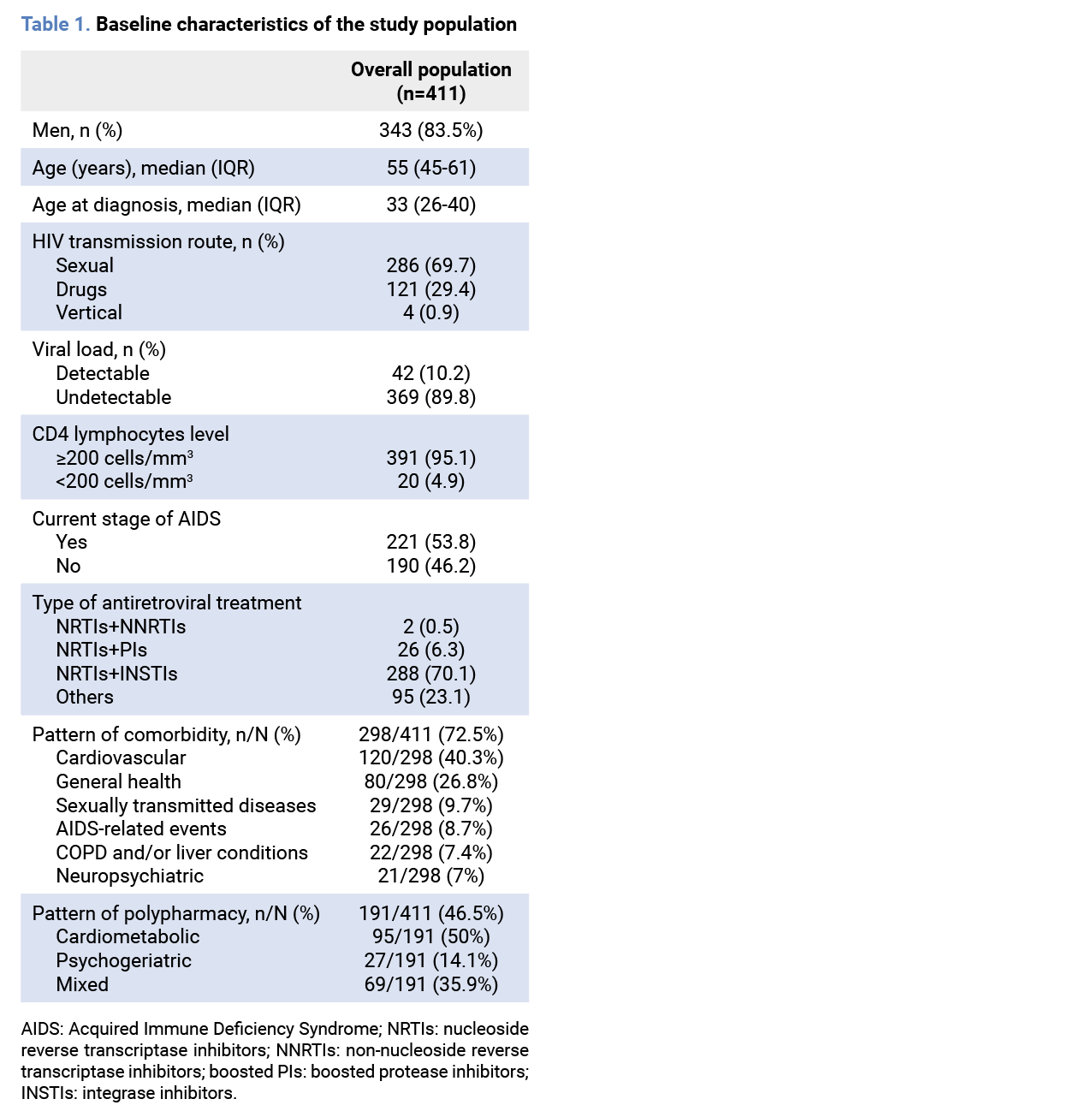 Comorbidity and polypharmacy
In terms of comorbidity, 72.5 % (n = 298) of the population had at least one comorbidity, while 27.5 % had none. Cardiovascular comorbidities were the most prevalent, affecting 40.3% of the patients.
Furthermore, the patients had a median of 3 concomitant medicines (IQR: 0–6) prescribed alongside ART. Regarding polypharmacy, 46.5 % (n = 191) of the patients had more than six medicines prescribed, with major polypharmacy occurring in 19.2 % of cases. The predominant polypharmacy pattern in these patients was cardiometabolic (50 %). Table 1 shows the distribution of comorbidity and polypharmacy patterns among the patients.
Level of stratification and index of perceived complexity of care
The MRCI was used to assess the pharmacotherapeutic complexity in PLHIV on antiretroviral therapy, yielding a median score of 8 (IQR: 4–13.5), which, although not high, reflects the complexity of the medication regimens. At the time of data collection, patients were stratified according to the HIV complexity levels defined by Morillo-Verdugo et al. [17]. The distribution was as follows: 85.4 % (n = 351) in level 3, 11.7 % (n= 48) in level 2, and 2.9 % (n = 12) in level 1. Regarding the perceived complexity index, assessed using a visual analogue scale (VAS) from 0 to 10, the median score was 0 (IQR: 0–4). This variable was categorised into three groups—low, medium, and high—corresponding to the stratification levels of Morillo-Verdugo et al. (2022). The distribution across these categories was 74.9% (n=308) in the low group, 20.4 % (n = 84) in the medium group, and 4.6 % (n = 19) in the high group.
Relationship between clinical and pharmacotherapeutic variables and the perceived care complexity
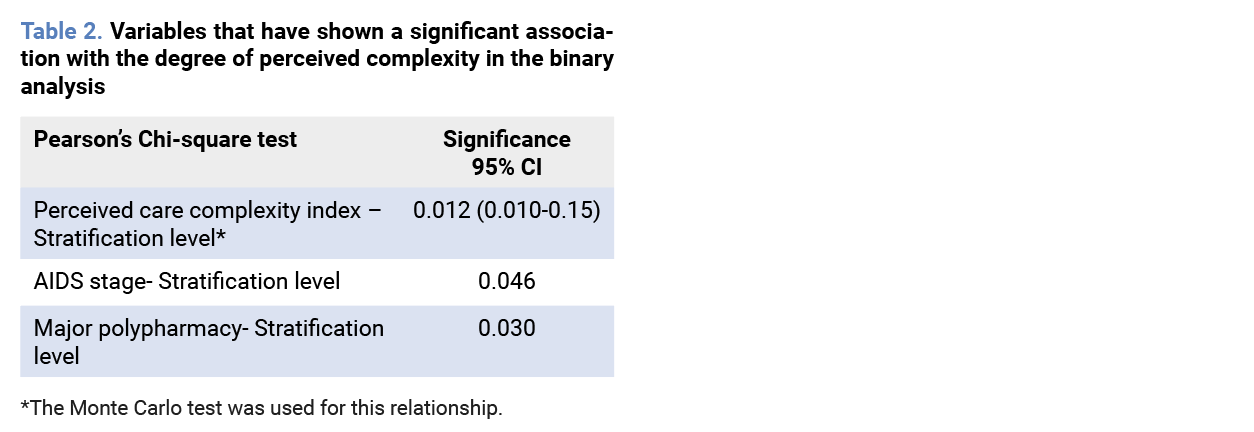
To determine the relationship between categorical variables and the perceived healthcare complexity index (categorised), contingency tables were created, and Pearson’s chi-square test along with the Monte Carlo method were applied when needed. Both tests are appropriate for analysing contingency tables with any number of rows and columns. In the bivariate analysis, variables such as AIDS stage, major polypharmacy, and stratification level showed significant associations with the perceived care complexity index
(p < 0.05) (Table 2). For the analysis of quantitative variables in relation to different levels of perceived care complexity, ANOVA or the Kruskal-Wallis test were used depending on the data distribution, which was previously assessed with the Kolmogorov-Smirnov test. No significant differences were found between the perceived care complexity index and quantitative variables such as current age, age at diagnosis, the number of concomitant medications, or the total MRCI score (p > 0.05).
 These two measures provide insight into the degree of agreement between the stratification level and the perceived care complexity index. Cramér’s V indicated a weak but significant association (p < 0.05), while the Kappa statistic suggested that the concordance between these variables was non-significant. The multinomial logistic regression model indicated that stratification levels 1 and 2 were associated with a higher likelihood of perceiving a high care complexity index. Patients in level 1 were 6.136 times more likely to perceive a high care complexity index, and those in level 2 were 4.909 times more likely, both with significant p-values (Table 3).
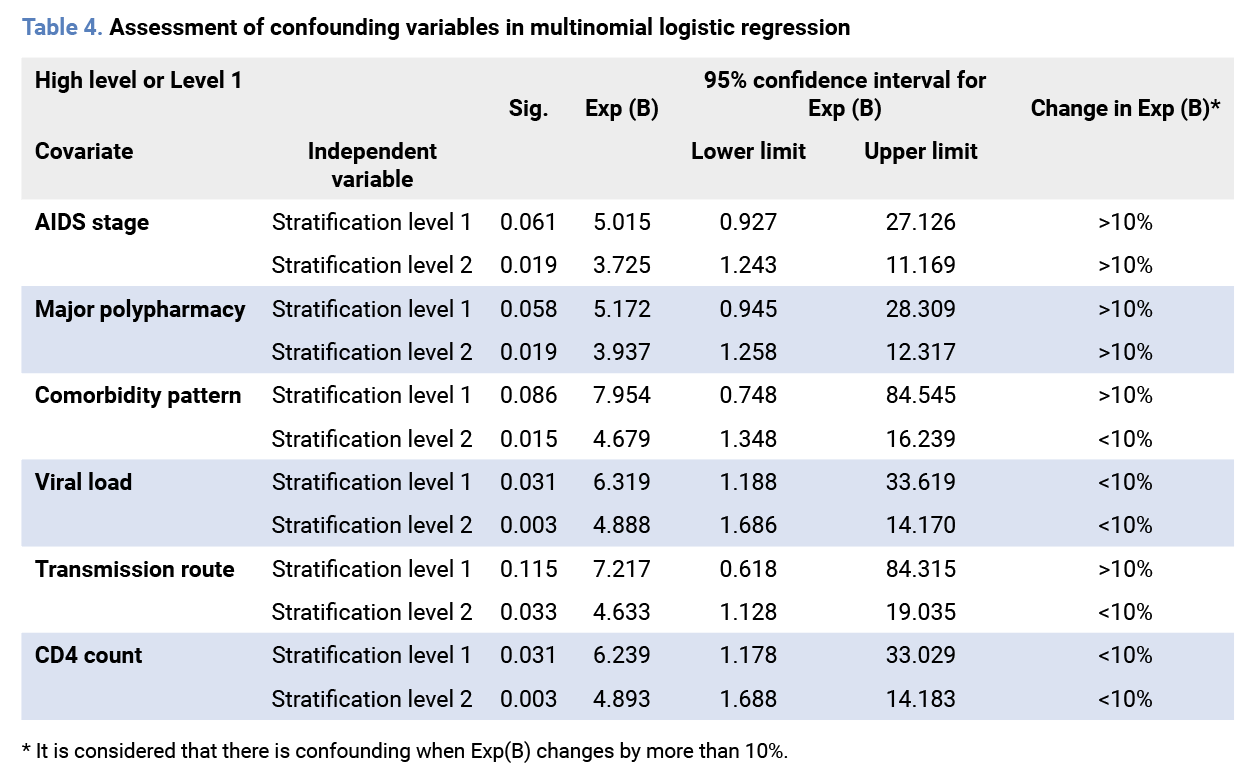
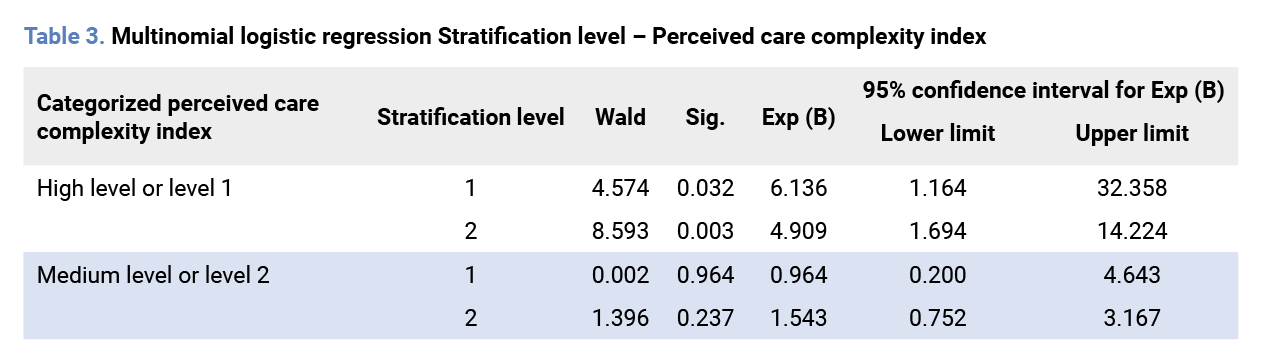 Furthermore, the multinomial logistic regression model included qualitative variables that had a p-value ≤ 0.25 in the bivariate analyses (chi-square test or Monte Carlo method), such as comorbidity pattern, AIDS stage, viral load, CD4 count, major polypharmacy, or transmission route. Factors such as comorbidity pattern, AIDS stage, transmission route, and major polypharmacy showed a confounding effect on the relationship between stratification level and perceived care complexity index as shown in Table 4.
Discussion
The findings of this study reveal a notable divergence between patients’ perceptions of healthcare complexity and the evaluations derived from multidimensional stratification tools. Importantly, a significant proportion of PLHIV perceive their care as less complex than indicated by multidimensional stratification tools. This highlights the limitations of self-assessment and underscores the need to combine both objective measures and subjective perceptions to personalise and enhance care. Addressing this disconnect is crucial for optimising care management and better meeting patients’ needs. The low concordance between the kappa coefficient and Cramér’s V reinforces the idea that, while there may be some association between perceived and objectively evaluated complexity, actual agreement remains minimal. This suggests that, from the patients’ perspective, variables such as the number of medications or the complexity of antiretroviral therapy may not hold the significance seen in clinical evaluations. Previous studies have shown that pharmaceutical interventions based on the CMO model, combined with stratification that considers various health dimensions, can improve health outcomes, primarily through enhanced treatment adherence [22-24]. A significant factor influencing treatment perceptions is HIV-related stigma. This stigma can lead patients to minimise their healthcare needs in order to avoid burdening others or to project an image of independence. Such distortions in self-assessment contribute to the gap between patient perceptions and clinical evaluations. Stigma and discrimination are known barriers to healthcare access and adherence, particularly affecting women, who face additional social vulnerabilities. These challenges foster feelings of isolation and hopelessness, highlighting the critical need to address the impact of stigma on health perceptions and treatment engagement [25]. Over time, many HIV patients develop emotional coping strategies to normalise treatment complexities, which can lead to underestimating healthcare needs compared to clinical evaluations. To bridge this gap, incorporating emotional assessments into patient stratification tools could be valuable. Research emphasises the critical role of early psychological support in enhancing social adaptation and treatment adherence. Patients who receive psychological assistance shortly after diagnosis tend to experience fewer emotional disorders and integrate more successfully into social contexts, highlighting the need for ongoing support throughout treatment [26]. Melo Brandão et al. (2020) identified effective coping strategies among people living with HIV patients, including reliance on spirituality, consistent adherence to treatment, support from healthcare professionals, and robust social networks. These strategies not only foster acceptance and empowerment but also significantly enhance psychological resilience and overall well-being [27]. As HIV care increasingly focuses on managing non-HIV-related comorbidities, particularly in high-income settings, addressing these health challenges is essential for normalising overall health outcomes [26]. In Spain, for instance, polypharmacy is prevalent among PLHIV, complicating treatment regimens and potentially impacting adherence [28]. The pressures associated with managing HIV, comorbidities, and polypharmacy can overwhelm patients, leading some to adopt denial or avoidance as coping mechanisms in response to information overload. Educational and psychoeducational interventions, such as personalised counselling and targeted workshops, are crucial for enhancing patients’ understanding of treatment adherence and effective strategies for managing comorbidities. Furthermore, improving communication and education regarding stratification criteria is essential. Ensuring that patients comprehend how clinical factors contribute to their complexity classification can help bridge the gap between perceptions and objective assessments. Social support significantly influences how patients perceive the complexity of their treatment. Those with robust support networks—such as family or friends assisting with medicines and appointments—often find their treatment less burdensome. In contrast, those with low support may feel overwhelmed. Studies link strong social support to better adherence to antiretroviral therapy, as it fosters improved doctor-patient communication and reduces non-adherence [29]. Given that low social support is common among PLHIV and associated with poorer health outcomes, tools like the MAPSS—an electronic, patient-reported measure of perceived social support—could help identify individuals at risk for adverse outcomes [30]. Strengthening support networks for PLHIV could thus play a crucial role in improving health outcomes. Chronic treatment fatigue, arising from daily medicine adherence, frequent appointments, and continuous monitoring, can lead HIV patients to underestimate their condition’s severity as a coping mechanism. This “treatment fatigue” can result in cognitive dissonance, where patients minimise the effort required for self-care. Addressing this issue is vital, as it impacts perceptions of care complexity. Interventions aimed at alleviating emotional fatigue, such as regular psychological support or restructuring treatment schedules to reduce clinic visits, could be beneficial. Long-acting antiretrovirals also hold promise for reducing treatment burden and improving adherence for those experiencing treatment fatigue [31]. This study has several limitations. Firstly, as a retrospective analysis from a single center, the generalisability of the findings may be restricted. Secondly, the reliance on self-reported data introduces an inherent element of subjectivity, particularly given that patients’ perceptions were assessed using a VAS. This method, while simple, may not fully capture the multidimensional nature of care complexity and could introduce bias due to its reliance on a single, generalised question that might be misunderstood or influenced by individual interpretation. Future studies could benefit from more structured methodologies, such as semi-quantitative interviews or validated scales for assessing patient perceptions, and should focus on key areas of research, including prospective multicenter studies to identify factors influencing patients’ perceptions of healthcare complexity, the development of stratification tools integrating both clinical metrics and psychosocial factors, and the design of interventions targeting both clinical and perceptual aspects of care complexity, which could improve patient engagement, adherence, and long-term health outcomes in PLHIV. In summary, this study highlights the need for a holistic approach to assessing care complexity in HIV patients by integrating both clinical evaluations and patients’ perceptions. Combining these perspectives can enable pharmacists to provide more personalised care, improving treatment adherence and outcomes in managing HIV and its comorbidities. Funding None to declare. Conflict of interests The authors declare no have conflicts of interest. Author contributions Conceptualization, CGG and RMV; methodology, CGG; validation, CGG, ECM and RMV; formal analysis, CGG; investigation, CGG, ECM, GANP and RMV; resources, RMV; data curation, CGG, ECM and RMV; writing—original draft preparation, CGG; writing—review and editing, CGG and RMV; visualization, CGG and RMV; supervision, RMV; project administration, CGG and RMV. All authors have read and agreed to the published version of the manuscript.References
- Cahill S, Valadéz R. Growing older with HIV/AIDS: new public health challenges. Am J Public Health. 2013;103(3): e7-e15. Available from: http://dx.doi.org/10.2105/AJPH.2012.301161
- Jericó C, Knobel H, Sorli ML, Montero M, Guelar A, Pedro-Botet J. Prevalencia de factores de riesgo cardiovascular en pacientes con infección por el VIH. Rev Clínica Esp. 2006; 206(11):556-9. Available from: http://dx.doi.org/10.1157/13096303
- Domingo P, Suarez-Lozano I, Teira R, Lozano F, Terrón A, Viciana P, et al. Dyslipidemia and Cardiovascular Disease Risk Factor Management in HIV-1-Infected Subjects Treated with HAART in the Spanish VACH Cohort. Open AIDS J. 2008;2(1):26-38. Available from: http://dx.doi.org/10.2174/187461360082010026
- Smit M, Brinkman K, Geerlings S, Smit C, Thyagarajan K, Sighem AV, et al. Future challenges for clinical care of an ageing population infected with HIV: a modelling study. Lancet Infect Dis. 2015;15(7):810-8. Available from: http://dx.doi.org/10.1016/S1473-3099(15)00056-0
- Schouten J, Wit FW, Stolte IG, Kootstra NA, Van Der Valk M, Geerlings SE, et al. Cross-sectional Comparison of the Prevalence of Age-Associated Comorbidities and Their Risk Factors Between HIV-Infected and Uninfected Individuals: The AGEhIV Cohort Study. Clin Infect Dis. 2014;59(12):1787-97. Available from: http://dx.doi.org/10.1093/cid/ciu701
- Althoff KN, McGinnis KA, Wyatt CM, Freiberg MS, Gilbert C, Oursler KK, et al. Comparison of Risk and Age at Diagnosis of Myocardial Infarction, End-Stage Renal Disease, and Non-AIDS-Defining Cancer in HIV-Infected Versus Uninfected Adults. Clin Infect Dis. 2015;60(4):627-38. Available from: http://dx.doi.org/10.1093/cid/ciu869
- Negredo E, Back D, Blanco JR, Blanco J, Erlandson KM, Garolera M, et al. Aging in HIV-Infected Subjects: A New Scenario and a New View. BioMed Res Int. 2017;2017: 5897298. Available from: http://dx.doi.org/10.1155/2017/5897298
- Contreras-Macías E, Gutiérrez-Pizarraya A, Robustillo-Cortés MA, Morillo-Verdugo R, UGC Farmacia, Hospital Universitario Virgen de Valme, Sevilla, Spain. High level of medication regimen complexity index correlate with worse quality of life in people living with HIV. Rev Esp Quimioter. 2021;34(2):93-9. Available from: http://dx.doi.org/10.37201/req/097.2020
- Edelman EJ, Gordon KS, Glover J, McNicholl IR, Fiellin DA, Justice AC. The Next Therapeutic Challenge in HIV: Polypharmacy. Drugs Aging. 2013;30(8):613-28. Available from: http://dx.doi.org/10.1007/s40266-013-0093-9
- Gimeno-Gracia M, Crusells-Canales MJ, Javier Armesto-Gómez F, Rabanaque-Hernández MJ. Prevalence of concomitant medications in older HIV+ patients and comparison with general population. HIV Clin Trials. 2015;16(3):117-24. Available from: http://dx.doi.org/10.1179/1528433614Z.0000000012
- Moulis F, Moulis G, Balardy L, Gérard S, Montastruc F, Sourdet S, et al. Exposure to Atropinic Drugs and Frailty Status. J Am Med Dir Assoc. 2015;16(3):253-7. Available from: http://dx.doi.org/10.1016/j.jamda.2014.11.017
- Fried LP, Tangen CM, Walston J, Newman AB, Hirsch C, Gottdiener J, et al. Frailty in Older Adults: Evidence for a Phenotype. J Gerontol A Biol Sci Med Sci. 2001;56(3):M146-57. Available from: http://dx.doi.org/10.1093/gerona/56.3.m146
- Bohannon RW. Hand-Grip Dynamometry Predicts Future Outcomes in Aging Adults: J Geriatr Phys Ther. 2008;31(1):3-10. Available from: http://dx.doi.org/10.1519/00139143-200831010-00002
- Yang C, Teh YE, Chua NGS, Lee KLS, Ng RQM. An overview of multimorbidity and polypharmacy in older people living with HIV. Geriatr Gerontol Int. 2024;24(S1):49-59. Available from: http://dx.doi.org/10.1111/ggi.14717
- Morillo-Verdugo R, Aguilar Pérez T, Gimeno-Gracia M, Rodríguez-González C, Robustillo-Cortes M de LA. Simplification and Multidimensional Adaptation of the Stratification Tool for Pharmaceutical Care in People Living With HIV. Ann Pharmacother. 2023;57(2):163-74. Available from: http://dx.doi.org/10.1177/10600280221096759
- Morillo-Verdugo R, Martínez-Sesmero JM, Lázaro-López A, Sánchez-Rubio J, Navarro-Aznáres H, deMiguel-Cascón M. Development of a risk stratification model for pharmaceutical care in HIV patients. Farm Hosp. 2017; 41(3): 346-56. Available from: http://dx.doi.org/10.7399/fh.2017.41.3.10655
- Morillo-Verdugo R, Lazaro-Lopez A, Alonso-Grandes E, Martin-Conde MT, Diaz-Ruiz P, Molina-Cuadrado E, et al. Patient Experience Evaluation of the CMO-Based Pharmaceutical Care Model vs Usual Care in People Living with HIV. J Multidiscip Healthc. 2022; Volume 15:2991-3003. Available from: http://dx.doi.org/10.2147/JMDH.S392398
- Martínez Sesmero JM, Margusino Framiñan L, Gimeno Gracia M, Áreas Del Águila V, Navarro Aznares H, Huertas Fernández MJ, et al. Comparison of quality of life in patients living with HIV infection through pharmaceutical care according to CMO methodology vs. conventional follow-up. MAS-VIH project. Rev Esp Quimioter. 2024;37(2):149-57. Available from: http://dx.doi.org/10.37201/req/105.2023
- Grupo de expertos de la Secretaría del Plan Nacional sobre el sida (SPNS), Sociedad Española de Geriatría y Gerontología (SEGG). Documento de Consenso sobre edad avanzada e infección por el virus de la inmunodeficiencia humana [Internet], 2015 [cited 4.11.24]. Available from: https://www.segg.es/media/descargas/Documento-de-edad-avanzada-y-VIH.pdf.
- George J, Phun YT, Bailey MJ, Kong DC, Stewart K. Development and Validation of the Medication Regimen Complexity Index. Ann Pharmacother. 2004; 38(9): 1369-76. Available from: http://dx.doi.org/10.1345/aph.1D479
- Morillo-Verdugo r, De las Aguas Robustillo-Cortés M, Abdel-Kader Martin L, Alvarez de Sotomayor Paz M, Lozano de León Naranjo F, Alméida-González CV. Determinación del valor umbral del índice de complejidad de la farmacoterapia para predecir polifarmacia en pacientes VIH+. Rev Esp Quimioter. 2019; 32(5): 458-64.
- Morillo-Verdugo R, Vélez-Díaz-Pallarés M, Fernández-Pacheco García-Valdecasas M, Fernéndez-Espínola S, Sánchez-Rubio Fernández J, Navarro-Ruiz A. Application of the CMO methodology to the improvement of primary adherence to concomitant medication in people living with-HIV. The PRICMO Project. Farm Hosp. 2021;45(5):247-52. Available from: http://dx.doi.org/10.7399/fh.11673
- Guzmán Ramos MI, Manzano Garcia M, Robustillo-Cortés MA, Gutiérrez Pizarraya A, Morillo-Verdugo R. Influence of CMO pharmaceutical care model-based intervention on readmission rate in high risk HIV patients: the INFARDAR study. Rev Esp Quimioter. 2021;34(5):459–67. Available from: http://dx.doi.org/10.37201/req/025.2021
- Zarate-Tamames B, Garin N, Calvin-Lamas M, Jornet S, Martínez-Simon JJ, García-Gil S, et al. Transforming respiratory diseases management: a CMO-based hospital pharmaceutical care model. Front Pharmacol. 2024; 15:1461473. Available from: http://dx.doi.org/10.3389/fphar.2024.1461473
- Campillay Campillay MDL, Monárdez Monárdez M. Estigma y discriminación en personas con VIH/SIDA, un desafío ético para los profesionales sanitarios. Rev Bioet Derecho. 2019; (47): 93-107. Available from: http://dx.doi.org/10.1344/rbd2019.0.26805
- Brandão BMGM, Angelim RCM, Marques SC, Oliveira RC, Abrão FMDS. Living with HIV: coping strategies of seropositive older adults. Rev Esc Enferm USP. 2020;54: e03576. Available from: http://dx.doi.org/10.1590/s1980-220x2018027603576
- Martínez-Sanz J, Serrano-Villar S, Vivancos MJ, Rubio R, Moreno S; HIV-associated comorbidities Study Group. Management of Comorbidities in Treated HIV Infection: A Long Way to Go: HIV, comorbidities and aging. Int J Antimicrob Agents. 2022; 59(1):106493. Available from: http://dx.doi.org/10.1016/j.ijantimicag.2021.106493
- Morillo-Verdugo R, Sánchez-Rubio-Ferrández J, Gimeno-Gracia M, Robustillo-Cortés MLA, Almeida-González CV; POINT study group. Prevalence of polypharmacy and associated factors among patients living with HIV infection in Spain: The POINT study. Enferm Infecc Microbiol Clin. 2020; 40(1)7-13. Available from: http://dx.doi.org/10.1016/j.eimc.2020.09.020
- Oliveira RS, Primeira MR, Santos WMD, Paula CC, Padoin SMM. Association between social support and adherence to anti-retroviral treatment in people living with HIV. Rev Gaucha Enferm. 2020; 41:e20190290. Available from: http://dx.doi.org/10.1590/1983-1447.2020.20190290
- Fredericksen RJ, Gibbons LE, Fitzsimmons E, Nance RM, Schafer KR, Batey DS, et al. Impact and correlates of sub-optimal social support among patients in HIV care. AIDS Care. 2021; 33(9):1178-88. Available from: http://dx.doi.org/10.1080/09540121.2020.1853660
- Nachega JB, Scarsi KK, Gandhi M, Scott RK, Mofenson LM, Archary M, et al. Long-acting antiretrovirals and HIV treatment adherence. Lancet HIV. 2023;10(5):e332-e42. Available from: http://dx.doi.org/10.1016/S2352-3018(23)00051-6
Explore
Articles
Volumes
About the journal
Most read
Recomendaciones para la prevención y el tratamiento de las infecciones respiratorias en adultos mayores institucionalizados
Revista Española de Quimioterapia
Acute infectious gastroenteritis in childhood: the role of rapid multiplex molecular syndromic panels in diagnosis and clinical management
Revista Española de Quimioterapia
Características epidemiológicas de pacientes con aislamientos de Enterobacterales productores de carbapenemasas-NDM en un hospital de alta complejidad
Revista Española de Quimioterapia
Review on the management of intra-abdominal candidiasis
Revista Española de Quimioterapia
Neoscytalidium dimidiatum: a rare locally acquired deep cutaneous infection in a renal transplant recipient
Revista Española de Quimioterapia