Original
October 2025, Volume 38, nº5
13 min
Effectiveness and safety of dual therapy with co-packaged dolutegravir and lamivudine compared to triple therapy as switching strategy in clinical practice
Diego Cecchini1* , Edgardo Bottaro1 , Brenda Bacelar1 , Ángeles Tisné1, Claudia Migazzi1, Macarena Roel1 , Maximiliano Bergman2 , Isabel Cassetti1
1Helios Salud, Buenos Aires, Argentina
2Laboratorio Richmond, Buenos Aires, Argentina
http://www.doi.org/10.37201/req/030.2025
Receipt Date:
06/03/2025
Acceptance Date:
14/05/2025
Publication Date:
15/06/2025
How to cite
Cecchini D, Bottaro E, Bacelar B, Tisné Á, Migazzi C, Roel M, et al. Effectiveness and safety of dual therapy with co-packaged dolutegravir and lamivudine compared to triple therapy as switching strategy in clinical practice. Rev Esp Quimioter. 2025; 38(5):383-393. Available from: http://www.doi.org/10.37201/req/030.2025
Metrics
636
Views
113
Downloads
Share
Share
Abstract (EN)
Introduction: Dolutegravir plus lamivudine (DTG/3TC) dual therapy has demonstrated efficacy in HIV treatment, but access remains challenging in Latin America. Argentina approved a generic co-packaged DTG+3TC presentation to improve accessibility. This study evaluated the effectiveness and safety of co-packed DTG/3TC compared to DTG-based triple therapy in clinical practice.
Materials and methods: A retrospective observational cohort study conducted between October 2019 and November 2023 at a reference HIV center in Argentina. Treatment-experienced people living with HIV (PLWH) with viral suppression who switched to either co-packaged DTG/3TC or DTG-based triple therapy were included. Primary outcomes included persistence, virologic suppression rates (VSR), and safety at 6, 12, and 18 months.
Results: Of 599 PLWH, 245 (41%) switched to dual therapy and 354 (59%) to triple therapy. Persistence rates for dual therapy at 6, 12, and 18 months were 99%, 100% and 98%; for triple therapy: 99%, 97% and 97%, respectively. VSR for dual therapy were 99%, 98% and 99%; for triple therapy: 99%, 97% and 98% at the same timepoints. Adverse event rates were low in both groups: dual therapy (0.5%, 0%, 0.8% at 6, 12, 18 months) and triple therapy (1.2%, 0.7%, 0.4% at 6, 12, 18 months).
Conclusions: Co-packaged DTG/3TC demonstrated high persistence and virologic suppression rates with a favorable safety profile in clinical practice. Its effectiveness and safety were comparable to DTG-based triple therapy, supporting its use as a cost-effective alternative for treatment-experienced PLWH in resource-limited settings.
Keywords (EN):
Latin America
Dual therapy
HIV
Dolutegravir
Antiretroviral therapy
Introduction
Dolutegravir/lamivudine (DTG/3TC) has demonstrated robust efficacy and safety as a dual therapy for treatment-experienced adult people living with HIV (PLWH) [1,2]. This combination has gained a significant position as a switch strategy in the experienced population, according to major international guidelines, as it represents an option that allows for a reduction in the number of drugs while maintaining therapeutic efficacy. The U.S. Department of Health and Human Services (DHHS) recommendations include DTG/3TC as a switching option for virologically suppressed individuals, with the precaution of avoiding its use in those with active HBV infection or when prior resistance testing is unavailable [3]. Similarly, the European AIDS Clinical Society (EACS) guidelines support the use of DTG/3TC as a switch strategy in HBsAg-negative patients with a suppressed viral load [4]. This endorsement is based primarily on robust clinical trial data from the TANGO and SALSA studies, which demonstrated non-inferiority of switching to DTG/3TC compared to continuing ongoing antiretroviral regimen. Briefly, in the TANGO study, switching to DTG/3TC showed non-inferior efficacy versus continuing tenofovir alafenamide-based regimens through 144 weeks, with no cases of confirmed virologic failure or treatment-emergent resistance. The SALSA trial further validated these findings across diverse populations, demonstrating non-inferiority when switching to DTG/3TC compared to continuing various three- or four-drug regimens based on non-nucleoside reverse transcriptase inhibitors (NNRTI), integrase inhibitors or boosted protease inhibitor (PIs), with comparable safety profiles and no resistance development [5,6]. Despite the proven efficacy of current antiretroviral regimens, access remains a significant challenge in Latin America. Antiretroviral therapy coverage in the region is estimated at only 73%, with barriers including medication costs and limited availability [7]. To address these challenges, optimizing treatments with more affordable options has become a priority, with several countries adopting strategies to increase access to generic formulations. In Argentina, HIV continues to represent a significant public health challenge, with approximately 5,000 new HIV diagnoses reported annually and over 140,000 people currently living with HIV nationwide[8]. While infection rates have remained stable over the past two decades, recent reductions in prevention programs raise concerns about maintaining progress in controlling the epidemic. To improve access to effective and affordable antiretroviral therapy, Argentina approved a generic presentation of DTG 50 mg + 3TC 300 mg as a co-packaged formulation containing both medications as separate tablets in a single blister pack for once-daily dosing The blister is die-cut to allow separation of the two tablets corresponding to the daily dose (Figure 1) [9].This differs from the single-tablet fixed-dose combination formulation used in studies like TANGO and SALSA, and in real-world cohorts reported to date. However, despite its availability in both public and private healthcare sectors in Argentina, there is limited evidence regarding the effectiveness and safety of this co-packaged formulation in clinical practice.
Patients and methods
Study design and objectives Real-world observational study evaluating the effectiveness and safety of switching to co-packaged DTG/3TC (coDTG/3TC) regimens, compared to DTG-based triple therapy (3DR), among virologically suppressed PLWH in routine clinical practice. The objectives were: a) To characterize the demographic and clinical profile of PLWH switching to coDTG/3TC vs 3DR. b) To compare effectiveness by assessing virologic suppression rates (VSR), defined as HIV-1 RNA <50 copies/mL at 6, 12 and 18 months. c) To characterize persistence, tolerability and safety, including adverse events at 6, 12 and 18 months. Study location, data sources and population The study population included treatment experienced PLWH who were switched to generic coDTG/3TG or 3DR in routine care prescription between October 2019 and December 2022 in a private HIV center with headquarters located in Buenos Aires, with a network across the country. It covers ART for 14,000 health-insured PLWH in its nationwide ambulatory program providing clinical follow-up and laboratory assessments. Participants met the following eligibility criteria: confirmed HIV infection by serologic testing and a baseline detectable viral load or positive Western blot, aged 18 years and over, experienced on ART, and having virologic suppression (viral load <50 copies/mL) at the time of switching to coDTG/3TC or 3DR in routine clinical practice. Subjects participating in clinical trials involving dual therapy, those receiving DTG/3TC as a fixed-dose combination or DTG and 3TC in different medicine boxes or bottles, and those switching ART outside the clinic’s network were excluded. Participants were identified through the institution’s electronic clinical charts. Information on demographics, HIV history, ART exposure, comorbidities, immune-virologic outcomes, and adverse events was retrospectively extracted from records by trained physicians. Only subjects on treatment were included in the analysis (discontinuations/missing data = excluded). Study data were collected and managed using REDCap (Research Electronic Data Capture, Vanderbilt University, Nashville, TN, USA), electronic data capture tools hosted at Fundación Helios Salud. Statistical analysis Statistical analysis employed both descriptive and analytical approaches. Categorical variables were summarized using absolute and relative frequencies, while continuous variables were described using medians and interquartile ranges (IQRs). Group comparisons for continuous variables were conducted using the Mann–Whitney U test. Categorical variables were compared using the chi-square test or Fisher’s exact test, as appropriate. All statistical tests were two-sided, with a significance threshold set at p < 0.05. Missing values were handled without exclusion, depending on the specific analysis. Graphical techniques, including boxplots and bar charts, were used to visualize key findings. All analyses were performed using R version 4.4.1 (R Core Team, 2024), with relevant packages for data processing, visualization, and hypothesis testing. Ethical statement This protocol was reviewed and approved by the Comité de Ética en Investigación Clínica (CEIC) in Buenos Aires, Argentina. Due to its retrospective design analyzing existing medical record data, a waiver of informed consent was granted, as this involved no direct contact with subjects.Results
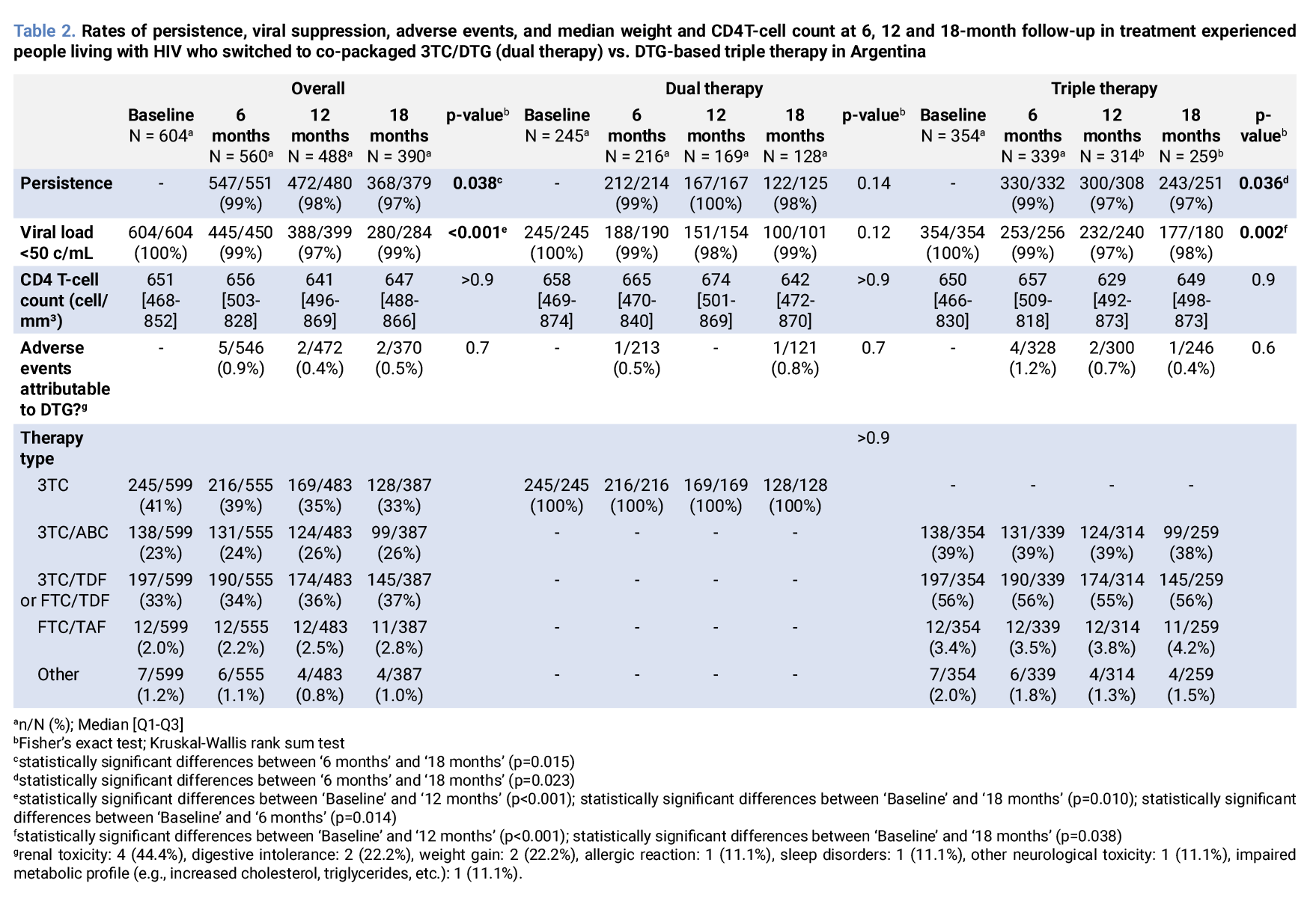
Of 599 people living with HIV (PLWH), 245 patients (40.8%) were switched to coDTG/3TC, while 354 (59.2%) transitioned to 3DR, comprising mainly 138 patients on 3TC/ABC and 197 on XTC/TDF. A summary of baseline characteristics is described in Table 1. Briefly, the study population was predominantly male (68.3%). PLWH switched to 3DR were younger than those switched to coDTG/3TC and had a higher frequency of previous virologic failure. Prior to switching, the most common antiretroviral therapies were first-generation NNRTIs and boosted PIs. The rationale for switching differed between groups: prevention of toxicity was more frequently described in the coDTG/3TC group (24.9% vs 14%), while ongoing toxicity was more commonly reported in the 3DR group (35.5% vs 27%). In 3DR, the predominant nucleoside backbone was XTC/TDF.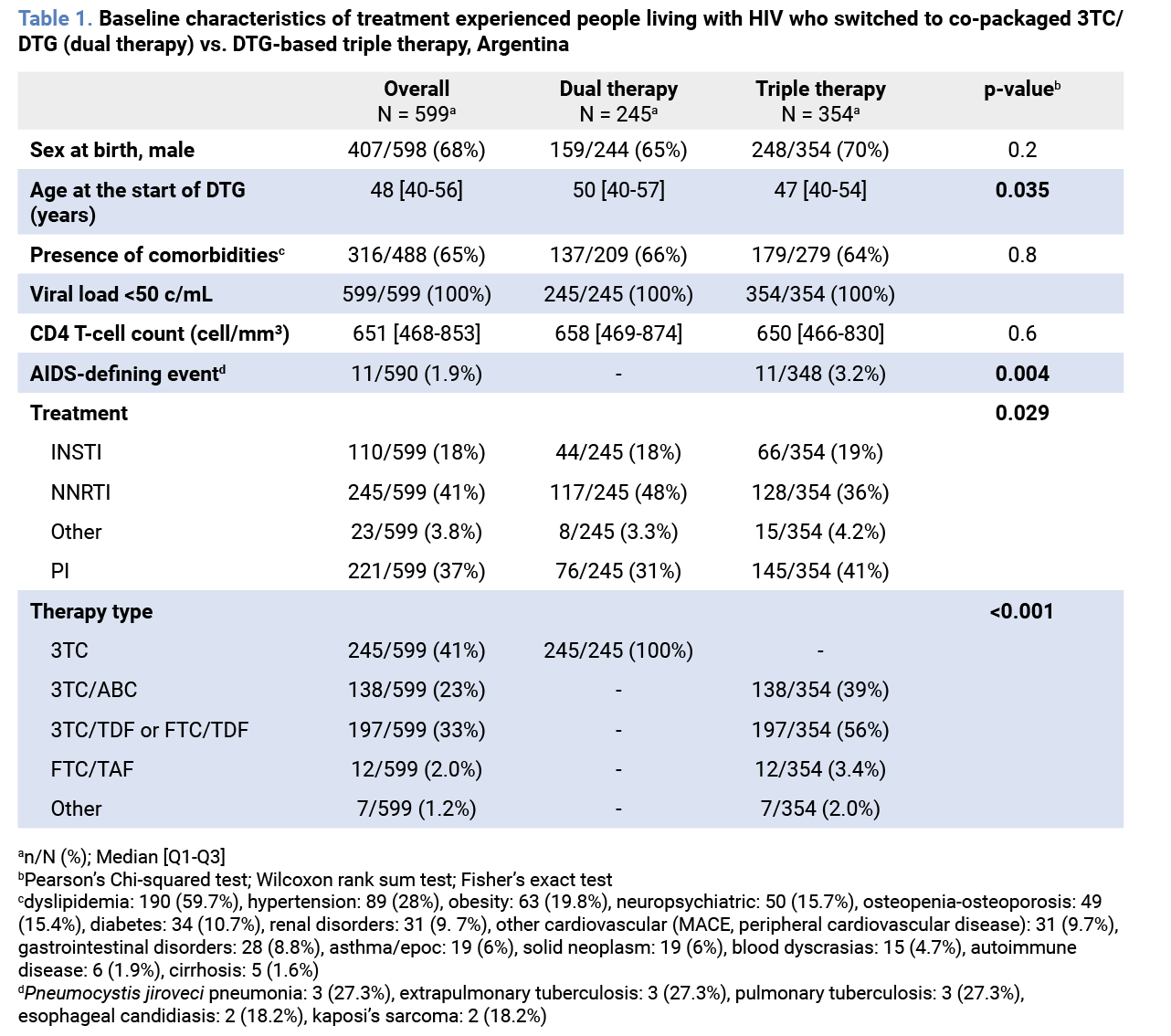 Persistence rates across all time points were high in both treatment arms: coDTG/3TC showed persistence rates of 99%, 100%, and 98% at 6, 12, and 18 months, respectively. The 3DR group maintained rates of 99%, 97%, and 97% across the same intervals. When analyzing subgroups, patients on XTC/TDF showed persistence rates of 99%, 95%, and 96%, while those on 3TC/ABC achieved rates of 100% at 6, 12, and 18 months, respectively.
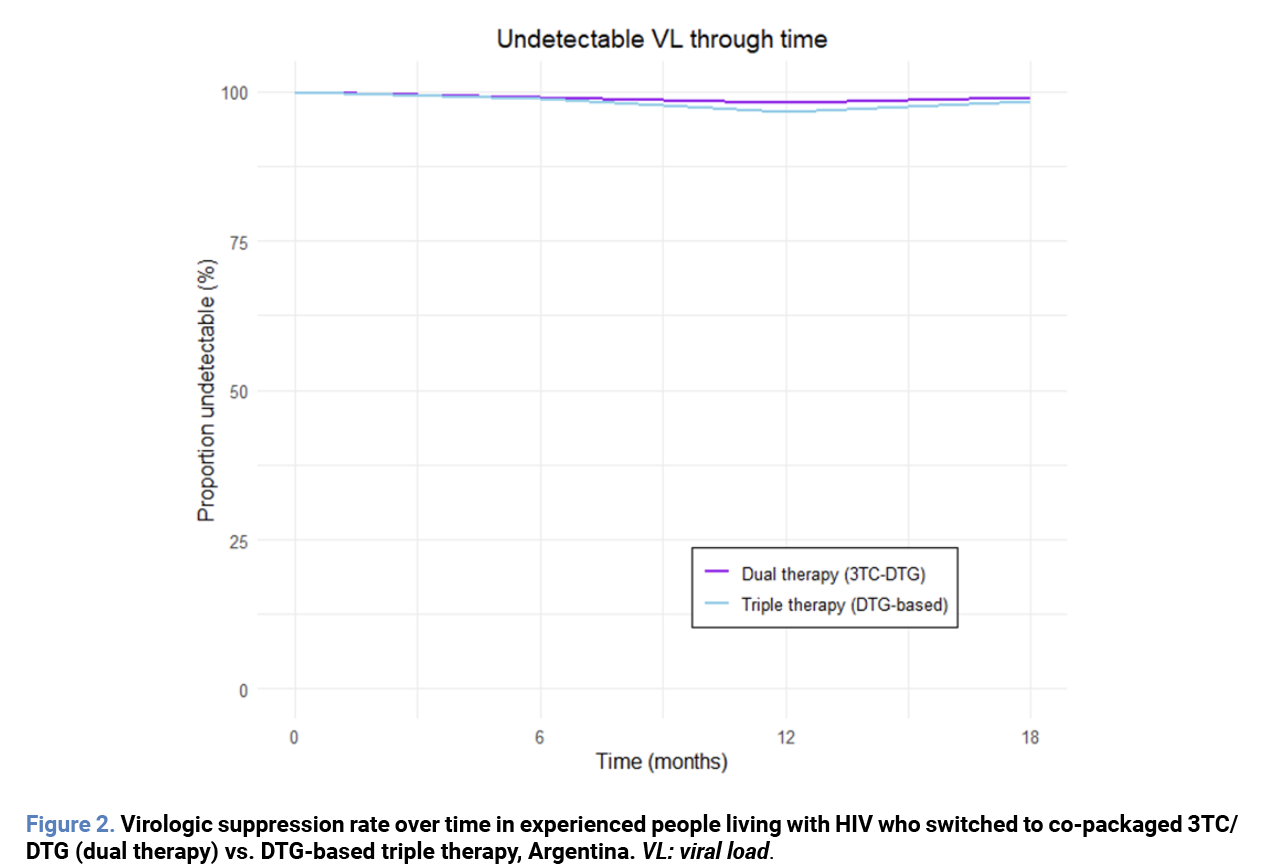
VSR were high across both treatment strategies (Figure 2). The coDTG/3TC group maintained VSR of 99%, 98%, and 99% at 6, 12, and 18 months, respectively. Comparable results were observed in the 3DR group, with rates of 99%, 97%, and 98% at the same time points. Within the 3DR cohort, patients on XTC/TDF achieved VSR of 99%, 95%, and 99%, while those on 3TC/ABC maintained rates of 99%, 98%, and 99% at 6, 12, and 18 months, respectively.
 Safety profiles were favorable in both treatment strategies, with minimal attributable adverse events. The coDTG/3TC group experienced adverse event rates of 0.5%, 0%, and 0.8% at 6, 12, and 18 months, respectively. Similarly, the 3DR group showed rates of 1.2%, 0.7%, and 0.4% across the same intervals. When stratifying by nucleoside backbone, those on 3TC/ABC reported one adverse event at 6 months (0.8%), while those on XTC/TDF experienced rates of 1.6%, 1.2%, and 0.7% at 6, 12, and 18 months, respectively. A summary of main outcomes is shown in Table 2.
Discussion
This study represents the first real-world evidence on the effectiveness and safety of a co-packaged DTG + 3TC formulation in clinical practice, a pharmaceutical presentation where both drugs are provided as separate tablets in a single blister pack, differing from the fixed-dose combinations used in clinical trials and other real-world cohorts. The effectiveness results observed in our cohort align remarkably well with those reported in the pivotal TANGO and SALSA trials. In TANGO, switching to DTG/3TC demonstrated noninferiority with 0.3% of participants having HIV-1 RNA ≥50 copies/mL at week 144 compared to 1.3% in those continuing TAF-based regimens, with no resistance development. Similarly, SALSA showed noninferiority with 0.4% versus 1.2% participants having HIV-1 RNA ≥50 copies/mL at week 48 when comparing DTG/3TC to continuing current antiretroviral regimens [5,6]. Our study demonstrated comparable virologic suppression rates exceeding 96% across all time points for both dual and triple therapy arms, with no significant differences between groups. The real-world effectiveness of coDTG/3TC observed in our study is consistent with findings from other observational cohorts worldwide. Buzón et al. reported virologic suppression rates over 96% in a large Spanish cohort of 1,032 PLWH [10]. Maggiolo et al. demonstrated sustained virologic efficacy over 5 years with 77.1% of individuals maintaining the DTG-3TC combination and no virologic failures detected [11]. Similarly, Pierone et al. reported low incidence rates of virologic failure (0.66 per 100 person-years) in their United States cohort [12]. Our study’s high persistence rates and favorable virologic outcomes in a co-packaged presentation in a Latin American country complement these findings. The safety profile of co-packaged DTG/3TC demonstrated remarkably low adverse event rates, with only 0.8% of patients experiencing attributable adverse events at 18 months. These findings align with the established safety data from pivotal clinical trials [5,6], where DTG/3TC showed comparable or better safety profiles than three-drug regimens, particularly with fewer serious adverse events. While the co-packed formulation might theoretically present adherence challenges compared to single-tablet regimens, the study showed high persistence rates exceeding 97% across all time points. This is particularly noteworthy since single-tablet regimens have traditionally been associated with better adherence and outcomes compared to multiple-tablet regimens [13]. The most commonly reported drug-related adverse events with DTG/3TC include weight gain and insomnia [14], though these were minimally observed in the co-packaged formulation cohort. The favorable safety profile, combined with the practical advantage of potential cost reduction through generic co-packaged formulations, suggests that this presentation offers a viable alternative to single-tablet regimens without compromising safety or effectiveness [15]. The main limitations of this report include its retrospective design, which may introduce selection bias, and the relatively short follow-up period of 18 months. Additionally, the study population was predominantly from a private healthcare setting, potentially limiting generalizability to public healthcare contexts in which coDTG/3TC is also available in Argentina. The uneven distribution of previous virologic failure between groups (higher in 3DR arm) indicates a bias in treatment allocation but reflects the routine clinical practice in which doctors usually prefer triple therapy in the context of documented or suspected drug resistance. Also, differences in age, reason for the switch and anchor drug of previous regimens differed between groups, showing targeted physician preferences while changing therapy in real life. An additional limitation of our study is the lack of comparison between co-packaged DTG/3TC and separately dispensed DTG and 3TC pills. Such a comparison would have allowed us to specifically evaluate the influence of the co-packaging format on treatment outcomes, adherence, and persistence. While previous studies have demonstrated the efficacy of DTG/3TC as a dual therapy regimen, the specific impact of different presentation formats (co-packaged versus separate pills versus fixed-dose combinations) remains incompletely understood. During our study period, we did not have a sufficient cohort of patients receiving DTG and 3TC as separate pills from different medicine boxes to make a valid comparison. Future research should specifically address how different pharmaceutical presentations of the same active ingredients might influence real-world effectiveness and adherence patterns, particularly in resource-limited settings where various formulations might be available based on cost and procurement considerations. Our cohort stands out for its considerable sample size, providing data from a Latin American context and supporting local/regional guidelines. The study’s comprehensive data collection through electronic medical records and standardized follow-up enhanced data quality. Furthermore, the inclusion of both dual and triple therapy arms with different nucleoside backbones allowed for robust comparative effectiveness analysis in routine clinical practice. This real-world data may support healthcare systems strategies seeking to optimize treatment access while managing limited resources, as co-packaged generic formulations could offer cost advantages compared to branded single-tablet regimens. However, careful patient selection remains crucial, as demonstrated by the lower rate of previous virologic failure in the dual therapy group and access to hepatitis B screening before prescription.Conclusion
This study provides local evidence supporting the effectiveness and safety of switching to a co-packaged DTG + 3TC formulation in Argentina, addressing a knowledge gap regarding alternative drug presentations available in resource-limited settings. While fixed-dose combinations remain the gold standard, co-packaged formulations represent a viable strategy to increase access to effective antiretroviral therapy as part of national HIV treatment programs without compromising treatment outcomes. Acknowledgments Parts of this study have been presented at the HIV Glasgow Congress, 10–13 November 2024, poster P093. Funding This study was sponsored by Laboratorio Richmond. Conflicts of interest The authors declare the following potential conflicts of interest: DC has received educational grants from Laboratorio Richmond. MB is a full-time employee of Laboratorio Richmond. All other authors declare that they have no known competing financial interests or personal relation ships that could have appeared to influence the work reported in this paper. These financial relationships are hereby disclosed in the interest of full transparency. The authors affirm that these arrangements have not influenced the content or conclusions of the present work. Authors contributions Conceptualization, D.C. and E.B.; Methodology, D.C.; Software, M.R.; Validation, M.R., I.C., and M.B.; Formal analysis, M.C.; Investigation, E.B., B.B., A.T. and C.M. ; Resources, I.C.; Data curation, M.C.; Writing – original draft, D.C.; Writing – review and editing, E.B.; Visualization, M,B.; Supervision, I.C.; Project administration, D.C.; Funding acquisition, I.C. All authors have read and approved the final version of the manuscript.References
- Patel R, Evitt L, Mariolis I, Di Giambenedetto S, d’Arminio Monforte A, Casado J, et al. HIV Treatment with the Two-Drug Regimen Dolutegravir Plus Lamivudine in Real-world Clinical Practice: A Systematic Literature Review. Infectious Diseases and Therapy . 2021; 10(4):2051–70. Available from: https://doi.org/10.1007/s40121-021-00522-7
- Cento V, Perno CF. Two-drug regimens with dolutegravir plus rilpivirine or lamivudine in HIV-1 treatment-naïve, virologically-suppressed patients: Latest evidence from the literature on their efficacy and safety. Journal of Global Antimicrobial Resistance. 2020; 20:228–37. Available from: http://dx.doi.org/10.1016/j.jgar.2019.08.010
- Guidelines for the Use of Antiretroviral Agents in Adults and Adolescents with HIV. Optimizing Antiretroviral Therapy in the Setting of Virologic Suppression [cited 2025 Feb 19]. Available from: https://clinicalinfo.hiv.gov/en/guidelines/hiv-clinical-guidelines-adult-and-adolescent-arv/optimizing-antiretroviral-therapy?view=full
- EACS Society. EACS Guidelines [cited 2025 Feb 19]. Available from: https://www.eacsociety.org/guidelines/eacs-guidelines/
- Osiyemi O, De Wit S, Ajana F, Bisshop F, Portilla J, Routy JP, et al. Efficacy and safety of switching to dolutegravir/lamivudine versus continuing a tenofovir alafenamide-based 3- or 4-drug regimen for maintenance of virologic suppression in adults living with human immunodeficiency virus type 1: Results through week 144 from the phase 3, noninferiority TANGO randomized trial. Clin Infect Dis. 2022; 75(6):975–86. Available from: https://doi.org/10.1093/cid/ciac036
- Llibre JM, Brites C, Cheng CY, Osiyemi O, Galera C, Hocqueloux L, et al. Efficacy and safety of switching to the 2-drug regimen dolutegravir/lamivudine versus continuing a 3- or 4-drug regimen for maintaining virologic suppression in adults living with human immunodeficiency virus 1 (HIV-1): Week 48 results from the phase 3, noninferiority SALSA randomized trial. Clin Infect Dis. 2023; 76(4):720–9. Available from: https://doi.org/10.1093/cid/ciac130
- PAHO. HIV/AIDS [cited 2025 Feb 18]. Available from: https://www.paho.org/en/topics/hivaids
- Ministerio de Salud de la Nación. Boletín N° 40 Respuesta al VIH y las ITS en la Argentina [cited 2025 Feb 18]. Available from: https://www.argentina.gob.ar/sites/default/files/2024/04/sintesis_boletin_n_40_de_respuesta_al_vih_y_las_its_en_la_argentina_1642024.pdf
- INFOBAE. Un novedoso tratamiento biterapia permitiría mejorar la adherencia en el abordaje del VIH [cited 2025 Feb 18]. Available from: https://www.infobae.com/salud/2020/10/06/un-novedoso-tratamiento-biterapia-permitiria-mejorar-la-adherencia-en-el-abordaje-del-vih/
- Buzón L, Dueñas C, Pedrero R, Iribarren JA, de Los Santos I, Díaz de Santiago A, et al. Dolutegravir Plus 3TC in Virologically Suppressed PLWHIV: Immunological Outcomes in a Multicenter Retrospective Cohort in Spain during the COVID-19 Pandemic. Viruses. 2023; 15(2). Available from: http://dx.doi.org/10.3390/v15020322
- Maggiolo F, Gulminetti R, Pagnucco L, Digaetano M, Cervo A, Valenti D, et al. Long-term outcome of lamivudine/dolutegravir dual therapy in HIV-infected, virologically suppressed patients. BMC Infect Dis. 2022; 22(1):782. Available from: http://dx.doi.org/10.1186/s12879-022-07769-6
- Pierone G, Fusco JS, Brunet L, Vannappagari V, Sarkar S, Henegar CE, et al. Virologically suppressed switch to Dolutegravir/Lamivudine 2-Drug regimen versus switch to commonly prescribed 3-Drug regimens in the United States. AIDS Res Ther. 2024; 21(1):76. Available from: http://dx.doi.org/10.1186/s12981-024-00668-7
- Sutton SS, Hardin JW, Bramley TJ, D’Souza AO, Bennett CL. Single- versus multiple-tablet HIV regimens: adherence and hospitalization risks. Am J Manag Care. 2016; 22(4):242–8.
- Ait-Khaled M, Oyee J, Ooi AYR, Wynne B, Maldonado A, Jones B, et al. Efficacy and Safety of Switching to Dolutegravir/Lamivudine Versus Continuing a Tenofovir Alafenamide-Based Regimen in Virologically Suppressed Adults With Human Immunodeficiency Virus Type 1: Subgroup Analysis of Participants With Elvitegravir as Baseline Third Agent From the TANGO Study. Open Forum Infect Dis. 2024; 11(5):ofae227. Available from: http://dx.doi.org/10.1093/ofid/ofae227
- Priest J, Germain G, Laliberté F, Duh MS, Mahendran M, Fakih I, et al. Comparing Real-World Healthcare Costs Associated with Single-Tablet Regimens for HIV-1: The 2-Drug Regimen Dolutegravir/Lamivudine vs. Standard 3- or 4-Drug Regimens. Infect Dis Ther. 2023; 12(8):2117–33. Available from: http://dx.doi.org/10.1007/s40121-023-00848-4
Explore
Articles
Volumes
About the journal
Most read
Recomendaciones para la prevención y el tratamiento de las infecciones respiratorias en adultos mayores institucionalizados
Revista Española de Quimioterapia
Acute infectious gastroenteritis in childhood: the role of rapid multiplex molecular syndromic panels in diagnosis and clinical management
Revista Española de Quimioterapia
Características epidemiológicas de pacientes con aislamientos de Enterobacterales productores de carbapenemasas-NDM en un hospital de alta complejidad
Revista Española de Quimioterapia
Review on the management of intra-abdominal candidiasis
Revista Española de Quimioterapia
Neoscytalidium dimidiatum: a rare locally acquired deep cutaneous infection in a renal transplant recipient
Revista Española de Quimioterapia