Original
April 2025, Volume 38, nº 2
18 min
Epidemiological characteristics of antimicrobial use in Primary Care in Spain: a nationwide study
Héctor Sánchez-Herrero1,2, Álvaro Solaz-García*3,4 , Alejandro Pinilla-González3,4 , Elena Vanessa Martínez-Sánchez1 , Patricia Santágueda-Balader5 , María Cernada-Badía3,4
1Coordinating Center for Health Alerts and Emergencies, Ministry of Health, Spain
2Research group of Nursing and Health Care, IDIPHISA, Spain
3University and Polytechnic La Fe Hospital of Valencia, Spain
4Research group of Perinatology. Health Research Institute La Fe (IISLAFE), Spain
5Tragsatec, Coordinating Center of Health Alerts and Emergencies, Ministry of Health, Spain
http://www.doi.org/10.37201/req/120.2024
Receipt Date:
11/12/2024
Acceptance Date:
31/12/2024
Publication Date:
05/02/2025
How to cite
Sánchez-Herrero H, Solaz-García A, Pinilla-González A, Martínez-Sánchez EV, Santágueda-Balader P, Cernada Badía M. Epidemiological characteristics of antimicrobial use in Primary Care in Spain: a nationwide study. Rev Esp Quimioter. 2025 Feb 6;38(2):115-125. doi: 10.37201/req/120.2024
Metrics
753
Views
104
Downloads
Share
Share
Abstract (EN)
Introduction: This study aims to describe antimicrobial use in primary care across Spain by analyzing the prescriptions dispensed in pharmacies. Antimicrobials were categorized into therapeutic action groups based on the ATC-2 classification: antibacterials (J01), antimycotics (J02), antimycobacterials (J04), and antivirals (J05). Additionally, the study explores epidemiological patterns of use.
Methods: A retrospective observational study was conducted using data from the Primary Care Clinical Database (BDCAP) for 2023. The analysis focused on defined daily doses (DDD) per 1,000 persons/day (DHD), and the number of individuals with at least one antimicrobial prescription in primary care. Data were stratified by age, sex, municipality size, income level, country of birth, and employment status. Changes in prescriptions percentages in 2017 and 2023, as well as variations by age group and sex were compared.
Results: An overall upward temporal trend in the antimicrobial DHD was observed from 2017 to 2023 (increase of 20.2%), with a decrease in usage during 2020 and 2021. Women exhibited higher DHD for antibacterials, antimycotics, and antivirals, whereas men demonstrated higher DHD for antimycobacterials. Notably, antimycobacterial agents had higher DHD in municipalities with populations exceeding 100,000 inhabitants and among foreign-born individuals. Out of 46,762,487 people assigned to primary care, 14,056,450 received prescribed antimicrobials in 2023.
Conclusions: These findings indicate a rising trend in antimicrobial use in primary care, underscoring the need for targeted interventions to encourage the rational use of antimicrobials, particularly in high-use groups.
Keywords (EN):
Antimicrobial stewardship
Antimicrobials
Antibiotics
Antibacterials
Antimicrobial resistance
Primary care
Antivirals
Antimycobacterials
Antimycotics
Antifungals
Introduction
The excessive and inappropriate use of antimicrobials has fueled the emergence and spread of resistant microorganisms, turning infections caused by antimicrobial-resistant pathogens into a global public health emergency and one of the most urgent challenges facing society today [1-3]. In response to the escalating threat of antimicrobial resistance (AMR), the European Joint Action on Antimicrobial Resistance and Healthcare-Associated Infections (EU-JAMRAI) was established at the European level to implement targeted strategies for monitoring, preventing, and effectively combating AMR. This initiative follows a One Health approach, integrating human, animal, and environmental health perspectives [4]. In Spain, several initiatives and policies have been implemented to combat the indiscriminate use and consumption of antimicrobials, leading to the creation of the National Plan against Antibiotic Resistance (PRAN by its initials in Spanish). The primary objective of this plan is to reduce the risk of selection and dissemination of AMR, thereby mitigating its impact on public health. This challenge affects humans, animals, and the environment, and the PRAN aims to preserve the effectiveness of existing antimicrobials [5]. The PRAN is inherently interdisciplinary and multidisciplinary, addressing not only the healthcare sector but also areas directly and indirectly linked to antimicrobial use and consumption, including the One Health strategy. Regarding healthcare, PRAN initiatives target both hospital and primary care settings. Although initially focused on the use and consumption of antibiotics, the scope of the plan has expanded to include all antimicrobials. Efforts are also underway to extend its application to additional areas, such as socio-health centers. Another objective of the PRAN is the implementation of Antibiotic Stewardship Programs (ASPs; PROA by its initials in Spanish) in both hospitals and primary care settings. These programs aim to optimize antibiotic prescription to improve patient outcomes, minimize adverse effects, control the emergence of resistance, and ensure the use of cost-effective treatments [5]. The overuse and misuse of antimicrobials constitute a public health challenge with profound implications for human health and the global emergence of AMR [1,4]. In Spain, over 90% of antibiotics are prescribed in primary care, and approximately two-thirds of patients treated for infectious conditions receive antibiotic therapy [5,6]. These data suggest that 25-30% of the population receives antibiotics annually [7]. In addition to the high rates of antibiotic prescription and dispensation, there is concern about their excessive and inappropriate use. This underscores the need to implement and develop programs that promote the rational use of antimicrobials in primary care, a priority for health authorities [5,8,9]. Therefore, this study aims to describe the use of antimicrobials in primary care across Spain in 2023, disaggregated by therapeutic action groups according to ATC-2 classification: antibacterials for systemic use (J01), antimycotics for systemic use (J02), antimycobacterials (J04) and antivirals for systemic use (J05), as recorded in the Primary Care Clinical Database (BDCAP by its initials in Spanish) of the Ministry of Health. Additionally, the study seeks to analyze antimicrobial use by age, sex, municipality size, income level, country of birth, and employment status, as well as to examine the temporal trends in usage from 2017 to 2023.Material and methods
A retrospective observational study was conducted to analyze the use of antimicrobials in patients with an individual health card assigned to primary care across Spain during 2023. The study examined the number of antimicrobials dispensations in pharmacies prescribed in primary care and the Daily Defined Doses (DDD) for 1,000 persons/day (DHD) of those antimicrobials. Data were obtained from prescriptions registered in the Primary Care Clinical Database (Base de Datos Clínicos de Atención Primaria (BDCA) in Spanish) of the Ministry of Health, which annually complies codified and standardized clinical information from primary care. This database was designed for statistical, clinical-administrative, and research purposes [10], whose objective is to collect information related to the clinical care provided in Primary Care and collect information in a homogeneous and systematic way, with a time perspective and based on clinical records. It is a database representative of the population with an individual health card assigned to Primary Care. An independent sample was designed to represent each autonomous community. The information focuses on the user, their health problems, consultations, comorbidities, procedures, parameters of certain biological values, visits made to primary care and the medicines prescribed by a physician at this first level to be dispensed in pharmacies. The design considered both the representativeness of the sample and the reliability of the estimates, since the results of the sample are inferred for the entire assigned population. To obtain the information at the National Health System (NHS) level, the estimate is made from the data obtained from the sample, which includes all the clinical records of the Health Basic Zones (HBZ) selected by sampling and will include all the antimicrobials dispensed in Primary Care for that HBZ [11]. The most recent update of the database includes data from individuals assigned to primary care in Spain as part of the NHS in 2023. Anonymized information was collected through single-stage random sampling by clusters (Basic Health Zones), stratified by autonomous community and municipality size of the primary care centers. Proportional weights were applied to ensure the representativeness of the data at both the regional and national levels [11]. Antimicrobial use in primary care was classified following the Anatomical Therapeutic Chemical (ATC) classification from the World Health Organization (WHO). The ATC codes analyzed were: J01 (Antibacterials or antibiotics for systemic use), J02 (Antimycotics or antifungals for systemic use), J04 (Antimycobacterials), and J05 (Antivirals for systemic use). Data were presented as the annual number of people using dispensed antimicrobials and the annual consumption rate, expressed in DDD for 1,000 persons/day (DHD), which estimates how many out of 1,000 people receive a DDD per day. The standard DDD, a technical unity of measurement for drug utilization studies recommended by the WHO, is defined as the assumed average maintenance dose per day for a drug used for its main indication in adults and a specific route of administration [12]. The following formula was used to estimate DDD:- DDD = Amount of active principle consumed / Standard DDD provided by WHO.
- Data were expressed as DDD per 1,000 inhabitants per day (DHD), using the following formula:
- DHD = DDD × 1,000 inhabitants / total population × time (days).
Results
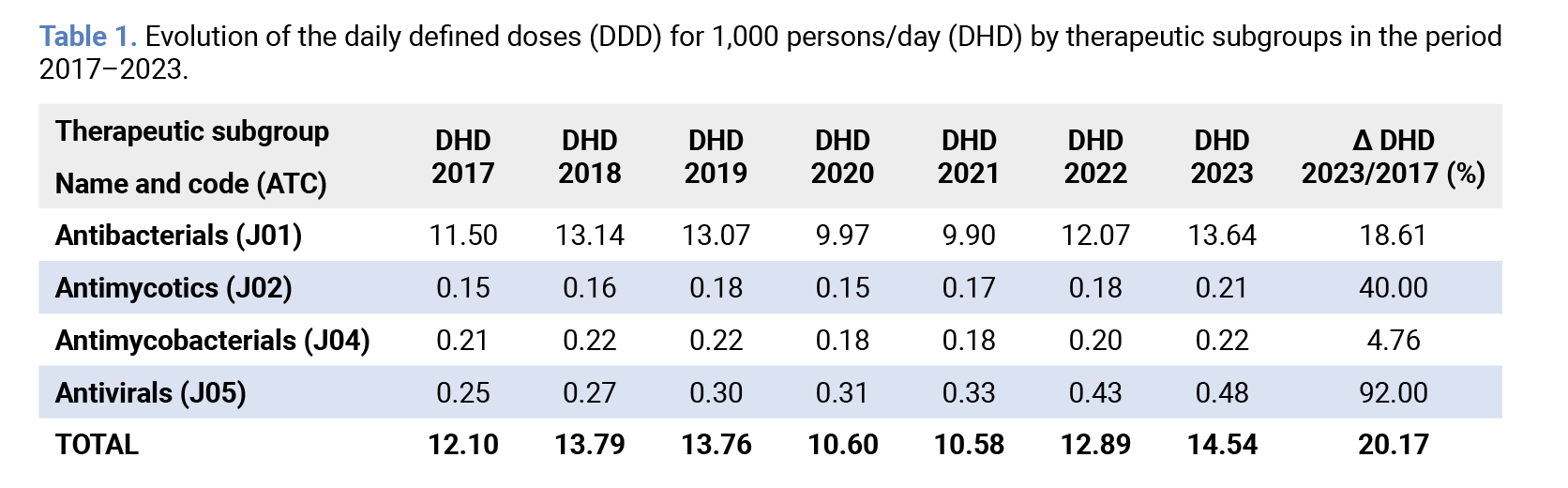
DHD (number of defined daily doses per 1,000 habitants/day). Overall, an upward time trend for all antimicrobial groups from 2017 to 2023 (20.2%) was observed in DHD, with a decrease in antimicrobial use in 2020 and continuing into 2021 (Figure 1).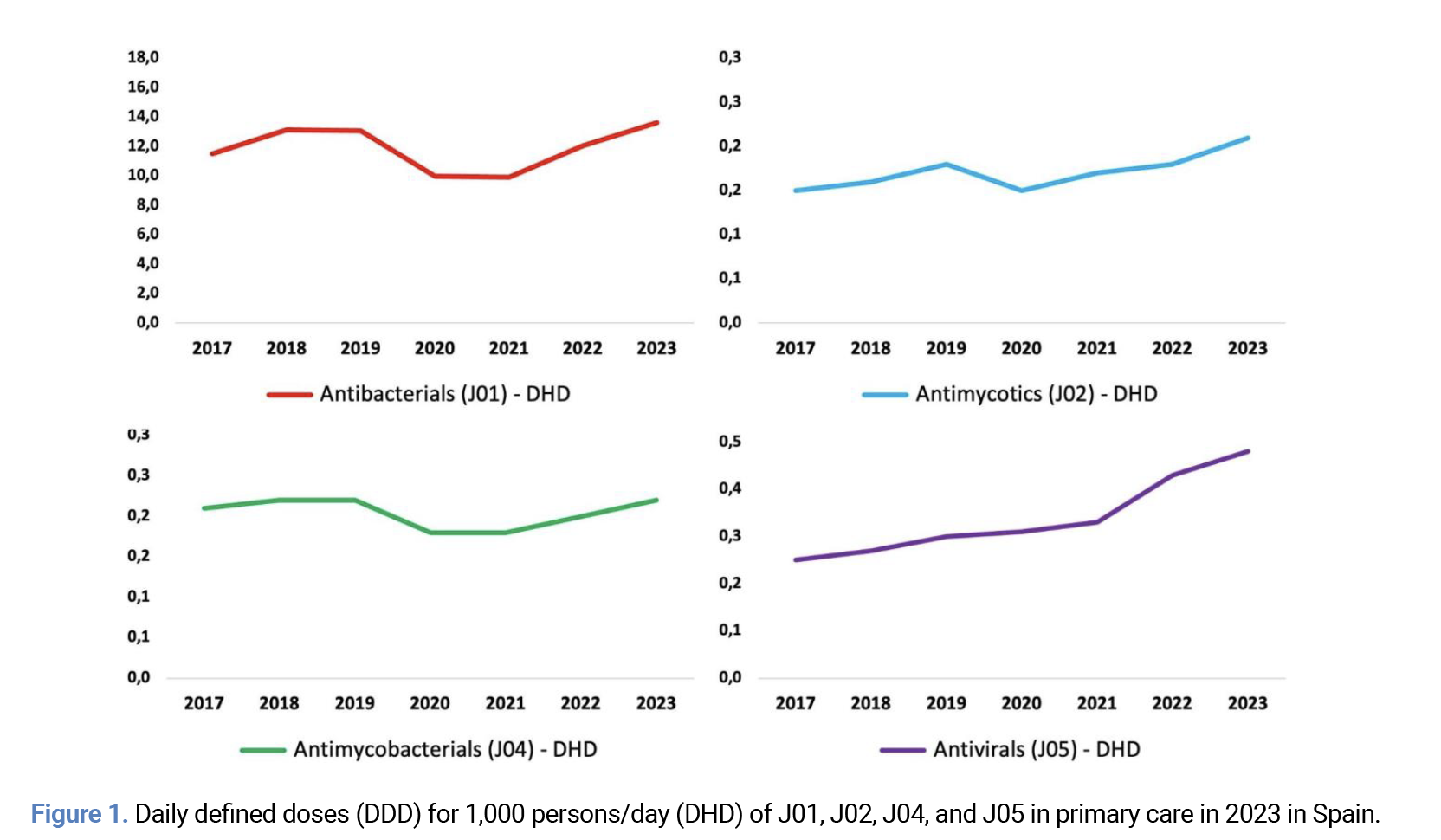 Similarly, a percentage increase was observed in each of the antimicrobial groups, with the largest increase in 2023/2017 in the use of antivirals (92.0%) (Table 1).
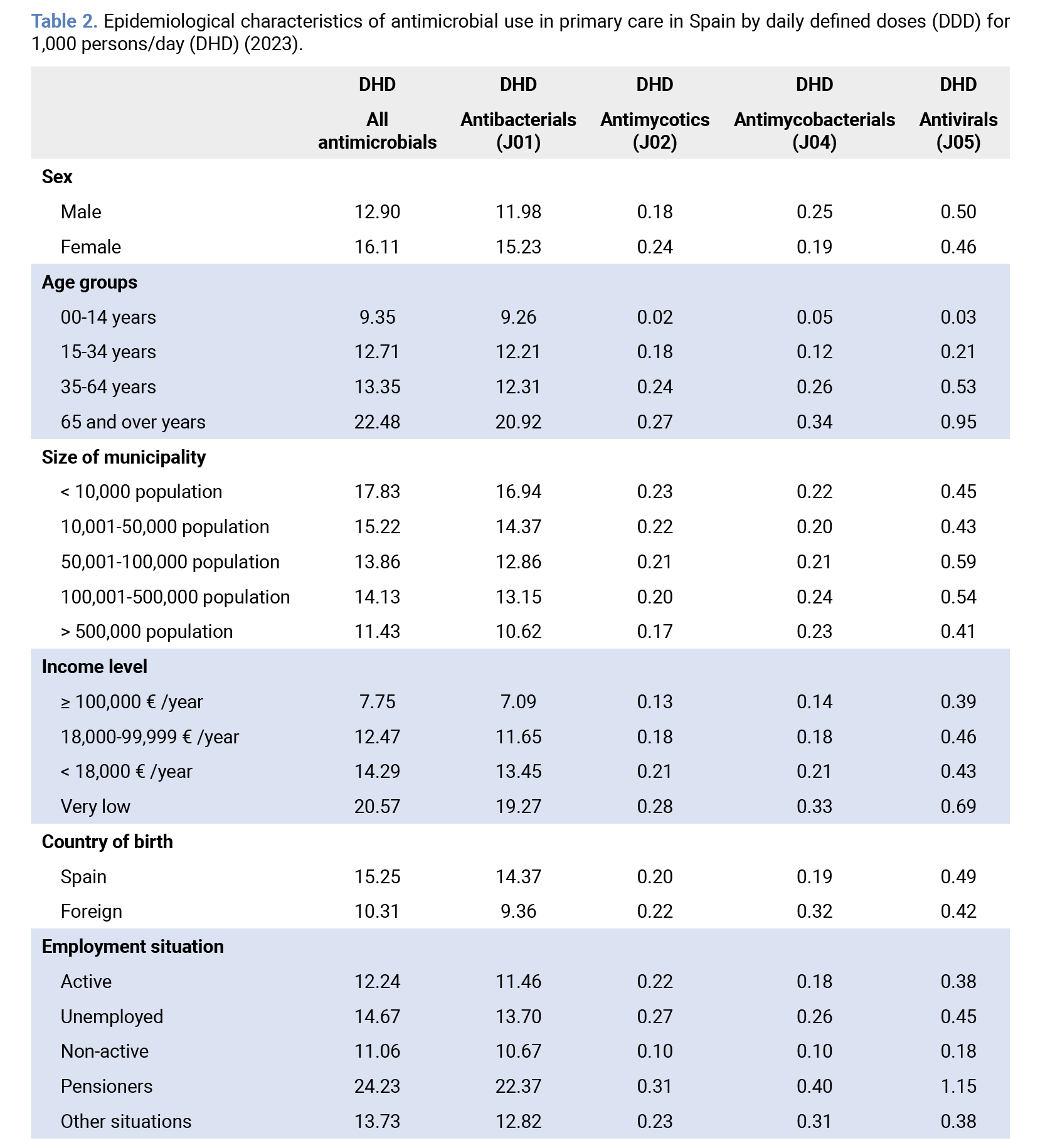
Women had higher DHD in the antibacterial (15.23 vs. 11.98) and antimycotic (0.24 vs. 0.18) groups, while men had higher DHD in the antimycobacterial (0.25 vs. 0.19) and antiviral (0.50 vs. 0.46) groups. In terms of age, people aged 65 years and older had higher DHD in all antimicrobial groups. Regarding municipal size, higher DHD for antibiotics (16.94) and antifungals (0.23) were found in municipalities with fewer than 10,000 inhabitants, while for antimycobacterials (0.24) the highest DHD in municipalities with between 100,001 and 500,000, and for antivirals (0.59), they were highest in municipalities with between 50,001 and 100,000. Higher DHD were also observed across all antimicrobial groups among those individuals with very low-income level. For those born in Spain, higher DHD were found for antibacterials (14.37) and antivirals (0.49), and higher DHD for all antimicrobial groups among pensioners (Table 2).
When analyzing DHD by sex and age (Table 3), higher DHD are found for women compared to men, except for antimycobacterial group, where men had higher DHD. For antibacterials, higher DHD were observed in the ≥ 65 age group for both men and women; however, the highest percentage increase in antibacterial use was found in the 0-14 age group for both males (28.41%) and females (30.3%). The same percentage increase (18.61%) was observed in both men and women between 2023 and 2017.
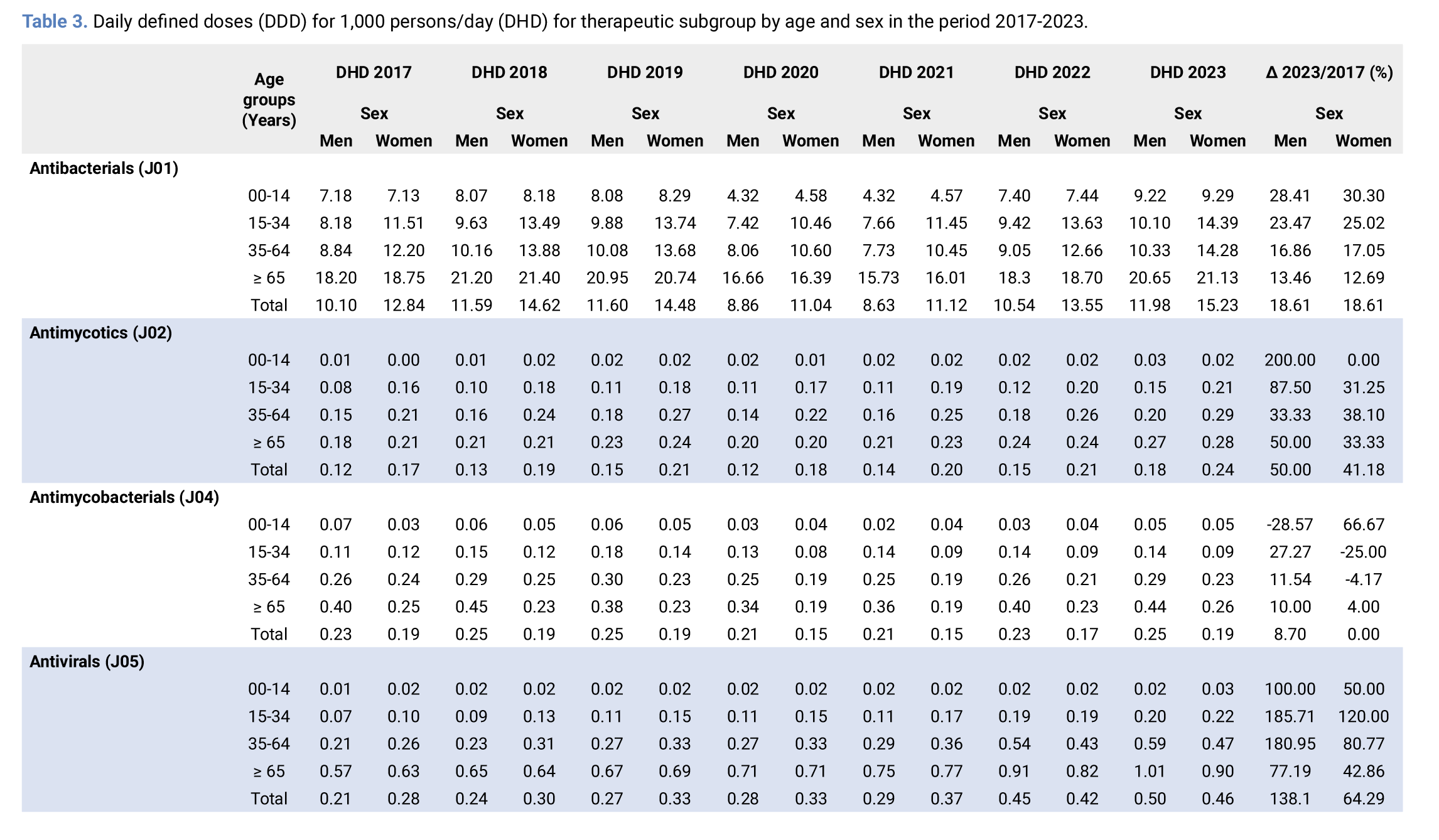 The DHD for antimycotics exhibit consistent pattern across the years, being higher among men aged 65 years and older, and higher in women aged 35-64 years. Regarding the percentage increase between 2023 and 2017, an increase is observed across all male age groups, except for the 35-64 age group.
For antimycobacterials, DHD were higher in the 65 years and older age group, except for women aged 35-64 years in 2018. The percentage change in 2023 compared to 2017 showed a decrease in DHD among males aged 0-14 years (-28.57%) and females aged 15-34 years (-25.00%) and 35-64 years (-4.17%).
Antivirals showed higher DHD in the ≥ 65 age group, with slightly higher values in men until 2020, when DHD were become equal for both sexes. From 2021 to 2023, DHD in this age group were higher for women.
Patient population (number of people). 46,762,487 people were registered to primary care nationwide in 2023, of whom 14,056,450 were prescribed at least one type of antimicrobial at the first level. Among ATC-2 groups, antibiotics were the most prescribed category (n= 13,106,122) (Table 4).
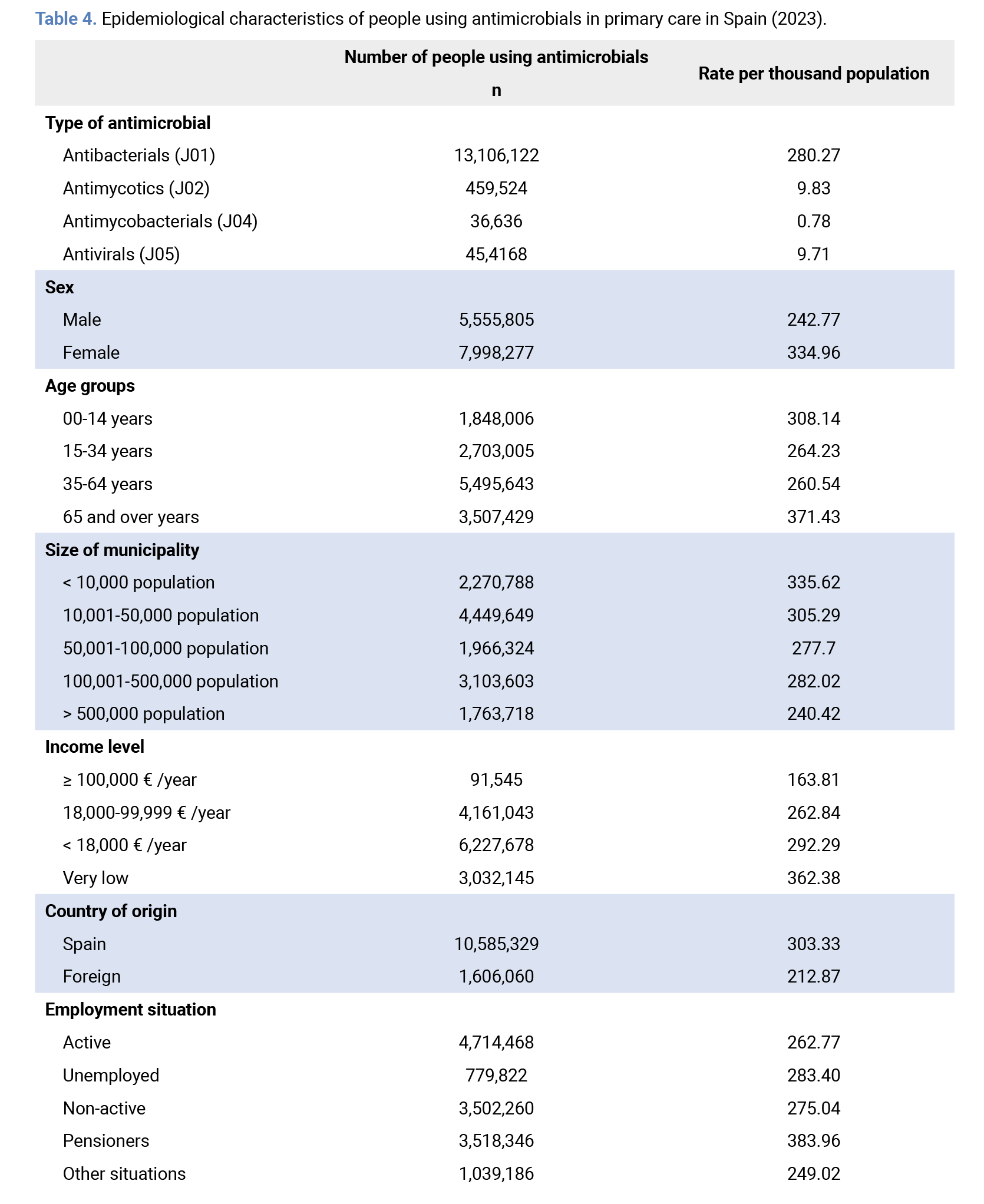 As shown in Table 4, the use of antimicrobials in women was 334.96 per thousand inhabitants during 2023 with the highest prevalence in the 35-64 age group (n= 5,495,643). People residing in municipalities with 10,001-50,000 inhabitants used the highest proportion of antimicrobials (n= 4,449,649). Individuals with an annual income below than €18,000 represented the group with the highest antimicrobial use (n= 6,227,678). By nationality, people born in Spain had the highest antimicrobial use (n= 10,585,329). Additionally, individuals in active employment showed a higher percentage of antimicrobial use (n= 4,714,468) compared to other groups.
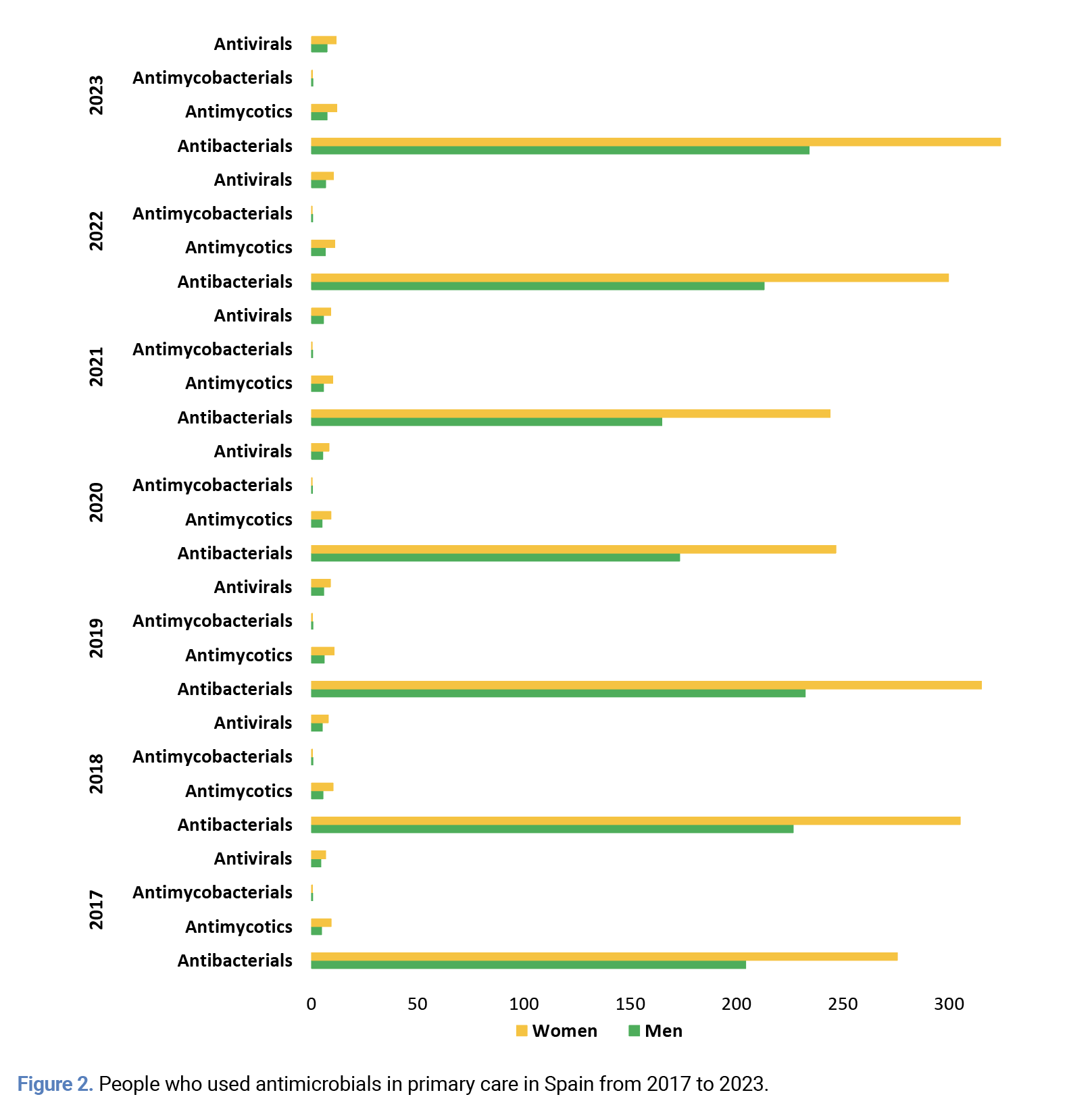
For all studied years (2017 - 2023), women consistently used more antimicrobials than men, except for the antimycobacterial group (Figure 2).
Discussion
Our study reveals that in 2023, 28.4% of the population assigned to primary care in Spain (approximately 13.5 million individuals) received antimicrobials. Among these, antibiotics were the most prescribed group, followed by antifungals, and antivirals. These trends reflect significant shifts in antimicrobial use, including a notable surge in antiviral prescriptions recently. A similar study analyzing data from 2012 to 2021 found that approximately 45.7% of hospitalized patients received antimicrobials, with a slight upward trend in the use of systemic and parenteral antimicrobials and a significant increase in overall consumption over the last few decades [13]. Similarly, other study in 2024 from Germany reported that 33.0% of patients were prescribed antimicrobials [3]. Between 2017 and 2023, our findings indicate a 20.2% overall increase in antimicrobial use, although a decline was noted in 2020 and 2021, likely due to the impact of the COVID-19 pandemic. Among the antimicrobial groups, antivirals experienced the largest increase (92%). Globally, studies highlight varying trends in antimicrobial use during the pandemic [14]. In Poland, primary care data showed a decrease in antibiotic prescription, attributed to reduced medical consultations and the identification of SARS-CoV-2 as the etiological agent, which minimized inappropriate antibiotic use for viral infections [15]. Similarly, in the United States (U.S.), outpatient antibiotic prescriptions declined by 33% between January and May 2020 compared to expected seasonal trends [16]. Conversely, antibiotic use increased in inpatient settings. In South America, a study found a significant rise in antibiotic consumption in healthcare facilities during the pandemic’s early phase, with some institutions maintaining elevated levels over time [17]. The U.S. National Healthcare Safety Network’s Antimicrobial Use and Resistance Module also reported increased inpatient antibiotic use during the pandemic [18]. Our study identified significant differences in antimicrobial use across sociodemographic groups. Women exhibited higher usage rates, particularly among those aged 35–64 and ≥ 65 years, and higher usage rates for antibiotics and antifungals, while men had higher use of antimycobacterials and antivirals. Antimicrobial use in primary care for women is often driven by the treatment of uncomplicated urinary tract infections (UTIs), with first-line antibiotics commonly prescribed, depending on local resistance patterns and individual factors [19,20]. The Centers for Disease Control and Prevention (CDC) highlights the importance of antimicrobial stewardship in managing UTIs to prevent resistance [21]. The findings of our study suggest that the higher consumption of antibiotics in women compared to men may be linked to their greater frequency of visits to primary care centers. A study conducted in England reported that women received 67% more antibiotic prescriptions than men. This same study also revealed that adult women accounted for 64% of primary care consultations, which largely explains the gender disparity in antibiotic prescribing [22]. Similarly, another study from the United Kingdom found that, even after adjusting for comorbidities, antibiotic prescription rates were 62% higher in women than in men [23]. Elderly individuals aged 65 and above exhibited the highest usage rates across all antimicrobial categories, a trend widely documented in previous studies such as a U.S. research from 2011 to 2014 that reported notably high antibiotic prescription rates among adults aged 65 and older had, especially those aged 75 and above [24]. Similarly, in Australia, antibiotic dispensing rates peaked among individuals aged 80 and older [25]. This aligns with data from Spain that identified individuals aged 60 and above as the major contributors to overall antibiotic use [26]. These findings underscore the need for targeted antibiotic stewardship programs for elders to mitigate the risks of AMR and adverse drug reactions. Lower socioeconomic status was associated with higher rates of antibiotic prescribing and usage. In our study, individuals earning less than €18,000 annually exhibited the highest antimicrobial usage rates. This aligns with findings from Wales, where individuals in the most deprived populations received 18% more prescriptions than those in the least deprived quintile, even after adjusting for demographics and chronic conditions [27]. Similar trends were observed in Scotland [28], the United States [29], and Brazil [30]. Furthermore, a study conducted in Ireland found that populations experiencing higher socioeconomic deprivation, often associated with unemployment, exhibited increased antimicrobial consumption. This trend suggests that poorer health outcomes and limited access to healthcare may contribute to higher antibiotic use [31]. Geographically, smaller municipalities (< 10,000 inhabitants) recorded the highest rates of antibiotic and antifungal use, whereas medium-sized and larger municipalities showed greater usage of antimycobacterials and antivirals. Urban centers, however, contribute to the presence of high concentrations of antibiotics and antibiotic resistance genes (ARGs) in their wastewater, mainly due to larger populations and higher antibiotic consumption rates [32-34]. For example, Elder et al. identified strong correlations between the population size and the daily loads of antibiotics and ARGs in wastewater treatment plants (WWTPs) [32]. Similarly, Gao et al. found that urban areas generally consume more antibiotics than suburban areas [33], suggesting that urbanization, along to differences in healthcare infrastructure and practices, significantly influences antibiotic use patterns. The findings of this study carry significant implications for the Spanish NHS. The high rates of antimicrobial prescriptions, particularly antibiotics, underscore the urgent need for enhanced policies promoting the rational use to combat AMR. Targeted interventions for women, older adults, and residents of smaller municipalities may be especially effective. Furthermore, the higher usage among individuals with low incomes and pensioners highlights the importance of integrating epidemiological and socioeconomic factors into public health strategies. Employment status and nationality also influenced antimicrobial use. Spanish-born individuals accounted for 22.15% of total users, and actively employed individuals exhibited higher usage rates. This may reflect pressures to return to work quickly, as observed in studies showing higher antibiotic prescribing rates for employed individuals with common colds [35]. This study has limitations, including reliance on sample-based data rather than a population-based registry, potential under-reporting of prescriptions due to the increased workload for family physicians, and we could not know the percentage of antimicrobials sold in pharmacies without a prescription as they are outside the scope of the database. Additionally, drug utilization metrics such as DDD and DHD provide approximate estimates of consumption rather than exact value of current use. However, the quality control and methodology for extrapolating data employed by the BDCAP database ensure reliable data and minimizes bias. These results provide valuable evidence for healthcare policymakers, supporting decisions on antimicrobial use in primary care. It is essential for health authorities to sustain and expand funding for initiatives and policies that promote antimicrobial stewardship to combat AMR among both patients and healthcare providers. The results underscore the urgent need for targeted interventions and policies, including the implementation of Antimicrobial Stewardship Programs and the adoption of frameworks like the recently published AMR Research Agenda by Hassoun-Kheir et al. [36]. Such strategies aim to optimize prescribing practices and reduce unnecessary antimicrobial use, particularly among high-risk groups. These measures are essential to mitigate the risk of AMR and ensure the sustainability of effective treatments in the future.Conclusion
This study provides a comprehensive analysis of antimicrobial use in primary care across Spain in 2023, examining patterns by therapeutic groups, demographic factors, and temporal trends. Antibiotics remain the most widely prescribed antimicrobials, with significant variations observed by age, sex, income levels, and geographic location. Notably, antimicrobial use has increased since 2017, when this information became available in the database, particularly for antivirals and antifungals, underscoring the importance of monitoring these trends and implementing targeted interventions to ensure sustainable use. Acknowledgements We would like to acknowledge the work and predisposition of the team from the Subdirectorate General for Health Information of the Ministry of Health. Funding None to declare. Conflict of interest The authors declare that they have no conflicts of interest. Author contributions Conceptualization, H.S.H. and A.S.G.; methodology, H.S.H.; validation and formal analysis: H.S.H., P.S.B. and E.V.M.S.; writing—original draft preparation, H.S.H. and A.S.G.; writing—review and editing, All the authors. All authors have read and agreed to the published version of the manuscript.References
- Aslam B, Khurshid M, Arshad MI, Muzammil S, Rasool M, Yasmeen N, et al. Antibiotic Resistance: One Health One World Outlook. Front Cell Infect Microbiol. 2021; 11: 771510. https://doi.org/10.3389/fcimb.2021.771510.
- Camacho Silvas LA. Resistencia bacteriana, una crisis actual. Rev Esp Salud Pública. 2023; 97: 1-10. https://ojs.sanidad.gob.es/index.php/resp/article/view/93
- Werner G, Abu Sin M. Antimicrobial resistance is invisible. I am not. Euro Surveill. 2024; 29 (47): 2400762. https://doi.org/10.2807/1560-7917.ES.2024.29.47.2400762.
- Join Action Antimicrobial Resistance and Healthcare-Associated Infections (EU JAMRAI) [Internet]. European Union. Available online: https://eu-jamrai.eu
- Ministerio de Sanidad Consumo y Bienestar Social. Plan Nacional Frente a las Resistencias Antibióticos (PRAN). Programas de Optimización de Uso de Antibióticos (PROA). 2017. Available online: https://www.resistenciaantibioticos.es.
- Llor C. Uso prudente de antibióticos y propuestas de mejora desde la atención primaria. Enferm Infecc Microbiol Clin. 2010; 28 Suppl 4: 17-22. https://doi.org/10.1016/S0213-005X(10)70037-9.
- Fernández-Urrusuno R, Flores-Dorado M, Vilches-Arenas A, Serrano-Martino C, Corral-Baena S, Montero-Balosa MC. Adecuación de la prescripción de antibióticos en un área de atención primaria: estudio descriptivo transversal. Enferm Infecc Microbiol Clin. 2014; 32(5): 285-92. https://doi.org/10.1016/j.eimc.2013.05.004.
- Rodríguez-Baño J, Pérez-Moreno MA, Peñalva G, Garnacho-Montero J, Pinto C, Salcedo I, et al. Outcomes of the PIRASOA programme, an antimicrobial stewardship programme implemented in hospitals of the Public Health System of Andalusia, Spain: an ecologic study of time-trend analysis. Clin Microbiol Infect. 2020; 26(3): 358-365. https://doi.org/10.1016/j.cmi.2019.07.009.
- Fernández-Urrusuno R, Meseguer Barros CM, Benavente Cantalejo RS, Hevia E, Serrano Martino C, Irastorza Aldasoro A, et al. Successful improvement of antibiotic prescribing at Primary Care in Andalusia following the implementation of an antimicrobial guide through multifaceted interventions: An interrupted time-series analysis. PLoS One. 2020; 15 (5): e0233062. https://doi.org/10.1371/journal.pone.0233062.
- Cayuela L, Pereyra-Rodríguez JJ, Hernández-Rodríguez JC, Rodríguez Fernández-Freire L, Cayuela A. Increasing prevalence of psoriasis in Spain: A population-based study (2018-2022). Med Clin (Barc). 2024: S0025-7753(24)00590-6. https://doi.org/10.1016/j.medcli.2024.08.019.
- Subdirección General de Información Sanitaria. Base de Datos Clínicos de Atención Primaria (BDCAP), Sistema Nacional de Salud [Internet]. Ministerio de Sanidad. 2014 [citado el 21 de noviembre de 2024]. Disponible en: https://www.sanidad.gob.es/estadEstudios/estadisticas/estadisticas/estMinisterio/SIAP/Diseno_BDCAP.pdf.
- WHO Collaborating Centre for Drug Statistics Methodology. ATC classification index with DDDs: Structure and principles [Internet]. 2022. Available from: https://www.whocc.no/atc/structure_and_principles/.
- Cantero M, Jiménez E, Parra LM, et al. Trends of Antimicrobial Use Through Selected Antimicrobial Indicators in Spanish Hospitals, 2012 to 2021. The Journal of Hospital Infection. 2023; 138: 19-26. https://doi.org/10.1016/j.jhin.2023.05.015.
- Tsuzuki S, Koizumi R, Asai Y, Ohmagari N. Trends in antimicrobial consumption: long-term impact of the COVID-19 pandemic. Clin Microbiol Infect. 2024: S1198-743X(24)00591-3. https://doi.org/10.1016/j.cmi.2024.12.005.
- Romaszko-Wojtowicz A, Tokarczyk-Malesa K, Doboszyńska A, Glińska-Lewczuk K. Impact of COVID-19 on Antibiotic Usage in Primary Care: A Retrospective Analysis. Scientific Reports. 2024; 14(1): 4798. https://doi.org/10.1038/s41598-024-55540-5.
- King LM, Lovegrove MC, Shehab N, et al. Trends in US Outpatient Antibiotic Prescriptions During the Coronavirus Disease 2019 Pandemic. Clin Infect Dis. 2021; 73(3): e652-e660. https://doi.org/10.1093/cid/ciaa1896.
- Patel TS, McGovern OL, Mahon G, et al. Trends in Inpatient Antibiotic Use Among Adults Hospitalized During the Coronavirus Disease 2019 Pandemic in Argentina, Brazil, and Chile, 2018-2021. Clin Infect Dis. 2023; 77(Suppl 1): S4-S11. https://doi.org/10.1093/cid/ciad261.
- O’Leary EN, Neuhauser MM, Srinivasan A, et al. Impact of the COVID-19 Pandemic on Inpatient Antibiotic Use in the United States, January 2019 Through July 2022. Clin Infect Dis. 2024; 78(1): 24-26. https://doi.org/10.1093/cid/ciad453.
- Naber KG, Wullt B, Wagenlehner FM. Antibiotic Treatment of Uncomplicated Urinary Tract Infection in Premenopausal Women. Int J Antimicrob Agents. 2011; 38 Suppl: 21-35. https://doi.org/10.1016/j.ijantimicag.2011.09.003.
- Schmiemann G, Hoffmann F, Hamprecht A, Jobski K. Patterns and Trends of Antibacterial Treatment in Patients With Urinary Tract Infections, 2015-2019: An Analysis of Health Insurance Data. BMC Prim Care. 2022; 23(1): 204. https://doi.org/10.1186/s12875-022-01816-6.
- Workowski KA, Bachmann LH, Chan PA, et al. Sexually Transmitted Infections Treatment Guidelines, 2021. MMWR Recomm Rep. 2021; 70(4):1-187. https://doi.org/10.15585/mmwr.rr7004a1.
- Smith DRM, Dolk FCK, Smieszek T, Robotham JV, Pouwels KB. Understanding the Gender Gap in Antibiotic Prescribing: A Cross-Sectional Analysis of English Primary Care. BMJ Open. 2018; 8(2): e020203. https://doi.org/10.1136/bmjopen-2017-020203.
- Shallcross L, Beckley N, Rait G, Hayward A, Petersen I. Antibiotic Prescribing Frequency Amongst Patients in Primary Care: A Cohort Study Using Electronic Health Records. The J Antimicrob Chemother. 2017; 72(6): 1818-1824. https://doi.org/10.1093/jac/dkx048.
- Kabbani S, Palms D, Bartoces M, Stone N, Hicks LA. Outpatient Antibiotic Prescribing for Older Adults in the United States: 2011 to 2014. J Am Geriatr Soc. 2018; 66(10): 1998-2002. https://doi.org/10.1111/jgs.15518.
- Chen Y, Kirk MD, Stuart R, et al. Socio-Demographic and Health Service Factors Associated With Antibiotic Dispensing in Older Australian Adults. PloS One. 2019; 14(8): e0221480. https://doi.org/10.1371/journal.pone.0221480.
- Malo S, José Rabanaque M, Feja C, et al. High Antibiotic Consumption: A Characterization of Heavy Users in Spain. Basic Clin Pharmacol Toxicol. 2014; 115(3): 231-6. https://doi.org/10.1111/bcpt.12211.
- Adekanmbi V, Jones H, Farewell D, Francis NA. Antibiotic Use and Deprivation: An Analysis of Welsh Primary Care Antibiotic Prescribing Data by Socioeconomic Status. J Antimicrob Chemother. 2020; 75(8): 2363-2371. https://doi.org/10.1093/jac/dkaa168.
- Covvey JR, Johnson BF, Elliott V, Malcolm W, Mullen AB. An Association Between Socioeconomic Deprivation and Primary Care Antibiotic Prescribing in Scotland. J Antimicrob Chemother. 2014; 69(3): 835-41. https://doi.org/10.1093/jac/dkt439.
- Volpi C, Shehadeh F, Mylonakis E. Correlation of Antimicrobial Prescription Rate and County Income in Medicare Part D. Medicine (Baltimore). 2019; 98(22): e15914. https://doi.org/10.1097/MD.0000000000015914.
- Kliemann BS, Levin AS, Moura ML, Boszczowski I, Lewis JJ. Socioeconomic Determinants of Antibiotic Consumption in the State of São Paulo, Brazil: The Effect of Restricting Over-The-Counter Sales. PLoS One. 2016; 11(12): e0167885. https://doi.org/10.1371/journal.pone.0167885.
- Garzón-Orjuela N, Amin D, Oza A, Segurado R, Vellinga A. Trends and geographical variations in outpatient antimicrobial consumption in Ireland in relation to socio-economic deprivation. Heliyon. 2024; 10(18): e37563. https://doi.org/10.1016/j.heliyon.2024.e37563.
- Elder FCT, Proctor K, Barden R, Gaze WH, Snape J, Feil EJ, Kasprzyk-Hordern B. Spatiotemporal profiling of antibiotics and resistance genes in a river catchment: Human population as the main driver of antibiotic and antibiotic resistance gene presence in the environment. Water Res. 2021; 203: 117533. https://doi.org/10.1016/j.watres.2021.117533.
- Gao J, Li L, Duan L, Yang M, Zhou X, Zheng Q, et al. Exploring antibiotic consumption between urban and sub-urban catchments using both parent drugs and related metabolites in wastewater-based epidemiology. Sci Total Environ. 2022; 827: 154171. https://doi.org/10.1016/j.scitotenv.2022.154171.
- Han S, Wang Z, Huang H, Wang T, Zhou Z, Bai Y, et al. Estimating antibiotics use in major cities in China through wastewater-based epidemiology. Sci Total Environ. 2022; 826: 154116. https://doi.org/10.1016/j.scitotenv.2022.154116.
- Araki Y, Momo K, Yasu T, Ono K, Uchikura T, Koinuma M, Sasaki T. Prescription pattern analysis for antibiotics in working-age workers diagnosed with common cold. Sci Rep. 2021; 11(1): 22701. https://doi.org/10.1038/s41598-021-02204-3.
- Hassoun-Kheir N, Guedes M, Arieti F, Pezzani MD, Gladstone BP, Robotham JV, et al. Expert consensus on antimicrobial resistance research priorities to focus development and implementation of antibacterial vaccines and monoclonal antibodies. Euro Surveill. 2024; 29 (47): 2400212. https://doi.org/10.2807/1560-7917.ES.2024.29.47.2400212.
Explore
Articles
Volumes
About the journal
Most read
Recomendaciones para la prevención y el tratamiento de las infecciones respiratorias en adultos mayores institucionalizados
Revista Española de Quimioterapia
Acute infectious gastroenteritis in childhood: the role of rapid multiplex molecular syndromic panels in diagnosis and clinical management
Revista Española de Quimioterapia
Características epidemiológicas de pacientes con aislamientos de Enterobacterales productores de carbapenemasas-NDM en un hospital de alta complejidad
Revista Española de Quimioterapia
Review on the management of intra-abdominal candidiasis
Revista Española de Quimioterapia
Neoscytalidium dimidiatum: a rare locally acquired deep cutaneous infection in a renal transplant recipient
Revista Española de Quimioterapia