Original
April 2025, Volume 38, nº 2
18 min
Epidemiology of the COVID-19 pneumonia in a group of hospitals from Madrid -Spain during the full period of the State of Alarm– HM cohort
José Barberán1,2,3 , María Ramos3,4, Julio Villanueva3,4 , Paula Villares2,3,4, Mercedes Villareal2,3,5, María Vivas2,3,5, Susana Orche3,7, María Tejera-Gonzalez 1,3,5, Justo M. Menéndez2,3,4, Lenin Tolentino-Hinojosa5,8, Cristina Almirall4,9, Leonor Antolin3,4, Lady Martinez1,2,3, Silvia Mendoza2,5, Adrián Pelaez2,3, María Segarra-Cañamares4, José E. Guerrero3,5,10, Jesús Pelaez2,3,5, Pablo Cardinal-Fernández* 2,3,5
1Hospital Universitario HM Monteprincipe, Madrid, Spain
2Facultad HM de Ciencias de la Salud, Universidad Camilo José Cela, Madrid, Spain
3Instituto de Investigación Sanitaria HM Hospitales, Madrid, Spain
4Hospital Universitario HM Sanchinarro, Madrid, Spain
5Hospital Universitario HM Torrelodones, Madrid, Spain
6Hospital Universitario HM Puerta del Sur, Madrid, Spain
7Hospital Universitario HM Madrid, Madrid, Spain
8Hospital Nacional Ramiro Prialé Huancayo, Perú
9Laboratorio de análisis clínicos ABACID, Madrid, Spain
10Unidad de Cuidados Intensivos del Hospital Universitario “Gregorio Marañón”, Madrid, Spain
http://www.doi.org/10.37201/req/110.2024
Receipt Date:
12/11/2024
Acceptance Date:
15/01/2025
Publication Date:
13/02/2025
How to cite
Barberán J, Ramos M, Villanueva J, Villares P, Villareal M, Vivas M, Orche S, Tejera-Gonzalez M, Menéndez JM, Tolentino-Hinojosa L, Almirall C, Antolin L, Martinez L, Mendoza S, Pelaez A, Segarra-Cañamares M, Guerrero JE, Pelaez J, Cardinal-Fernández P. Epidemiology of the COVID-19 pneumonia in a group of hospitals from Madrid -Spain during the full period of the State of Alarm– HM cohort. Rev Esp Quimioter. 2025 Feb 14;38(2):97-107. doi: 10.37201/req/110.2024
Metrics
440
Views
71
Downloads
Share
Share
Abstract (EN)
Introduction: To describe the epidemiology pattern of the COVID-19 pandemic during all Spanish State of Alarm.
Methods: Retrospective, observational, cohort and multicenter study. Inclusion criteria: age ≥18 years old, admitted for COVID-19 pneumonia in any of the centers of the HM Hospitals Group. Exclusion criteria: voluntary discharge, death in the emergency department, transfer to centers outside the HM group or incomplete data. State of Alarm period: 31/01/2020 to 05/07/2023. Predominant COVID-19 variant was defined when it exceeded 50% of the total isolates.
Results: During the study period, 2,992 patients were admitted due to a COVID-19 pneumonia, 295 patients (9.86%) non-survive. Survivors and non-survivors were different in age and comorbidities. However, both cohorts presented a similar net of interaction between comorbidities. Hospital admissions per week showed an evolution in “peaks” with “troughs”. A total of 197 (6.48%) patients were admitted to the ICU, of whom 52 (26.39%) non-survive; this subgroup stood out for having a higher proportion of septic shock, orotracheal intubation and acute renal failure, as well as a lower proportion of pulmonary thromboembolism and delirium. Concerning the viral variants, the incidence for the original variant was 4.05 cases/day, for the alpha variant 3.82 cases/day, for the delta variant 1.16 cases/day and for the omicron variant 1.35 cases/day.
Conclusion. Almost 1 of 10 patients with COVID-19 pneumonia death, a proportion that increased to 1 of 4 in case of being admitted to the ICU. Unexpectedly, interaction between comorbidities did not differ between survivors and non-survivor’s patients. Predominant variants were associated with different hospital admission rates but not influence the presence of peak-troughs evolution of the pandemic.
Keywords (EN):
Epidemiology
COVID-19
Pneumonia
Pandemia
SARS-CoV-2
Health crisis
VOCs variants.
Introduction
The COVID-19 pandemic, caused by the SARS-CoV-2 virus, unleashed an unprecedented global health crisis since its emergence in late 2019 [1]. Spain was one of the most affected countries in Europe, with official data from the Ministry of Health estimating beyond 13 million infections and 130,000 deaths [2,3]. The emergence of this new virus also caused a significant financial stress to the healthcare system. For example, Drago et al. [3] estimated that the cost of care for each COVID-19 patient was €1,000 per day, a cost that trebles in the case of intensive care unit [4] admissions. From a virological perspective, SARS-CoV-2 continuously mutated over time, giving rise to new variants. Some of these were classified as variants of concern (VOCs) by the World Health Organization (WHO) due to their association with increased transmissibility, heightened disease severity, reduced immune response, or diminished efficacy of therapeutic interventions [5]. In Spain, several studies have analyzed the epidemiology of SARS-CoV-2-associated pneumonia [6-8]. However, to our knowledge, none of them have covered the entire health crisis defined by the Spanish Government as the “State of Alarm”. The aim of this study was to provide a comprehensive analysis of the epidemiological characteristics of patients with COVID-19 pneumonia admitted to HM Hospitals Group in Madrid (Spain) during the entire State of Alarm. Likewise, to analyze the effect of the predominant SARS-CoV-2 variant in the epidemiological patterns. Some data from the first wave (1 March to 5 April 2020) of the pandemic has been previously published [7].Material and methods
This is a retrospective, observational, multicenter cohort study. Inclusion criteria: adult patients (≥ 18 years of age), hospitalized with a COVID-19 pneumonia in centers belong to HM Hospitals in Madrid, Spain (HM Sanchinarro University Hospital, HM Puerta del Sur University Hospital, HM Madrid University Hospital, HM Monteprincipe University Hospital and HM Torrelodones University Hospital). In the case of more than one hospital admission, only the first one was considered. COVID-19 pneumonia was defined by the presence of typical characteristics on the chest radiography or CT (e.g. ground glass opacities, bilateral infiltrates, etc.) [9] associated with a positive nasal or throat SARS-CoV-2 swab test (antigen or PCR) within 7 days of admission. Exclusion criteria: voluntary discharge, death in the emergency department, transfer to centers outside of HM Hospitales group or incomplete data in the medical record. The study period was compiled between 31/01/2020 to 05/07/2023 (date of the first case of COVID-19 diagnosed in Spain to the date of the official end of the State of Alarm in Spain, respectively). Participants were retrieved automatically from the electronic patient record systems. Clinical data was extracted at hospital discharge by the staff of the documentation and archiving department. Data collected were: age, sex, date of hospital admission and discharge, comorbidities (diabetes, smoking, alcoholism, dyslipidemia, hyperuricemia, chronic arterial hypertension [CAH], chronic heart failure [CHF], ischemic coronary heart disease, chronic obstructive pulmonary disease [COPD], asthma, chronic liver disease, chronic renal failure [CRF], stroke and thyroid disease), date of admission and discharge from the ICU, ICU events (need for orotracheal intubation [OTI], tracheostomy, renal replacement therapy [RRT], septic shock, adult respiratory distress syndrome [ARDS], pulmonary thromboembolism [PTE], cardio-respiratory arrest [CRA], delirium) and discharge outcome. The predominant SARS-CoV-2 variant was defined as the one that exceeded 50% of all isolates. Based on official data from the Spanish Ministry of Health, the following periods can be recognized [5]: (a) original variant (v_orig) from the start of the pandemic to 31/01/2021 (366 days); (b) alpha variant (v_alpha) from 01/02/21 to 20/06/2021 (140 days), (c) delta variant (v_delta) from 21/06/2021 to 12/12/2021 (175 days) and (d) omicron variant (v omicron) from 13/12/2021 to 05/07/ 2023 (572 days). Statistical analysis. Categorical variables were presented as number of cases and percentages, continuous variables as median and interquartile range. Categorical variables were compared using the chi-square or Fisher’s exact test, and continuous variables were compared using the non-parametric Mann-Whitney U or Kruskall-Wallis test as appropriate. The group of living patients was compared with those who died at hospital discharge. Comorbidities data was visualized through a heatmap and network graphs. Network graphs were created using the graph function, employing the kk algorithm for node layout design. For each network, the width of the edges was visualized according to the weight of the interaction and the size of the nodes was adjusted based on the percentage measure attribute. Additionally, specific structural features derived from the networks were determined, and permutation tests were conducted to assess differences between the networks of survivor and non-survivor patient groups. The evaluated structural features included strength (defined as the sum of the weights of a nodes´ connections in the network), betweenness centrality (the frequency with which a node acts as an intermediary on the shortest paths between other nodes), clustering coefficient (the degree of clustering of a node, indicating how connected its neighbors are to each other), average shortest path length (the average shortest path length between all pairs of nodes in the network), and network quality (the measure which evaluates the quality of the division into communities). Permutation tests were performed with 1,000 interactions. A value of P <0.05 was considered significant. All analyses were performed using the R statistical program and its libraries [10]. The manuscript was written in accordance with the recommendations of the STROBE guidelines for the publication of observational cohort studies [11]. Ethics. The ethics committee approved the study and provided the informed consent for the waiver.Results
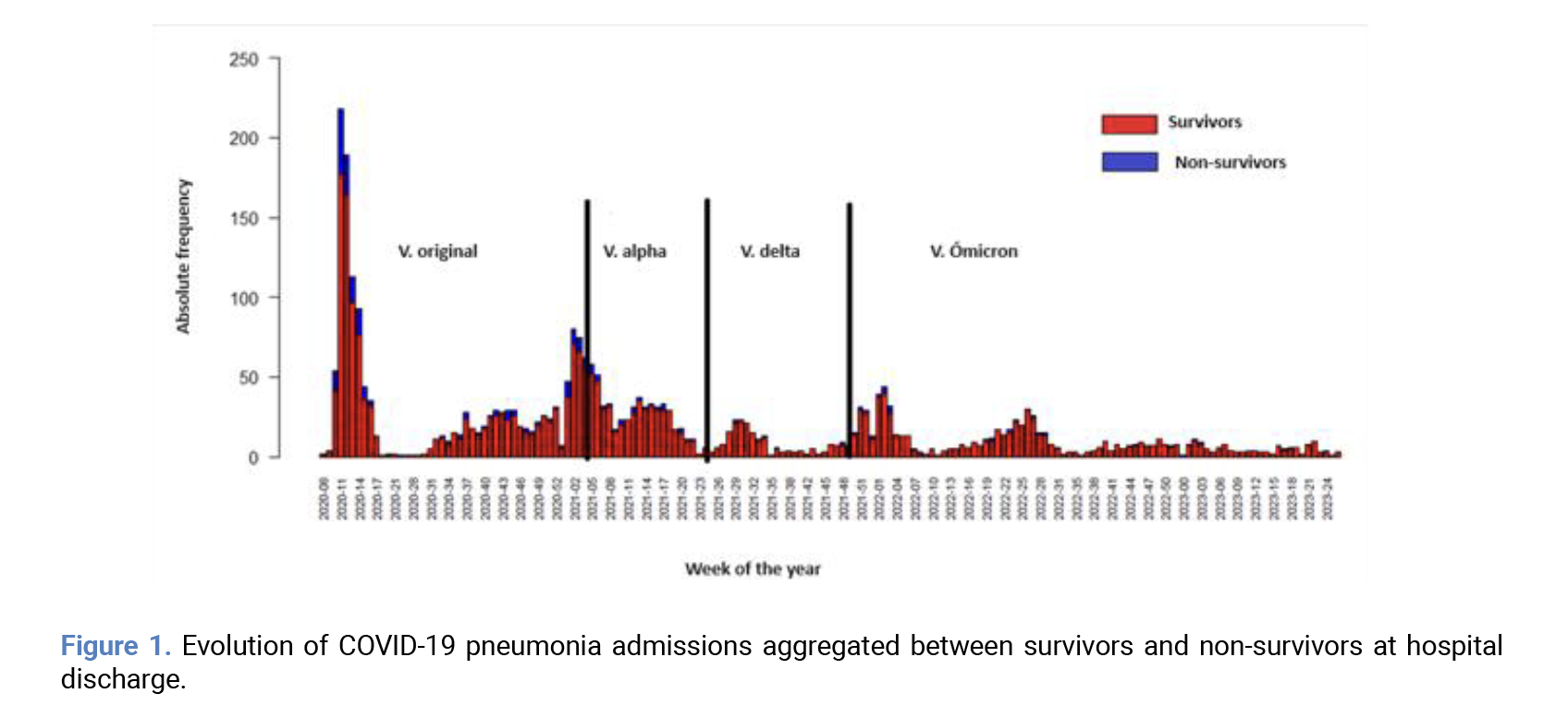
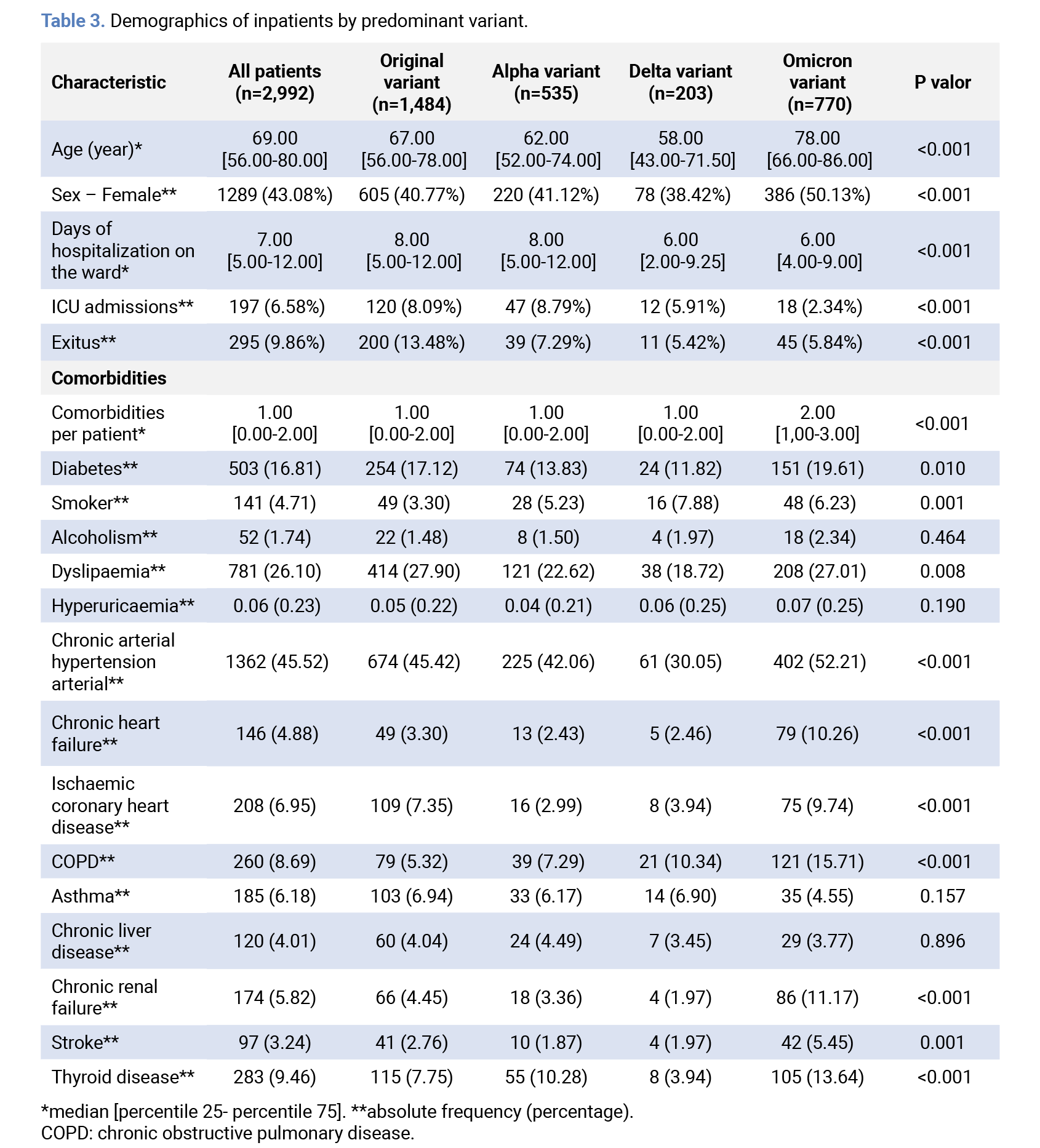
During the study period, 8,102 patients were diagnosed with the SARS-CoV-2 infection:559 (6.90%) were excluded due to missing data and 4,551 (56.17%) did not meet the inclusion criteria. The main demographic characteristics of the 2,992 (36.93%) COVID-19 patients with pneumonia included in this study can be appreciated in table 1.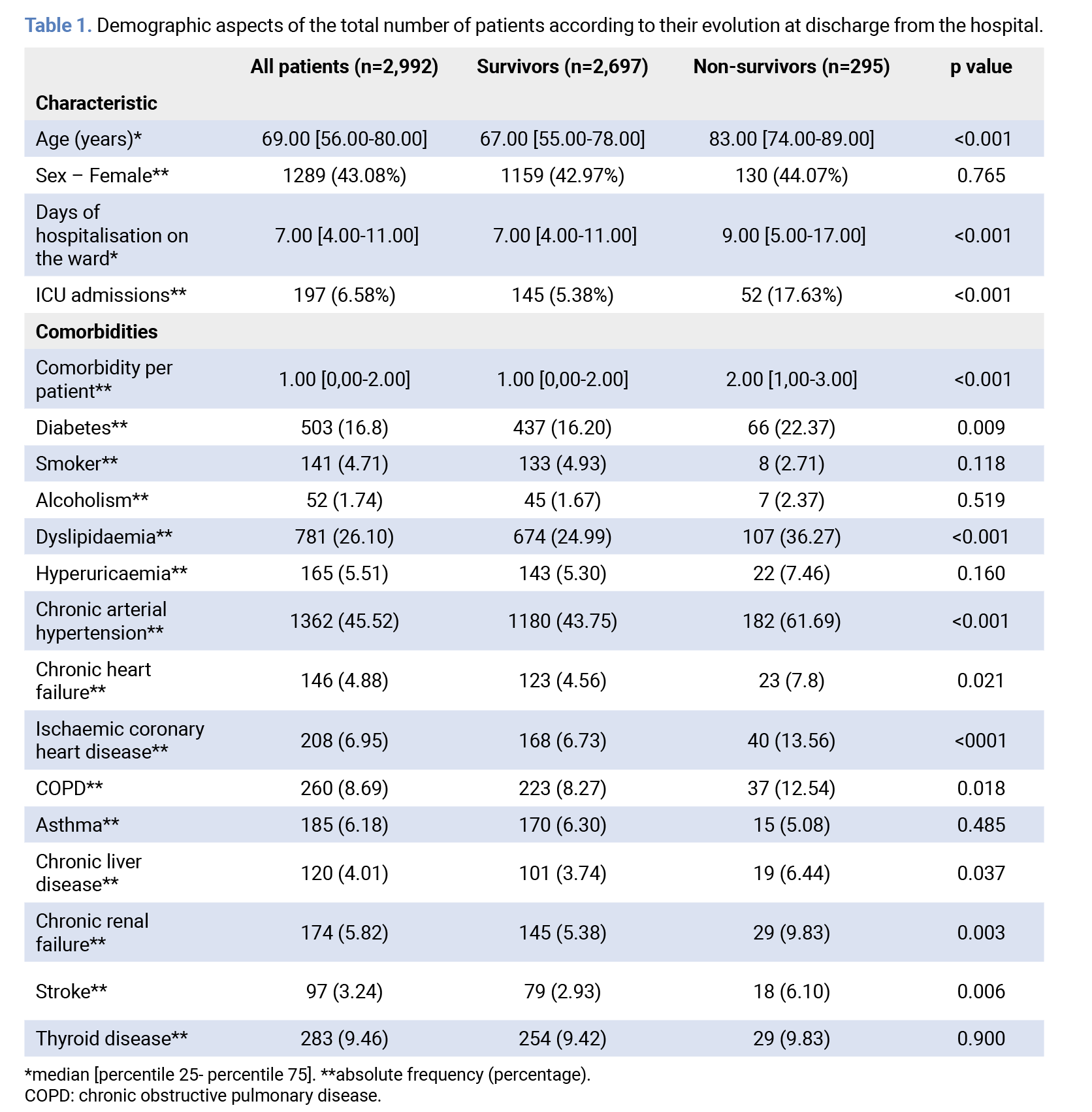 Hospital admissions per week showed an oscillating evolution characterized by “peaks” separated by “troughs”. The maximum “peak” was the first one that extended from week 9 to week 17 of 2020, reaching 218, 189 and 113 admissions during weeks 11, 12 and 13 respectively (Figure 1).
 A total of 295 cases (9.86%) did not survive, being different from those that survive mainly in terms of age, day of hospitalization and comorbidities; other differences can be appreciated in Table 1.
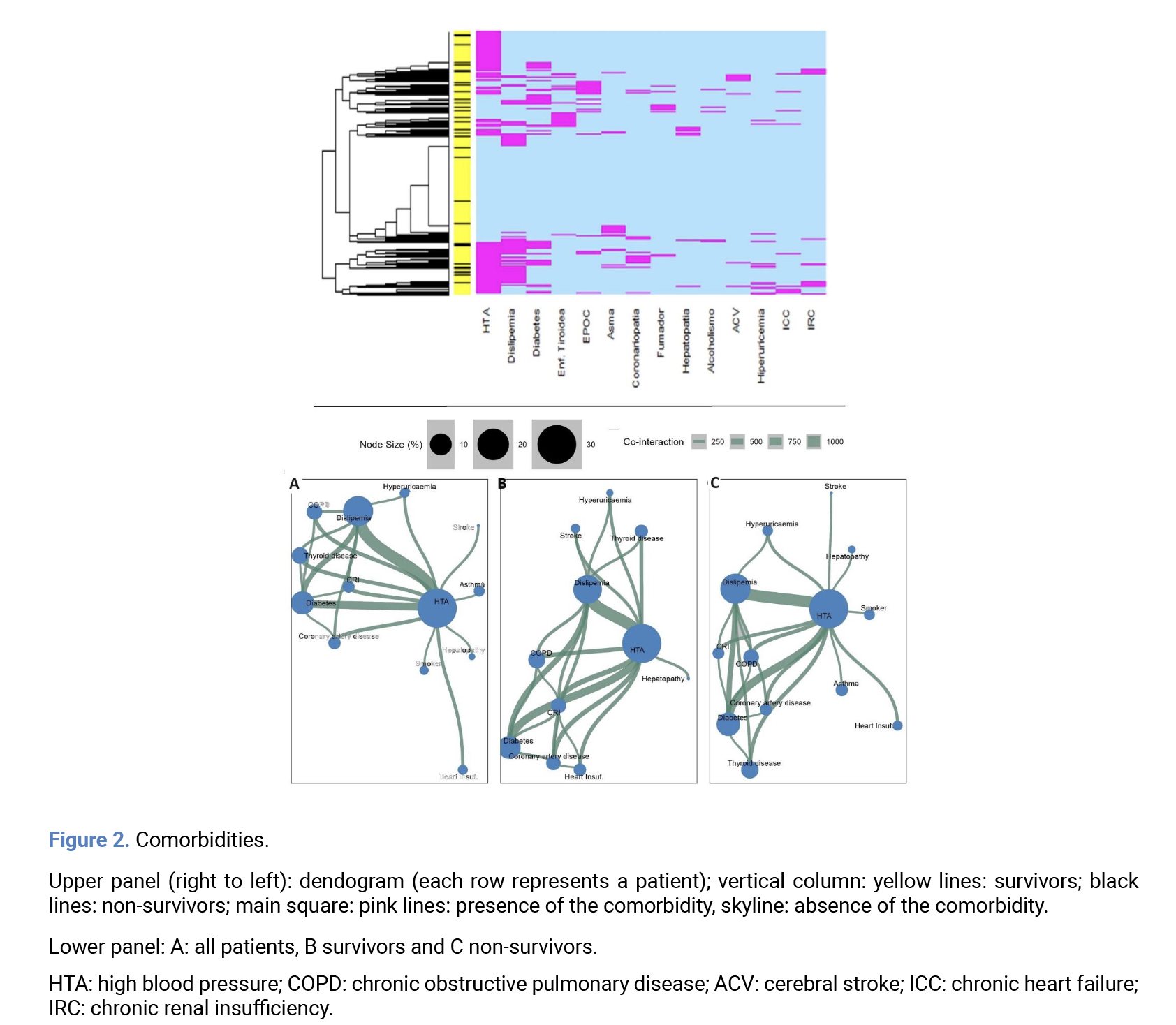
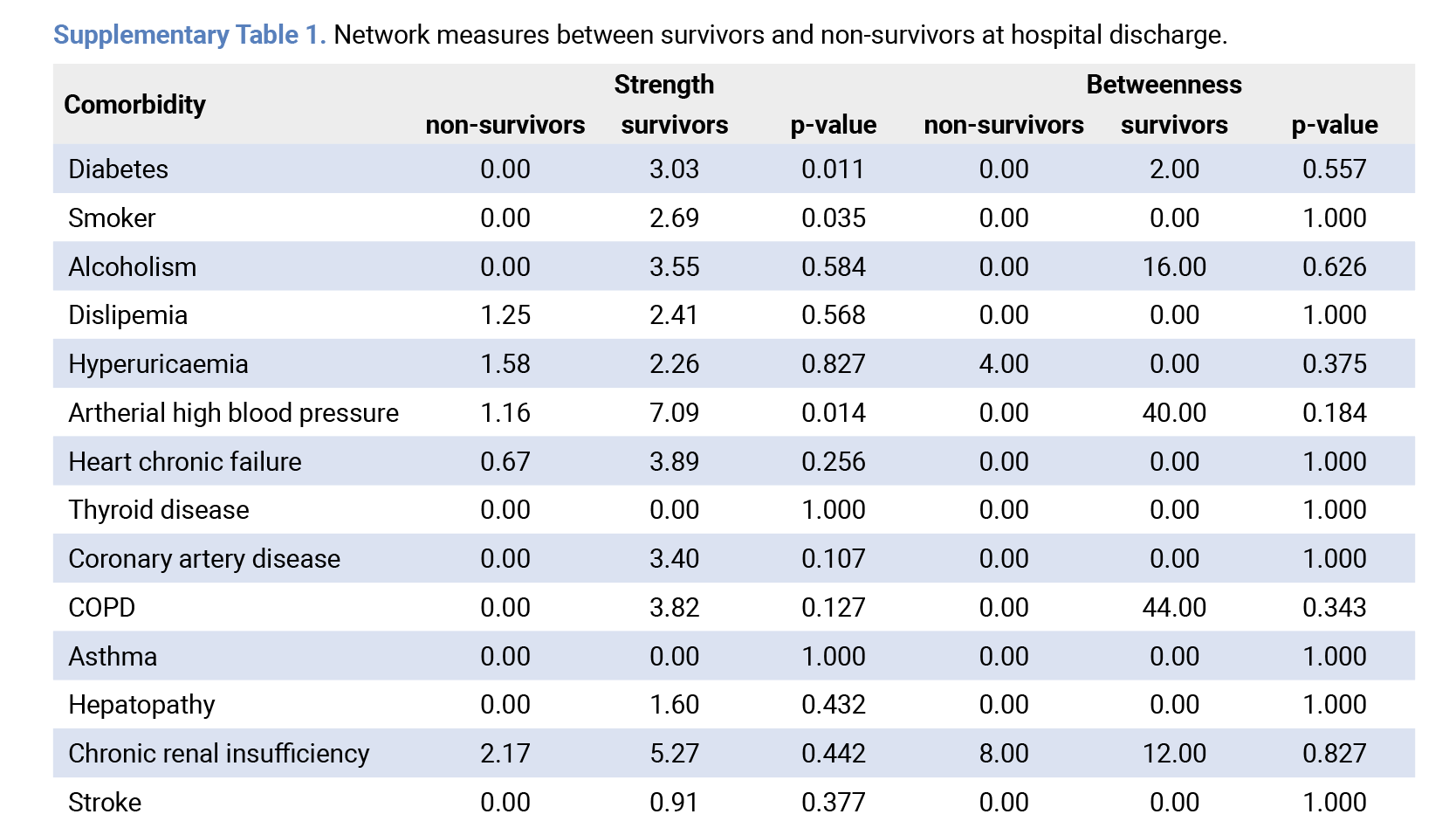
Regarding comorbidities, the medium number of comorbidities per patient was higher in non-survivor than survivor patients. Despite the network analysis demonstrating that diabetes, smoking, and arterial high blood pressure were the most connected (interrelated) comorbidities (Figure 2, Table S1 - supplementary material), both networks were similar: clustering coefficient (CC) for non-survivors was 0.000, and for survivors, 0.481 (p-value = 0.106); average shortest path length (ASPL) for non-survivors was 0.492, and for survivors, 1.436 (p-value = 0.397); and network modularity (Q) for survivors was 0.115, and for non-survivors, 0.306 (p-value = 0.288).
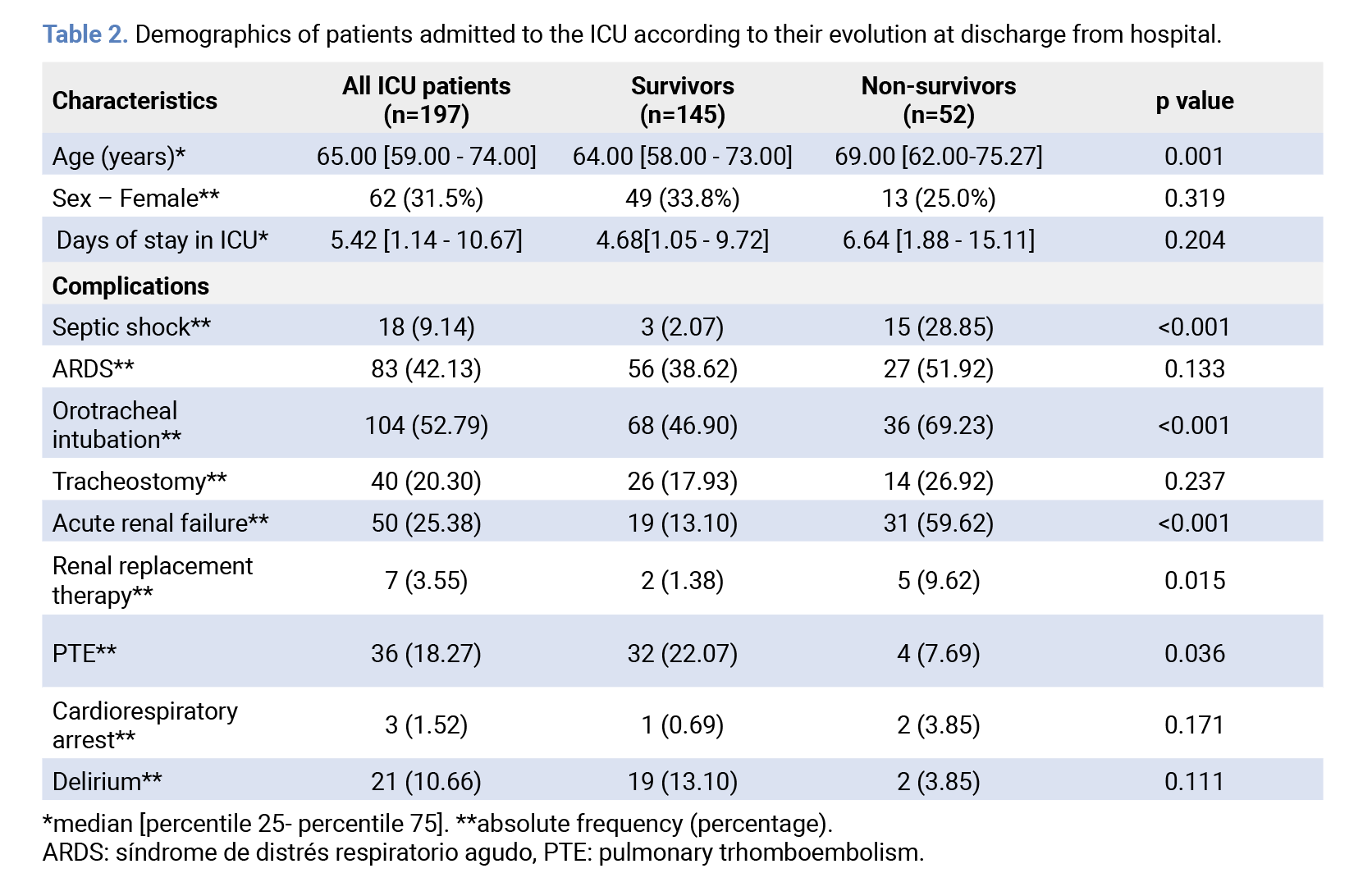
 Of the 197 (6.48%) patients admitted to the ICU, 52 (26.39%) did not survive; this subgroup was notable for having a higher proportion of septic shock, OTI and acute renal failure, as well as a lower proportion of PTE and delirium (Table 2).
Regarding the SARS_CoV-2 variants, the incidence of pneumonia for v_orig was 4.05 cases/day, for v_alpha 3.82 cases/day, for v_delta 1.16 cases/day and for v_omicron 1.35 cases/day. It´s noteworthy that as one variant was replaced by another, hospital days and mortality decreased. Other characteristics between different variants can be appreciated in table 3.
Discussion
The present study, to our knowledge, is the first that includes all consecutive hospitalized patients with COVID-19 pneumonia during the entire period of the State of Alarm in Spain, highlighting the impact of the disease in our community. Specifically, almost 1 in 10 patients died, a proportion that increased to 1 in 4 cases where ICU admission was required. The time evolution showed a saw-teeth pattern, with peaks not fully associated with the change in the predominant virus variant. Comorbidities conditions were extremely common; however, their relations did not differ between survivors and non-survivors. In terms of mortality, an international meta-analysis, which included 423,117 patients from 42 studies published before August 2020 (13 in China, 11 in the USA, 3 in Italy, 2 in Turkey, 2 in Spain, 2 in Mexico, 2 in Korea, 1 in France, 1 in Australia, 1 in Asia, 1 in Brazil, 1 in the UK and 2 in other regions), reported a meta-mortality of 17.62% [12]. In Spain, Garcia-Carretero et al. [6] in a study that included almost half a million patients hospitalized for COVID-19 during the years 2020-2021 reported a mortality of 14.3%. In another study by the same author that, including 3,315 patients admitted to a single public hospital in Madrid during the period of 25/02/2020 to 12/05/2020 (corresponding to the so-called “first wave”), found a mortality of 9.4% [13]. Additionally, Jiménez E et al. [14] in a study including 1,393 patients admitted to a single public hospital in Madrid during the period 01/03/2020 to 28/05/2020, reported a mortality of 21.2%. The overall mortality in our study was 9.86% (26.39% when intensive care was required) with a downward trend over time (at the beginning of the pandemic, corresponding to the original variant, there was a maximum of 13.48% which progressively decreased to reach a minimum of 5.84% with the last variant identified). Our results rank among the best reported, which may be attributed to the early establishment of an institutional monitoring committee by HM Hospitals, in addition to local committees at each hospital. This structure facilitated coordination among key departments involved in patient care, ensuring standardized protocols for treatment incorporation and prescription, hospital and ICU admission criteria, discharge processes, and other critical aspects of COVID-19 management. The pandemic “peaks and troughs” evolution has been well demonstrated by several authors [15]; our results agree with them. However, not all peaks were similar. For example, the first two peaks (start of the pandemic and early 2021) being recognized as the main ones in terms of the magnitude of admissions. Nevertheless, these peaks were distinguished by their onset; the first being “explosive” and the second showed a slow increase. Meanwhile, after August 2022 (week 31), an evolutionary change can be seen, acquiring a “flattened plateau” shape in which a similar number of patients were always maintained with minimal variations. It is striking that these peaks/troughs corresponded to changes in the season of the year, implying changes in the behavior of society, rather than the emergence of a new variant. In fact, our results suggest that each variant may have characteristics, highlighting the trend towards lower severity (lower mortality, ICU admissions and days of hospitalization) and the involvement of patients with advanced age and greater comorbidities. While this finding is difficult to interpret, we speculate that it may be linked to improved immune system response due to infection or vaccine intervention [16], the availability of targeted antivirals [17,18] and immunomodulatory therapies [19,20], optimization in the implementation of supportive measures and change in variant virulence [21,22]. Genetic variants of SARS-CoV-2 have been globally surging in many countries around the world. However, the pandemic has changed since the irruption of the Omicron variant [23]. Several studies have suggested that the Omicron variant is associated to an increase in the transmissibility but a significantly lower disease severity than the Delta variant (hospitalization, oxygen requirements, mechanical ventilation, and death); however, studies against other VOCs are scarce [24,25] In our study, during the period of omicron variant predominance, the number of hospital and ICU admissions decreased and the median age of each patient and number of comorbidities increased. Although this finding must be interpreted cautiously, this suggests that younger patients with no, or few, comorbidities, usually did not require hospitalization during the Omicron predominance. The analysis of comorbidities is important mainly because it allows the identification of individuals at higher risk of a worse prognosis and therefore to be prioritized for certain intervention, and for the understanding of the pathophysiological mechanisms underlying the infection [26]. Our study strongly suggested that non-survivor’s patients had more comorbidities than those who survived, whether related to the respiratory system (COPD and asthma), cardiovascular (dyslipemia, CAH, chronic heart failure and ischemic coronary heart disease), diabetes, CRF and stroke). It is striking that smoking was under-represented in the group of non-survivors, which could be linked to a selection bias given that the proportion of COPD patients is increased in this group [27]. In addition to assessing the effect of each comorbidity in an isolated form, it is possible to analyze their global interconnections in a net [28]. Unexpectedly, we did not find any difference between survivors and non-survivors’ networks graph; we speculate that this finding may be explained because both nets shared the same physiopathology mechanism (e.g., inflammation, immune response, or genetic predisposition) that create common pathways that contribute to the co-occurrence of the disease but not influence their outcome. In addition, network graphs may reveal general principles of disease interactions, and main chronic conditions like diabetes or hypertension may act as hubs that connect other comorbidities that do not influence the mortality. Slightly more than a quarter of the patients required intensive care, with a mortality rate of 26.3%, especially in men aged around 65 years; all of which coincides with data published nationally and internationally [29-31]. Among the main complications was ARDS, present in 1 out of 2 patients admitted to the ICU and in which, strikingly, it was not associated with increased mortality. This unexpected finding could be explained, among other reasons, by the clinical inability to distinguish between bilateral pneumonia and ARDS [32]. PTE and delirium were frequent complications that predominated in the group that survived. We speculate that both findings could be explained by a selection bias, given that the most severe patients who proportionally died more often could not be transferred for a CT angiography or could not be awakened for delirium assessment [33]. Regarding the days of stay in the ICU, although the median stay was almost 6 days, 25% of admissions stayed more than 10 days. This study has some limitations. First, the stratification of the cohort based on predominant SARS-CoV-2 variants was derived from ecological rather than individual data, which may have led to some misclassification. However, we consider this margin of error to be minimal, as official data from the Spanish Ministry of Health [5] indicate that transition periods between variants were short, with each new predominant variant rapidly displacing the previous one. Second, follow-up was limited to hospital discharge, preventing the assessment of important post-discharge events such as readmission or post-COVID syndrome. Lastly, the impact of COVID-19 vaccination on clinical outcomes could not be analyzed. Despite these limitations, this study also presents notable strengths. Most importantly, the rigorous data collection and retrieval process, facilitated by a unified electronic medical record system across all HM Hospitals, ensured comprehensive identification of COVID-19 admissions from the onset of the pandemic, minimizing potential biases inherent in retrospective studies. Additionally, the homogeneity of the enrolled patients and the robust diagnostic criteria for COVID-19 pneumonia significantly enhance the study’s external validity. Another key strength is its multicenter design, involving five hospitals across different geographic areas of Madrid, which supports the generalizability of the findings. Lastly, the inclusion of the entire period under the State of Alarm provides a comprehensive and longitudinal perspective on the impact of COVID-19 in this setting. In summary, this study, which to our knowledge is the first to include the entire period of the State of Alarm, describes the epidemic progression of COVID-19 pneumonia in a group of private hospitals in Madrid-Spain. It shows that 9 out of 10 hospitalized patients with COVID-19 were cured, placing Madrid’s healthcare system in a privileged position worldwide in terms of healthcare outcomes. Funding None to declare. Conflict of interest The authors declare that they have no conflicts of interest. Author contributions Conceptualization, J.B., M.R., J.V. and P.C-F.; methodology, J.B., M.R., J.V. and P.C-F.; investigation, J.B., M.R., J.V., P.V., M.V., S.O, A. T-G, J.M., L.T-H., C.A., L.A., L.M., S.M., A.P., M. S-C., J.E.G., J.P. and P.C-F.; writing—review and editing, J.B., M.R., J.V., P.V., M.V., S.O, A. T-G, J.M., L.T-H., C.A., L.A., L.M., S.M., A.P., M. S-C., J.E.G., J.P. and P.C-F. All authors have read and agreed to the published version of the manuscript.References
- Guan WJ, Ni ZY, Hu Y, Liang WH, Ou CQ, He JX, et al. Clinical Characteristics of Coronavirus Disease 2019 in China. N Engl J Med. 2020;382(18):1708-20. doi: 10.1056/NEJMoa2002032.
- España MdSd. Actualización nº 672. Enfermedad por el coronavirus (COVID-19). 30.06.2023 2023 [26-7-2024]. Available from: https://www.sanidad.gob.es/areas/alertasEmergenciasSanitarias/alertasActuales/nCov/documentos/Actualizacion_672_COVID-19.pdf.
- Drago G, Perez-Sadaba FJ, Aceituno S, Gari C, Lopez-Belmonte JL. Healthcare resource use and associated costs in a cohort of hospitalized COVID-19 patients in Spain: A retrospective analysis from the first to the third pandemic wave. EPICOV study. PLoS One. 2023;18(1):e0280940. doi: 10.1371/journal.pone.0280940.
- Gradisteanu Pircalabioru G, Ilie I, Oprea L, Picu A, Petcu LM, Burlibasa L, et al. Microbiome, Mycobiome and Related Metabolites Alterations in Patients with Metabolic Syndrome-A Pilot Study. Metabolites. 2022;12(3). Epub 20220228. doi: 10.3390/metabo12030218.
- España MdS-. Actualización de la situación epidemiológica de las variantes deSARS-CoV-2 en España 2023 [28/7/2024]. Available from: https://www.sanidad.gob.es/profesionales/saludPublica/ccayes/alertasActual/nCov/documentos/COVID19_Actualizacion_variantes_20230522.pdf.
- Garcia-Carretero R, Vazquez-Gomez O, Gil-Prieto R, Gil-de-Miguel A. Hospitalization burden and epidemiology of the COVID-19 pandemic in Spain (2020-2021). BMC Infect Dis. 2023;23(1):476. doi: 10.1186/s12879-023-08454-y. P
- Cardinal-Fernandez P, Garcia Cuesta E, Barberan J, Varona JF, Estirado A, Moreno A, et al. Clinical characteristics and outcomes of 1,331 patients with COVID-19: HM Spanish Cohort. Rev Esp Quimioter. 2021;34(4):342-52. doi: 10.37201/req/050.2021.
- Casas-Rojo JM, Anton-Santos JM, Millan-Nunez-Cortes J, Lumbreras-Bermejo C, Ramos-Rincon JM, Roy-Vallejo E, et al. [Clinical characteristics of patients hospitalized with COVID-19 in Spain: Results from the SEMI-COVID-19 Registry]. Rev Clin Esp. 2020;220(8):480-94. doi: 10.1016/j.rce.2020.07.003.
- Lee JH, Koh J, Jeon YK, Goo JM, Yoon SH. An Integrated Radiologic-Pathologic Understanding of COVID-19 Pneumonia. Radiology. 2023;306(2):e222600. doi: 10.1148/radiol.222600.
- Zhang Z, Gayle AA, Wang J, Zhang H, Cardinal-Fernandez P. Comparing baseline characteristics between groups: an introduction to the CBCgrps package. Ann Transl Med. 2017;5(24):484. doi: 10.21037/atm.2017.09.39.
- Fernández E. Estudios epidemiológicos (STROBE). Medicina Clínica. 2005;125:43-8. doi: 10.1016/S0210-5705(09)71003-9.
- Dessie ZG, Zewotir T. Mortality-related risk factors of COVID-19: a systematic review and meta-analysis of 42 studies and 423,117 patients. BMC Infect Dis. 2021;21(1):855. doi: 10.1186/s12879-021-06536-3.
- Garcia-Carretero R, Vazquez-Gomez O, Ordonez-Garcia M, Garrido-Peno N, Gil-Prieto R, Gil-de-Miguel A. Differences in Trends in Admissions and Outcomes among Patients from a Secondary Hospital in Madrid during the COVID-19 Pandemic: A Hospital-Based Epidemiological Analysis (2020-2022). Viruses. 2023;15(7). doi: 10.3390/v15071616.
- Jimenez E, Fontan-Vela M, Valencia J, Fernandez-Jimenez I, Alvaro-Alonso EA, Izquierdo-Garcia E, et al. Characteristics, complications and outcomes among 1549 patients hospitalised with COVID-19 in a secondary hospital in Madrid, Spain: a retrospective case series study. BMJ Open. 2020;10(11):e042398. doi: 10.1136/bmjopen-2020-042398.
- Pelaez A, Ruiz Del Arbol N, Vazquez Sellan A, Castellano JM, Soriano JB, Ancochea J, et al. Clinical characteristics and outcomes among hospitalised COVID-19 patients across epidemic waves in Spain: An unCoVer analysis. Med Clin (Barc). 2024;162(11):523-31. doi: 10.1016/j.medcli.2023.12.030.
- Ministerio de Sanidad. Evaluacion del desempeno del sns español frente a la pandemia de Covid-19 [25/7/2024]. Available from: https://www.sanidad.gob.es/areas/alertasEmergenciasSanitarias/alertasActuales/nCov/documentos/EVALUACION_DEL_DESEMPENO_DEL_SNS_ESPANOL_FRENTE_A_LA_PANDEMIA_DE_COVID-19.pdf.
- Gottlieb RL, Vaca CE, Paredes R, Mera J, Webb BJ, Perez G, et al. Early Remdesivir to Prevent Progression to Severe Covid-19 in Outpatients. N Engl J Med. 2022;386(4):305-15. doi: 10.1056/NEJMoa2116846.
- Kalil AC, Patterson TF, Mehta AK, Tomashek KM, Wolfe CR, Ghazaryan V, et al. Baricitinib plus Remdesivir for Hospitalized Adults with Covid-19. N Engl J Med. 2021;384(9):795-807. doi: 10.1056/NEJMoa2031994.
- Sancho M, Muniz J, Cardinal-Fernandez P. Tocilizumab in patients infected by SARS-CoV2. Med Clin (Engl Ed). 2021;156(8):402-6. doi: 10.1016/j.medcle.2020.12.01.
- Shukla N, Shamim U, Agarwal P, Pandey R, Narayan J. From bench to bedside: potential of translational research in COVID-19 and beyond. Brief Funct Genomics. 2024;23(4):349-62. doi: 10.1093/bfgp/elad051.
- Carabelli AM, Peacock TP, Thorne LG, Harvey WT, Hughes J, Consortium C-GU, et al. SARS-CoV-2 variant biology: immune escape, transmission and fitness. Nat Rev Microbiol. 2023;21(3):162-77. doi: 10.1038/s41579-022-00841-7.
- Jassat W, Abdool Karim SS, Mudara C, Welch R, Ozougwu L, Groome MJ, et al. Clinical severity of COVID-19 in patients admitted to hospital during the omicron wave in South Africa: a retrospective observational study. Lancet Glob Health. 2022;10(7):e961-e9. doi: 10.1016/S2214-109X(22)00114-0.
- Karim SSA, Karim QA. Omicron SARS-CoV-2 variant: a new chapter in the COVID-19 pandemic. Lancet. 2021;398(10317):2126-8. doi: 10.1016/S0140-6736(21)02758-6.
- Hu FH, Jia YJ, Zhao DY, Fu XL, Zhang WQ, Tang W, et al. Clinical outcomes of the severe acute respiratory syndrome coronavirus 2 Omicron and Delta variant: systematic review and meta-analysis of 33 studies covering 6 037 144 coronavirus disease 2019-positive patients. Clin Microbiol Infect. 2023;29(7):835-44. doi: 10.1016/j.cmi.2023.03.017.
- Xia Q, Yang Y, Wang F, Huang Z, Qiu W, Mao A. Case fatality rates of COVID-19 during epidemic periods of variants of concern: A meta-analysis by continents. Int J Infect Dis. 2024;141:106950. doi: 10.1016/j.ijid.2024.01.017.
- Russell CD, Lone NI, Baillie JK. Comorbidities, multimorbidity and COVID-19. Nat Med. 2023;29(2):334-43. doi: 10.1038/s41591-022-02156-9. .
- Jimenez-Ruiz CA, Lopez-Padilla D, Alonso-Arroyo A, Aleixandre-Benavent R, Solano-Reina S, de Granda-Orive JI. [COVID-19 and Smoking: A Systematic Review and Meta-Analysis of the Evidence]. Arch Bronconeumol. 2021;57:21-34. doi: 10.1016/j.arbres.2020.06.024.
- Hidalgo CA, Blumm N, Barabasi AL, Christakis NA. A dynamic network approach for the study of human phenotypes. PLoS Comput Biol. 2009;5(4):e1000353. doi: 10.1371/journal.pcbi.1000353.
- Alvarez-Macias A, Ubeda-Iglesias A, Macias-Seda J, Gomez-Salgado J. Factors related to mortality of patients with COVID-19 who are admitted to the ICU: Prognostic mortality factors of COVID-19 patients. Medicine (Baltimore). 2024;103(21):e38266. doi: 10.1097/MD.0000000000038266.
- Ramirez P, Gordon M, Martin-Cerezuela M, Villarreal E, Sancho E, Padros M, et al. Acute respiratory distress syndrome due to COVID-19. Clinical and prognostic features from a medical Critical Care Unit in Valencia, Spain. Med Intensiva. 2021;45(1):27-34. doi: 10.1016/j.medin.2020.06.015.
- Reyes LF, Bastidas A, Narvaez PO, Parra-Tanoux D, Fuentes YV, Serrano-Mayorga CC, et al. Clinical characteristics, systemic complications, and in-hospital outcomes for patients with COVID-19 in Latin America. LIVEN-Covid-19 study: A prospective, multicenter, multinational, cohort study. PLoS One. 2022;17(3):e0265529. doi: 10.1371/journal.pone.0265529.
- Cardinal-Fernandez P, Correger E, Villanueva J, Rios F. Acute Respiratory Distress: from syndrome to disease. Med Intensiva. 2016;40(3):169-75. doi: 10.1016/j.medin.2015.11.006.
- Lopez-Reyes R, Oscullo G, Jimenez D, Cano I, Garcia-Ortega A. [Thrombotic Risk and Covid-19: Review of Current Evidence for a Better Diagnostic and Therapeutic Approach]. Arch Bronconeumol. 2021;57:55-64. doi: 10.1016/j.arbres.2020.07.033.
Supplementary material / Material suplementario
Explore
Articles
Volumes
About the journal
Most read
Recomendaciones para la prevención y el tratamiento de las infecciones respiratorias en adultos mayores institucionalizados
Revista Española de Quimioterapia
Acute infectious gastroenteritis in childhood: the role of rapid multiplex molecular syndromic panels in diagnosis and clinical management
Revista Española de Quimioterapia
Características epidemiológicas de pacientes con aislamientos de Enterobacterales productores de carbapenemasas-NDM en un hospital de alta complejidad
Revista Española de Quimioterapia
Review on the management of intra-abdominal candidiasis
Revista Española de Quimioterapia
Neoscytalidium dimidiatum: a rare locally acquired deep cutaneous infection in a renal transplant recipient
Revista Española de Quimioterapia