Original
August 2025, Volume 38, nº4
18 min
Factors Associated with Adequate Quality of Life Levels in HIV Patients During a Five-Year Longitudinal Study
Enrique Contreras-Macías1* , Ramón Morillo-Verdugo2
1Hospital San Juan De Dios, Sevilla, España
2Hospital Universitario Virgen de Valme, Sevilla, España
http://www.doi.org/10.37201/req/032.2025
Receipt Date:
07/03/2025
Acceptance Date:
01/04/2025
Publication Date:
15/04/2025
How to cite
Enrique Contreras-Macías, Ramón Morillo-Verdugo. Factors Associated with Adequate Quality of Life Levels in HIV Patients During a Five-Year Longitudinal Study. Rev Esp Quimioter 2025; 38(4): 335-344. Disponible en: http://www.doi.org/10.37201/req/032.2025
Metrics
407
Views
95
Downloads
Share
Share
Abstract (EN)
Introduction: Advances in antiretroviral therapy (ARV) have improved the life expectancy of people living with HIV (PLWH), shifting the focus to quality of life (QoL). However, aging, polypharmacy, and comorbidities pose challenges. This study aimed to evaluate the evolution of QoL over five years and identify associated sociodemographic, clinical, and pharmacotherapeutic factors.
Methods: A single-center retrospective observational study was conducted in PLWH attending a tertiary hospital outpatient pharmacy. QoL was assessed using the EQ-5D-5L questionnaire. Sociodemographic, clinical, and pharmacotherapeutic variables—including age, polypharmacy, comorbidities, and Medication Regimen Complexity Index (MRCI)—were analyzed. Multivariate logistic regression identified predictors of good QoL, defined as a Visual Analogue Scale (VAS) score ≥76.
Results: A total of 437 PLWH were included with median age 52 years. The participants were majority male (82.8%). Throughout the study, mean VAS scores remained stable, with 63.7–73.4% of participants reporting good QoL each year. The most frequently reported issues were related to mobility (8.9%), pain/discomfort (5.1%), and anxiety/depression (3.0%). Multivariate analysis showed that advanced age (OR: 1.55, 95%CI: 1.14–2.11), polypharmacy (OR: 1.87, 95%CI: 1.35–2.59), comorbidities (OR: 2.13, 95%CI: 1.76–2.89), and socioeconomic problems (OR: 2.47, 95%CI: 1.44–4.21) were significantly associated with lower QoL.
Conclusion: Aging, polypharmacy, and socioeconomic disparities significantly impact QoL in PLWH. Integrating QoL assessments into routine care and addressing these factors through comprehensive management strategies could enhance long-term well-being.
Keywords (EN):
Highly active antiretroviral therapy (HAART)
Pharmaceutical care
HIV
Health outcomes
Health-related quality of life
Introduction
The optimization in the immunovirological control of HIV infection, thanks to the improvement of antiretroviral treatment (ARV), has resulted in people living with HIV (PLWH) experiencing enhanced survival, achieving a life expectancy nearly equivalent to the seronegative population [1]. All this has led to a shift in the profile of HIV patients, and we are facing an aging HIV cohort, with patients developing age-related comorbidities resulting in polypharmacy and frailty [2]. The progressive aging of this population presents us with a series of challenges that will continue to increase, as it is estimated that by 2030, 73% of PLWH in Europe will be over 50 years old [2]. All of this raises the risk of polypharmacy, the risk of adverse events due to reduced functional reserve, chronic inflammation, and immune system deterioration, with negative consequences for the quality of life (QoL) of PLWH [3]. The high rate of polypharmacy among the population with HIV infection, coupled with the presence of complicated dosing schedules or special instructions such as dietary interactions, may contribute to increased difficulty or patient interest in adhering properly to treatment [4]. In this context, various tools have been developed to assess the complexity of pharmacotherapy. These tools represent the initial step towards achieving a better quantitative and qualitative understanding of how the complexity of prescribed medications impacts adherence, medical outcomes, and QoL [5]. There is already a study that found the negative influence of pharmacotherapeutic complexity on the quality of life perceived by patients using the EQ-5D-5L scale [6]. The assessment of changes in QoL from the patient’s perspective before and after healthcare interventions can be facilitated through the utilization of instruments such as the EQ-5D. This standardized questionnaire offers a straightforward, generic measure of health for both clinical evaluation and economic assessment purposes [7]. The evaluation of QoL has garnered significant acceptance within the realm of HIV patient care, with the World Health Organization (WHO) endorsing it as a pivotal outcome in clinical practice. This endorsement led to its incorporation as a fourth target within the “90-90-90” goals established by the WHO in 2016 [8]. In the 2021 ‘Consensus statement on the role of health systems in advancing the long-term well-being of people living with HIV’, a global panel of HIV experts emphasized the importance of self-reported Health-Related Quality of Life (HRQoL) as a fundamental outcome in both individual patient care and the broader monitoring of health system responses to HIV at national and global levels [9]. Poorer HRQoL outcomes predicted adverse outcomes for HIV patients, such as hospitalizations for any cause and mortality [7,10]. Therefore, achieving optimal HRQoL outcomes for PLWH, who experience a greater burden of multimorbidity than the general population, can confer significant benefits [11]. The aim of this study was to analyze the evolution of QoL among the HIV population over a 5-year period to determine the influence of related sociodemographic, clinical and pharmacotherapeutic factors in good QoL.Material and methods
Study design and participants This single-center retrospective observational study was conducted at a tertiary hospital. PLWH attending the hospital’s outpatient pharmacy service between January 2020 and December 2024 were included. Routine clinical practice at the hospital includes the assessment of QoL for all PLWH using validated instruments during their visits. For this study, only those patients with complete QoL data spanning the full five-year period were included in the analysis. Variables were collected during outpatient hospital pharmacy visits w ARV, both the first and subsequent discontinuations. The following variables were analyzed: demographic (age, sex); clinical variables related to analytical data (plasma viral load, CD4 cell count), comorbidities and pharmacotherapeutics, such as stratification level, type of ARV (both before and after discontinuation), presence of polypharmacy and major polypharmacy, presence of comorbidities and medication regimen complexity index (MRCI). Only patients with all completed variables were included in the analysis. Definition of the endpoint The outcome was defined as health-related quality of life, measured with the Spanish version of the EQ-5D-5L questionnaire, a validated tool for assessing QoL in chronic patients. This instrument evaluates five health dimensions (mobility, self-care, usual activities, pain/discomfort, and anxiety/depression) using five levels of severity. Responses were grouped into three categories (no problems, mild-moderate problems, severe-extreme problems) to facilitate analysis. Additionally, a Visual Analogue Scale (VAS) from 0 to 100 was used to capture patients perceived overall health, with scores ≥76 considered indicative of good QoL [12]. Due to the lack of a specific value set for Spain during the study period, the EuroQol-recommended crosswalk methodology was applied to derive 5L values from 3L data [13]. Definitions The threshold of 50 years was used to identify elderly patients according to the updated version of the “Consensus Document for Elderly HIV Patients” [14]. Undetectable viral load was defined as a value of less than 50 copies/mL, in accordance with the analytical method employed at the hospital. Comorbidity was defined as any chronic disease that was present in the patient at the beginning or that appeared during the study. Together with the presence or absence of comorbidity, and the type of comorbidity was recorded. Comorbidity patterns were also classified according to the study published by De Francesco et al [15]. ARV regimens were systematically categorized according to their pharmacological classes as follows: a combination of two nucleoside reverse transcriptase inhibitors (NRTIs) in conjunction with a third agent, which could be either a non-nucleoside reverse transcriptase inhibitor (NNRTI), a protease inhibitor (PI), or an integrase strand transfer inhibitor (INSTI). ARV regimens that deviate from the conventional triple-therapy framework described above, incorporating alternative therapeutic strategies, were classified under the broader category of “other regimens.” Furthermore, ARV regimens were also stratified by the number of antiretroviral agents included in the treatment scheme, distinguishing between triple therapy, dual therapy, and monotherapy approaches. Polypharmacy was defined as the use of 6 or more different drugs, including antiretroviral medication; major polypharmacy was defined as the use of 11 or more drugs. To describe the patterns of polypharmacy, we employed the categorization proposed by Calderón-Larrañaga et al. who classified the patterns depending on the type of disease they were intended to treat: cardiovascular, depression-anxiety, acute respiratory infection, chronic pulmonary disease, rhinitis-asthma, pain and menopause [16]. A patient was classified in a specific pattern of polypharmacy when the patient was prescribed at least three drugs included in that pattern. The MRCI is a validated 65-item tool that evaluates treatment regimen complexity based on the number of medications, dosage form, dosage frequency, and additional or special instructions. This index score ranges from 1.5 (for someone taking a single tablet or capsule taken once a day) to an undefined maximum since the score increases with the number of medications; greater scores indicate higher complexity [17]. Additionally, according to Morillo-Verdugo et al. a cut-off value of 11.25 for MRCI index score was employed for considering a patient as complex [18]. Statistical analysis Discrete variables were expressed as counts (percentages), and continuous variables as medians with interquartile ranges (IQRs) or means and standard deviations (SD). Differences in categorical variables were calculated using a two-sided likelihood ratio chi-square test or Fisher’s exact test, and the student t-test or Mann-Whitney U test were used for continuous variables, when appropriate. Normality was assessed using the by Kolmogorov-Smirnov or Shapiro-Wilk tests, depending on group size. To determine the predictive factors of good QoL, a multivariate logistic regression model was constructed, including those variables that showed differences in the univariate analysis. The model’s fit was assessed using the Hosmer-Lemeshow goodness-of-fit test, and its discriminatory ability was evaluated by the area under the curve (AUC-ROC). The threshold for statistical significance was defined as p<0.05. The statistical analysis was conducted using SPSS Statistics for macOS, version 28.0, and all tests were two-tailed. Ethics Data collected from the study cohort is generated during usual care. The study fulfilled all the ethical requirements and was approved by the Clinical Research Ethics Committee of Sevilla-Sur (C.I. 1340-N-23). This study was carried out in accordance with the Declaration of Helsinki guidelines for biomedical research.Results
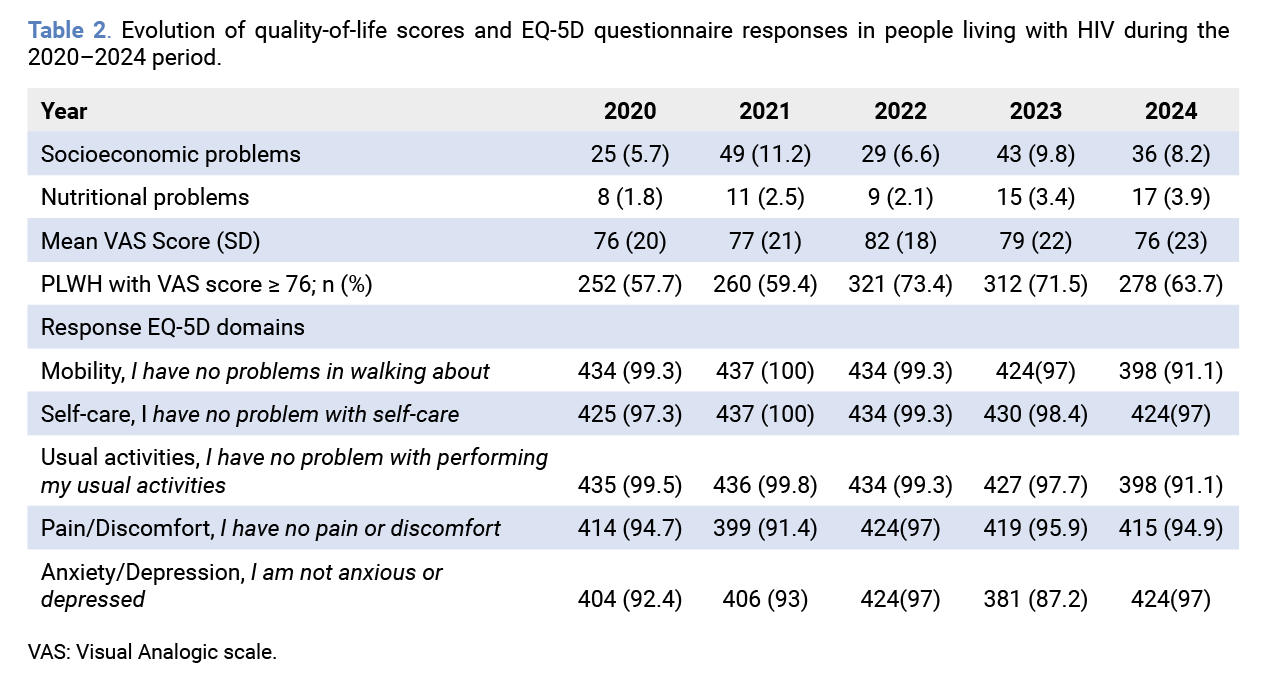
Of the 637 PLWH, 437 participants completed the questionnaire over the five-year period and were included in this study. At baseline, the median age was 52 years (IQR: 43-58 years), and 82.8% were male. Baseline characteristics are shown in Table 1.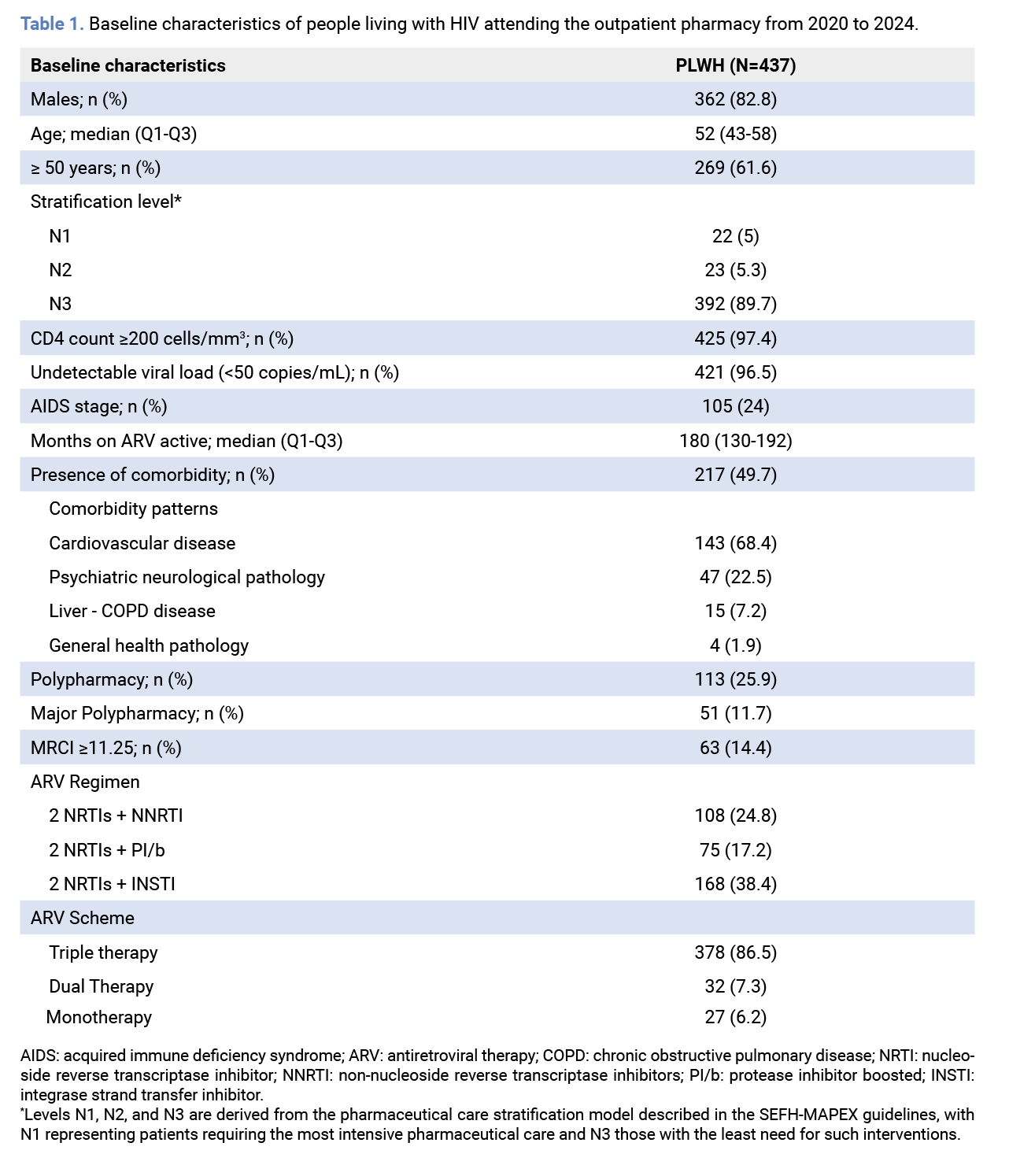 Throughout the five years analyzed, the mean score on the VAS QoL scale consistently indicates a good quality of life. No significant differences were found when analyzing the p-value for linear trend (p=0.84). Throughout the analyzed period, most PLWH included did not report issues in the domains assessed by the EQ-5D questionnaire. Table 2 showed the progression of this score over the years and EQ-5D answers.
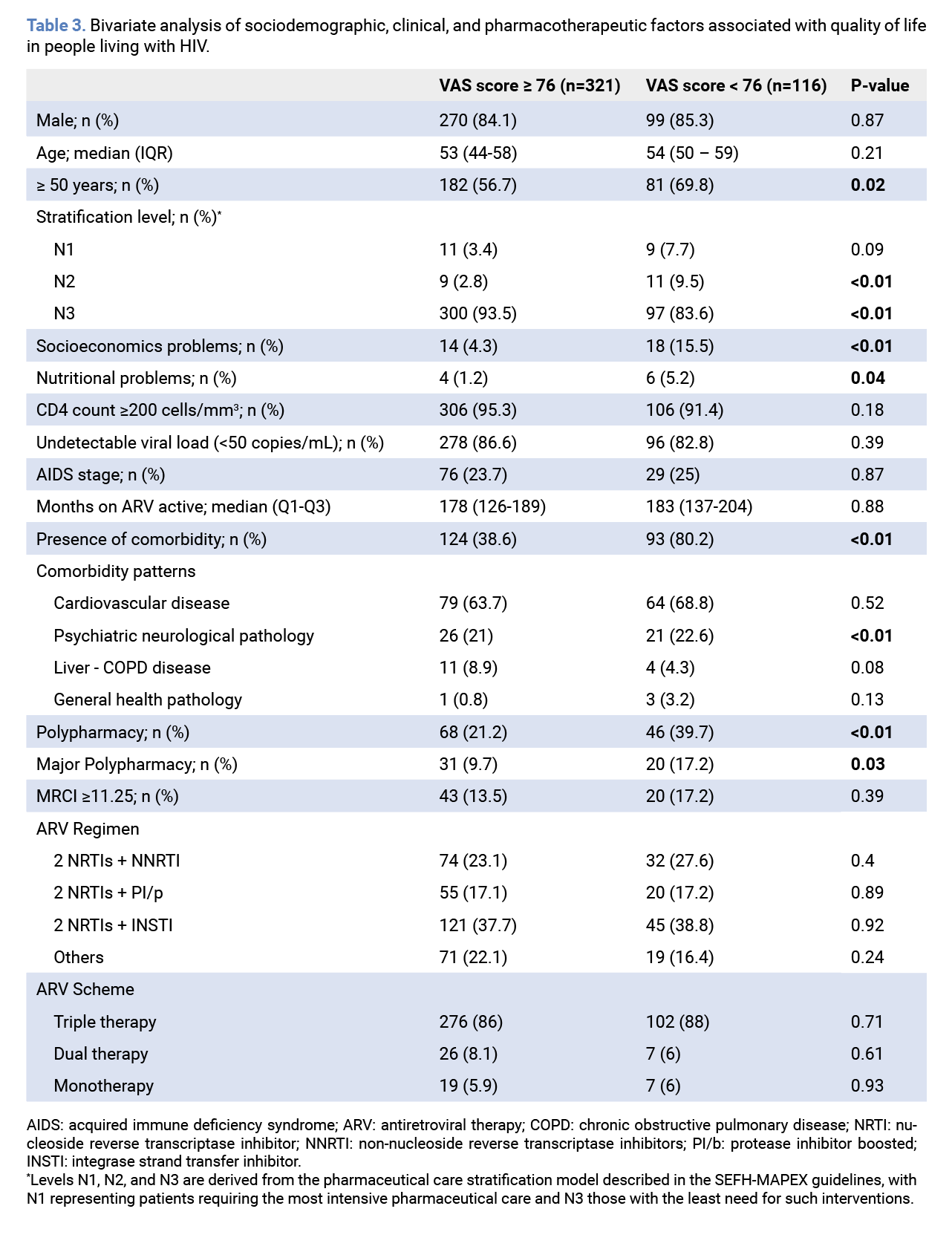
 A bivariate analysis was conducted to identify sociodemographic and pharmacotherapeutic variables in groups of participants with a VAS score of 76 or higher and those with a VAS score <76. Table 3 presents the complete results of the analysis.
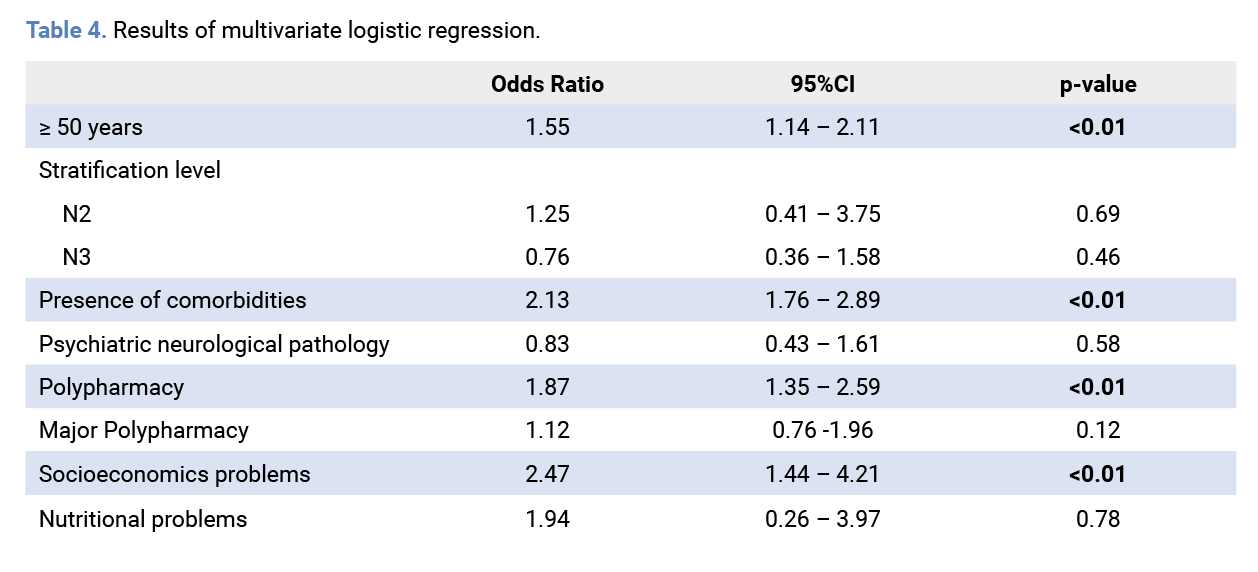
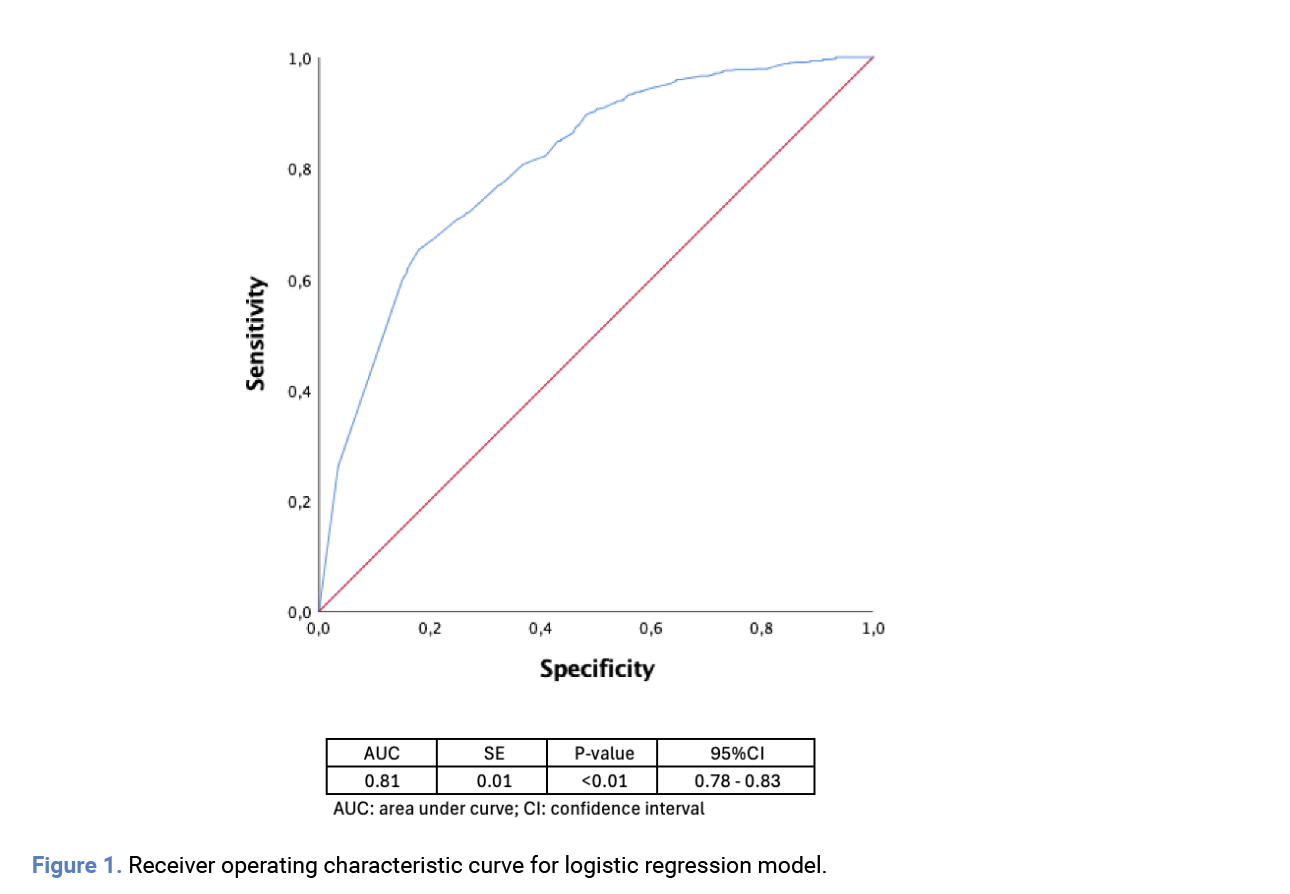
 The multivariate model developed showed significant differences for patients with a VAS score <76 in relation to advanced age, polypharmacy, presence of comorbidities and socioeconomic problems. The full description of the model is presented in Table 4. The Hosmer-Lemeshow test value was p=0.1 which suggests that the logistic regression model used has a good fit to the data. The ROC curve was constructed, and this showed that the model includes variables that predict QoL in PLWH (area under curve = 0.81 [95%CI, 0.78-0.83) (Figure 1).
Discussion
Our study demonstrates that advanced age, polypharmacy, and socioeconomic problems are factors that influence the attainment of good QoL in PLWH. Additionally, according to our results, more than half of the patients followed throughout the analyzed period exhibited a good QoL. The importance of achieving and maintaining a good QoL in PLWH stems from the 90-90-90 targets. In 2021, UNAIDS introduced a new strategy titled “End Inequalities: End AIDS, Global AIDS Strategy 2021-2026,” which raised the targets to 95% [19]. However, this updated strategy did not specifically include a target related to the QoL in PLWH. This may indicate a shift towards integrating quality of life assessments into the routine care and monitoring of these patients [20,21]. Some countries, such as Australia, have included specific QoL targets in their national HIV strategies for 2018-2022, defining that “75% of PLWH report a good QoL” [22]. The data indicate that more than half of the included population maintains a good QoL, with a slight increasing trend in the percentage of PLWH. Previous studies have described a correlation between lower QoL and age in PLWH, particularly those aged 50 years and older [23,24]. For instance, a study conducted in a public hospital within the healthcare network of the Community of Madrid observed that older PLWH undergoing treatment exhibited lower QoL, especially in physical aspects and levels of independence [25]. Consistent with these findings, the results of our study also indicate that older PLWH experience a reduction in QoL compared to younger age groups. The presence of non-AIDS-defining comorbidities in PWLH has been recognized as a critical factor negatively impacting QoL, particularly among aging individuals. Chronic conditions such as cardiovascular disease, diabetes, and neuropsychiatric disorders contribute to physical limitations, polypharmacy, and increased healthcare utilization. Furthermore, HIV-associated neurocognitive disorders exacerbate functional impairment and psychological distress, further compromising QoL. These findings underscore the necessity of a comprehensive, multidisciplinary approach to HIV care that prioritizes early detection and integrated management of comorbid conditions [26,27]. Polypharmacy is recognized as a risk factor for negative health outcomes related to treatment, such as drug interactions or suboptimal adherence. Many PLWH express concerns about the side effects of both ARV and concomitant medications, which affects their quality of life. As a result, they tend to report lower quality of life scores compared to patients who are not on polypharmacy [25]. However, when comparing patients with major polypharmacy, no significant differences in QoL are observed, which may be attributed to the relatively low percentage of patients experiencing major polypharmacy. Another study indicates that PLWH report better QoL compared to seronegative patients with chronic conditions, such as type 1 diabetes and rheumatoid arthritis. This difference may be attributed to the pharmacotherapeutic complexity, as ARV often involves simplified regimens, including single-tablet regimens, in contrast to treatment regimens that require parenteral formulations [28]. Within the context of PLWH, it has been observed that high pharmacotherapeutic complexity is associated with lower patient-perceived QoL [6]. On the other hand, advances in ARV have significantly increased the survival of PLWH due to optimal immunovirological control. As a result, HIV infection can now be regarded as a chronic disease. Although no clear association was found between the duration of ARV and quality of life, recent studies suggest that stability in ARV access and adherence may play a key role in the well-being of PLWH. However, PLWH face unique determinants of QoL compared to those with other chronic diseases, such as type 1 diabetes or rheumatoid arthritis. While advancements in antiretroviral therapies have simplified treatment regimens, enhancing adherence and improving certain aspects of QoL, the pervasive impact of social stigma remains significant. This stigma, encompassing biases related to diagnosis and confidentiality, deeply affects the psychological and social well-being of patients, in ways not directly paralleled in most other chronic conditions. In contrast, chronic conditions like diabetes often lack this profound psychological and social impact but may pose more direct physical challenges. These findings underscore the necessity of comprehensive strategies that address both clinical and social aspects of HIV care. [29,30]. Based on the results presented, several future research avenues could be explored, such as expanding the research to multiple hospital centers to enhance the generalizability of the findings and extending the observation period beyond five years to capture long-term changes in QoL. It is important to note that older patients may have been living with HIV for a longer period, which could confound the relationship between age and QoL. The duration of infection may influence both clinical outcomes and QoL, given the cumulative effects of chronic infection, treatment exposure, and comorbidities. Future analyses should consider including this variable in the regression model if such data are available, as it could provide a more nuanced understanding of the predictors of QoL in PLWH. Moreover, the findings identify unfavorable socioeconomic conditions as a risk factor, suggesting that studies analyzing the impact of socioeconomic factors more deeply could help improve QoL, including qualitative studies to better understand patient experiences. This study has several limitations that should be acknowledged. Its unicentric design may limit the generalizability of findings, although the homogeneity of clinical protocols reinforces internal validity. The predominance of male participants is consistent with the higher prevalence of HIV diagnoses among men in Europe. The inclusion of only patients with complete five-year follow-up data may have led to selection bias; however, as exclusions were mainly due to late consultation enrollment, significant bias is unlikely. Additionally, while the EQ-5D-5L is a validated QoL assessment tool, it may not fully capture HIV-specific concerns, suggesting the need for disease-specific measures and qualitative approaches addressing psychosocial factors. The definition of adequate QoL using a VAS score of 76, although supported by the EuroQol guidelines, has not been specifically validated for PLWH. Furthermore, psychosocial and socioeconomic problems were recorded as a global variable without detailed stratification, limiting insights into specific determinants such as income, employment, or healthcare access. Given these limitations, future multicenter studies are warranted to enhance external validity and deepen the understanding of QoL in PLWH. In conclusion, the study provides valuable insight into QoL of PLWH, emphasizing the importance of factors such as advanced age, polypharmacy, and socioeconomic issues in achieving a good QoL. The findings highlight the need to integrate QoL assessments into routine clinical practice to enhance the management and well-being of PLWH. Although the unicentric nature of the study limits the generalizability of the results, the longitudinal approach and the use of validated tools such as the EQ-5D provide a solid foundation for future research and improvements in the care of this population. Funding None to declare. Conflicts of interest The authors declare that they have no conflict of interest. Author contributions Conceptualization, E.C.M. and R.M.V.; methodology, E.C.M. and R.M.V.; formal analysis, E.C.M.; writing—original draft preparation: E.C.M. and R.M.V.; writing—review and editingl authors, E.C.M. and R.M.V. All authors have read and agreed to the published version of the manuscript.References
- Cahill S, Valadéz R. Growing older with HIV/AIDS: new public health challenges. Am J Public Health. 2013;103(3):e7-e15. doi: 10.2105/AJPH.2012.301161.
- Smit M, Brinkman K, Geerlings S, Smit C, Thyagarajan K, Sighem Av, et al. Future challenges for clinical care of an ageing population infected with HIV: a modelling study. Lancet Infect Dis. 2015;15(7):810-8. doi: 10.1016/S1473-3099(15)00056-0. Erratum in: Lancet Infect Dis. 2015;15(9):998. doi: 10.1016/S1473-3099(15)00230-3.
- Schouten J, Wit FW, Stolte IG, Kootstra NA, van der Valk M, Geerlings SE, et al. Cross-sectional comparison of the prevalence of age-associated comorbidities and their risk factors between HIV-infected and uninfected individuals: the AGEhIV cohort study. Clin Infect Dis. 2014;59(12):1787-97. doi: 10.1093/cid/ciu701.
- Morillo-Verdugo R, Sánchez-Rubio-Ferrández J, Gimeno-Gracia M, Robustillo-Cortés MLA, Almeida-González CV; POINT study group. Prevalence of polypharmacy and associated factors among patients living with HIV infection in Spain: The POINT study. Enferm Infecc Microbiol Clin (Engl Ed). 2020:S0213-005X(20)30317-7. English, Spanish. doi: 10.1016/j.eimc.2020.09.020.
- Hirsch JD, Metz KR, Hosokawa PW, Libby AM. Validation of a patient-level medication regimen complexity index as a possible tool to identify patients for medication therapy management intervention. Pharmacotherapy. 2014;34(8):826-35. doi: 10.1002/phar.1452.
- Contreras-Macías E, Gutiérrez-Pizarraya A, RobustilloCortés MA, Morillo-Verdugo R. High level of medication regimen complexity index correlate with worse quality of life in people living with HIV. Rev Esp Quimioter. 2021;34(2):93-99. doi: 10.37201/req/097.2020.
- Cooper V, Clatworthy J, Harding R, Whetham J; Emerge Consortium. Measuring quality of life among people living with HIV: a systematic review of reviews. Health Qual Life Outcomes. 2017;15(1):220. doi: 10.1186/s12955-017-0778-6
- Lazarus JV, Safreed-Harmon K, Barton SE, Costagliola D, Dedes N, Del Amo Valero J, Gatell JM, Baptista-Leite R, Mendão L, Porter K, Vella S, Rockstroh JK. Beyond viral suppression of HIV - the new quality of life frontier. BMC Med. 2016;14(1):94. doi: 10.1186/s12916-016-0640-4
- Lazarus JV, Safreed-Harmon K, Kamarulzaman A, Anderson J, Leite RB, Behrens G, et al. Consensus statement on the role of health systems in advancing the long-term well-being of people living with HIV. Nat Commun. 2021;12(1):4450. doi: 10.1038/s41467-021-24673-w.
- Emuren L, Welles S, Polansky M, Evans AA, Macalino G, Agan BK; Infectious Disease Clinical Research Program HIV Working Group. Lower health-related quality of life predicts all-cause hospitalization among HIV-infected individuals. Health Qual Life Outcomes. 2018;16(1):107. doi: 10.1186/s12955-018-0931-x
- Jonkman NH, Schuurmans MJ, Groenwold RHH, Hoes AW, Trappenburg JCA. Identifying components of self-management interventions that improve health-related quality of life in chronically ill patients: Systematic review and meta-regression analysis. Patient Educ Couns. 2016;99(7):1087-1098. doi: 10.1016/j.pec.2016.01.022.
- EuroQol Research Foundation. EQ-5D-5L user guide: basic information on how to use the EQ-5D-5L instrument [Internet]. Rotterdam: EuroQol Research Foundation; 2019. Available from: https://euroqol.org/publications/user-guides.
- EuroQol Research Foundation. EQ-5D Crosswalk Index Value Calculator [Internet]. Rotterdam: EuroQol Research Foundation. Available from: https://euroqol.org/eq-5d-instruments/eq-5d-5l-about/valuation-standard-value-sets/crosswalk-index-value-calculator/.
- Grupo de expertos de la Secretaría del Plan Nacional sobre el SIDA (SPNS)Sociedad Española de Geriatría y Gerontología (SEGG). Documento deconsenso sobre edad avanzada e infección por el virus de lainmunodeficiencia humana (Actualización 2021) [Internet]. Madrid: Ministeriode Sanidad Servicios Sociales e Igualdad. Disponible en: https://www.segg.es/media/descargas/Documento-de-edad-avanzada-y-VIH.pdf
- De Francesco D, Sabin CA, Reiss P. Multimorbidity patterns in people with HIV. Curr Opin HIV AIDS. 2020;15(2):110-117. doi: 10.1097/COH.0000000000000595.
- Calderón-Larrañaga A, Gimeno-Feliu LA, González-Rubio F, Poblador-Plou B, Lairla-San José M, Abad-Díez JM, et al. Polypharmacy patterns: unravelling systematic associations between prescribed medications. PLoS One. 2013;8(12):e84967. doi: 10.1371/journal.pone.0084967.
- Alves-Conceição V, Rocha KSS, Silva FVN, Silva ROS, Cerqueira-Santos S, Nunes MAP, et al. Are Clinical Outcomes Associated With Medication Regimen Complexity? A Systematic Review and Meta-analysis. Ann Pharmacother. 2020;54(4):301-313. doi: 10.1177/1060028019886846.
- Morillo-Verdugo R, Robustillo-Cortés MA, Abdel-Kader Martín L, Álvarez de Sotomayor Paz M, Lozano de León Naranjo F, Almeida González CV. Determination of a cutoff value for medication regimen complexity index to predict polypharmacy in HIV+ older patient. Rev Esp Quimioter. 2019 Oct;32(5):458-464. PMID: 31528986
- UNAIDS. Overcoming inequalities and setting the course to end AIDS by 2030 [Internet]. Geneva: UNAIDS; 2021. Available from: https://www.unaids.org/sites/default/files/media_asset/A-75-836_es.pdf.
- Marques-Gomes J, Salt MJ, Pereira-Neto R, Barteldes FS, Gouveia-Barros V, Carvalho A, et al. Development of the HIV360 international core set of outcome measures for adults living with HIV: A consensus process. HIV Med. 2022;23(6):639-649. doi: 10.1111/hiv.13221.
- Safreed-Harmon K, Anderson J, Azzopardi-Muscat N, Behrens GMN, d’Arminio Monforte A, Davidovich U, et al. Reorienting health systems to care for people with HIV beyond viral suppression. Lancet HIV. 2019;6(12):e869-e877. doi: 10.1016/S2352-3018(19)30334-0.
- Commonwealth of Australia. Eighth national HIV strategy 2018–2022 [Internet]. Canberra: Government of Australia, Department of Health; 2018. Available from: https://www.health.gov.au/resources/publications/eighth-national-hiv-strategy-2018-2022.
- Monteiro F, Canavarro MC, Pereira M. Factors associated with quality of life in middle-aged and older patients living with HIV. AIDS Care. 2016;28 Suppl 1(sup1):92-8. doi: 10.1080/09540121.2016.1146209.
- Patier Ruiz I, Sánchez-Rubio Ferrández J, Molina García T, Gaspar Alonso-Vega G. Resultados en calidad de vida comunicados por pacientes en tratamiento antirretroviral. Rev OFIL ILAPHAR. 2020;30(2):105-107. Doi. 10.4321/s1699-714x2020000200008
- Okoli C, de Los Rios P, Eremin A, Brough G, Young B, Short D. Relationship Between Polypharmacy and Quality of Life Among People in 24 Countries Living With HIV. Prev Chronic Dis. 2020;17:E22. doi: 10.5888/pcd17.190359.
- Zhabokritsky A, Klein M, Loutfy M, Guaraldi G, Andany N, Guillemi S, et al. Non-AIDS-defining comorbidities impact health related quality of life among older adults living with HIV. Front Med (Lausanne). 2024;11:1380731. doi: 10.3389/fmed.2024.1380731.
- Alford K, Daley S, Banerjee S, Vera JH. Quality of life in people living with HIV-associated neurocognitive disorder: A scoping review study. PLoS One. 2021;16(5):e0251944. doi: 10.1371/journal.pone.0251944..
- Seguiti C, Salvo PF, Di Stasio E, Lamonica S, Fedele AL, Manfrida S, et al. Health-related quality of life (HRQoL) from HIV patients’ perspective: comparison of patient-reported outcome (PRO) measures among people living with hiv (PLWH) and other chronic clinical conditions. J Patient Rep Outcomes. 2022;6(1):27. doi: 10.1186/s41687-022-00423-4
- Gakhar H, Kamali A, Holodniy M. Health-related quality of life assessment after antiretroviral therapy: a review of the literature. Drugs. 2013;73(7):651-72. doi: 10.1007/s40265-013-0040-4.
- Root R, Whiteside A. A qualitative study of community home-based care and antiretroviral adherence in Swaziland. J Int AIDS Soc. 2013;16:17978. doi: 10.7448/IAS.16.1.17978.
Explore
Articles
Volumes
About the journal
Most read
Recomendaciones para la prevención y el tratamiento de las infecciones respiratorias en adultos mayores institucionalizados
Revista Española de Quimioterapia
Acute infectious gastroenteritis in childhood: the role of rapid multiplex molecular syndromic panels in diagnosis and clinical management
Revista Española de Quimioterapia
Características epidemiológicas de pacientes con aislamientos de Enterobacterales productores de carbapenemasas-NDM en un hospital de alta complejidad
Revista Española de Quimioterapia
Review on the management of intra-abdominal candidiasis
Revista Española de Quimioterapia
Neoscytalidium dimidiatum: a rare locally acquired deep cutaneous infection in a renal transplant recipient
Revista Española de Quimioterapia