Original
June 2025, Volume 38, nº 3
20 min
Living with dogs and cats: Is it a risk factor for community acquired methicillin-resistant Staphylococcus aureus skin and soft tissue infections in humans?
Patricio Favier *1,3 , Carla Raffo3 , Diego Torres3 , Marcelo Gismondi1 , Florencia Piñeiro1 , Gabriela Blugerman1 , Marian Erbin2 , Johana Pérez4, Omar Sued5 , María José Rolón1
1Infectious Diseases Division, Hospital General de Agudos Dr. Juan A. Fernández, City of Buenos Aires, Argentina
2Bacteriology Division, Hospital General de Agudos Dr. Juan A. Fernández, City of Buenos Aires, Argentina
3Infectious Diseases Service, Hospital de Trauma y Emergencias Dr. Federico Abete, Malvinas Argentinas County, Province of Buenos Aires, Argentina
4Microbiology Service, Hospital de Trauma y Emergencias Dr. Federico Abete, Malvinas Argentinas County, Province of Buenos Aires, Argentina
5Investigation Area, Fundación Huesped, City of Buenos Aires, Argentina
http://www.doi.org/10.37201/req/114.2024
Receipt Date:
26/11/2024
Acceptance Date:
22/01/2025
Publication Date:
19/02/2025
How to cite
Favier P, Raffo C, Torres D, Gismondi M, Piñeiro F, Blugerman G, et al. Living with dogs and cats: Is it a risk factor for community acquired methicillin-resistant Staphylococcus aureus skin and soft tissue infections in humans? Rev Esp Quimioter. 2025; 38(3):187-96. Available from: http://www.doi.org/10.37201/req/017.2025
Metrics
482
Views
103
Downloads
Share
Share
Abstract (EN)
Introduction: Community-acquired methicillin-resistant Staphylococcus aureus (MRSA) is a human skin and mucosa colonizer being this colonization a risk factor for infections by this germ. It´s unknown the role that domestic canines and felines (CF) play in human colonization. The objective of this study was to demonstrate the association between MRSA isolation in clinical samples from skin and soft tissue infections (SSTIs) in adults living with CF.
Material and methods: A retrospective model of cases (SSTIs with isolation of MRSA) and controls (SSTIs without isolation of MRSA) was used. We included 166 SSTI episodes treated in two hospitals, in Buenos Aires, Argentina, between October 2014 and January 2018. Samples were taken by puncture through healthy skin and the material obtained was sown in usual culture media. For bacterial identification, mass spectrometry and automated nephelometry were used. Methicillin-resistance was confirmed by disc-diffusion with cefoxitin discs. Data on living habits with CF and classic risk factors for SSTIs by MRSA were collected.
Results: Patients with SSTIs due to MRSA live more with CF (crude OR 1.9; [1.1-3.7] p<0.05) and tend to live more closely with them (crude OR 1.8; [0.99-3.43] p=0.08). In the multivariate analysis, those who live closely with CF have 1.3 times more chances of SSTIs due to MRSA (adjusted OR 2.32; [1.12-4.78] p<0.02).
Conclusions: We conclude that there is an association between human MRSA SSTIs and living with CF.
Keywords (EN):
[i]Staphylococcus aureus[/i]
Cats
Skin and soft tissues infections
MRSA
Dogs
Risk factor
Introduction
Community acquired methicillin-resistant Staphylococcus aureus (MRSA) is a microorganism that colonizes skin and mucous membranes of humans [1-5]. It has been estimated that between 15% and 80% of the population in Argentina are asymptomatic carriers of this pathogens [6,7]. Colonization by MRSA is a significant risk factor for infections caused by this microorganism [5,8-10]. These infections can include osteomyelitis, spondylodiscitis, septic arthritis, infective endocarditis, necrotizing pneumonia, surgical site infections, skin and soft tissue infections (SSTI), bacteremia, and more [11-13]. Even with proper treatment, some of these infections can result in fatal outcomes if not diagnosed early. Despite the availability of effective antimicrobials, MRSA remains a challenge not only to treat, but also for human decolonization [14-16]. However, it is believed that applying topical antibacterial products to the patient and their cohabitants can be 60% effective in preventing S. aureus infections for up to one year [17]. Therefore, identifying additional risk factors for staphylococcal infections is crucial [18]. One area that remains poorly understood is the role of domestic pets, specifically dogs and cats, in facilitating human colonization and its clinical impact [19,20]. Notably, there are currently no standardized recommendations for the surveillance and decolonization of pets, despite the possibility that they may act as ´living fomites´, reinitiating the MRSA transmission cycle within households by not being targeted by these measures [21-23]. Besides, there is a lack of reliable data on the carrier rate of MRSA in domestic pets in Argentina [24]. The primary objective of this study was to demonstrate the relation between MRSA isolation in clinical samples from SSTIs in adults living with domestic canines and felines (CF) [25]. The secondary objective was to evaluate the relationship between SSTIs and the classic risk factors for this condition caused by MRSA in our study population.Material and methods
Study design. The study was performed in two general hospitals located in Argentina (one in the City of Buenos Aires -CBA- and the other in the Province of Buenos Aires -PBA-), from October 2014 to January 2018. This period was chosen for the retrospective case-control analysis because during that time, MRSA epidemiological surveillance from skin and soft tissues clinical samples was being conducted in both hospitals. The study included cases of SSTIs with isolation of MRSA and controls of SSTIs without isolation of MRSA. Population and sample procedure. We evaluated clinical and microbiological records from adult outpatients who were diagnosed with either suppurative or non-suppurative SSTIs [26]. Inclusion criteria included≥ 16 years old, with skin and soft tissue lesions indicative of infection, being able to provide sample collection, and capable of completing an epidemiological survey. The medical team, (infectious disease, internal medicine, dermatology, or surgical physicians), determined the diagnosis of STTI in all cases. Samples were obtained through sterile puncture of the lesion via healthy skin by the treating physicians. For non-suppurative STTI cases, 1 mL of sterile saline was instilled and then aspirated for culture. Patients also completed a brief questionnaire to investigate factors that could be associated with MRSA isolation and the living habits with CF in their homes if present. Questionnaire and collected data. From each clinical record we completed a questionnaire that gathered epidemiological data for the 12-month period prior to sampling. The questionnaire collected information about various risk factors associated with acquisition of MRSA, including whether the patient or any household member had been hospitalized [27], engagement in contact sports, immunosuppressive conditions (rheumatological pathologies, congenital or acquired immunodeficiencies, chemotherapy, radiotherapy, current oncological pathology, HIV/AIDS or use of ≥ 20mg prednisone daily or equivalent for more than two weeks), history of cardiometabolic pathology (heart disease, arterial hypertension, diabetes mellitus, etc.). In addition, it was determined whether the patient had previously been diagnosed with MRSA in SSTI or was known to be colonized with this pathogen. Patients were also asked about the presence of companion animals at home. The kind of human and animal contact was defined as ´close´ if the companion animals had access to the same rooms and surfaces as household members for most of the day. The questionnaire also gathered data related to pet-related factors, including number of animals in the household, their age, sex, breed, use of antimicrobials in the previous year and whether they had been neutered, dewormed, and vaccinated for rabies within the last year, as a proxy of sanitary control. Sample processing and bacterial identification. Punctured samples were collected and transferred into tubes containing 2 mL of brain-heart infusion broth (BHI, BritaniaTM, Argentina), followed by 37°C incubation for 24 hours. Afterward, 50μL of BHI was plated on chocolate agar, mannitol salt agar, and blood agar (BritaniaTM, Argentina), and plates were incubated at 37°C for an additional 24 hours. If the culture result was negative or uncertain, incubation was extended up to 48 hours. Colonies were initially identified based on their morphology and Gram stain, and suspect colonies were subjected to further identification using MALDI-TOF (Bruker MALDI Biotyper™ Becton DickinsonTM, United States) and/or nephelometric methods (PhoenixTM, Becton DickinsonTM, United States) [28]. Antibiotic resistance. S. aureus isolates susceptibility to methicillin and other antimicrobials was assessed using the modified Kirby-Bauer disc-diffusion method. Isolates were plated on Müeller-Hinton agar (MHA, BritaniaTM, Argentina), and discs containing cefoxitin 30μg, ciprofloxacin 5μg, erythromycin 15μg, cotrimoxazole 25μg, gentamicin 10μg, clindamycin 2μg, rifampicin 5μg and minocycline 30μg (BritaniaTM, Argentina) were set following manufacturer’s recommendations. Methicillin resistance was defined as an inhibition halo less than or equal to 21mm for the cefoxitin disc, in accordance with the 2018 Clinical and Laboratory Standards Institute recommendations (CLSI 2018) [29]. The disc approximation test (D-test) in MHA was used to determine resistance to macrolides, lincosamides, and streptogramin B (MLSb). A bacterial suspension equivalent to a turbidity of 0.5 McFarland standard (PhoenixSpecTM, Becton DickinsonTM, United States) was placed on an MHA plate, and a 2μg clindamycin disc was placed 20mm from the edge of a 15μg erythromycin disc. After 24 hours at 37 °C incubation, isolates that showed flattening of the clindamycin inhibition zone adjacent to the erythromycin disc (zone ´D´) were considered clindamycin resistant while inducible MLSb. Halos of size ≤13mm around erythromycin and ≤21mm around clindamycin were considered resistant. Organisms that were resistant to both antibiotics were interpreted as having a constitutive MLSb. Phenotypes resistant only to macrolides or lincosamides with a negative D-test were not considered MLSb. For the remaining antimicrobials tested, resistance was defined based on the following CLSI 2018 cut-off points (inhibition halos): ciprofloxacin ≤15mm, cotrimoxazole ≤10mm, gentamicin ≤12mm, rifampicin ≤16mm, and minocycline ≤14mm. Thus, MRSA was defined as S. aureus isolate resistant to cefoxitin and presenting, or not, one (and not more) of the following resistance patterns: MLSb (constitutive or inducible), macrolides, lincosamides, cotrimoxazole, fluoroquinolones, aminoglycosides, tetracyclines, or rifampicin [30-32]. Statistical analysis. Quantitative variables were reported as median and interquartile range (IQR), and categorical variables were reported as percentage (%). For the comparison of means between the two groups, the Mann-Whitney/Wilcoxon test was used, since the continuous variables did not present a normal distribution. For the comparison of proportions, the chi2 test or Fisher’s exact test was used, as appropriate. The multivariate model was evaluated using logistic regression, employing the Hosmer-Lemeshow goodness-of-fit test. The analysis was conducted in three steps, in which the variable with the lowest statistical weight was removed in each step, resulting in a final analysis that only included variables with high statistical weight. For all comparisons, a significance level of 5% (p value ≤0.05) was established. For the goodness-of-fit test, a p-value greater >0.05 was considered acceptable. Statistical analysis was performed with Epi-Info 7.2TM. Ethics. According to 1480/2011 resolution “Guide for Research with Human Beings” of the Argentinian Ministry of Health and the Hospital de Trauma y Emergencias Dr. Federico Abete (Malvinas Argentinas County, Province of Buenos Aires, Argentina) Institutional Review Board ethical approval was not needed as to it was an intervention within the framework of an epidemiological surveillance program with a necessary action to guarantee the health of the participating subjects.Results
Out of the 166 patients who were evaluated (from both centers, as described in Figure 1), 65.1% were male and 34.9% were female. The median age was 39 years (IQR 27). Of the STTIs evaluated, 54.2% had MRSA isolation (Table 1). The remaining cases yielded other bacteria or had negative cultures. From the total of cases that were evaluated, 72.3% were suppurative SSTIs (boils, suppurative cellulitis, or abscesses). Most of the population under study cohabited with CF (67.5%), although only a third of them reported having close contact with their pets (35.5%).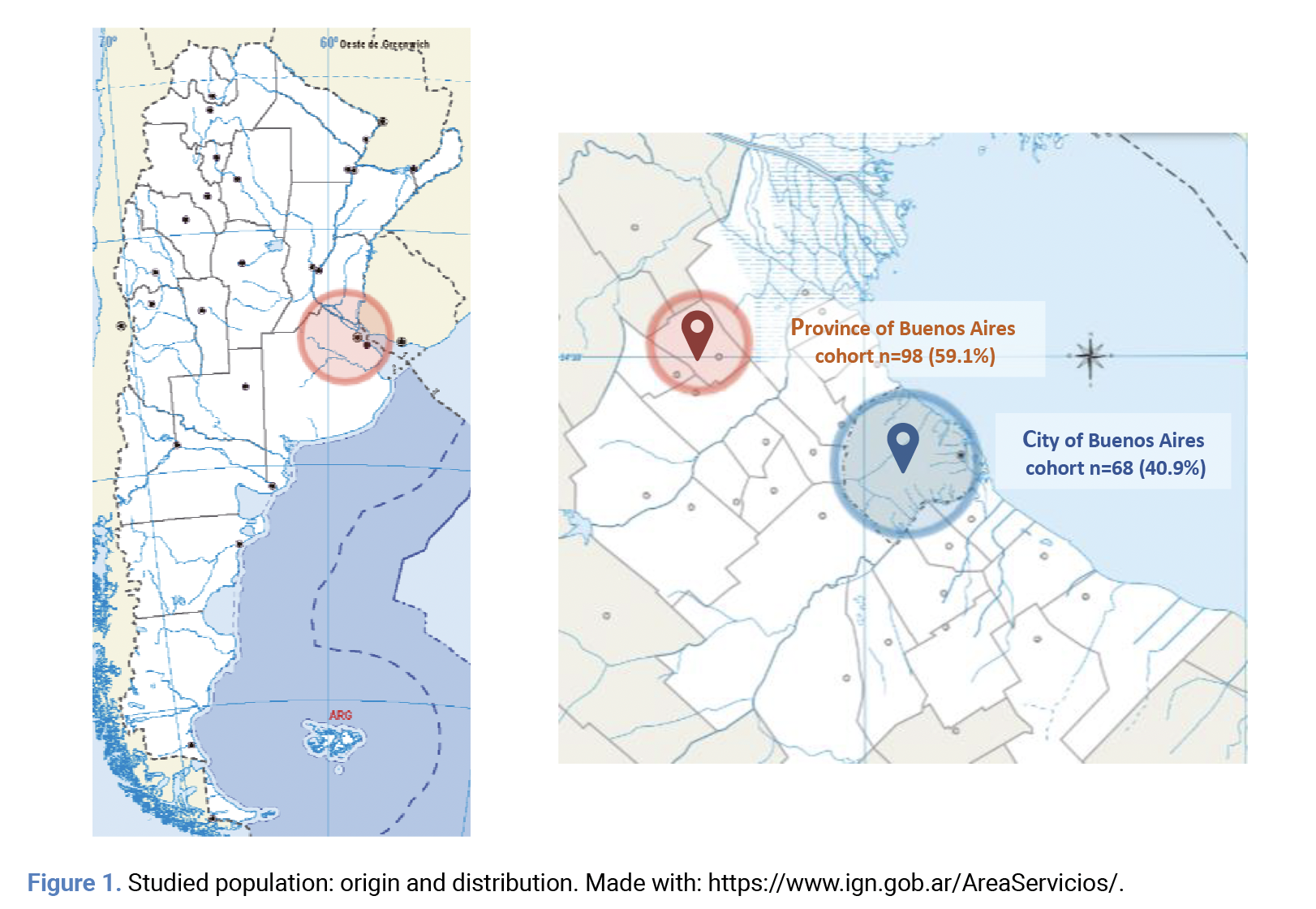
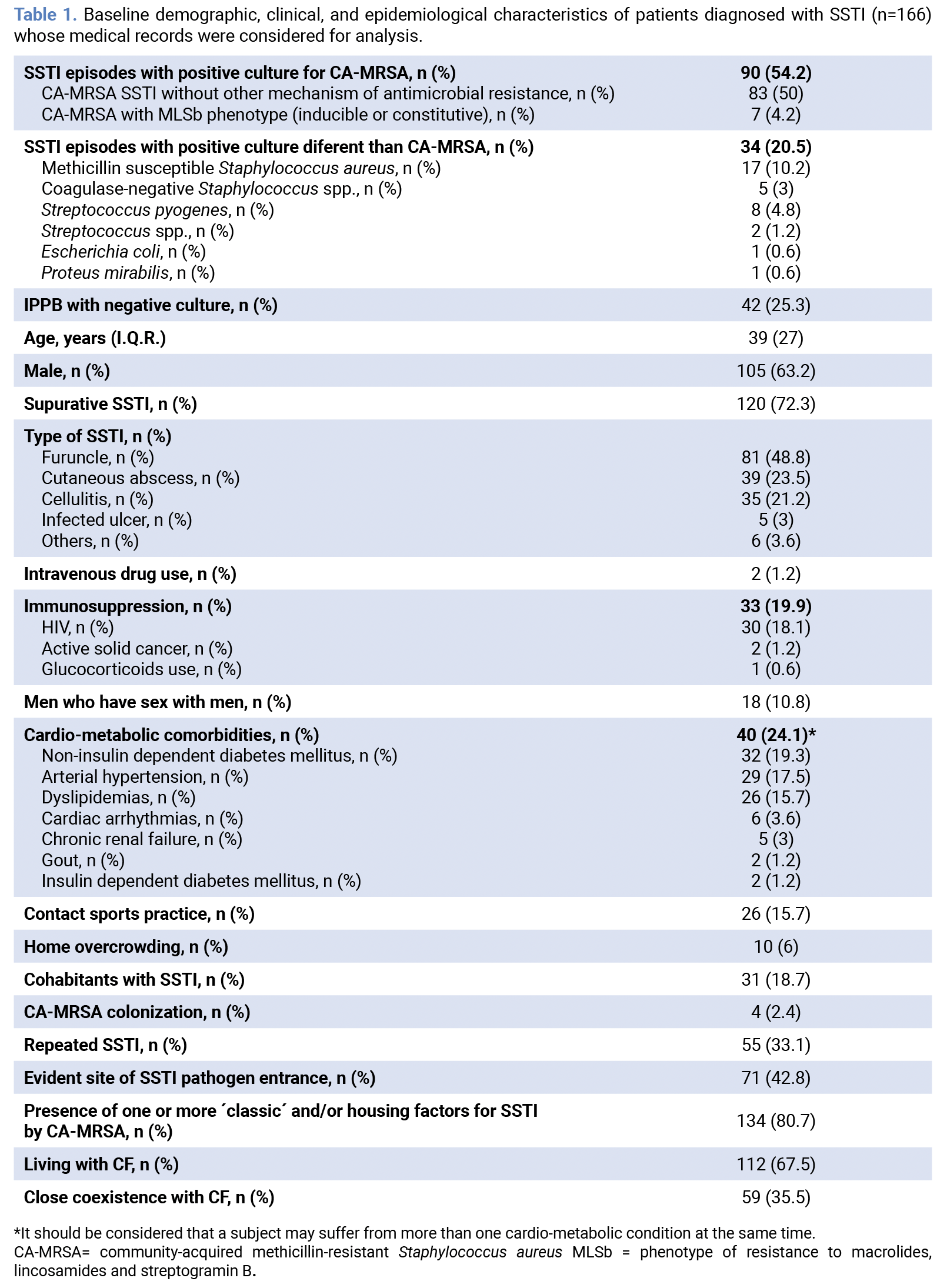 In the univariate analysis, patients who lived with CF exhibited an increased likelihood of having a positive culture for MRSA from their SSTIs (crude OR 2.0; [1.1-3.8] p<0.04). This suggests that living near CF may be a contributing factor to our primary outcome (crude OR 1.7; [0.9-3.4] p=0.08). Furthermore, younger patients, and those ones with ´classic´ MRSA risk factors (including skin disorders) were found to have a higher frequency of MRSA isolation (Table 2).
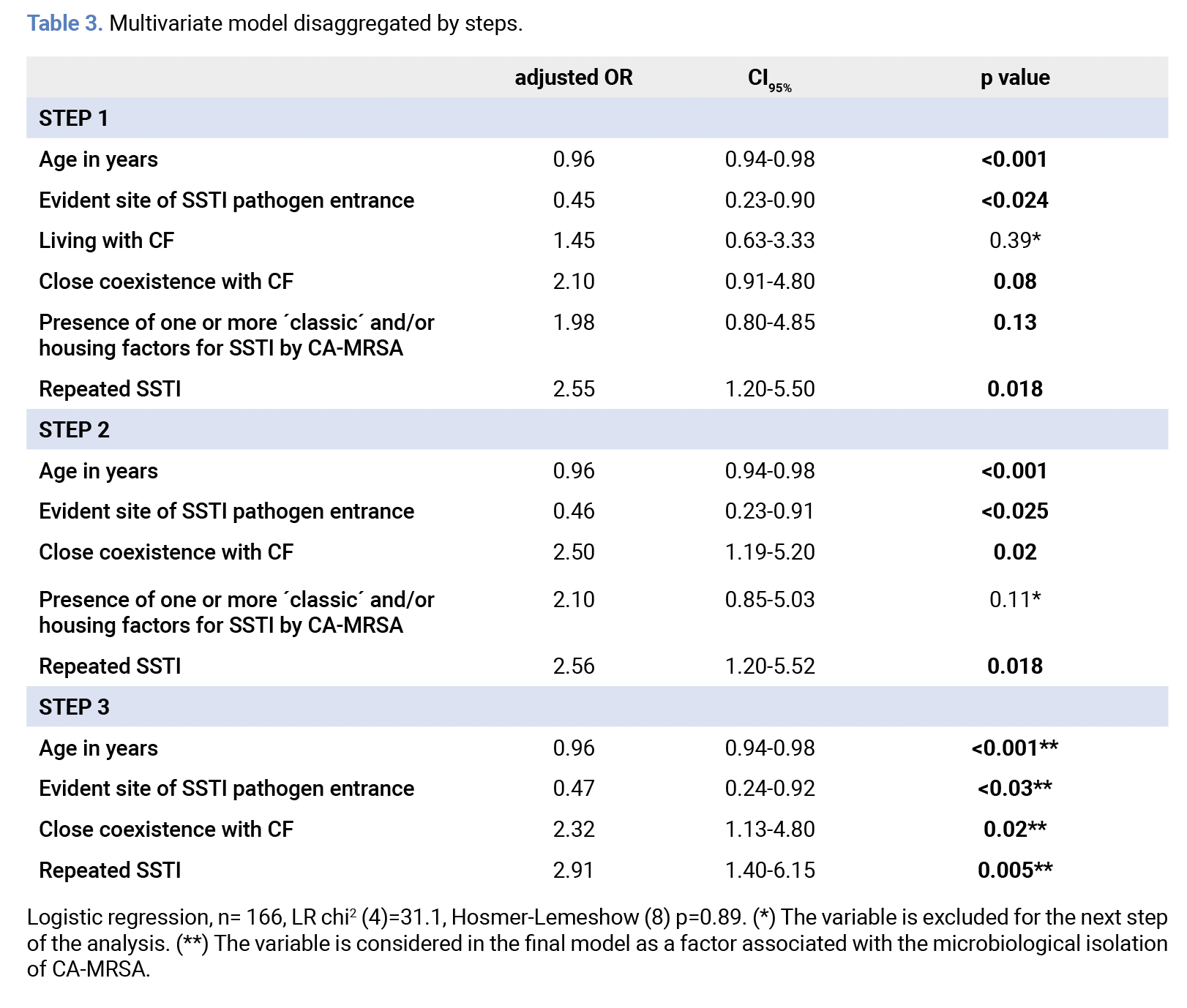
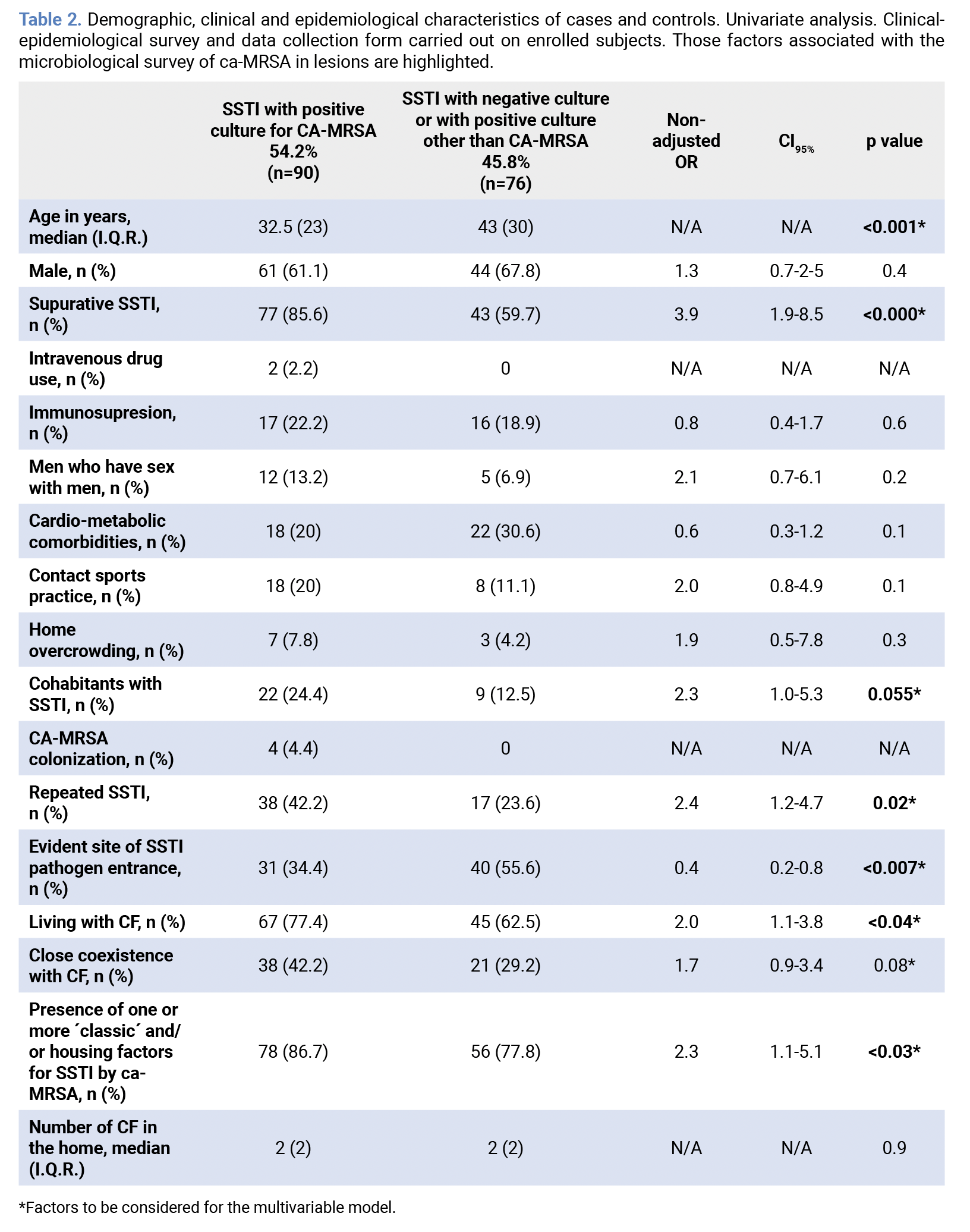 When adjusting for other variables, it was found that patients living in close proximity to CF had a 1.3 times higher probability of SSTIs caused by MRSA (adjusted OR 2.3; [1.1-4.8] p<0.02). Additionally, for each year of age increase, the chance of acquiring MRSA SSTIs decreased 4%. Moreover, presenting repeated SSTIs and having an evident skin disruption were independent factors associated with MRSA isolation (Table 3).
 Finally, pets’ pregnancy status, castration, deworming, anti-rabies vaccination, breed, or age, as there was no demonstrated association with MRSA STTIs in any of the cases.
Discussion
Numerous studies have demonstrated the influence of different ´modifiable´ risk factors on the prediction of MRSA infections [6,10,19,33]. Our study is the first at a regional level that demonstrates the association between skin and soft tissue MRSA infections and living with CF; since most of the previous works included both sick humans and asymptomatic nasal carriers [30,35-37]. Although many clinical trials have examined the prevalence of S. aureus among companion animals [37-39], there is a lack of studies focused on the colonization of healthy animals (without clinical signs or symptoms) that have close contact with their owners (whether they are sick, as in our case, or not). To explain this, operational difficulties must be solved as a result of the lack of knowledge regarding the animal carriage of MRSA [17] (time to colonization, best anatomical sites for sampling, clinical implications in the medium and long term, sensitivity, and specificity of the methods to be used, influence of the animal breed, health, and parity, etc.). It is interesting that the factor of ´living closely´ with pets was a stronger linked factor than merely ´living´, regardless of whether this coexistence was close or not, especially in the CBA group. In a more profound interpretation, we attribute this finding to the fact that there were data from patients coming from PBA, which were included in the global analysis. In this sense, the number of patients who did not live closely with their pets was greater, as they had a larger uncovered area in their homes for their companion animals to be in. Therefore, the majority of patients in the CBA group were ´obligated´ to live closely with their pets, given that apartment living is the most common type of housing there. This, in turn, could result in another point of intervention in the effort to control potential risk factors that can be intervened to prevent the occurrence of MRSA infections. It is evident, considering these findings, that S. aureus is a zoonotic pathogen [25], so it is crucial to understand the bidirectional nature of the transmission of this bacterium in the context of the human-animal day [10,36,40]. Therefore, it is necessary to understand the impact of the use of antimicrobials in the veterinary environment and the existing antimicrobial resistance at this level [34,36]. In recent years, many studies have shown higher rates of MRSA carriage in companion animals in contrast to stray animals; and how this is influenced by to other extra factors [41-43] (such as the type of sampling, age of the animal, time the animal remains in the home, etc.). This reinforces our perspective regarding the deepening of ´modifiable´ aspects of the coexistence between CF and humans that would undoubtedly have an impact on staphylococcal co-colonization (and hence, disease) in both members of the dyad. Therefore, the fact that breed or number of pets at home had no influence on the results obtained are aspects that need further investigation, evaluating larger populations of sick humans living with CF. Finally, integrated work between the human and veterinary medical teams is necessary, to standardize practices for sampling, processing, and evaluating data for future research regarding the transmission of ´problematic bacteria´ between animals and humans. Experiences, as ours would be the kick-off for intervention studies aim to evaluate appropriate guidelines and products for bacterial decolonization in companion animals and cohabiting humans [44]. Consequently, the current recommendation guidelines regarding the topic could be expanded, understanding pets as ´living fomites´ or ´members of the cohabiting or family group´ of the index case. In this regard, obtaining generalizable data on the carrier status of companion animals could support the implementation of active decolonization policies aimed at prevention within household settings, similar to the periodic deworming protocols applied to these animal models. However, such measures should be grounded in mixed clinical trials involving both humans and pets to assess the potential impact of these strategies, as well as to ensure their implementation in the most cost-effective and feasible manner. Our study presents several limitations that should be considered when interpreting the results. First, the definition used for ´close contact with CF´ is not entirely homogeneous. This lack of standardization could introduce a potential bias in the statistical analysis and affect the accuracy of our findings. Additionally, data on the health status of companion animals were self-reported by their owners rather than obtained from veterinary records. This introduces the possibility of information bias, as owners’ perceptions may not accurately reflect their pets’ actual health conditions. Another limitation is that, although we found a statistical association between close cohabitation with CF and the recurrence of MRSA infections, the lack of microbiological screening of the pets could limit the robustness of our results. Including such data would have strengthened our study’s conclusions, but this was not feasible due to budget constraints. Finally, our data originate from a highly specific epidemiological setting. To generalize these results to other populations, it is essential to replicate this type of analysis in different epidemiological contexts.Conclusions
Our study demonstrates a correlation between close cohabitation with domestic dogs and/or cats and community-acquired MRSA skin and soft tissue infections (SSTI) in adults. This association was more pronounced in areas where individuals reside in apartments as opposed to those living in houses with outdoor spaces. Additionally, our primary outcome was linked to already established risk factors for this condition, such as younger age, recurrent SSTI, and portal of entry. Acknowledgments Special thanks, to the infectious diseases and bacteriologists staff at “Dr. Juan A. Fernández” (CBA) and “Dr. Federico Abete” (PBA) hospitals for their selfless participation in the development of this research. Funding None to declare. Conflict of Interest The authors declare no conflict of interest. Author contributions Conceptualization, P.F.; methodology, P.F., O.S. and M.J.R.; software, G.B.; validation, D.T. and C.R.; formal analysis, G.B.; investigation, P.F.; resources, P.F., C.R., M.J.R.; data curation, G.B.; writing—original draft preparation, P.F.; writing—review and editing, O.S. and M.J.R. visualization, M.G. and F.P.; supervision, M.E. and J.P.; project administration, P.F. All authors have read and agreed to the published version of the manuscript.References
- Cheung G. Y. C., Bae J. S., & Otto M. Pathogenicity and virulence of Staphylococcus aureus. Virulence. 2021 Dec;12(1):547-569. https://doi.org/10.1080/21505594.2021.1878688
- Hatlen T. J., & Miller L. G. Staphylococcal Skin and Soft Tissue Infections. Infect Dis Clin North Am, 2021 35(1), 81–105. https://doi.org/10.1016/j.idc.2020.10.003
- John Bennett Raphael Dolin Martin J. Blaser. Staphylococcus aureus (Including Staphylococcal Toxic Shock). Mandell, Douglas, and Bennett’s Principles and Practice of Infectious Diseases. 2014
- Liu C., Bayer A., Cosgrove S.E., Daum R. S., Fridkin S.K., Gorwitz R. J., et al. Clinical practice guidelines by the infectious diseases’ society of America for the treatment of methicillin-resistant Staphylococcus aureus infections in adults and children. Clin Infect Dis. 2011 52(3), e18–e55. https://doi.org/10.1093/cid/ciq146
- Vigil D, Harden W, Hines A, Hosokawa P, Henderson W, Bessesen M. Revised Risk Estimates for MRSA Infection in Patients with Intermittent Versus Persistent MRSA Nares Colonization. Infect Control Hosp Epidemiol. 2016 May;37(5):623-4. https://doi.org/10.1017/ice.2015.190
- Fosch S, Yones C, Trossero M, Grosso O, Nepote A. Nasal carriage of Staphylococcus aureus in community individuals: epidemiological factors. Acta Bioquím Clín Latinoam. vol.46 no.1 La Plata ene./mar. 2012
- Keller L. Portación nasal de Staphylococcus aureus meticilino resistente en pacientes ambulatorios. Presentado en el XXIII Congreso Latinoamericano de Microbiología y XIV Congreso Argentino de Microbiología. Rosario, Santa Fe, del 26 al 30 de septiembre de 2016.
- Bierowiec K., Płoneczka-Janeczko K., & Rypuła, K. Prevalence and Risk Factors of Colonization with Staphylococcus aureus in Healthy Pet Cats Kept in the City Households. Biomed Res Int. 2016; 2016:3070524. https://doi.org/10.1155/2016/3070524
- Wang B, Suh K, Muldoon K, Oake N, Forster A, Ramotar K, et al. Risk Factors for Methicillin- Resistant Staphylococcus aureus (MRSA) Colonization Among Patients Admitted to Obstetrical Units: A Nested Case-Control Study. J Obstet Gynaecol Can. 2017 Dec 13. pii: S1701- 2163(17)30512-1. https://doi.org/10.1016/j.jogc.2017.09.025
- Wertheim HF L, Melles DC, Vos MC, van Leeuwen W, van Belkum A, Verbrugh H A, et al. The role of nasal carriage in Staphylococcus aureus infections. Lancet Infect Dis. 2005 5(12), 751–762. https://doi.org/10.1016/S1473-3099(05)70295-4
- Neidhart S, Neidhart S, Zaatreh S, Klinder A, Redanz S, Spitzmüller R, et al. Predictors of colonization with Staphylococcus species among patients scheduled for cardiac and orthopedic interventions at tertiary care hospitals in north- eastern Germany-a prevalence screening study. Eur J Clin Microbiol Infect Dis. 2017 Dec 21. https://doi.org/10.1007/s10096-017-3154-x
- Taormina D, Konda S2, Liporace F, Egol K. Can preoperative nasal cultures of Staphylococcus aureus predict infectious complications or outcomes following repair of fracture nonunion? J Infect Public Health. 2017 Oct 31. pii:S1876-0341(17)30282-4. https://doi.org/10.1016/j.jiph.2017.10.007
- Torre-C J, Natera C, Mesa F, Trikic M, Rodríguez-Baño J. Clinical predictors of methicillin-resistant Staphylococcus aureus in nosocomial and healthcare-associated pneumonia: a multicenter, matched case-control study. Eur J Clin Microbiol Infect Dis. 2018 Jan;37(1):51-56. https://doi.org/10.1007/s10096-017-3100-y
- Peng H, Wang L-C, Zhai J-L, Weng X-S, Feng B, Wang W. Effectiveness of preoperative decolonization with nasal povidone iodine in Chinese patients undergoing elective orthopedic surgery: a prospective cross-sectional study. Braz J Med Biol Res. 2017 Dec 18;51(2). https://doi.org/10.1590/1414-431X20176736
- Sadigursky D, Santos Pires,H, Caldas S, Borja L, Castro de Queiroz G, Lemos Aziaet M. Prophylaxis with nasal decolonization in patients submitted to total knee and hip arthroplasty: systematic review and meta- analysis. Rev Bras Ortop. 2017 Oct 27;52(6):631- 637 J Arthroplasty. 2017 Sep;32(9):2815-2819.https://doi.org/10.1016/j.arth.2017.04.039
- Urias D, Varghese M, Simunich T, Morrissey S, Dumire R. Preoperative decolonization to reduce infections in urgent lower extremity repairs. Eur J Trauma Emerg Surg. 2018 Jan 6. https://doi.org/10.1007/s00068-017-0896-1
- Rezapoor M, Nicholson T, Mostafavi Tabatabaee R, Chen A, Maltenfort M, Parvizi J. Povidone-Iodine-Based Solutions for Decolonization of Nasal Staphylococcus aureus: A Randomized, Prospective, Placebo-Controlled Study. J Arthroplasty. 2017 Sep;32(9):2815-2819 https://doi.org/10.1016/j.arth.2017.04.039
- Morgan M. Methicillin-resistant Staphylococcus aureus and animals: zoonosis or humanosis? J Antimicrob Chemother. 2008 Dec; 62(6):1181-7. https://doi.org/10.1093/jac/dkn405
- Chai MH, Sukiman MZ, Liew YW, Shapawi MS, Roslan FS, Hashim SN, et al. Detection, molecular characterization, and antibiogram of multi-drug resistant and methicillin-resistant Staphylococcus aureus (MRSA) isolated from pets and pet owners in Malaysia. Iran J Vet Res. 2021; 22(4), 277–287. https://doi.org/10.22099/ijvr.2021.39586.5752.
- Khairullah AR, Sudjarwo SA, Effendi MH, Ramandinianto SC, Gelolodo MA, Widodo A, et al. Pet animals as reservoirs for spreading methicillin-resistant Staphylococcus aureus to human health. J Adv Vet Anim Res. 2023 10(1), 1–13. https://doi.org/10.5455/javar.2023.j641
- Morris D, Lautenbach E, Zaoutis T, Leckerman K, Edelstein P, Rankin S. Potential for pet animals to harbour methicillin-resistant Staphylococcus aureus when residing with human MRSA patients. Zoonoses Public Health. 2012 Jun;59(4):286-93. https://doi.org/10.1111/j.1863-2378.2011.01448.x
- Ruzauskas M, Couto N, Kerziene S, Siugzdiniene R, Klimiene I, Virgailis M, et al. Prevalence, species distribution and antimicrobial resistance patterns of methicillin-resistant staphylococci in Lithuanian pet animals. Acta Vet Scand. 2015 Jun 2;57:27. https://doi.org/10.1186/s12941-014-0056-y
- Sung J, Yang M, Sreevatsan S, Bender J, Singer R, Knutson T, et al. Longitudinal study of Staphylococcus aureus colonization and infection in a cohort of swine veterinarians in the United States. BMC Infect Dis. 2017 Oct 19;17(1):690. https://doi.org/10.1186/s12879-017-2802-1
- Moreno Mochi P., Vargas J. M., Vivaldo S., Bottiglieri M., López C., Mochi S., et al. Molecular epidemiology of methicillin-resistant Staphylococcus aureus from different population groups in Argentina. J Glob Antimicrob Resist. 2020 23, 82–86. https://doi.org/10.1016/j.jgar.2020.07.016
- Scott N, Seeraj C, Satram B, Sandy N M, Seuradge K, Seerattan B, et al. Occurrence of methicillin-resistant Staphylococcus aureus in pets and their owners in rural and urban communities in Trinidad. J Infect Dev Ctries. 2022 16(9), 1458–1465. https://doi.org/10.3855/jidc.13597
- Stevens D L, Bisno A L, Chambers H F, Dellinger E P, Goldstein E J C, Gorbach S, et al. C. Practice guidelines for the diagnosis and management of skin and soft tissue infections: 2014 update by the infectious diseases’ society of America. Clin Infect Dis. 2014 59(2), 147–159. https://doi.org/10.1093/cid/ciu444
- Mollema F P N, Richardus J H, Behrendt M, Vaessen N, Lodder, W Hendriks, W., et al. Transmission of Methicillin-Resistant Staphylococcus aureus to Household Contacts. J Clin Microbiol. 2010 48(1), 202–207 https://doi.org/10.1128/JCM.01499-09
- Du Z, Yang R, Guo Z, Song Y, & Wang J. Identification of Staphylococcus aureus and determination of its methicillin resistance by matrix-assisted laser desorption/ionization time-of-flight mass spectrometry. Anal Chem. 2022 74(21), 5487–5491. https://doi.org/10.1021/ac020109k
- Clinical and Laboratory Standards Institute. M100 Performance standards for antimicrobial susceptibility testing. 28th ed. CLSI; Waune, PA, USA: 2018
- Foster T. J. Antibiotic resistance in Staphylococcus aureus. Current status and future prospects. FEMS Microbiol Rev. 2017 41(3), 430–449. https://doi.org/10.1093/femsre/fux007
- Menocal, A., Lucero, C., Gagetti, P., Pasteran, F., Tuduri, E., De Mendieta, J. Staphylococcus aureus: perfil de sensibilidad a los antimicrobianos 2010-2017, (2017) Red Nacional de Vigilancia de la Resistencia a los Antimicrobianos WHONET - Argentina.
- Stefani S, Goglio A. Methicillin-resistant Staphylococcus aureus: related infections and antibiotic resistance. Int J Infect Dis. 2010 14, S19–S22. https://doi.org/10.1016/j.ijid.2010.05.009
- Jenkins A, Diep BA, Mai TT, Vo NH, Warrener P, Suzich, J., et al. Differential Expression and Roles of Staphylococcus aureus Virulence Determinants during Colonization and Disease. MBio. 2015 6(1). https://doi.org/10.1128/mBio.02272-14
- Catry B, Van Duijkeren E, Pomba MC, Greko C, Moreno MA, Pyörälä S, et al; Scientific Advisory Group on Antimicrobials (SAGAM). Reflection paper on MRSA in food-producing and companion animals: epidemiology and control options for human and animal health. Epidemiol Infect. 2010 May;138(5):626-44. https://doi.org/10.1017/S0950268810000014
- Feßler AT, Schuenemann R, Kadlec K, Hensel V, Brombach J, Murugaiyan J, et al. Methicillin-resistant Staphylococcus aureus (MRSA) and methicillin-resistant Staphylococcus pseudintermedius (MRSP) among employees and in the environment of a small animal hospital. Vet Microbiol. 2018 Jul;221:153-158 https://doi.org/10.1016/j.vetmic.2018.06.001
- Haag AF, Fitzgerald JR, Penadés JR. Staphylococcus aureus in Animals. Microbiol Spectr. 2019 May;7(3). https://doi.org/10.1128/microbiolspec.GPP3-00602019
- Hemeg HA. Determination of phylogenetic relationships among methicillin-resistant Staphylococcus aureus recovered from infected humans and Companion Animals. Saudi J Biol Sci. 2021 28(4), 2098–2101. https://doi.org/10.1016/j.sjbs.2021.01.017
- Bierowiec K, Płoneczka-Janeczko K, Rypuła K. Is the colonization of Staphylococcus aureus in pets associated with their close contact with owners. PloS One, (2016). 11(5), e0156052. https://doi.org/10.1371/journal.pone.0156052
- Rynhoud H, Forde BM, Beatson S A, Abraham S, Meler E, Soares Magalhães R J, Gibson JS. Molecular Epidemiology of Clinical and Colonizing Methicillin-Resistant Staphylococcus Isolates in Companion Animals. Front Vet Sci. 2021 8, 620491. https://doi.org/10.3389/fvets.2021.620491
- Köck R, Ballhausen B, Bischoff M, Cuny C, Eckmanns T, Fetsch A, Harmsen D, et al. The impact of zoonotic MRSA colonization and infection in Germany. Berl Munch Tierarztl Wochenschr. 2014 Sep-Oct;127(9-10):384-98. https://doi.org/10.2376/0005-9366-127-384
- Cohn LA, Middleton JR. A veterinary perspective on methicillin-resistant staphylococci. J Vet Emerg Crit Care (San Antonio). 2010 Feb;20(1):31-45. PMID: 20230433. https://doi.org/10.1111/j.1476-4431.2009.00497.x
- Petinaki E, Spiliopoulou I. Methicillin-resistant Staphylococcus aureus among companion and food-chain animals: impact of human contacts. Clin Microbiol Infect. 2012 Jul;18(7):626-34. https://doi.org/10.1111/j.1469-0691.2012.03881.x
- Petinaki E, Spiliopoulou I. Methicillin-resistant Staphylococcus aureus colonization and infection risks from companion animals: current perspectives. Vet Med (Auckl). 2015 Nov 6;6:373-382. https://doi.org/10.2147/VMRR.S91313
- Loeb M. B., Main C., Eady A., & Walker-Dilks C. Antimicrobial drugs for treating methicillin-resistant Staphylococcus aureus colonization. Cochrane Database Syst Rev. 2023 (4). https://doi.org/10.1002/14651858.CD003340
Explore
Articles
Volumes
About the journal
Most read
Recomendaciones para la prevención y el tratamiento de las infecciones respiratorias en adultos mayores institucionalizados
Revista Española de Quimioterapia
Acute infectious gastroenteritis in childhood: the role of rapid multiplex molecular syndromic panels in diagnosis and clinical management
Revista Española de Quimioterapia
Características epidemiológicas de pacientes con aislamientos de Enterobacterales productores de carbapenemasas-NDM en un hospital de alta complejidad
Revista Española de Quimioterapia
Review on the management of intra-abdominal candidiasis
Revista Española de Quimioterapia
Neoscytalidium dimidiatum: a rare locally acquired deep cutaneous infection in a renal transplant recipient
Revista Española de Quimioterapia