Original
August 2026, Volume 39, nº 4
19 min
Long-term persistence, effectiveness, safety, and metabolic impact of bictegravir/emtricitabine/tenofovir alafenamide fixed-dose combination in people living with HIV in the BICTARG cohort
Persistencia a largo plazo, efectividad, seguridad e impacto metabólico de la combinación a dosis fija de bictegravir/emtricitabina/tenofovir alafenamida en personas con VIH de la cohorte BICTARG
Diego Cecchini1* , Martín Brizuela1, Gastón Copertari1, Brenda Bacelar1, Cinthia Lamaizon1, Macarena Roel1, Edgardo Bottaro1, Isabel Cassetti1
1Helios Salud, Ciudad Autónoma de Buenos Aires, Argentina
*Correspondence:
Diego Cecchini. dcecchini@heliossalud.com.ar
Receipt Date:
16/04/2026
Acceptance Date:
04/06/2026
Publication Date:
16/06/2026
How to cite
Cecchini D, Brizuela M, Copertari G, Bacelar B, Lamaizon C, Roel M, et al. Long-term persistence, effectiveness, safety, and metabolic impact of bictegravir/emtricitabine/tenofovir alafenamide fixed-dose combination in people living with HIV in the BICTARG cohort. Rev Esp Quimioter 2026; 39(4):357-364. Available from: http://www.doi.org/10.37201/req/187.2026
Metrics
259
Views
58
Downloads
Share
Share
Abstract (EN)
Introduction: Bictegravir/emtricitabine/tenofovir alafenamide (B/F/TAF) is a preferred antiretroviral regimen in international guidelines, but long-term real-world data in Latin American people living with HIV (PLWH) are scarce. This study describes 48-month persistence, virological effectiveness, safety and metabolic changes in the Argentine BICTARG cohort.
Material and methods: We conducted an observational, retrospective, open cohort study including treatment-naïve (TN) and treatment-experienced (TE) adults with HIV who initiated B/F/TAF between October 2019 and December 2022 at a large HIV centre. Persistence on B/F/TAF, virological suppression (VS, <50 copies/mL), B/F/TAF-related adverse events (AEs), and metabolic parameters (fasting glucose, cholesterol, and triglycerides) were assessed at 24, 36 and 48 months.
Results: Overall, 3,057 PLWH were included: 425 TN (14%) and 2,632 TE (86%). In TN, persistence at 24, 36 and 48 months was 99%, 97% and 95%, and VS rates were 95%, 93% and 90%, respectively, with no AEs reported. In TE, persistence was 98%, 96%, and 88%, and VS rates were 96%, 98%, and 98%; AE rates were ≤0.4%, with no virological failure. Fasting glucose remained unchanged; TN participants showed increases in total, LDL, and HDL cholesterol, whereas in TE participants, lipid levels were stable and triglycerides decreased over time (p<0.001).
Conclusions: In this large Argentine cohort, B/F/TAF demonstrated high persistence, sustained VS, low AE rates and an overall favourable metabolic profile over 48 months in both TN and TE PLWH, providing the first long-term real-world evidence from Latin America.
Keywords (EN):
Tenofovir alafenamide
Bictegravir
HIV
Latin America
Real-world
Abstract (ES)
Introducción: Bictegravir/emtricitabina/tenofovir alafenamida (B/F/TAF) es un esquema antirretroviral preferido en las guías internacionales, pero existen pocos datos de vida real a largo plazo en personas latinoamericanas con VIH (PVVIH). Este estudio describe la persistencia, efectividad virológica, seguridad y evolución metabólica hasta 48 meses en la cohorte BICTARG en Argentina.
Material y métodos: Estudio observacional, retrospectivo, de cohorte abierta que incluyó adultos con VIH, naïve al tratamiento (TN) y experimentados (TE), que iniciaron B/F/TAF en octubre de 2019 y diciembre de 2022 en un centro de referencia. Se evaluaron la persistencia en B/F/TAF, la supresión virológica (SV, <50 copias/mL), los eventos adversos (EA) y parámetros metabólicos (glucemia en ayunas, colesterol y triglicéridos) a 24, 36 y 48 meses.
Resultados: En total, se incluyeron 3.057 PVVIH: 425 TN (14%) y 2.632 TE (86%). En TN, la persistencia a los 24, 36 y 48 meses fue del 99%, 97% y 95%, y las tasas de SV fueron del 95%, 93% y 90%, respectivamente, sin EA reportados. En TE, la persistencia fue 98%, 96% y 88%, y las tasas de SV fueron del 96%, 98% y 98%; las tasas de EA fueron ≤0,4%, sin fracaso virológico. No se observaron cambios en glucemia; los participantes TN mostraron aumentos en el colesterol total, LDL y HDL, mientras que en los participantes TE los niveles lipídicos se mantuvieron estables y los triglicéridos disminuyeron (p<0,001).
Conclusiones: En esta gran cohorte argentina, B/F/TAF demostró alta persistencia, SV sostenida, bajas tasas de EA y un perfil metabólico globalmente favorable durante 48 meses tanto en PVVIH TN como TE, aportando la primera evidencia de vida real a largo plazo en Latinoamérica.
Keywords (ES):
VIH
Bictegravir
Tenofovir alafenamida
Vida real
Latinoamérica
Introduction
Bictegravir/emtricitabine/tenofovir alafenamide (B/F/TAF) is a once-daily, single-tablet integrase strand transfer inhibitor (INSTI)–based regimen recommended in major international HIV treatment guidelines as an option for both initial and switch antiretroviral therapy (ART) in people living with HIV (PLWH) [1–3]. Its approval was supported by phase 3 randomised trials in treatment-naïve individuals, in which B/F/TAF demonstrated rapid and durable viral suppression, non-inferiority to dolutegravir-based comparators, and a high genetic barrier to resistance through up to five years of follow-up [4–8]. Additional randomised studies in virologically suppressed, treatment-experienced patients switching from a boosted protease inhibitor (PI) or from a dolutegravir-based regimen confirmed maintenance of virological suppression, low rates of discontinuation due to adverse events, and a generally favourable metabolic profile [9,10]. These data led to the positioning of B/F/TAF as a preferred or recommended regimen in European, North American and Latin American guidelines [1–3].
Beyond pivotal trials, real-world evidence has increasingly characterised the performance of B/F/TAF across diverse healthcare settings. The multicountry BICSTaR cohort, a prospective observational study, reported high effectiveness at 12 months, with HIV-1 RNA <50 copies/mL in 94% of treatment-naïve and 97% of treatment-experienced participants, together with high regimen persistence (97% and 95%, respectively) and no emergent resistance [11]. Real-world cohorts from Europe have similarly shown that switching to B/F/TAF is associated with maintenance of viral suppression, low discontinuation rates, and favourable tolerability profiles [12–14]. In the SCOLTA Italian cohort, ART-experienced PLWH switching to B/F/TAF experienced significant reductions in total cholesterol and triglycerides with only modest changes in glucose and liver enzymes, while naïve persons showed increases in lipid levels without deterioration in the atherogenic ratio, and overall discontinuations due to adverse events remained low [12]. Together, these observational data complement randomised trials by demonstrating the robustness of B/F/TAF in routine clinical practice in predominantly high-income settings.
In Latin America, where structural barriers and heterogeneous care models may influence long-term ART outcomes, real-world data for B/F/TAF remain limited [15,16]. The BICTARG cohort from Argentina provided one of the first large, single-centre observational evaluations of B/F/TAF in a resource-constrained setting, including 315 treatment-naïve and 2,356 treatment-
experienced PLWH initiating or switching to B/F/TAF between 2019 and 2021. At 24 and 48 weeks, B/F/TAF showed very high persistence (>99% in both treatment-naïve and treatment-experienced groups) and virological suppression rates ≥97% for HIV-1 RNA <200 copies/mL and ≥92% for <50 copies/mL, with no virological failures reported.
Metabolic outcomes revealed modest increases in total, LDL, and HDL cholesterol among treatment-naïve participants and a reduction in triglycerides in treatment-experienced individuals, along with mild declines in estimated glomerular filtration rate in both groups. In addition, patient-reported outcomes collected via online surveys documented high treatment satisfaction, high quality of life scores, and few concerns related to B/F/TAF across both treatment-naïve and treatment-experienced participants. These findings supported the effectiveness, safety, and acceptability of B/F/TAF over 48 weeks in a large Hispanic/Latino cohort but did not address outcomes beyond one year [17].
Long-term persistence, metabolic outcomes, and late adverse events under B/F/TAF in Latin American PLWH are still poorly described, despite the growing emphasis on lifelong ART and the increasing prevalence of comorbidities such as dyslipidaemia, obesity, and hypertension in the region [18–20]. To date, extended real-world follow-up beyond two years has primarily been reported from high-income countries, including the extension of the BICSTaR cohort in Canada, France, and Germany, which showed sustained virological suppression, immunological recovery, and a stable safety profile over five years of B/F/TAF therapy [21]. However, translating these findings to Latin America requires caution because of differences in healthcare access, population-level comorbidity patterns, and ART exposure histories.
In this context, the BICTARG study was expanded to describe 48-month outcomes in treatment-naïve and treatment-experienced PLWH initiating B/F/TAF, thereby providing novel regional evidence to inform ART policies and guideline development in Latin America. For the present analysis, we included consecutive treatment-naïve and treatment-experienced adults who initiated B/F/TAF between October 2019 and December 2022 at Helios Salud, a private HIV care network based in Buenos Aires with nationwide coverage.
The objectives were: (a) to characterise the demographic and clinical profile of PLWH starting or switching to B/F/TAF; (b) to assess persistence on B/F/TAF and virological effectiveness at 12, 24, 36, and 48 months; (c) to describe long-term safety, including adverse events leading to discontinuation; and (d) to evaluate the evolution of fasting glucose and lipid parameters over 48 months.
Material and methods
Study population and data sources
Eligible participants were PLWH aged ≥18 years with confirmed serological diagnoses who initiated B/F/TAF as part of routine care during the study period. Both treatment-naïve individuals (no prior ART) and treatment-experienced PLWH (previous or current ART exposure) were included. Key exclusion criteria were participation in interventional clinical trials involving B/F/TAF and initiation of B/F/TAF outside our clinic network. Participants were identified through the institutional electronic medical record (EMR) system (InfHos), and data were retrospectively extracted by infectious disease specialists using a standardised electronic case report form. Extracted variables included demographics, HIV history, ART exposure, comorbidities, laboratory results, and reported adverse events.
Baseline was defined as the date of B/F/TAF initiation. For treatment-experienced individuals, prior ART regimens and the main reason for switching to B/F/TAF (simplification, toxicity prevention, previous toxicity, virological failure, or other reasons) were also recorded. Follow-up visits and laboratory assessments were those routinely scheduled in clinical practice; the present analysis focused on data at approximately 12, 24, 36, and 48 months after baseline, reflecting real-world follow-up.
Outcomes and definitions
Persistence was defined as the continued use of B/F/TAF at each time point, expressed as the proportion of individuals who remained on this regimen among those with available follow-up data (participants without access to B/F/TAF at any time point because of changes in the policies for purchasing medication were excluded). Discontinuation was recorded when B/F/TAF was permanently stopped for any medical reason; reasons (e.g., toxicity, patient preference, virological failure, or other) were extracted from the EMR when documented. Safety outcomes included the occurrence of any adverse event (AE) considered related to B/F/TAF and AEs leading to discontinuation.
Virological effectiveness was evaluated by HIV-1 RNA levels at each time point. Virological suppression was described using a threshold of <50 copies/mL. The primary effectiveness outcome was the proportion of participants with HIV-1 RNA <50 copies/mL among those still receiving B/F/TAF and with available viral load data at each visit. Virological failure was defined in the cohort as a confirmed rebound above 200 copies/mL.
Metabolic outcomes were evaluated using fasting plasma glucose and lipid parameters (total cholesterol, HDL cholesterol, LDL cholesterol, and triglycerides) measured at baseline and at approximately 24, 36, and 48 months. Metabolic analyses were conducted separately for treatment-naïve and treatment-experienced participants with available laboratory data at baseline and at least one follow-up time point.
Statistical analysis
Descriptive statistics were used to summarise baseline characteristics and outcomes. Categorical variables are presented as absolute frequencies and percentages, and continuous variables as medians with interquartile ranges (IQR). For persistence and virological suppression, we calculated the proportion of participants on B/F/TAF and with HIV-1 RNA <50 copies/mL at each time point among those with available data (missing-data-excluded approach), stratified by treatment-naïve and treatment-experienced status.
For baseline and follow-up group comparisons, categorical variables were compared using chi-square or Fisher’s exact tests and continuous variables using parametric or non-parametric tests, as appropriate. For metabolic parameters, within-group changes over time were assessed using non-parametric tests appropriate for paired data. Specifically, we used the Wilcoxon signed-rank test to compare median values at baseline versus 24, 36, and 48 months; p-values from these comparisons were reported in the corresponding figures and tables. A two-sided p-value <0.05 was considered statistically significant. Analyses were conducted using R (version 4.5.1; R Foundation for Statistical Computing, Vienna, Austria). Participants with missing laboratory or follow-up data at a given time point were excluded from the corresponding analysis, and no imputation of missing values was performed.
Ethical considerations
The study protocol was reviewed and approved by the Comité de Ética en Investigación Clínica (CEIC) in Buenos Aires, Argentina. For this retrospective cohort analysis, the ethics committee granted a waiver of informed consent because the study was based on secondary use of anonymized data and did not involve direct contact or intervention with participants. Data were handled in accordance with local regulations on confidentiality and data protection, and all analyses used deidentified datasets.
Results
Baseline characteristics
We included 3,057 PLWH who initiated B/F/TAF between October 2019 and December 2022, of whom 425 (14%) were treatment-naïve and 2,632 (86%) were treatment-experienced. The median age (interquartile range, IQR) was 36 years (30–46) in the treatment-naïve group and 46 years (37–53) among treatment-experienced participants; 81% and 72%, respectively, were male, and 99.6% were of Hispanic/Latino ethnicity. Median CD4 cell counts were 318 cells/mm³ (147–508) in treatment-naïve participants and 624 cells/mm³ (438–845) in treatment-experienced PLWH, respectively. At B/F/TAF initiation, 89% of treatment-experienced participants had HIV‑1 RNA <50 copies/mL, while treatment-naïve individuals presented with a median baseline viral load of 47,300 (8,930-212,000) copies/mL.
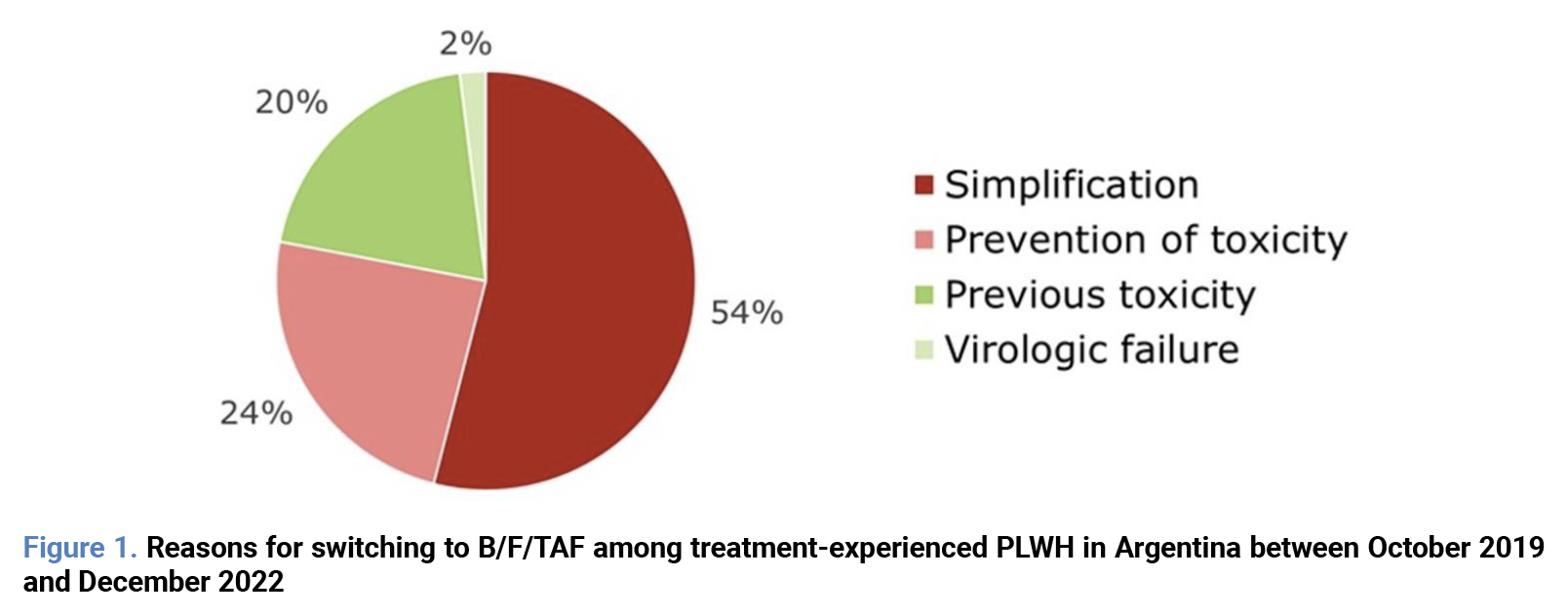
At least one comorbidity was described in 21% of treatment-naïve PLWH and 49% of treatment-experienced participants with comorbidities, the most common were dyslipidemia (57%), hypertension (26%), obesity (25%), osteopenia/osteoporosis (14%), and neuropsychiatric disorders (14%). In the treatment-naïve group, the predominant comorbidities were dyslipidaemia (26%), obesity (26%), hypertension (22%), neuropsychiatric disorders (17%), and diabetes (16%). The main reasons for switching to B/F/TAF in the experienced group are shown in Figure 1. Previous anchor drugs in the experienced group were predominantly boosted protease inhibitors (36%) and first-generation non-nucleoside reverse transcriptase inhibitors (34%).
Persistence on B/F/TAF
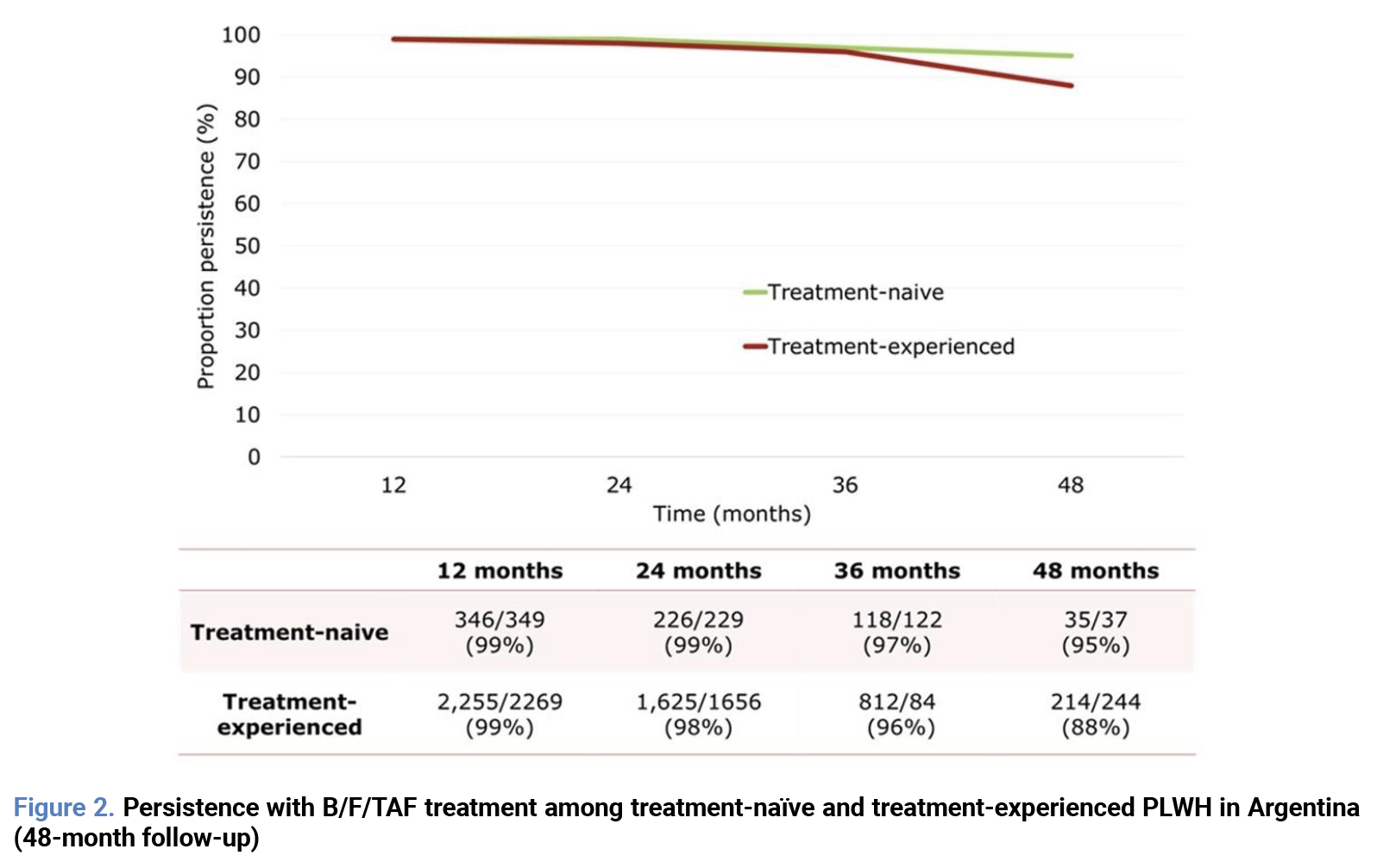
Treatment persistence remained high across the 48-month follow-up (Figure 2). In the treatment-naïve group, persistence was 99% at 12, 24, and 36 months and 95% at 48 months. Among treatment-experienced participants, persistence was 99% at 12 months, 98% at 24 months, 96% at 36 months, and 88% at 48 months.
Virological effectiveness and safety
B/F/TAF demonstrated durable virological suppression over 48 months. In treatment-naïve PLWH, the proportion with HIV-1 RNA <50 copies/mL increased from baseline to 92% at 12 months and remained stable thereafter. In treatment-experienced participants, suppression rates were 89% at baseline, increased to >95% at 12 months and remained stable thereafter. No virological failures were reported over the observation period in either group, with very low rates of adverse events (AEs) attributed to B/F/TAF. No AEs were reported among treatment-naïve participants during follow-up. In treatment-experienced PLWH, AE rates were 0.4%, 0.1%, and 0 at 24, 36, and 48 months, respectively.
Metabolic outcomes
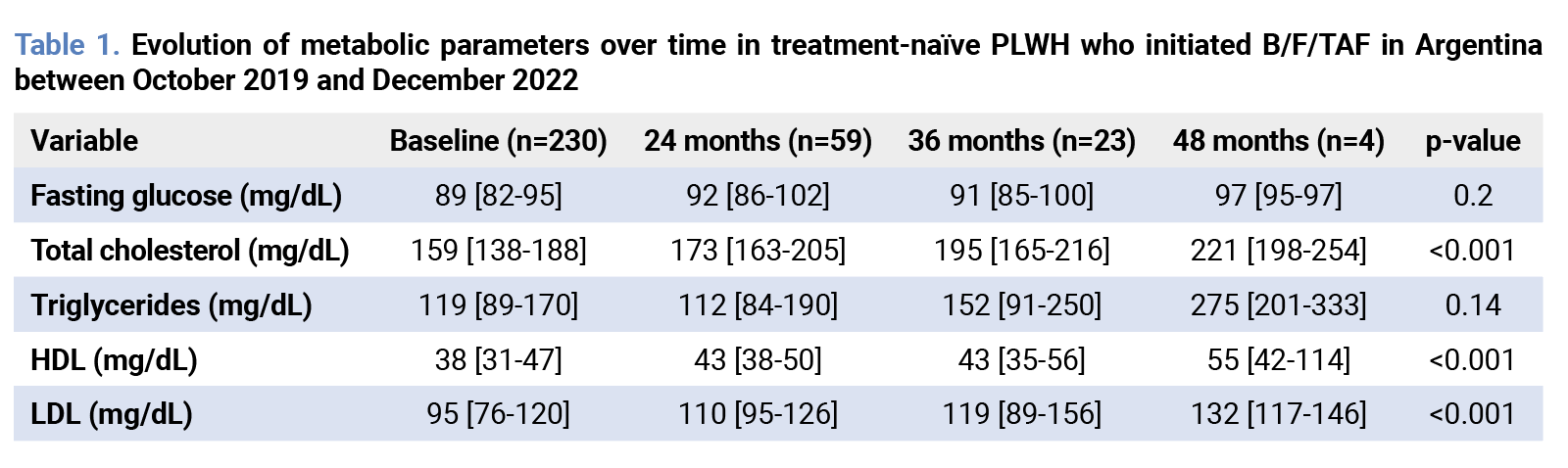
Metabolic parameters in treatment-naïve PLWH showed statistically significant but numerically modest changes over time due to limited available data (Table 1). Fasting glucose remained stable over the study period. Conversely, total cholesterol increased significantly. Triglycerides increased, though not significantly. Both HDL cholesterol and LDL cholesterol showed significant increases over the same period.
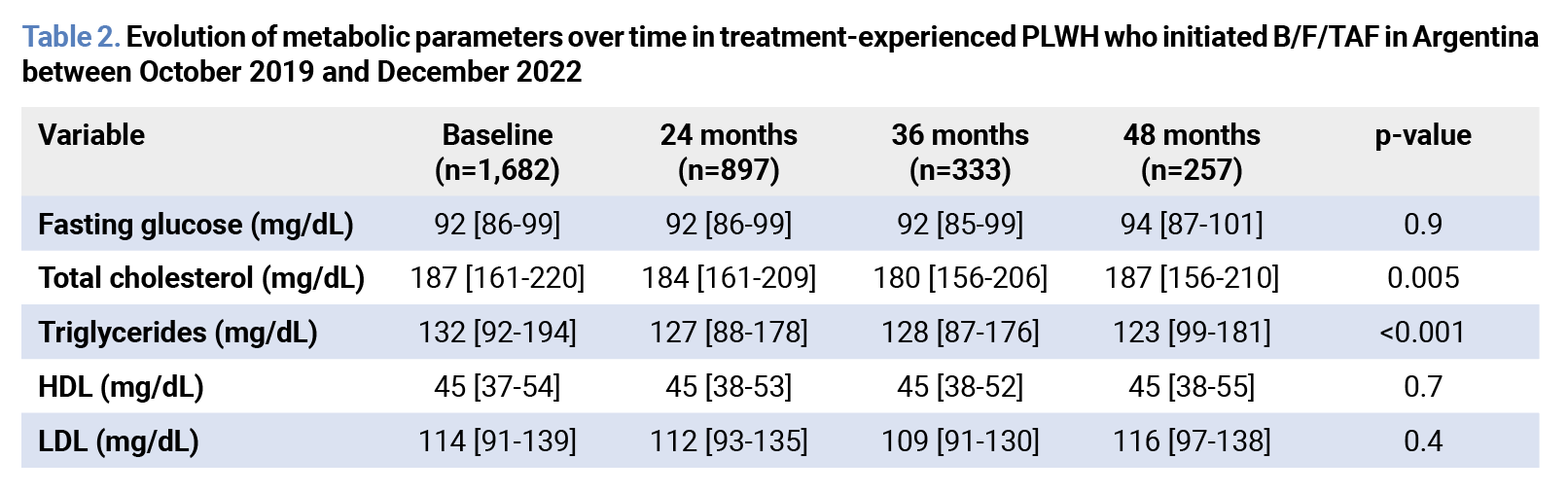
Among treatment-experienced PLWH with available metabolic data, the switch to B/F/TAF resulted in the stabilisation or modest improvement of the lipid profile over 48 months, without evidence of worsening glycaemic control (Table 2). Total cholesterol showed a statistically significant yet clinically modest overall decrease, while triglycerides showed a significant decline. Conversely, both HDL and LDL cholesterol remained unchanged, fluctuating minimally around their baseline values.
Discussion
This long-term analysis of the BICTARG cohort shows that once-daily B/F/TAF provides sustained virological suppression, high persistence, and a favourable safety profile over 48 months in both treatment-naïve and treatment-experienced PLWH in Argentina. Persistence remained ≥95% in treatment‑naïve and ≥88% in experienced participants at four years, while virologic suppression rates were ≥90% and ≥96%, respectively, at 48 months, with no reported virological failures. In treatment-naïve PLWH, B/F/TAF was associated with gradual increases in total, LDL, and HDL cholesterol, whereas treatment-experienced individuals exhibited stable lipid profiles with significant reductions in triglycerides. Adverse events were rare, and no safety signals emerged over time, supporting the long-term tolerability of B/F/TAF in this large Hispanic/Latino cohort.
When compared with extended real-world data from other regions, the BICTARG results are broadly consistent with and complementary to observations from the BICSTaR cohorts. The initial 12-month pooled BICSTaR analysis reported HIV-1 RNA <50 copies/mL in 94% of treatment-naïve and 97% of treatment-experienced participants, with high persistence and no emergent resistance, closely mirroring the early BICTARG experience [11,17]. The five-year BICSTaR extension in Canada, France, and Germany showed that virological suppression remained ≥96% by missing-data-excluded analysis over 5 years in both naïve and experienced participants who stayed on B/F/TAF, with declining effectiveness in discontinuation-failure analyses driven mainly by study dropout rather than loss of response. Metabolic changes in the BICSTaR extension were modest, with limited shifts in lipid fractions. Importantly, drug-related adverse events leading to discontinuation were uncommon and occurred predominantly within the first six months, again paralleling the low AE rates and sustained persistence observed in BICTARG [21]. Thus, BICTARG extends these findings by providing analogous long-term data from a Latin American real-world setting, reinforcing the durability and safety of B/F/TAF across diverse healthcare systems.
The metabolic findings in BICTARG align with prior observations from both the original 48-week BICTARG report and other real-world cohorts. In treatment-naïve individuals, the progressive increase in total and LDL cholesterol, coupled with rising HDL cholesterol, reproduces earlier 48-week data and resembles patterns reported in clinical trials and observational studies of B/F/TAF initiation. Among treatment-experienced PLWH, the significant reductions in triglycerides and stable total and LDL cholesterol echo the 48-week BICTARG findings and the SCOLTA cohort results, where switching from PI-based regimens to B/F/TAF improved lipid profiles without clinically meaningful metabolic derangements [12]. However, interpretation of late time-point metabolic data in BICTARG requires caution, particularly in treatment-naïve participants because sample sizes at 36 and 48 months were small, and selection bias cannot be excluded. No detailed data on weight changes were available for this report, so long-term weight trajectories under B/F/TAF in this cohort cannot be characterised. Therefore, while the overall profile appears reassuring, further regional data with complete long-term anthropometric measurements would be valuable.
Several limitations of this study must be acknowledged. BICTARG is a single-centre, retrospective observational cohort without a control group receiving alternative ART regimens, precluding direct comparative effectiveness or safety inferences. Second, long-term follow-up is affected by loss to follow-up and missing data, particularly for laboratory and metabolic parameters at 36 and 48 months, which reduces the precision of estimates and may introduce bias if individuals with complete data differ from those without. Specifically, the reduced sample size at these later time points is attributable to several real-world factors: 1) Not all PLWH had reached the full 48-month duration of follow-up at the time of the analysis; 2) not all participants underwent scheduled laboratory assessments within the stipulated timeframe; and 3) the continuity of B/F/TAF access exhibited variability due to fluctuations in medication procurement policies. In addition, the cohort is drawn from a private HIV care network, with access to B/F/TAF but potentially different socioeconomic profiles and comorbidity burdens than public-sector populations in Argentina or other Latin American countries; hence, generalisability to the broader regional epidemic is not guaranteed. Finally, although patient‑reported outcomes were characterised in the earlier 48-week publication [17], linked in the long-term quality-of-life and symptom data were not evaluated in the long‑term follow‑up, limiting insight into the participant-perceived impact of prolonged B/F/TAF use.
Despite these limitations, the BICTARG 48-month analysis provides important, region-specific real-world evidence on the durability, safety, and metabolic impact of B/F/TAF in Latin America. As ART becomes truly lifelong and the PLWH population ages, understanding long-term outcomes in real-world settings with high burdens of cardiometabolic comorbidities is essential for guiding regimen selection and monitoring strategies [22,23]. The present data continue to support the inclusion of B/F/TAF as an effective and well tolerated option for both ART initiation and regimen simplification in regional guidelines. Observational cohorts from Latin America complement clinical trials and high-income settings real-world studies by capturing the impact of structural and epidemiologic features unique to the region, including patterns of prior ART exposure, healthcare access, and adherence. Continued investment in long-term, real-world research in Latin American PLWH will be critical to strengthen evidence-based regional ART policies, optimise regimen choices, and ultimately improve outcomes across the HIV care continuum.
Acknowledgements
The authors thank the administrative support teams at Helios Salud for their assistance. Parts of this study were presented at the 13th IAS Conference on HIV Science, 13–17 July 2025, Kigali, Rwanda (EP0173).
Funding
This study was sponsored by Gilead. The funding source had no role in the study design, data collection, analysis or interpretation, writing of the report, or decision to submit the article for publication.
Author contributions
Conceptualisation: D.C., E.B., M.R., I.C.; Formal analysis: D.C., M.R.; Drafting, checking, and editing: D.C., M.B., G.C., B.B., C.L., E.B.; Validation: D.C., M.R., I.C.; Drafting – initial draft: D.C., E.B.; Project management: D.C., M.R.; Supervision: D.C., M.R., I.C.; Methodology: D.C., M.R.; Investigation: D.C., M.B., G.C., B.B., C.L., E.B.; Visualisation: D.C., M.B., M.R., I.C.; Resources: D.C., M.R., I.C.; Data collection: M.B., G.C., B.B., C.L., E.B.; Software: M.R.; Funding acquisition: I.C.
Conflict of interest
DC has received an educational grant and speaker fees from Gilead Sciences, Inc. IC has received an educational grant, speaker fees, and an investigational grant from Gilead Sciences, Inc. The other authors declare no conflicts of interest.
AI statement
Artificial intelligence tools were used only to assist with the translation and language editing of certain paragraphs from Spanish to English, as English is not the authors’ native language. All translations were reviewed and verified by the authors.
References
- Panel on Antiretroviral Guidelines for Adults and Adolescents. Guidelines for the use of antiretroviral agents in adults and adolescents with HIV [Internet]. Rockville (MD): U.S. Department of Health and Human Services; 2025 [cited 2026 Apr 4]. Available from: https://clinicalinfo.hiv.gov/en/guidelines/hiv-clinical-guide lines-adult-and-adolescent-arv
- European AIDS Clinical Society. EACS Guidelines. Version 13.0 [Internet]. Brussels: EACS; 2025 [cited 2026 Mar 4]. Available from: https://www.eacsociety.org/guidelines/eacs-guidelines/
- Sociedad Argentina de Infectología. Consenso Argentino de Terapia Antirretroviral [Internet]. Buenos Aires: SADI; 2023 [cited 2026 Apr 4]. Available from: https://www.sadi.org.ar/publicaciones/1733-consenso-argentino-de-tera pia-antirretroviral
- Gallant J, Lazzarin A, Mills A, Orkin C, Podzamczer D, Tebas P, et al. Bictegravir, emtricitabine, and tenofovir alafenamide versus dolutegravir, abacavir, and lamivudine for initial treatment of HIV-1 infection (GS-US-380-1489): a double-blind, multicentre, phase 3, randomised controlled non-inferiority trial. Lancet. 2017;390(10107):2063-2072. Available from: https://doi.org/10.1016/S0140-6736(17) 32299-7
- Orkin C, DeJesus E, Sax PE, Arribas JR, Gupta SK, Martorell C, et al. Fixed-dose combination bictegravir, emtricitabine, and tenofovir alafenamide versus dolutegravir-containing regimens for initial treatment of HIV-1 infection: week 144 results from two randomised, double-blind, multicentre, phase 3, non-inferiority trials. Lancet HIV. 2020;7(6):e389-e400. Available from: https://doi.org/10.1016/S2352-3018(20)30099-0
- Sax PE, Arribas JR, Orkin C, Lazzarin A, Pozniak A, DeJesus E, et al. Bictegravir/emtricitabine/tenofovir alafenamide as initial treatment for HIV-1: five-year follow-up from two randomized trials. EClinicalMedicine. 2023;59:101991. Available from: https://doi.org/10.1016/j.eclinm.2023.101991
- Wohl DA, Yazdanpanah Y, Baumgarten A, Clarke A, Thompson MA, Brinson C, et al. Bictegravir combined with emtricitabine and tenofovir alafenamide versus dolutegravir, abacavir, and lamivudine for initial treatment of HIV-1 infection: week 96 results from a randomised, double-blind, multicentre, phase 3, non-inferiority trial. Lancet HIV. 2019;6(6):e355-e363. Available from: https://doi.org/10.1016/S2352-3018(19)30077-3
- Curteis T, Eddowes LA, Chen M, Gandhi-Patel B, Karlsson A, Luedke H, et al. Comparative safety of B/F/TAF versus other antiretroviral therapy regimens for treatment-naïve people with HIV-1: a systematic literature review and network meta-analysis. J Comp Eff Res. 2025;14:e240231. Available from: https://doi.org/10.57264/cer-2024-0231
- Daar E, DeJesus E, Ruane P, Crofoot G, Oguchi G, Creticos C, et al. Phase 3 randomized, controlled trial of switching to fixed-dose bictegravir/emtricitabine/tenofovir alafenamide (B/F/TAF) from boosted protease inhibitor-based regimens in virologically suppressed adults: Week 48 results. Open Forum Infect Dis 2017;4:S735–S735. Available from: https://doi.org/10.1093/ofid/ofx180.003
- Molina J-M, Ward D, Brar I, Mills A, Stellbrink H-J, López-Cortés L, et al. Switching to fixed-dose bictegravir, emtricitabine, and tenofovir alafenamide from dolutegravir plus abacavir and lamivudine in virologically suppressed adults with HIV-1: 48 week results of a randomised, double-blind, multicentre, active-controlled, phase 3, non-inferiority trial. Lancet HIV 2018;5:e357–65. Available from: https://doi.org/10.1016/S2352-3018(18)30092-4
- Esser S, Brunetta J, Inciarte A, Levy I, D’Arminio Monforte A, Lambert JS, et al. Twelve-month effectiveness and safety of bictegravir/emtricitabine/tenofovir alafenamide in people with HIV: Real-world insights from BICSTaR cohorts. HIV Med 2024;25:440–53. Available from: https://doi.org/10.1111/hiv.13593
- Squillace N, Ricci E, Maggi P, Taramasso L, Menzaghi B, De Socio GV, et al. Real-life safety of Emtricitabine/Tenofovir Alafenamide/Bictegravir. PLoS One 2023;18:e0289132. Available from: https://doi.org/10. 1371/journal.pone.0289132
- Torralba M, Rodríguez G, González Gasca FJ, Cuadra F, Barberá J, Geijo P, et al. Bictegravir/Emtricitabine/Tenofovir Alafenamide in a Multicentre Cohort: Real-Life Experience From Spain. Ann Pharmacother 2024;58:140–7. Available from: https://doi.org/10.1177/10600280231168852
- Nasreddine R, Florence E, Yombi JC, Henrard S, Darcis G, Van Praet J, et al. Efficacy, durability, and tolerability of bictegravir/emtricitabine/tenofovir alafenamide for the treatment of HIV in a real-world setting in Belgium. HIV Med 2023;24:914–24. Available from: https://doi.org/10.1111/hiv.13493.
- Wolff MJ, Cortes CP, Mejìa FA, Padgett D, Belaunzarán-Zamudio P, Grinsztejn B, et al. Evaluating the care cascade after antiretroviral therapy initiation in Latin America. Int J STD AIDS 2018;29:4–12. Available from: https://doi.org/10.1177/0956462417714094
- Wolff MJ, Giganti MJ, Cortes CP, Cahn P, Grinsztejn B, Pape JW, et al. A decade of HAART in Latin America: Long term outcomes among the first wave of HIV patients to receive combination therapy. PLoS One 2017;12:e0179769. Available from: https://doi.org/10.1371/journal.pone.0179769
- Cecchini D, Brizuela M, Seleme MS, Mingrone MV, Copertari G, Bacelar B, et al. Effectiveness, safety, and patient-reported outcomes of treatment with bictegravir/emtricitabine/tenofovir alafenamide fixed dose combination in people living with HIV in Argentina: the BICTARG cohort. Rev Esp Quimioter 2025;38:40–7. Available from: https://doi.org/10.37201/req/080.2024
- Gomes A, Reyes EV, Garduno LS, Rojas R, Mir Mesejo G, Del Rosario E, et al. Incidence of Diabetes Mellitus and Obesity and the Overlap of Comorbidities in HIV+ Hispanics Initiating Antiretroviral Therapy. PLoS One 2016;11:e0160797. Available from: https://doi.org/10.1371/journal.pone.0160797
- Hidalgo JA, Florez A, Agurto C, Pinedo Y, Ayarza R, Rodriguez L, et al. Metabolic and Cardiovascular Comorbidities Among Clinically Stable HIV Patients on Long-Term ARV Therapy in Five Ambulatory Clinics in Lima-Callao, Peru. Open AIDS J 2018;12:126–35. Available from: https://doi.org/10.2174/1874613601812010126
- García-Peña Á, Aldana J, Botero JD, Vasquez JM, León M, Rodríguez-Lugo D, et al. Prevalence of cardiovascular risk factors in a historical cohort of people living with human immunodeficiency virus during a 10-year period. SAGE Open Med 2023;11:20503121231166647. Available from: https://doi.org/10.1177/20503121231166647
- Wet J, Lee M, Rieke A, Hocqueloux L, Robineau O, Thorpe D, at al. Five-Year Extended Follow-Up of the Observational BICSTaR Cohort: Final Analysis in People With HIV Receiving Bictegravir/Emtricitabine/Tenofovir Alafenamide (B/F/TAF) in Routine Clinical Practice. In: Abstracts of the 25h European AIDS Conference, Paris, France, 2025. Abstract MeP05.3.
- Chawla A, Wang C, Patton C, Murray M, Punekar Y, de Ruiter A, et al. A Review of Long-Term Toxicity of Antiretroviral Treatment Regimens and Implications for an Aging Population. Infect Dis Ther 2018;7:183–95. Available from: https://doi.org/10.1007/s40121-018-0201-6
- Batterham RL, Bedimo RJ, Diaz RS, Guaraldi G, Lo J, Martínez E, et al. Cardiometabolic health in people with HIV: expert consensus review. J Antimicrob Chemother 2024;79:1218–33. Available from: https://doi.org/10.1093/jac/dkae116
Explore
Articles
Volumes
About the journal
Most read
Recomendaciones para la prevención y el tratamiento de las infecciones respiratorias en adultos mayores institucionalizados
Revista Española de Quimioterapia
Acute infectious gastroenteritis in childhood: the role of rapid multiplex molecular syndromic panels in diagnosis and clinical management
Revista Española de Quimioterapia
Características epidemiológicas de pacientes con aislamientos de Enterobacterales productores de carbapenemasas-NDM en un hospital de alta complejidad
Revista Española de Quimioterapia
Review on the management of intra-abdominal candidiasis
Revista Española de Quimioterapia
Neoscytalidium dimidiatum: a rare locally acquired deep cutaneous infection in a renal transplant recipient
Revista Española de Quimioterapia