Letter
October 2025, Volume 38, nº5
6 min
Mycobacterium bovis, a rare causative pathogen of multiple pseudoaneurysms
Manuel Callejón-Fernández¹*, Dácil García-Rosado¹, Zena Ibrahim-Achi¹, Silvia Campos-Gutiérrez¹, María del Mar Alonso-Socas¹, María Lecuona-Fernández¹
1Hospital Universitario de Canarias, San Cristóbal de La Laguna, Tenerife, España
http://www.doi.org/10.37201/req/057.2025
Receipt Date:
13/06/2025
Acceptance Date:
08/07/2025
Publication Date:
22/07/2025
How to cite
Callejón-Fernández M, García-Rosado D, Ibrahim-Achi Z, Campos-Gutiérrez S, Alonso-Socas MDM, Lecuona-Fernández M. Mycobacterium bovis, a rare causative pathogen of multiple pseudoaneurysms. Rev Esp Quimioter. 2025; 38(5):439-441. Available from: http://www.doi.org/10.37201/req/057.2025
Metrics
203
Views
50
Downloads
Share
Share
Sir,
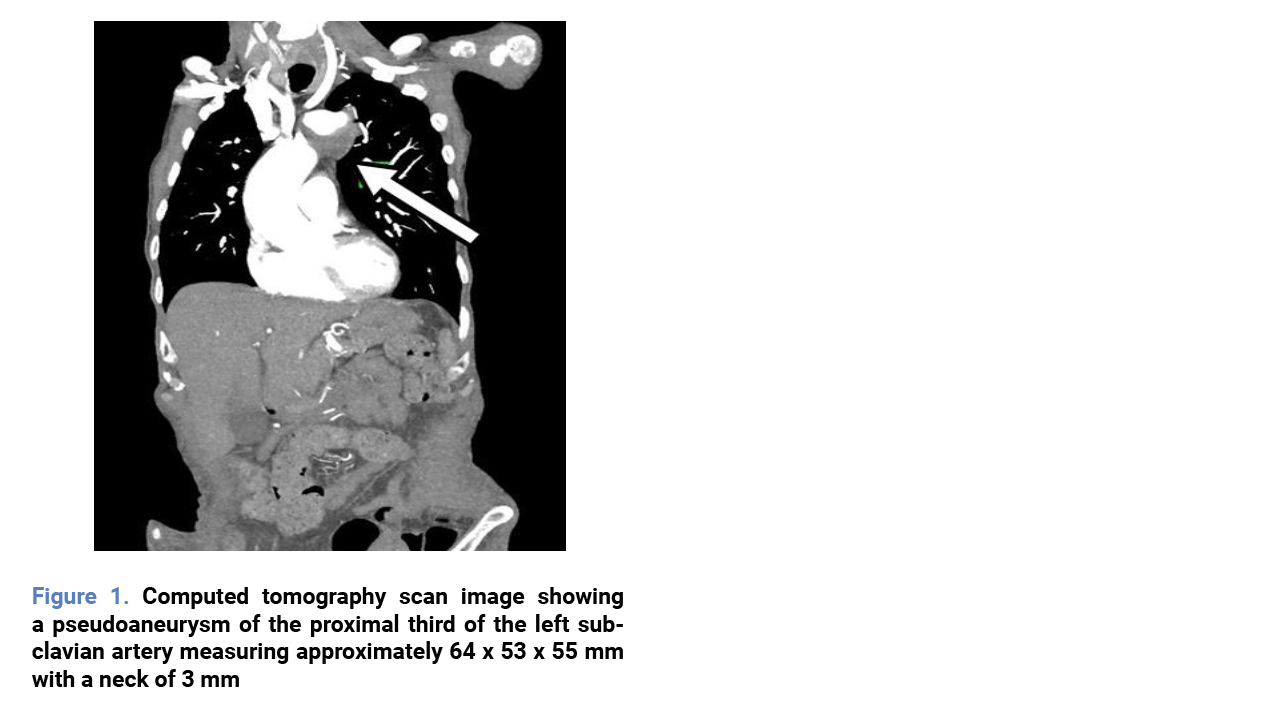
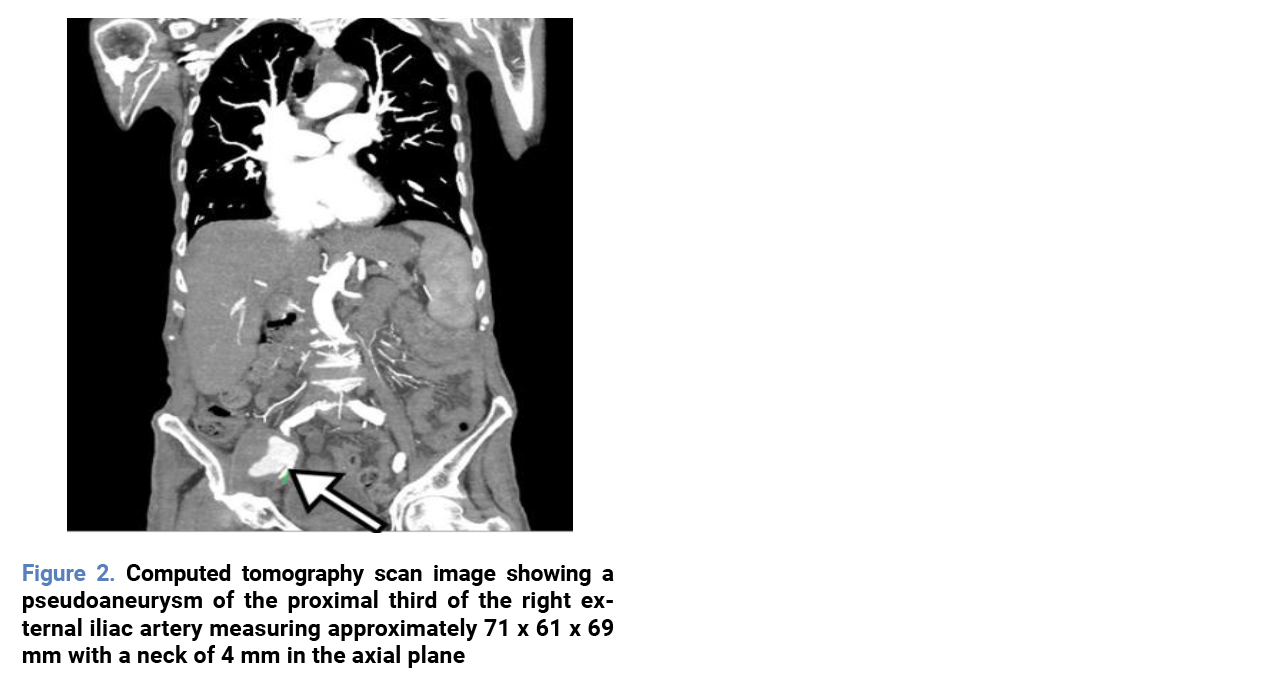
We present an 85-year-old male with a history of bladder adenocarcinoma treated with 17 intravesical BCG instillations without complications from December 18, 2018, to April 5, 2021. He was referred from another hospital center due to left subclavian and right external iliac artery pseudoaneurysms. Moreover, the patient had previously received a stent implant for a right superficial femoral artery pseudoaneurysm 6 months before the current admission. Upon directed anamnesis, the patient reported weight loss of more than 10 kg over the last year and pain in the right thigh, but no fever or other symptoms. Physical examination revealed substantial cachexia (a body mass index of 15.2) and a palpable, pulsating, painful tumor in the right thigh. The most noticeable results from blood analysis were the levels of hemoglobin (10.8 g/dL), albumin (2.8 g/dL), and CRP (29.80 g/dL), and a platelet count of 90,000/µL. No infiltrates or masses were detected on chest radiography; however, whole-body computed tomography (CT) indicated a left subclavian artery pseudoaneurysm (measuring 6.4 x 5.3 x 5.5 cm) with a superficial mural thrombus and patent lumen, and an external iliac pseudoaneurysm (measuring 7.1 x 6.9 x 6.1 cm).
We observed the patent stent in the distal third of the right superficial femoral artery but no adenopathies or other pathologic findings (Figures 1 and 2).
 Serial samples of urine and feces, and blood cultures were analyzed at the Mycobacteria Laboratory of the Microbiology Services. Blood cultures were incubated in the BACTEC MGIT 960 system (Becton Dickinson, Sparks, MD, USA). Urine and fecal samples were cultured in Lowenstein-Jensen medium (BioMèrieux, Marcy l’Etoile, France). Bacteriological culture of urine samples was also performed in MGIT medium (Becton Dickinson). Ziehl-Neelsen staining of both sample types was negative. The QuantiFERON-TB Gold plus (QIAGEN, USA) test resulted negative as well.
The patient suffered clinical deterioration with respiratory insufficiency caused by pneumonia and died 2 weeks after admission, with microbiological culture results pending. Blood cultures were eventually positive for Mycobacterium tuberculosis complex on day 26 and urine cultures on day 33 of incubation. The Speed-oligo Mycobacteria assay (Vircell, Granada, Spain) was used to characterize the urine samples in the MGIT liquid medium and the blood samples from Lowenstein-Jensen cultures colonies. The strain was sent to the Carlos III Health Institute (Majadahonda, Madrid, Spain), where it was identified as BCG resistant to pyrazinamide (the pncA mutation His57Asp) but sensitive to the other antibiotics (i.e., isoniazid, ethambutol, rifampin, and streptomycin).
Infectious aorta pseudoaneurysms are extremely rare and potentially lethal [1]. Moreover, the etiology of the described case is rare in itself. The most common causative agents are Staphylococcus subspecies and Salmonella subsp. Less frequently, infectious aneurysms can be produced by Treponema palladium or Mycobacterium subsp., including BCG [2]. Mycobacterium bovis infection along with vascular involvement after BCG therapy is an extremely rare complication [3].
To our knowledge, a total of 75 cases of mycotic aortic aneurysms caused by disseminated mycobacterial infection have been described as yet [4]. Four different mechanisms have been described that could lead to systemic spread of M. bovis with vascular involvement: hematogenous spread followed by direct colonization of the intima, colonization favored by preexisting atherosclerosis, metastatic implantation through the vasa vasorum, or continuous spread of adjacent infected tissue, as is the case in contiguous lymphadenitis or psoas abscesses. Usually, symptoms are very unspecific, like night sweats, weight loss, general malaise, and persistent fever, so that the diagnosis has to be based on PCR and specific mycobacteria cultures [2].
There is currently no consensus guideline on the therapy of tuberculous mycotic pseudoaneurysms. To achieve an optimal outcome, combined, targeted antibiotic and surgical treatment is necessary. Long et al. reported a mortality rate of 100% if patients did not receive any treatment or only had either surgical or medical therapy [5].
Having a tuberculous mycotic pseudoaneurysm is a life-threatening condition. Rupture occurs in over 50% of reported patients and requires emergency surgical treatment. Small, asymptomatic aneurysms can be treated with antibiotic therapy alone, while anti-tuberculosis therapy combined with surgical repair is the treatment of choice for larger aneurysms [6]. An endovascular approach can offer a less invasive alternative to open surgery, especially in patients at high risk for conventional surgical procedures. As a drawback, infection will not be eradicated nor will the affected tissue be debrided. However, endovascular treatment can be improved with virtually no limitations by combining it with an associated antibiotic strategy [7].
Criteria for poor prognosis associated with persisting chronic infection have been described, such as age over 65 years, the onset of fever, or pseudoaneurysm rupture in the course of the surgical procedure. The 12-months survival rate of patients with persistent infection after aortic endovascular treatment is approximately 39% [7]. Anti-tuberculosis therapy should be started immediately after confirmed diagnosis and continued for at least six to twelve months [2].
In conclusion, the etiology of infection by M. bovis must be taken into account as a cause of mycotic pseudoaneurysms in patients with BCG instillation, and combined early antimicrobial and surgical treatment should be considered because of the high morbidity and mortality rate in these patients.
Author contributions
Conceptualization: M.C, D.G, S.C, Z.A and M.M.; Writing—original draft preparation: M.C, D.G, S.C, Z.A and M.L.; Methodology: M.C, D.G, S.C, Z.A and M.M.; Writing—review and editing: M.C, D.G, S.C, Z.A and M.L.; Supervision: D.G and M.L. All authors have read and agreed to the published version of the manuscript.
Funding
None to declare.
Conflicts of interest
The authors declare have no conflicts of interest.
Serial samples of urine and feces, and blood cultures were analyzed at the Mycobacteria Laboratory of the Microbiology Services. Blood cultures were incubated in the BACTEC MGIT 960 system (Becton Dickinson, Sparks, MD, USA). Urine and fecal samples were cultured in Lowenstein-Jensen medium (BioMèrieux, Marcy l’Etoile, France). Bacteriological culture of urine samples was also performed in MGIT medium (Becton Dickinson). Ziehl-Neelsen staining of both sample types was negative. The QuantiFERON-TB Gold plus (QIAGEN, USA) test resulted negative as well.
The patient suffered clinical deterioration with respiratory insufficiency caused by pneumonia and died 2 weeks after admission, with microbiological culture results pending. Blood cultures were eventually positive for Mycobacterium tuberculosis complex on day 26 and urine cultures on day 33 of incubation. The Speed-oligo Mycobacteria assay (Vircell, Granada, Spain) was used to characterize the urine samples in the MGIT liquid medium and the blood samples from Lowenstein-Jensen cultures colonies. The strain was sent to the Carlos III Health Institute (Majadahonda, Madrid, Spain), where it was identified as BCG resistant to pyrazinamide (the pncA mutation His57Asp) but sensitive to the other antibiotics (i.e., isoniazid, ethambutol, rifampin, and streptomycin).
Infectious aorta pseudoaneurysms are extremely rare and potentially lethal [1]. Moreover, the etiology of the described case is rare in itself. The most common causative agents are Staphylococcus subspecies and Salmonella subsp. Less frequently, infectious aneurysms can be produced by Treponema palladium or Mycobacterium subsp., including BCG [2]. Mycobacterium bovis infection along with vascular involvement after BCG therapy is an extremely rare complication [3].
To our knowledge, a total of 75 cases of mycotic aortic aneurysms caused by disseminated mycobacterial infection have been described as yet [4]. Four different mechanisms have been described that could lead to systemic spread of M. bovis with vascular involvement: hematogenous spread followed by direct colonization of the intima, colonization favored by preexisting atherosclerosis, metastatic implantation through the vasa vasorum, or continuous spread of adjacent infected tissue, as is the case in contiguous lymphadenitis or psoas abscesses. Usually, symptoms are very unspecific, like night sweats, weight loss, general malaise, and persistent fever, so that the diagnosis has to be based on PCR and specific mycobacteria cultures [2].
There is currently no consensus guideline on the therapy of tuberculous mycotic pseudoaneurysms. To achieve an optimal outcome, combined, targeted antibiotic and surgical treatment is necessary. Long et al. reported a mortality rate of 100% if patients did not receive any treatment or only had either surgical or medical therapy [5].
Having a tuberculous mycotic pseudoaneurysm is a life-threatening condition. Rupture occurs in over 50% of reported patients and requires emergency surgical treatment. Small, asymptomatic aneurysms can be treated with antibiotic therapy alone, while anti-tuberculosis therapy combined with surgical repair is the treatment of choice for larger aneurysms [6]. An endovascular approach can offer a less invasive alternative to open surgery, especially in patients at high risk for conventional surgical procedures. As a drawback, infection will not be eradicated nor will the affected tissue be debrided. However, endovascular treatment can be improved with virtually no limitations by combining it with an associated antibiotic strategy [7].
Criteria for poor prognosis associated with persisting chronic infection have been described, such as age over 65 years, the onset of fever, or pseudoaneurysm rupture in the course of the surgical procedure. The 12-months survival rate of patients with persistent infection after aortic endovascular treatment is approximately 39% [7]. Anti-tuberculosis therapy should be started immediately after confirmed diagnosis and continued for at least six to twelve months [2].
In conclusion, the etiology of infection by M. bovis must be taken into account as a cause of mycotic pseudoaneurysms in patients with BCG instillation, and combined early antimicrobial and surgical treatment should be considered because of the high morbidity and mortality rate in these patients.
Author contributions
Conceptualization: M.C, D.G, S.C, Z.A and M.M.; Writing—original draft preparation: M.C, D.G, S.C, Z.A and M.L.; Methodology: M.C, D.G, S.C, Z.A and M.M.; Writing—review and editing: M.C, D.G, S.C, Z.A and M.L.; Supervision: D.G and M.L. All authors have read and agreed to the published version of the manuscript.
Funding
None to declare.
Conflicts of interest
The authors declare have no conflicts of interest.
References
- Hardin GEJ, Lawlor DK. Ruptured mycotic abdominal aortic aneurysm secondary to Mycobacterium bovis after intravesical treatment with bacillus Calmette- Guérin. J Vasc Surg 2007;46:131-4. Available from: https://doi.org/10.1016/j.jvs.2007.01.054.
- Buerger M, Kapahnke S, Omran S, Schomaker M, Rief M, Greiner A, et al. Aortic aneurysm and aortic graft infection related to Mycobacterium bovis after intravesical Bacille Calmette–Guérin therapy—a case series. BMC Surg 2021;21:1-7. Available from: https://doi.org/10.1186/s12893-021-01142-1.
- Simar J, Belkhir L, Tombal B, André E. Ruptured aortic aneurysm due to Mycobacterium bovis BCG with a delayed bacteriological diagnosis due to false negative result of the MPB 64 immunochromatographic assay. BMC Res Notes 2017;10:1-4. Available from: https://doi.org/10.1186/s13104-017-2382-6.
- Ho KKF, Lal V, Hagley D, Bingley J. Systematic Review of Case Reports of Bacillus Calmette-Guerin Vascular Infections. Ann Vasc Surg. 2022; 83:369-377. Available from: https://doi.org/10.1016/j.avsg.2022.01.027.
- Long R, Guzman R, Greenberg H, Safneck J, Hershfield E. Tuberculous mycotic aneurysm of the aorta: Review of published medical and surgical experience. Chest 1999;115:522-31. Available from: https://doi.org/10.1378/chest.115.2.522.
- Coscas R, Arlet JB, Belhomme D, Fabiani JN, Pouchot J. Multiple mycotic aneurysms due to Mycobacterium bovis after intravesical bacillus Calmette-Guérin therapy. J Vasc Surg 2009;50:1185-90. Available from: https://doi.org/10.1016/j.jvs.2009.06.004.
- Higashi Y, Nakamura S, Kidani K, Matumoto K, Kawago K, Isobe J, et al. Mycobacterium bovis-induced aneurysm after intravesical Bacillus Calmette-Guérin therapy: A case study and literature review. Intern Med 2018;57:429-35. Available from: https://doi.org/10.2169/internalmedicine.9102-17.
Explore
Articles
Volumes
About the journal
Most read
Recomendaciones para la prevención y el tratamiento de las infecciones respiratorias en adultos mayores institucionalizados
Revista Española de Quimioterapia
Acute infectious gastroenteritis in childhood: the role of rapid multiplex molecular syndromic panels in diagnosis and clinical management
Revista Española de Quimioterapia
Características epidemiológicas de pacientes con aislamientos de Enterobacterales productores de carbapenemasas-NDM en un hospital de alta complejidad
Revista Española de Quimioterapia
Review on the management of intra-abdominal candidiasis
Revista Española de Quimioterapia
Neoscytalidium dimidiatum: a rare locally acquired deep cutaneous infection in a renal transplant recipient
Revista Española de Quimioterapia