Original
August 2026, Volume 39, nº 4
17 min
Nasal swab-guided deescalation of empirical linezolid in respiratory infections at a secondary-level hospital: quantification of quality gaps and antimicrobial stewardship opportunities
Desescalada del tratamiento empírico con linezolid guiada por el hisopado nasal en infecciones respiratorias en un hospital de segundo nivel: cuantificación de las brechas de calidad y de las oportunidades para la optimización del uso de antimicrobianos
Javier Martínez de Victoria-Carazo1,2 Carlos Guerrero-Herrera2,3, Lucía Guillén-Zafra1,2, Waldo Sánchez-Yebra-Fernández2,4, Andrés Ruíz-Sancho1,2, María Núñez-Núñez2,3
1Department of Infectious Diseases, Hospital Universitario Clínico San Cecilio, Granada, Spain
2Instituto de Investigación Biosanitaria de Granada, Granada, Spain
3Department of Hospital Pharmacy, Hospital Universitario Clínico San Cecilio, Granada, Spain
4Department of Microbiology, Hospital Universitario Clínico San Cecilio, Granada, Spain
*Correspondence:
Javier Martínez de Victoria-Carazo. jmdvc94@gmail.com
Receipt Date:
08/04/2026
Acceptance Date:
11/06/2026
Publication Date:
25/06/2026
How to cite
Martínez de Victoria-Carazo J, Guerrero-Herrera C, Guillén-Zafra L, Sánchez-Yebra-Fernández W, Ruíz-Sancho A, Núñez-Núñez M. Nasal swab-guided deescalation of empirical linezolid in respiratory infections at a secondary-level hospital: quantification of quality gaps and antimicrobial stewardship opportunities. Rev Esp Quimioter 2026; 39(4):347-356. Available from: http://www.doi.org/10.37201/req/183.2026
Metrics
221
Views
30
Downloads
Share
Share
Abstract (EN)
Background: Empirical linezolid for respiratory infections risks overtreatment and therapeutic inertia. Methicillin-resistant Staphylococcus aureus (MRSA) nasal swabs have high negative predictive value for ruling out MRSA pneumonia, yet their systematic integration into clinical practice remains poorly documented in Spain. The aim of the study was to quantify three sequential quality gaps in the empirical linezolid prescribing process and estimate the potential for improvement through an antimicrobial stewardship programme (ASP).
Methods: A retrospective observational study of 83 patients receiving empirical linezolid for respiratory infections at a secondary-level hospital during five non-consecutive months of 2025. Three quality gaps were defined: Gap 0 (initiation without MRSA risk criteria); Gap 1 (failure to request a nasal swab in eligible patients); and Gap 2 (therapeutic inertia following a negative result).
Results: Gap 0 affected 30.1% of patients, predominantly CAP (72%), discontinuation was more frequent in Gap 0 patients than in eligible candidates. Gap 1 affected 32.5%, with marked inter-unit variability: swabs were requested in 78% of Internal Medicine patients versus 41.7% in Respiratory Medicine. Among 56 patients with results, 85.7% were negative; Gap 2 affected 20.8%, generating 56 days of linezolid administered after a negative result was available. Patients with positive swabs had significantly higher cumulative risk scores than negative patients. Overall, 62.7% of patients presented ≥1 gap, accounting for 69.5% of 377 total linezolid-days.
Conclusions: Quality gaps in empirical linezolid use affect two-thirds of patients and are associated with nearly 70% of treatment days. Targeted two-level ASP interventions, explicit indication criteria, and systematic de-escalation prompts after negative swabs are warranted.
Keywords (EN):
Nasal swab
MRSA
Antimicrobial stewardship
Linezolid
Abstract (ES)
Introducción: El uso empírico de linezolid en infecciones respiratorias conlleva riesgos de sobretratamiento e inercia terapéutica. Los frotis nasales de Staphylococcus aureus resistente a meticilina (SARM) tienen un alto valor predictivo negativo para descartar la neumonía por SARM; sin embargo, su integración sistemática en la práctica clínica sigue estando poco documentada en España. El objetivo del estudio fue cuantificar tres brechas de calidad secuenciales en el proceso de prescripción empírica de linezolid y estimar el potencial de mejora mediante un programa de optimización del uso de antimicrobianos (PROA).
Métodos: Estudio observacional retrospectivo de 83 pacientes que recibieron linezolid empírico por infecciones respiratorias en un hospital de segundo nivel durante cinco meses no consecutivos de 2025. Se definieron tres brechas de calidad: Brecha 0 (inicio sin criterios de riesgo de SARM); Brecha 1 (ausencia de solicitud de frotis nasal en pacientes elegibles); y Brecha 2 (inercia terapéutica tras un resultado negativo).
Resultados: La Brecha 0 afectó al 30,1% de los pacientes, predominantemente NAC (72%); la suspensión del tratamiento fue más frecuente en pacientes de la Brecha 0 que en los candidatos elegibles. La Brecha 1 afectó al 32,5%, con una marcada variabilidad entre unidades: se solicitaron frotis en el 78% de los pacientes de Medicina Interna frente al 41,7% en Neumología. Entre los 56 pacientes con resultados, el 85,7% fueron negativos; la Brecha 2 afectó al 20,8%, generando 56 días de linezolid administrados después de que el resultado negativo estuviera disponible. Los pacientes con frotis positivos tuvieron puntuaciones de riesgo acumulado significativamente más altas que los pacientes negativos. En general, el 62,7% de los pacientes presentaron ≥1 brecha, lo que representó el 69,5% de los 377 días-linazolid totales.
Conclusiones: Las brechas de calidad en el uso empírico de linezolid afectan a dos tercios de los pacientes y se asocian con casi el 70% de los días de tratamiento. Se justifica la realización de intervenciones PROA dirigidas a dos niveles: criterios de indicación explícitos y avisos sistemáticos de desescalada tras frotis negativos.
Keywords (ES):
Linezolid
SARM
Exudado nasal
Optimización del uso de antimicrobianos
Introduction
Antimicrobial resistance (AMR) is one of the most pressing global public health challenges of the last decade. In 2017, the World Health Organization (WHO) introduced the AWaRe (Access, Watch, Reserve) classification as a tool to support antibiotic stewardship at local, national, and global levels, categorising antibiotics based on their associated resistance risk [1]. Within this framework, linezolid, an oxazolidinone approved for the treatment of community-acquired and hospital-acquired pneumonia, as well as skin and soft tissue infections caused by methicillin-resistant Staphylococcus aureus (MRSA), is classified as a Watch antibiotic and positioned as an alternative to vancomycin in several clinical settings [2,3]. Its differential properties, including better pulmonary tissue penetration, lower nephrotoxicity rates, and an antitoxin effect derived from its inhibitory mechanism on ribosomal protein synthesis, have made it a preferred option in specific scenarios [4,5]. However, inappropriate use of linezolid may promote the emergence of resistance and toxicity, particularly in the hospital setting [6].
According to the most recent annual report from the National Antimicrobial Resistance Plan in Spain, linezolid consumption remains stable, with the greatest selective pressure concentrated in intensive care units and haematology and oncology services [7]. While MRSA rates among S. aureus have stabilised at 22-25% nationally, Enterococcus spp. represent a growing epidemiological concern, with resistance peaks of up to 16% in tertiary care settings, frequently associated with vancomycin-resistant strains [8].
Against this epidemiological backdrop, several strategies have been implemented to optimise linezolid use in the hospital setting. The identification of MRSA colonisation status represents a particularly well-established stewardship approach. Current evidence consistently supports the use of MRSA nasal swabs as a rapid, cost-effective tool to exclude MRSA as a causative pathogen, with a negative predictive value (NPV) approaching 98% in the context of respiratory infections and in areas of low-to-moderate MRSA prevalence [9,10]. A 2025 systematic review and meta-analysis confirmed that nasal PCR screening enables timely de-escalation and reduces unnecessary anti-MRSA therapy by a mean of 1.1 days without increasing mortality or length of stay [11].
Beyond the epidemiological benefits, avoiding unnecessary linezolid exposure reduces the long-term risk of toxicity, primarily thrombocytopenia and, less frequently, serotonin syndrome, while also reducing selective pressure and the risk of emerging resistance. It is worth noting that, although linezolid resistance in MRSA remains exceptional, resistance rates in coagulase-negative staphylococci (particularly Staphylococcus epidermidis) are substantially higher in hospital settings and may be driven by unnecessary exposure [12].
The combination of rapid microbiological diagnosis and prospective audit with feedback has demonstrated some of the most robust outcomes in anti-MRSA stewardship. Such interventions allow early de-escalation from vancomycin or linezolid to targeted therapy, significantly reducing median treatment duration while maintaining clinical outcomes [13].
Multidisciplinary programmes integrating education, clinical guidelines, antibiotic timeouts, and daily audit have achieved reductions in vancomycin consumption from 112 to 38 days of therapy per 1000 patient-days, although effectiveness remains dependent on the integration of measures and direct prescriber feedback rather than on administrative restrictions alone [14]. A key concept in understanding why these strategies do not achieve universal success is that of antibiotic inertia: the tendency to continue broad-spectrum therapy beyond the point at which microbiological evidence supports de-escalation [15].
This phenomenon operates at multiple levels: clinicians may fail to request the diagnostic tool or may not act on a negative result even when it is available and it has been shown to increase with the clinical perception of prior risk, independently of current microbiological findings [15].
Despite these stewardship advances, empirical linezolid use in respiratory infections remains frequent in many hospitals, including among patients without clear MRSA risk factors. In our centre, audits within the local ASP have identified a relevant number of linezolid prescriptions for the empirical management of respiratory infections, highlighting the need for systematic evaluation of prescribing appropriateness and early de-escalation opportunities. The present study aims to characterise empirical linezolid use for respiratory infections at our institution, assess its appropriateness according to defined MRSA risk criteria, quantify three sequential quality gaps in the prescribing process, and estimate the potential benefit of a targeted ASP intervention as a basis for the future design of a structured programme.
Methods
Study design and setting. We conducted a retrospective, observational study of real-world clinical practice at a secondary-level general hospital in Spain. The study period comprised five non-consecutive months of 2025. The study was approved by the institutional Ethics Committee of Hospital Universitario San Cecilio.
Patients. All adult patients (≥18 years) who received at least one dose of empirical linezolid for a respiratory infection during the study period in the Internal Medicine or Respiratory Medicine wards were eligible. Cases were identified from pharmacy dispensing records. Patients receiving linezolid as targeted therapy, patients with infections at non-respiratory sites, and those with insufficient data for classification were excluded.
Variables. Collected variables included: age, sex, admitting unit, clinical diagnosis, and the following MRSA risk factors, classified a priori as major criteria (prior hospitalisation or parenteral antibiotic therapy, prior MRSA colonisation or isolation, sepsis or septic shock) and minor criteria (nursing home residence, haemodialysis or peritoneal dialysis, pressure ulcers, viral or influenza pneumonia, bilateral pulmonary infiltrates). We also recorded the attending physician’s judgment on empirical linezolid candidacy, nasal swab request (yes/no), time from treatment initiation to swab result (days), swab result (negative/positive/not requested), treatment start and end dates, and the subsequent clinical decision (maintained, discontinued, escalated, or no action). Derived variables included treatment duration (days), time from a negative swab result to treatment end (days post-result), and cumulative MRSA risk scores.
Quality gap definitions. Three sequential quality gaps were defined: Gap 0 (empirical overprescription):
initiation of linezolid in patients who did not fulfil any MRSA risk criterion according to the clinician’s documented assessment; Gap 1 (under-requesting): a candidate patient was not offered a nasal swab during the treatment course; and Gap 2 (therapeutic inertia): the nasal swab result was negative, but linezolid was not discontinued. A patient could qualify for more than one gap simultaneously.
Statistical analysis. Categorical variables were expressed as frequencies and percentages, continuous variables as medians with interquartile ranges (IQR). Categorical comparisons used Pearson’s chi-squared test or Fisher’s exact test. Continuous comparisons used the Wilcoxon rank-sum test. A logistic regression model was fitted to explore predictors of a positive swab result and was kept parsimonious given the limited number of events (n=8 positives). The significance level was p<0.05. No formal sample size calculation was performed, as this study describes the complete census of patients receiving empirical linezolid for respiratory infections during the defined study period. The sample size was therefore determined by the available clinical data. All analyses were performed using RStudio version 4.3.
Results
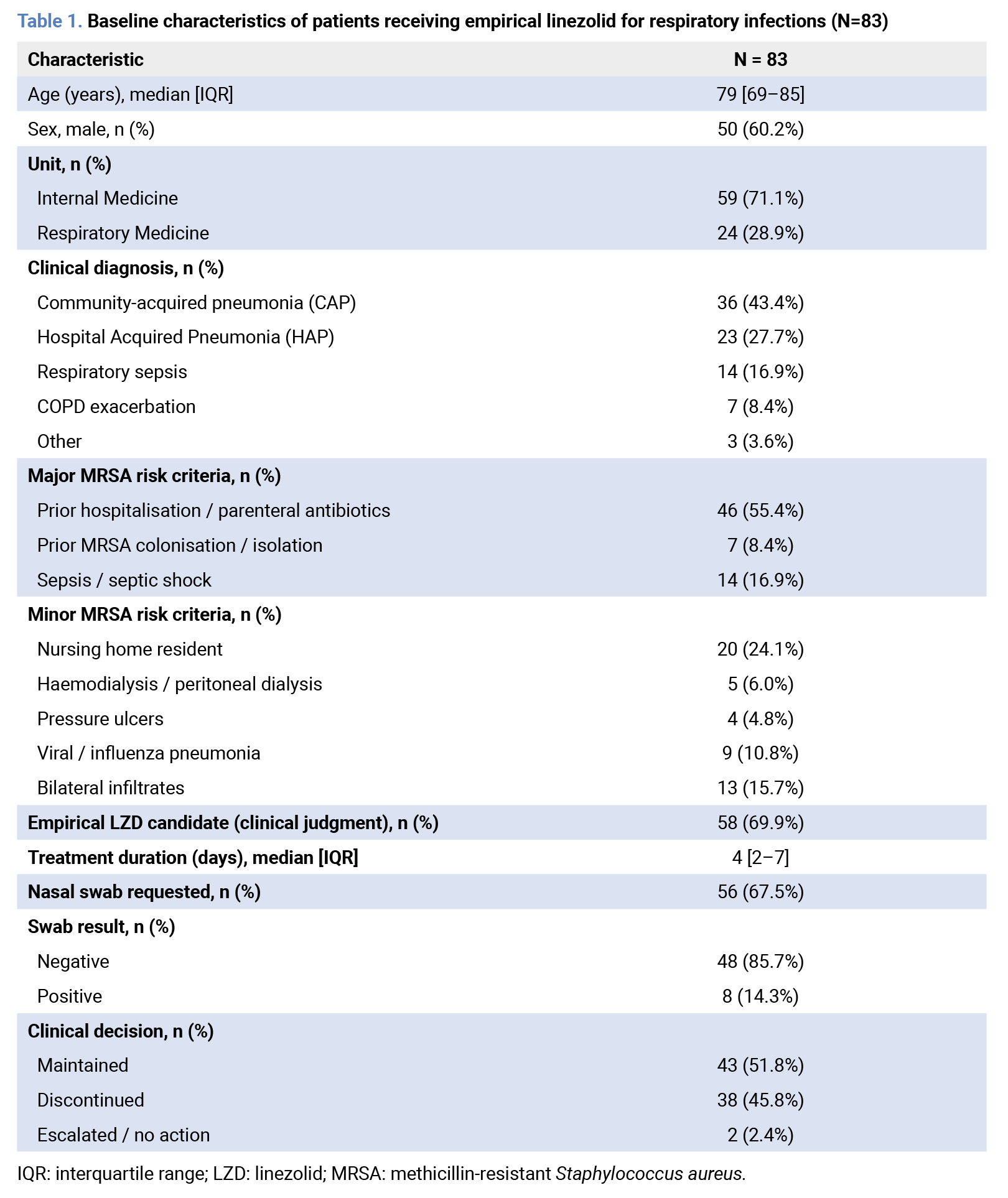
Study population. Eighty-three patients were included (Table 1). The median age was 79 years [IQR 69–85] and 60.2% were male. Most patients were admitted to Internal Medicine (71.1%). The most frequent diagnoses were community-acquired pneumonia (CAP, 43.4%), hospital-acquired pneumonia (HAP, 27.7%), and respiratory sepsis (16.9%). More than half had prior hospitalisation or parenteral antibiotics (55.4%), and 24.1% resided in a nursing home. The median treatment duration was 4 days [IQR 2–7]. Regarding clinical outcomes, a safety review of the 38 patients who underwent successful linezolid de-escalation revealed optimal clinical evolution during the 30-day post-discontinuation follow-up. None of these patients experienced clinical failure, required linezolid re-escalation, or died as a result of an untreated MRSA respiratory infection, demonstrating that swab-guided discontinuation is a safe clinical strategy.
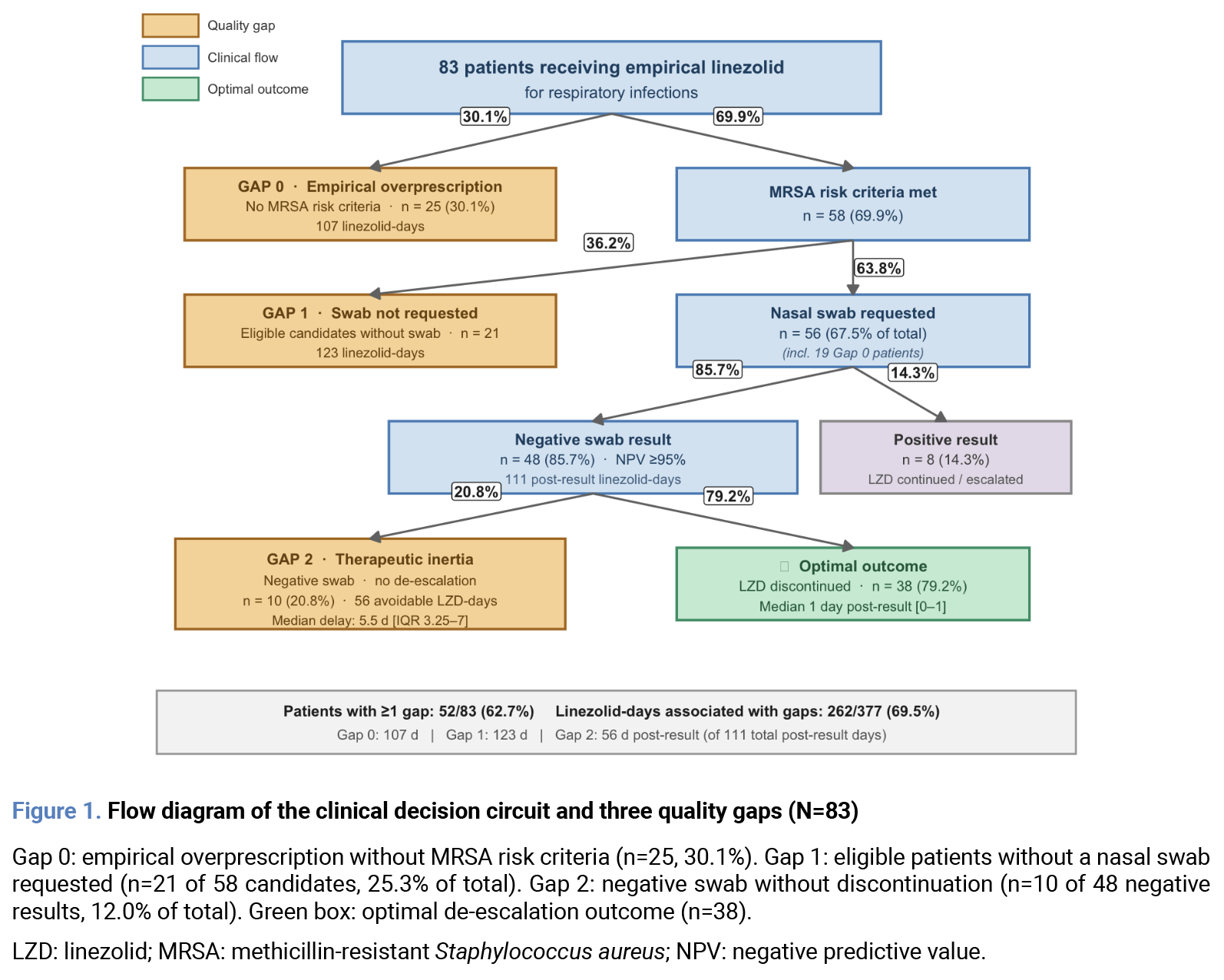
Gap 0: empirical overprescription. The attending clinician judged that 25 patients (30.1%) did not meet the criteria for empirical linezolid. In this group, the predominant diagnosis was CAP without risk factors (72%), followed by COPD exacerbation (12%). Despite the absence of an indication, all 25 patients received linezolid, accumulating 107 total treatment-days (median 4 days [IQR 2–6]). The discontinuation rate was higher among Gap 0 patients (56.0%, 14/25) than among eligible candidates with objective criteria (41.4%, 24/58), although this difference did not reach statistical significance (p=0.240; OR 0.56, 95% CI 0.19–1.58).
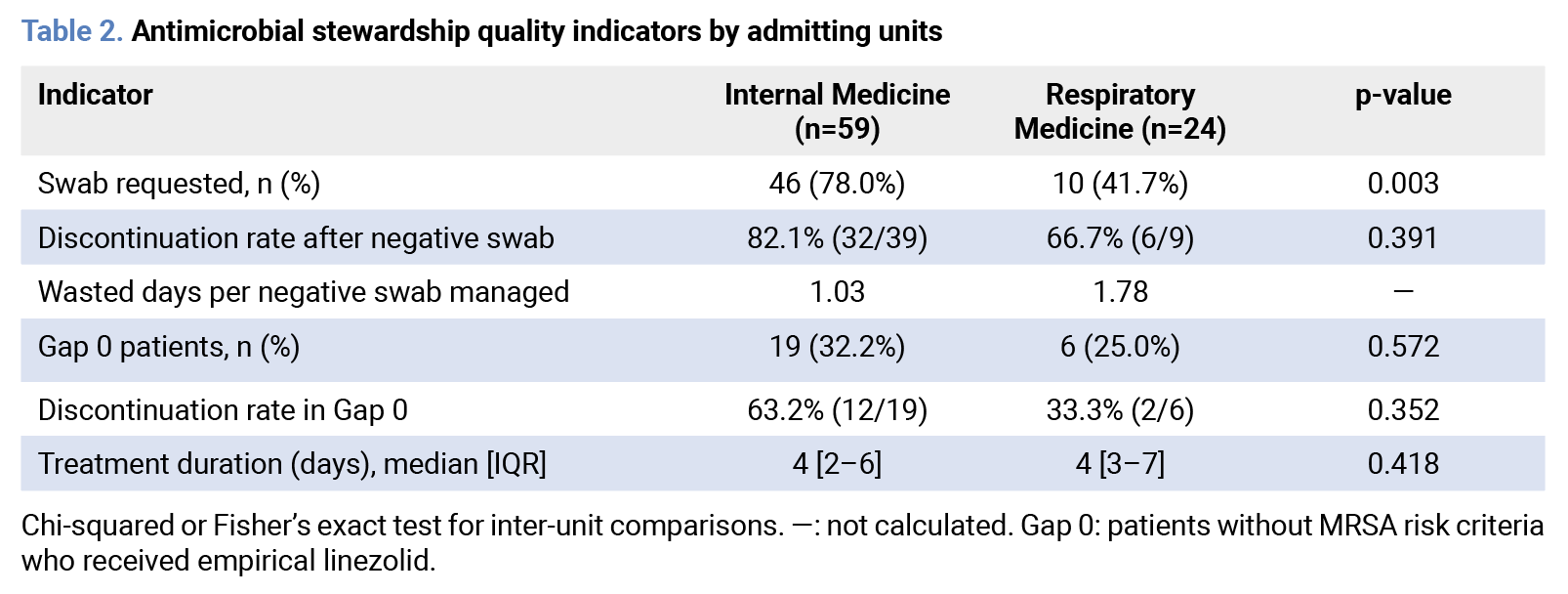
Gap 1: under-requesting and inter-unit variability. Nasal swabs were requested in 56 patients (67.5%), with a median time from treatment initiation to the availability of the result of 2 days [IQR 1–3]. Swab request rates differed significantly between units: 78.0% in Internal Medicine versus 41.7% in Respiratory Medicine (p=0.003) (Table 2). This inter-unit variability was consistent across multiple quality indicators: Internal Medicine achieved a higher discontinuation rate after a negative result (82.1% vs 66.7%) and generated fewer wasted treatment-days per negative swab managed (1.03 vs 1.78 days). Notably, swab request rates were similar between Gap 0 patients (76.0%) and eligible candidates (63.8%, p=0.318).
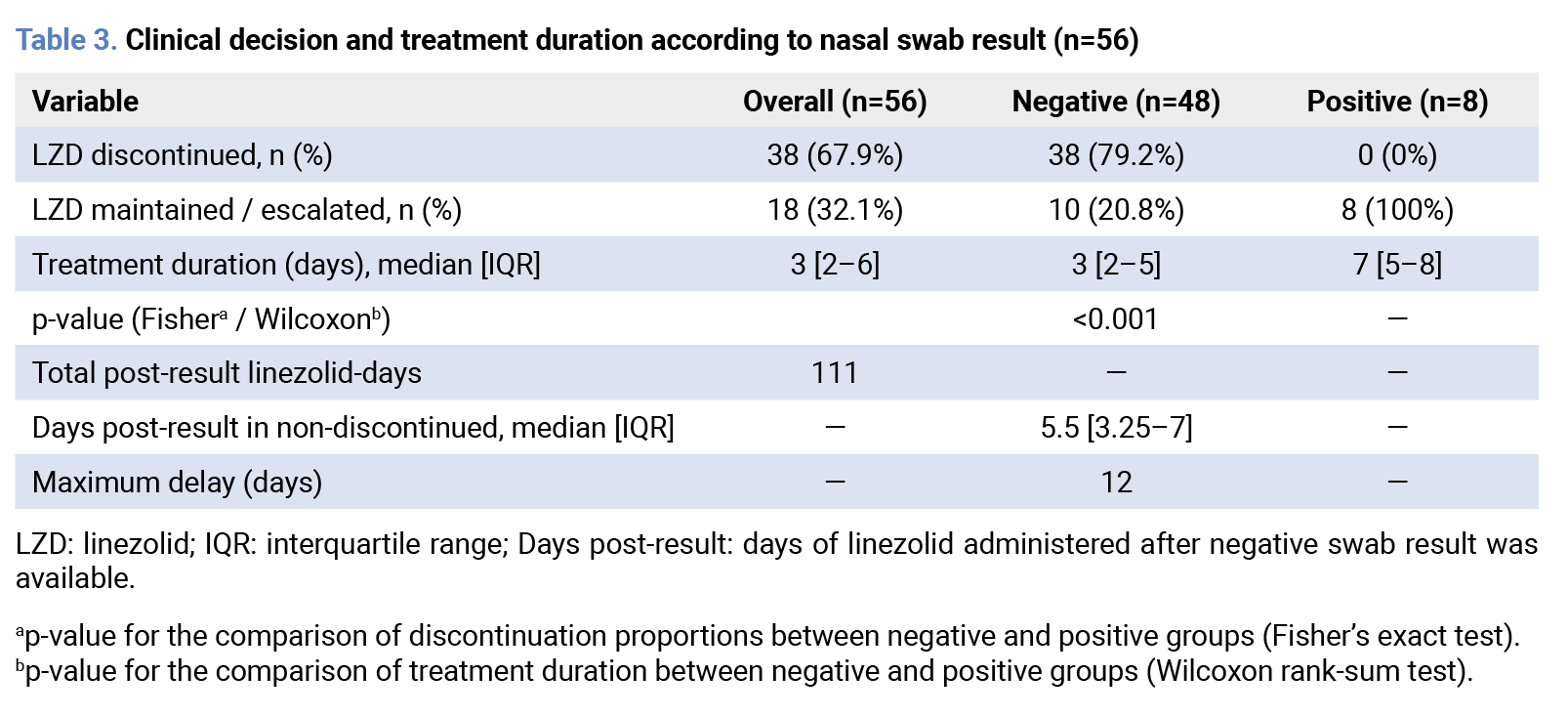
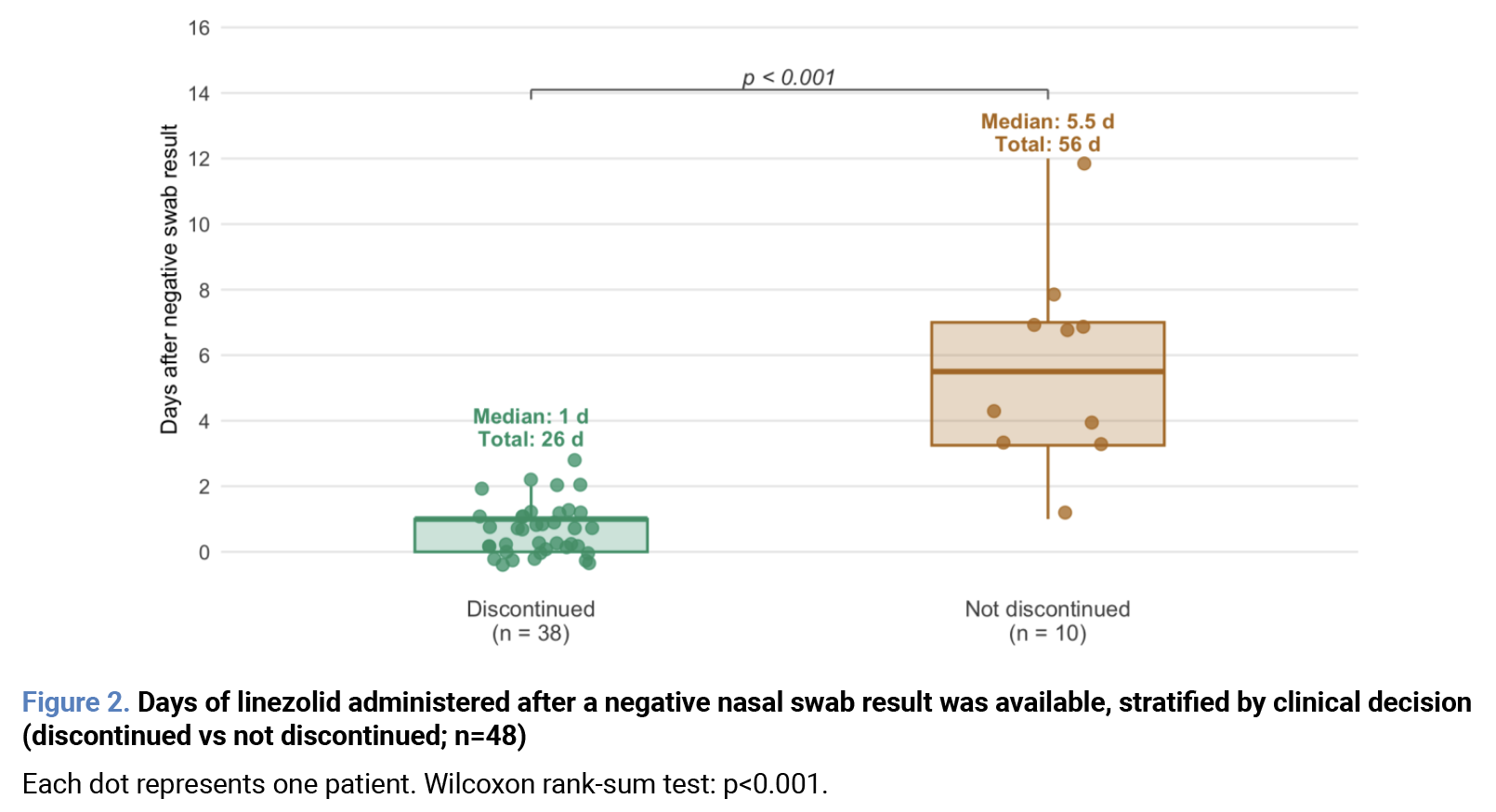
Gap 2: therapeutic inertia and post-result waste. Of 56 patients with a swab result, 85.7% (48/56) had a negative result and 14.3% (8/56) had a positive result. The swab result was strongly associated with the clinical decision (p<0.001): all eight positive results led to continuation or escalation, whereas 38 of the 48 negative results (79.2%) prompted discontinuation. Treatment duration was significantly shorter in patients with negative-result (median 3 days [IQR 2–5] versus 7 days [IQR 5–8]) (Table 3). However, 10 of the 48 patients with a negative swab (20.8%) did not undergo de-escalation. These patients accumulated 56 days of linezolid administered after a negative result was already available, with a median delay of 5.5 days [IQR 3.25–7] and a maximum of 12 days, significantly longer than the 1-day median [IQR 0–1] observed in discontinued patients (p<0.001). Considering all 48 patients with a negative swab, total post-result linezolid exposure amounted to 111 days.
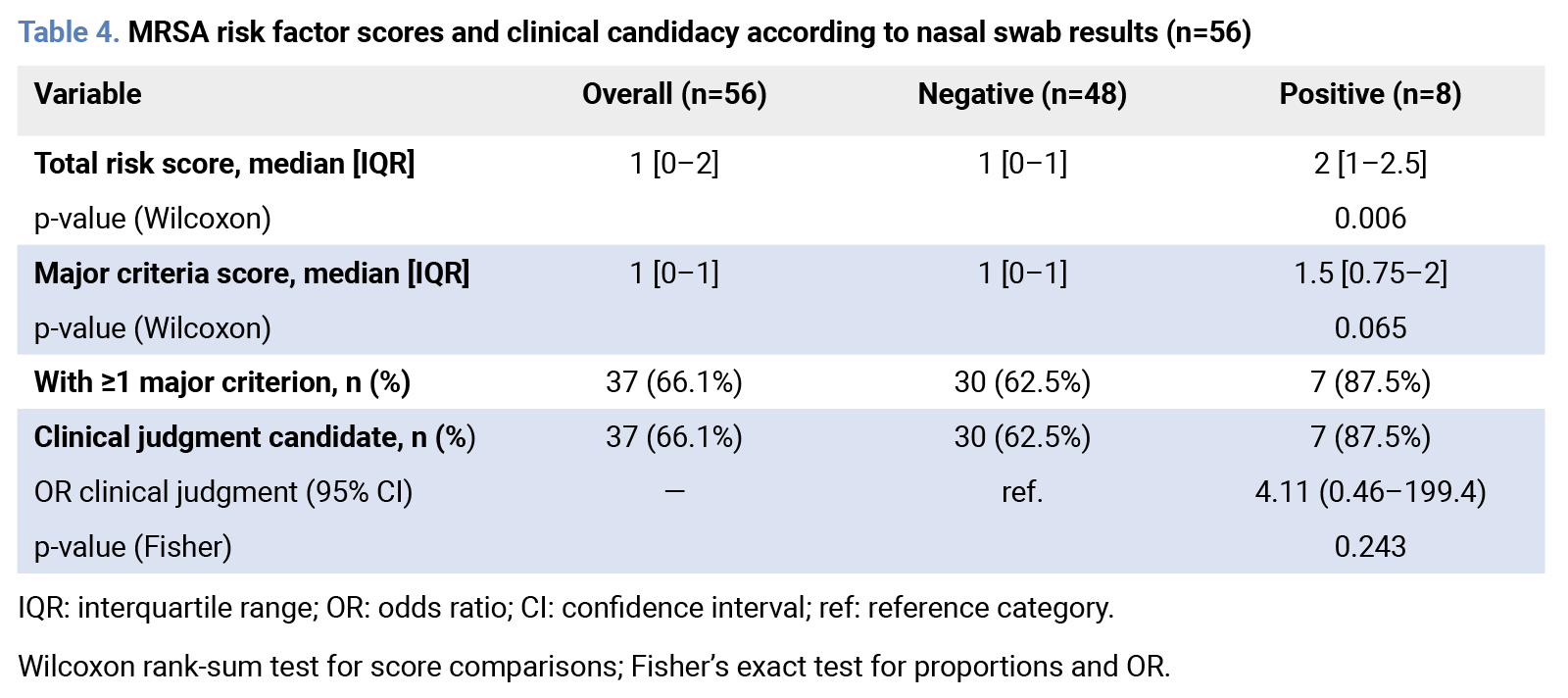
Risk factors score and swab result. Patients with a positive swab had a significantly higher cumulative risk score (major + minor criteria) than those with a negative result (median 2 [IQR 1–2.5] versus 1 [IQR 0–1]; p=0.006) (Table 4). The major criterion score alone showed a trend in the same direction (median 1.5 versus 1; p=0.065) that did not reach statistical significance, likely due to limited statistical power with only eight positive events. The clinical candidacy judgment yielded an OR of 4.11 (95% CI 0.46–199.4; p=0.243) for predicting a positive result, consistent in direction but not significant given the small event count. Among individual criteria, prior hospitalisation or parenteral antibiotic therapy was the most prevalent major criterion in both positive (87.5%, 7/8) and negative (58.3%, 28/48) groups, followed by prior MRSA colonisation or isolation, which was exclusively present in positive-result patients (25.0%, 2/8 vs 0.0%, 0/48). Nursing home residence was the most frequent minor criterion overall, present in 37.5% (3/8) of positive-swab patients compared with 22.9% (11/48) of negative-swab patients.
Global impact of quality gaps. Overall, 52 of the 83 patients (62.7%) presented with at least one quality gap. The 262 linezolid-days associated with any gap represented 69.5% of the 377 total linezolid-days administered during the study period.
Discussion
This study provides a detailed characterisation of real-world empirical linezolid use for respiratory infections at a secondary-level Spanish hospital, revealing that quality gaps affect nearly two-thirds of patients and account for approximately 70% of total linezolid exposure.
The 30.1% rate of empirical overprescription (Gap 0) is consistent with international evidence showing that anti-MRSA therapy is frequently initiated in patients unlikely to harbour MRSA, particularly those with CAP without risk factors [11]. Current ATS/IDSA guidelines recommend restricting empirical MRSA coverage to patients with locally validated risk factors [16,17], a threshold that was not met in nearly one in three of our patients. The noteworthy pattern observed (a higher discontinuation rate in Gap 0 patients than in those with genuine risk criteria) has not been previously described and suggests that clinicians who initiate treatment without established criteria retain awareness of the questionable indication and are more responsive to subsequent information, while the presence of prior risk factors generates a cognitive anchor that resists microbiological disconfirmation, a pattern aligned with the concept of antibiotic inertia [15].
The inter-unit variability in swab request rates (78% in Internal Medicine vs 41.7% in Respiratory Medicine, p=0.003) is the most operationally relevant finding for ASP design. Respiratory Medicine achieved lower discontinuation rates when swabs were obtained and generated more wasted treatment-days per negative swab. Similar interprofessional barriers have been documented in the stewardship literature, in which stewardship-driven recommendations can be perceived as interference with prescriber autonomy [19-21]. Our data suggest that Respiratory Medicine should be the primary target for educational and protocol-based interventions, including
stewardship-driven swab ordering as implemented in other centres [19,20].
Gap 2 generated 56 days of avoidable linezolid exposure, with a median delay of 5.5 days after result availability. This metric is particularly important because it cannot be attributed to diagnostic uncertainty: the information was available and the clinical team chose not to act. Comparable findings have been reported in pharmacist-driven protocols, in which the median time to de-escalation was reduced from 44 to 19 hours after a structured stewardship intervention [20], and in pre-post studies in which protocol implementation shortened anti-MRSA therapy by approximately 2 days [19]. The 111 total post-result linezolid-days across all 48 negative-swab patients highlights the systemic nature of therapeutic inertia. It should be acknowledged, however, that a proportion of the observed inertia may be clinically justified by factors not captured in this retrospective dataset, such as initial haemodynamic severity, perceived risk of treatment failure in frail patients, or clinical deterioration occurring after the swab result became available. These factors could legitimately lead a clinician to maintain broad-spectrum coverage despite a negative nasal swab, and their absence from the analysis means that not all 56 days classified as avoidable waste should necessarily be considered unjustified. Future intervention studies should prospectively collect severity scores and clinical evolution data to allow a more refined interpretation of de-escalation appropriateness.
The correlation between the cumulative MRSA risk score and swab positivity (p=0.006) provides internal validation that the risk stratification criteria used at our institution have biological relevance. Although the small number of positive events (n=8) limits statistical power for individual predictors, the directionality of the major-criteria score (p=0.065) and clinical judgment (OR 4.11) supports the principle that clinicians identify high-risk patients correctly. The problem lies not in recognition but in the therapeutic response to microbiological information. From a methodological standpoint, the three-gap framework introduced in this study represents a structured and readily exportable audit tool. Its sequential architecture (indication appropriateness, diagnostic tool utilisation, and therapeutic response to results) can be applied to any anti-MRSA agent across different hospital settings and patient populations without requiring specific software or dedicated resources. Each gap is independently actionable, which facilitates targeted, prioritised implementation at the unit level. We encourage other centres to apply and validate this model in their own prescribing contexts, as cross-institutional comparisons of gap prevalence and composition could ultimately inform national stewardship benchmarks.
This study has several limitations. The retrospective single-centre design and small sample size (n=83) limit generalisability and statistical power for multivariate analyses. Notably, no clinical failures, linezolid re-escalations, or deaths related to untreated MRSA respiratory infections were documented within this period. While these preliminary data confirm that swab-guided discontinuation was safe in our cohort, we acknowledge that confirming hard clinical outcomes requires larger prospective cohorts. Additionally, the definition of empirical linezolid appropriateness was based on the attending clinician’s documented judgment, which may introduce subjectivity and variability. Factors such as initial clinical severity, haemodynamic instability, or unfavourable early evolution could have influenced the decision to maintain treatment despite a negative microbiological result, acting as potential confounders not captured in this retrospective analysis. The study preceded any formal ASP intervention, making it a pure audit of spontaneous clinical behaviour. Expansion to a multicentre design, the collection of outcome data, and a post-intervention phase are required to confirm and extend these findings.
Conclusions
Quality gaps in empirical linezolid use for respiratory infections affect nearly two-thirds of patients and account for nearly 70% of total treatment-days in this cohort. Three sequential gaps were identified: empirical overprescription, failure to request nasal swabs, and therapeutic inertia after a negative result, each representing a distinct and targetable intervention point. A three-level ASP strategy is proposed: explicit indication criteria at initiation, an autonomous systematic stewardship-driven nasal swab request in every linezolid prescribed at day 0, and deescalation prompt upon receipt of a negative swab result via personal notification via Infectious Diseases specialist or electronic notification. Respiratory Medicine represents the priority unit for both educational and structural interventions. These data provide the observational baseline necessary to design, implement, and evaluate a formal ASP programme in a pre-post intervention study.
Funding
None to declare.
Author contributions
Conceptualisation: C.G.H., W.S.-Y.F., J.M.d.V.C.; Formal analysis: C.G.H., J.M.d.V.C.; Drafting – initial draft: C.G.H.; Validation: C.G.H., J.M.d.V.C., M.N.N.; Data collection: C.G.H., J.M.d.V.C.; Methodology: C.G.H., J.M.d.V.C., M.N.N.; Investigation: C.G.H., W.S.-Y.F., L.G.Z., J.M.d.V.C., A.R.S., M.N.N.; Resources: W.S.-Y.F., J.M.d.V.C.; Visualisation: L.G.Z., A.R.S.; Project management: L.G.Z., A.R.S.; Drafting, checking, and editing: J.M.d.V.C.; Supervision: A.R.S., M.N.N. All authors have read and agreed to the published version of the manuscript.
Conflict of interest
the authors declare that they have no conflict of interest.
AI statement
No artificial intelligence tools were used in the writing, analysis, interpretation, or review of this article.
References
- world Health Organization. AWaRe Classification of Antibiotics. Geneva: WHO; 2017 (updated 2021). Available at: https://www.who.int/publications/i/item/2021-aware-classification
- Stevens DL, Herr D, Lampiris H, et al. Linezolid versus vancomycin for the treatment of methicillin-resistant Staphylococcus aureus infections. Clin Infect Dis. 2002;34(11):1481–1490. https://doi.org/10.1086/340353.
- Wunderink RG, Niederman MS, Kollef MH, et al. Linezolid in methicillin-resistant Staphylococcus aureus nosocomial pneumonia: a randomized, controlled study. Clin Infect Dis. 2012;54(5):621–629. doi: 10.1093/cid/cir895.
- Stein GE, Wells EM. The importance of tissue penetration in achieving successful antimicrobial treatment of nosocomial pneumonia and complicated skin and soft-tissue infections caused by MRSA: vancomycin and linezolid. Curr Med Res Opin. 2010;26(3):571–588. https://doi.org/10.1185/03007990903512057
- Bernardo K, Pakulat N, Fleer S, et al. Subinhibitory concentrations of linezolid reduce Staphylococcus aureus virulence factor expression. Antimicrob Agents Chemother. 2004;48(2):546–555. https://doi.org/10.1128/AAC.48.2.546-555.2004
- Gu B, Kelesidis T, Tsiodras S, et al. The emerging problem of linezolid-resistant Staphylococcus. J Antimicrob Chemother. 2013;68(1):4–11. https://doi.org/10.1093/jac/dks354
- Plan Nacional frente a la Resistencia a los Antibióticos (PRAN). Informe Anual 2025. Madrid: Agencia Española de Medicamentos y Productos Sanitarios; 2025.
- European Centre for Disease Prevention and Control. Antimicrobial Resistance in the EU/EEA (EARS-Net): Annual Epidemiological Report 2023. Stockholm: ECDC; 2024.
- Parente DM, Cunha CB, Mylonakis E, Timbrook TT. The clinical utility of methicillin-resistant Staphylococcus aureus (MRSA) nasal screening to rule out MRSA pneumonia: a diagnostic meta-analysis with antimicrobial stewardship implications. Clin Infect Dis. 2018;67(1):1–7. https://doi.org/10.1093/cid/ciy024
- Mergenhagen KA, Starr KE, Wattengel BA, et al. Determining the utility of methicillin-resistant Staphylococcus aureus nares screening in antimicrobial stewardship. Clin Infect Dis. 2020;71(5):1142–1148. https://doi.org/10.1093/cid/ciz974
- Tanure YCB, Geranutti MJ, Ventura SS, et al. Impact of MRSA nasal swab screening and PCR in pneumonia treatment and antimicrobial stewardship: A systematic review and meta-analysis. Diagn Microbiol Infect Dis. 2026 Mar;114(3):117204. https://doi.org/10.1016/j.diagmicrobio.2025.117204
- Rubinstein E, Isturiz R, Standiford HC, et al. Worldwide assessment of linezolid’s clinical safety and tolerability: comparator-controlled phase III studies. Antimicrob Agents Chemother. 2003;47(6):1824–1831. https://doi.org/10.1128/AAC.47.6.1824-1831.2003
- Barlam TF, Cosgrove SE, Abbo LM, et al. Implementing an antibiotic stewardship program: guidelines by the IDSA and SHEA. Clin Infect Dis. 2016;62(10):e51–e77. https://doi.org/10.1093/cid/ciw118
- Gentges J, El-Kouri N, Rahman T, et al. Use of nares swab to de-escalate vancomycin for patients with suspected methicillin-resistant Staphylococcus aureus. Antimicrob Steward Healthc Epidemiol. 2023 Oct 9;3(1):e167. https://doi.org/10.1017/ash.2023.444
- Charani E, Ahmad R, Rawson TM, et al. Defining antibiotic inertia: application of a focused clinical scenario survey to illuminate a new target for antimicrobial stewardship during transitions of care. Clin Infect Dis. 2022;74(11):2050–2057. https://doi.org/10.1093/cid/ciab872
- Metlay JP, Waterer GW, Long AC, et al. Diagnosis and treatment of adults with community-acquired pneumonia. Am J Respir Crit Care Med. 2019;200(7):e45–e67. https://doi.org/10.1164/rccm.201908-1581ST
- Kalil AC, Metersky ML, Klompas M, et al. Management of adults with hospital-acquired and ventilator-associated pneumonia: 2016 clinical practice guidelines by the IDSA and ATS. Clin Infect Dis. 2016;63(5):e61–e111. https://doi.org/10.1093/cid/cix759
- Tsiodras S, Shin N, Christians U, et al. Linezolid-associated peripheral and optic neuropathy, lactic acidosis, and serotonin syndrome. Pharmacotherapy. 2014;34(5):529–538. https://doi.org/10.1592/phco.27.8.1189
- Willis C, Allen B, Tucker C, et al. Impact of a pharmacist-driven MRSA PCR nasal swab protocol on the de-escalation of empiric vancomycin in patients with pneumonia in a rural healthcare setting. Cureus. 2019;11(12):e6321. https://doi.org/10.7759/cureus.6378
- Meng L, Pourali S, Hitchcock MM, et al. Discontinuation patterns and cost avoidance of a pharmacist-driven MRSA nasal PCR testing protocol for de-escalation of empiric vancomycin for suspected pneumonia. Open Forum Infect Dis. 2021;8(4):ofab099. https://doi.org/10.1093/ofid/ofab099
- Broom J, Broom A, Plage S, et al. How should clinicians navigate interprofessional tension in their roles as antimicrobial stewards? AMA J Ethics. 2024;26(6):E490–E498. https://doi.org/10.1001/amajethics.2024.441
Explore
Articles
Volumes
About the journal
Most read
Recomendaciones para la prevención y el tratamiento de las infecciones respiratorias en adultos mayores institucionalizados
Revista Española de Quimioterapia
Acute infectious gastroenteritis in childhood: the role of rapid multiplex molecular syndromic panels in diagnosis and clinical management
Revista Española de Quimioterapia
Características epidemiológicas de pacientes con aislamientos de Enterobacterales productores de carbapenemasas-NDM en un hospital de alta complejidad
Revista Española de Quimioterapia
Review on the management of intra-abdominal candidiasis
Revista Española de Quimioterapia
Neoscytalidium dimidiatum: a rare locally acquired deep cutaneous infection in a renal transplant recipient
Revista Española de Quimioterapia