Review
Volume 38; Suppl. 1
11 min
New evidence in the management of CMV infection: impact on prophylaxis and treatment
Jesús Fortún1,*
1Servicio de Enfermedades Infecciosas, Hospital Ramón y Cajal, CIBERINFEC. Universidad de Alcalá, Madrid, Spain
https://doi.org/10.37201/req/s01.12.2025
Receipt Date:
05/09/2025
Acceptance Date:
04/09/2025
Publication Date:
23/10/2025
How to cite
Fortún J. New evidence in the management of CMV infection: Impact on prophylaxis and treatment. Rev Esp Quimioter. 2025; 38(Suppl. 1): 80-86. Available from: https://doi.org/10.37201/req/s01.12.2025
Metrics
1026
Views
142
Downloads
Share
Share
Abstract (EN)
Cytomegalovirus (CMV) infection is a leading cause of morbidity and mortality among immunocompromised individuals, especially hematopoietic stem cell transplant and solid organ transplant recipients. In recent years, significant advances have transformed the approach to CMV prevention and therapy. This manuscript explores key evidence regarding antiviral prophylaxis, treatment strategies, resistance mechanisms, and the potential of immune-guided monitoring in transplant settings. The role of novel agents such as letermovir and maribavir is highlighted. These findings support personalized strategies that balance efficacy, toxicity, and resistance in managing CMV infection.
Keywords (EN):
CMV
Maribavir
Letermovir
Transplantation
Epidemiology and risk stratification
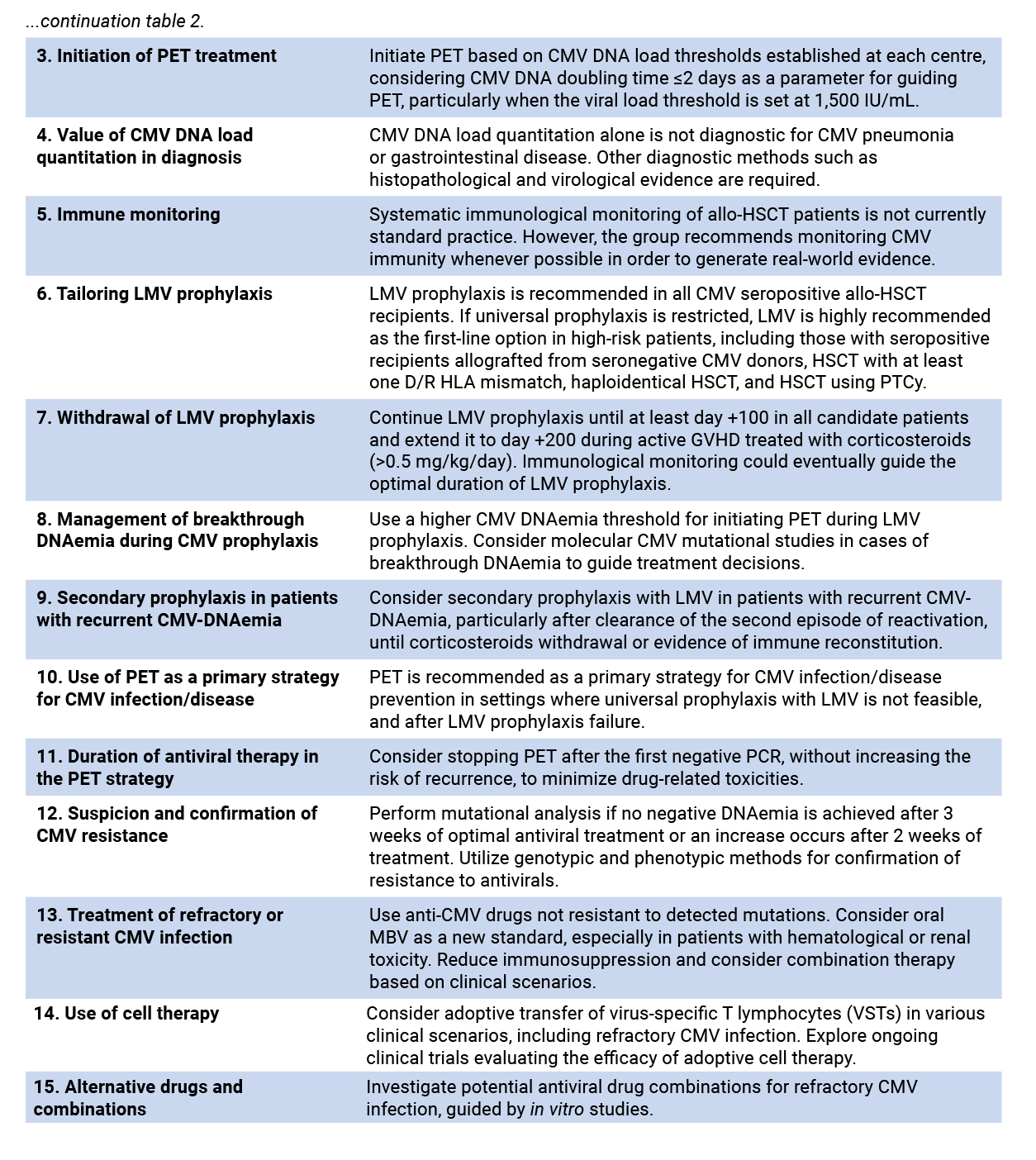
The risk of CMV infection varies based on donor and recipient serostatus, type of transplant, immunosuppression intensity, and prophylactic strategy [1]. In allogeneic HSCT, the risk can reach 30–80% depending on whether the donor and/or recipient are seropositive [1]. Solid organ transplant recipients are also at high risk, particularly D+/R− patients. The highest-risk scenarios often require personalized strategies based on both virological and immunological parameters. The Spanish GETH-TC consensus underscores the importance of individualized prophylaxis and monitoring to mitigate these risks effectively [2]. CMV infection remains a complex challenge due to the varying degrees of risk between patient populations. HSCT recipients, particularly those with seropositive recipients, exhibit the highest incidence of CMV reactivation. Rates in this subgroup can exceed 50% without effective prophylaxis (Table 2) [3]. Meanwhile, in SOT recipients, risk factors such as potent immunosuppression, particularly with lymphocyte-depleting agents like thymoglobulin, further increase vulnerability. The updated recommendations from the GESITRA-IC-SEIMC 2024 consensus highlight the role of individualized approaches based on serostatus, organ type, and immunosuppressive regimen [2]. Tailored prophylaxis not only improves outcomes but also reduces overtreatment and toxicity.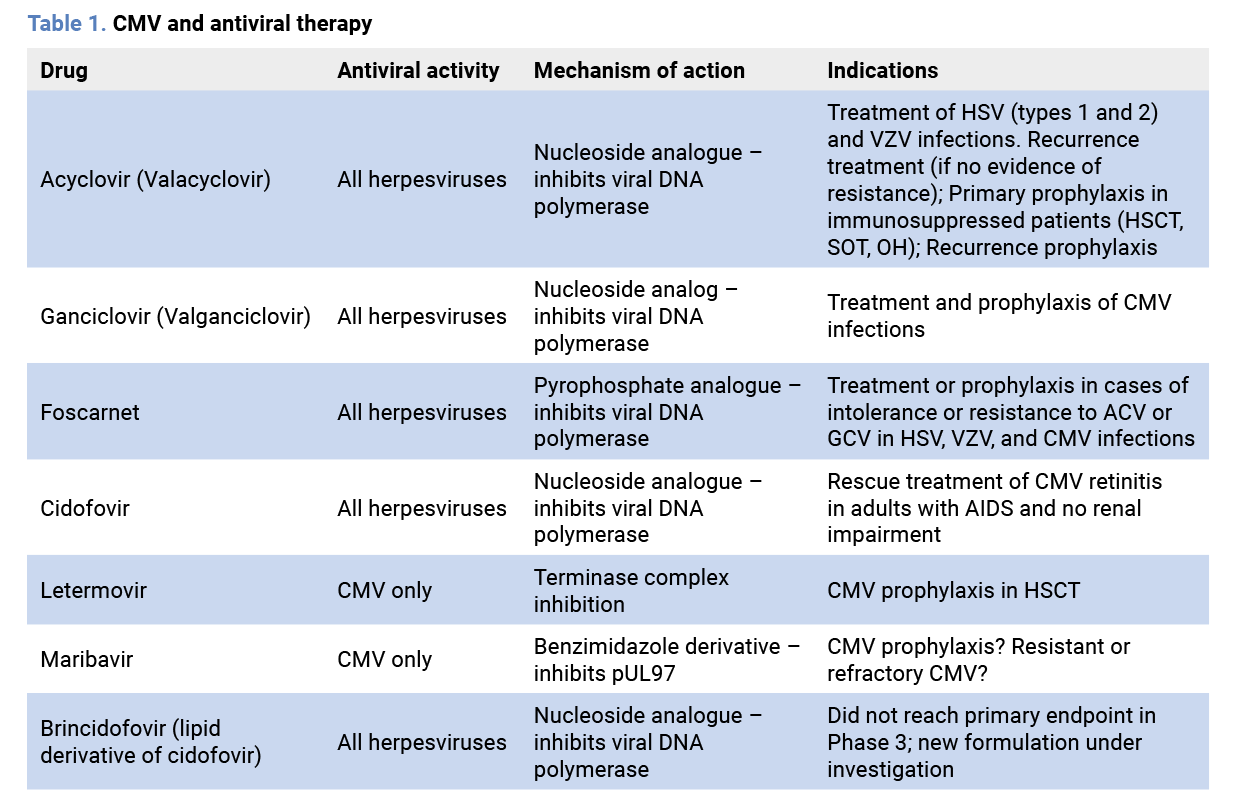
Letermovir: a new paradigm in CMV prophylaxis
Letermovir is a selective CMV terminase complex inhibitor targeting UL56 and UL89 proteins, crucial for viral DNA processing. In a pivotal phase 3 trial, letermovir prophylaxis significantly reduced the incidence of clinically significant CMV infection at 24 weeks post-HSCT, along with a decrease in all-cause mortality [4]. Letermovir is now a first-line option in HSCT patients, particularly those at risk of valganciclovir-associated toxicities such as neutropenia or renal impairment. Its safety profile supports its use. However, resistance mutations at codon C325 of UL56 have emerged, warranting careful surveillance. Letermovir’s favourable safety profile is particularly notable. Unlike ganciclovir or valganciclovir, it does not suppress bone marrow function, making it suitable for patients already at risk of neutropenia due to conditioning regimens or concomitant therapies. Its pharmacokinetics also allow once-daily oral or intravenous administration, improving patient adherence. Expanded access programs and real-world studies have corroborated clinical trial findings, reinforcing its utility across diverse patient populations. Letermovir is also being investigated for use in SOT recipients; a recent prophylaxis trial in kidney transplant recipients confirmed equivalent efficacy to valganciclovir but with a significant reduction in toxicity [5].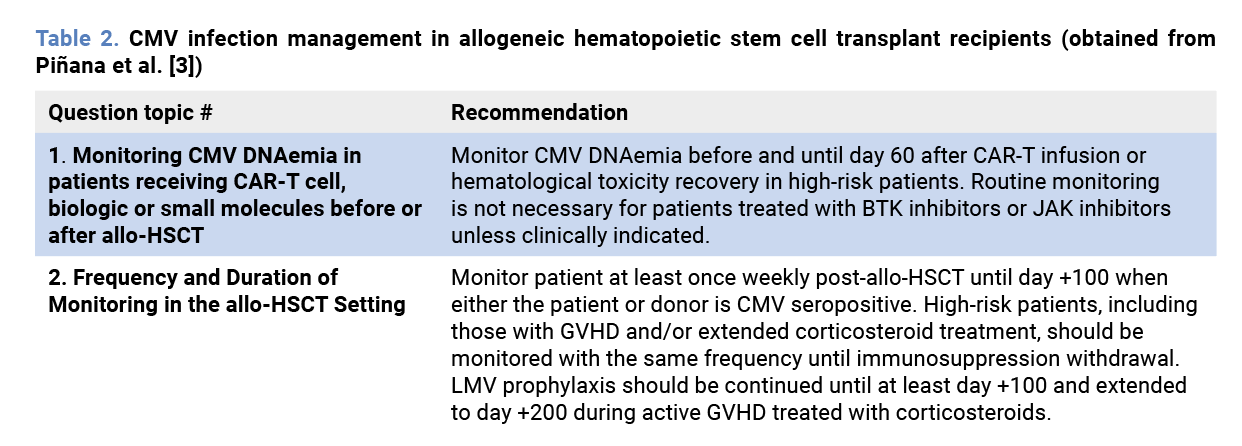
CMV RNA monitoring: a novel biomarker
Recent data suggest that CMV RNAemia may serve as a more sensitive marker for early viral replication compared to DNAemia. In a prospective study from Italy involving 21 patients on letermovir prophylaxis, CMV RNAemia detected active replication in patients who later required antiviral treatment, even when DNA levels were low or undetectable [6]. This could redefine monitoring algorithms, especially during or after prophylaxis. Although still investigational, RNA-based monitoring may identify patients at risk earlier, potentially guiding preemptive treatment more effectively. Incorporating CMV RNA monitoring into clinical practice may address some limitations associated with DNA-based diagnostics. RNAemia has been shown to correlate with active replication and viral gene expression, which may precede DNAemia and allow earlier intervention.Maribavir in resistant and refractory CMV
Maribavir is an orally bioavailable antiviral that inhibits the UL97 kinase, but in a target distinct from that of ganciclovir. This novel mechanism enables activity against CMV strains resistant to standard therapies. The SOLSTICE phase 3 trial showed maribavir was more effective and better tolerated than investigator-assigned therapy in patients with refractory/resistant CMV post-transplant [7]. Notably, maribavir was associated with fewer hematologic toxicities, though taste disturbance (dysgeusia) was common. Resistance to maribavir, especially via UL97 mutations (T409M, H411Y, C480F), has been documented, emphasizing the need for resistance-guided therapy in non-responders. In clinical practice, maribavir is often reserved for patients with multidrug-resistant CMV or those intolerant to other antivirals. Real-world data confirm its efficacy and superior tolerability compared to foscarnet [8]. Importantly, maribavir’s efficacy in patients with UL54 and UL97 mutations expands the treatment arsenal for difficult-to-manage cases. However, clinicians must remain vigilant about emerging resistance mutations that may reduce treatment durability. Regular viral load monitoring and resistance genotyping are essential in guiding therapy adjustments [7,8].Comparative studies and preemptive therapy strategies
Several studies have compared maribavir to valganciclovir in both treatment and preemptive therapy (PET) settings. Although Maertens et al. in a phase II study demonstrated non-inferiority in PET using maribavir, with lower rates of neutropenia and better tolerability [9], the AURORA study did not confirm the non-inferiority of maribavir compared to valganciclovir for preemptive therapy in hematopoietic stem cell transplant recipients at the primary 8-week endpoint, although it did so for secondary endpoints [10]. PET approaches, including low-threshold (LT) and high-threshold (HT) strategies, continue to be used in R-D+ [11,12]. A meta-analysis by Kumar et al. showed that LT PET resulted in significantly lower CMV disease rates compared to HT PET or universal prophylaxis (UP), without increased risk of rejection or graft loss [11]. A similar result had been obtained by Singh et al. in a clinical trial in liver transplant recipients [12]. Preemptive strategies allow for early intervention upon detection of low-level viremia, minimizing drug exposure in low-risk patients. Despite the advantages of PET, its success hinges on reliable access to frequent CMV PCR testing and rapid turnaround times [13]. Variability in assay sensitivity and institutional thresholds complicates standardization. Future directions include harmonization of PET protocols and the integration of CMV-specific immune assays to better stratify patients. Some experts argue for a hybrid approach—universal prophylaxis in the early post-transplant period followed by immune-guided PET—particularly in high-risk SOT recipients like lung transplant patients [2].The choice between prophylaxis and PET depends on various institutional and patient-specific factors. While universal prophylaxis is simple to implement and reduces early CMV events, it may expose low-risk patients to unnecessary drug toxicity and costs. PET, in contrast, demands rigorous surveillance but reduces drug burden. The transition from fixed-duration to immunologically guided prophylaxis presents a middle ground that merges efficacy with individualized care.Immune-guided prophylaxis and the role of cellular immunity
Immune monitoring, such as CMV-specific T-cell assays, is increasingly used to tailor prophylaxis duration and identify patients who can safely discontinue antiviral therapy. Paez-Vega et al. compared standard prophylaxis with immunoguided strategies in lung transplant recipients and showed non-inferiority, paving the way for broader adoption in SOT populations [14]. Similar findings from Swiss cohort study in kidney transplant patients further validate this approach [15]. Beyond reducing drug exposure, immune monitoring has the potential to identify patients who may benefit from extended prophylaxis or intensified surveillance. Incorporating immune profiling into clinical workflows requires collaboration between transplant physicians, infectious disease specialists, and laboratory services. Advances in assay standardization and automation are facilitating broader adoption. Ongoing studies aim to refine thresholds for CMV-specific T-cell responses that predict protection against disease. In the future, these strategies may enable ‘immune passports’—profiles that guide not only CMV management but also inform broader immunosuppressive regimens.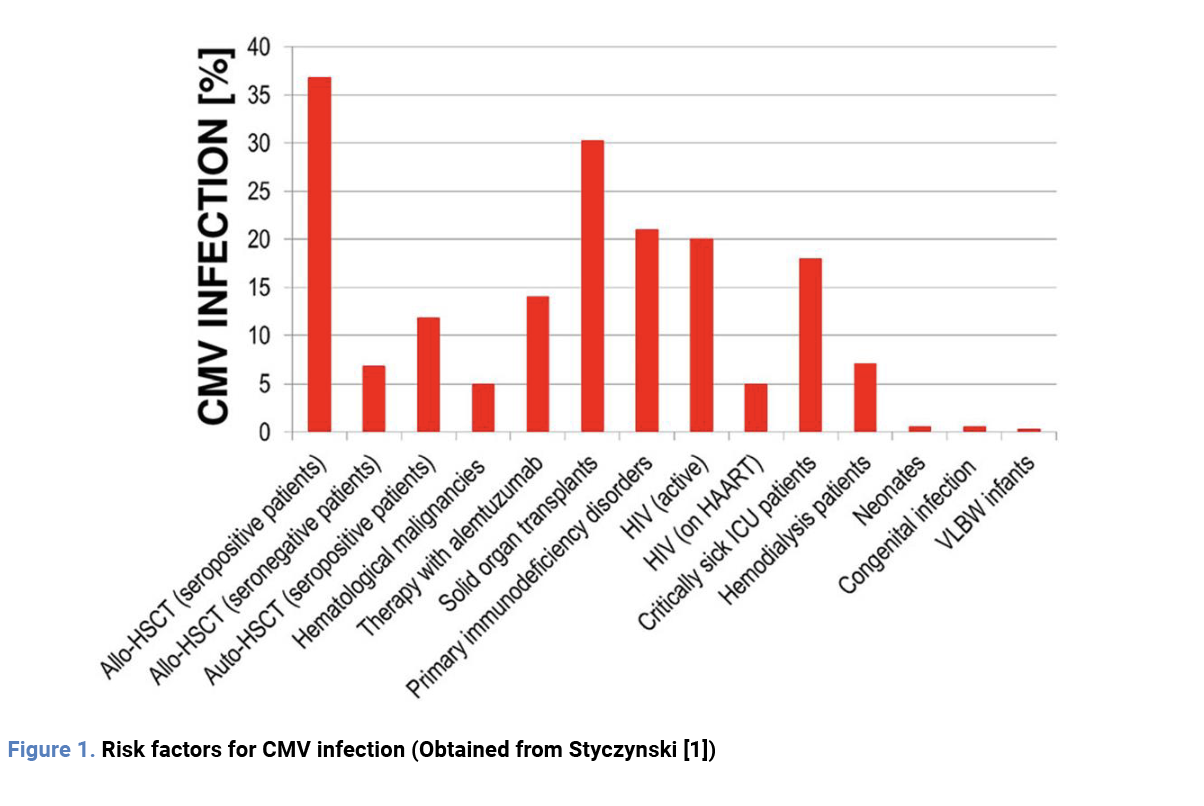
Virus-specific T-cell therapy
Adoptive transfer of CMV-specific T-cells offers a promising approach for patients with multiple CMV reactivations or resistant disease. A recent scoping review summarized available studies supporting the safety and efficacy of this strategy [16]. While still experimental, these therapies may be particularly beneficial in patients unresponsive to pharmacological agents, providing durable CMV control and aiding immune reconstitution. The therapeutic landscape is also evolving with the emergence of virus-specific T-cell therapies. According to the scoping review by Fung et al., this modality shows promise for both prophylaxis and treatment in patients who have failed conventional antivirals [16]. These therapies involve the infusion of donor-derived or third-party CMV-specific T-cells, which target viral antigens and help reconstitute antiviral immunity. Early-phase trials have reported high rates of viral clearance and favourable safety profiles. However, logistical challenges such as manufacturing, cost, and access limit widespread adoption. Further multicentre studies are essential to validate efficacy and define optimal timing, dosing, and patient selection.Conclusions
Management of CMV infection in transplant recipients has evolved significantly with the introduction of letermovir and maribavir, as well as the incorporation of RNA monitoring and immune profiling. These advancements support a move toward individualized prophylaxis and therapy strategies that optimize outcomes while minimizing toxicity and resistance. Ongoing research is needed to standardize monitoring protocols, validate novel biomarkers, and expand access to cellular therapies. Clinicians must remain vigilant for resistance patterns and adapt strategies based on patient-specific risks. Ultimately, the goal of CMV management is to prevent disease, preserve graft function, and improve patient survival while minimizing adverse effects. The integration of novel antivirals, biomarkers, and immune diagnostics marks a paradigm shift from one-size-fits-all to personalized medicine. Widespread adoption of these strategies requires education, infrastructure, and interdisciplinary cooperation. While significant progress has been made, continued investment in clinical trials and translational research will be essential to address persistent gaps in knowledge and ensure equitable access to optimal CMV care globally. As more real-world data emerge, the clinical community is poised to refine existing algorithms for CMV prevention and treatment. The increasing availability of CMV-specific diagnostics and therapeutic modalities necessitates updated clinical guidelines that reflect these innovations. Importantly, strategies must also consider resource availability and cost-effectiveness, especially in lower-income settings where access to newer antivirals and immunologic monitoring may be limited. Future studies should also investigate long-term outcomes, including resistance development, quality of life, and graft survival associated with various CMV management strategies. By leveraging the current momentum in translational research, clinicians can continue improving patient care while advancing the field of transplant virology. Funding None to declare. Conflict of Interest The authors declare no conflict of interest. Author contributions Writing—original draft preparation, J.F.; writing—review and editing, J.F. References- Styczynski J. Who Is the Patient at Risk of CMV Recurrence: A Review of the Current Scientific Evidence with a Focus on Hematopoietic Cell Transplantation. Infect Dis Ther. 2018 Mar;7(1):1-16. Available from: https://doi.org/10.1007/s40121-017-0180-z
- Ruiz-Arabi E, Torre-Cisneros J, Aguilera V, Alonso R, Berenguer M, Bestard O, et al. Management of cytomegalovirus in adult solid organ transplant patients: GESITRA-IC-SEIMC, CIBERINFEC, and SET recommendations update. Transplant Rev Orlando. 2024 Dec;38(4):100875. Available from: https://doi.org/10.1016/j.trre.2024.100875
- Piñana JL, Giménez E, Vázquez L, Marcos MÁ, Guerreiro M, Duarte R, et al. Update on Cytomegalovirus Infection Management in Allogeneic Hematopoietic Stem Cell Transplant Recipients. A Consensus Document of the Spanish Group for Hematopoietic Transplantation and Cell Therapy (GETH-TC). Mediterr J Hematol Infect Dis. 2024 Sep;16(1):e2024065. Available from: https://doi.org/10.4084/MJHID.2024.065
- Marty FM, Ljungman P, Chemaly RF, Maertens J, Dadwal SS, Duarte RF, et al. Letermovir Prophylaxis for Cytomegalovirus in Hematopoietic-Cell Transplantation. N Engl J Med. 2017 Dec;377(25):2433-2444. Available from: https://doi.org/10.1056/NEJMoa1706640
- Limaye AP, Budde K, Humar A, Vincenti F, Kuypers DRJ, Carroll RP, et al. Letermovir vs Valganciclovir for Prophylaxis of Cytomegalovirus in High-Risk Kidney Transplant Recipients: A Randomized Clinical Trial. JAMA. 2023 Jul;330(1):33-42. Available from: https://doi.org/10.1001/jama.2023.9106
- Nava A, et al. CMV RNA: a new marker for monitoring CMV in HCT with letermovir prophylaxis [poster]. Presented at: 35th ECCMID (European Congress of Clinical Microbiology and Infectious Diseases); 2025 Apr; Vienna, Austria.
- Avery RK, Alain S, Alexander BD, Blumberg EA, Chemaly RF, Cordonnier C, et al. SOLSTICE Trial Investigators. Maribavir for Refractory Cytomegalovirus Infections With or Without Resistance Post-Transplant: Results From a Phase 3 Randomized Clinical Trial. Clin Infect Dis. 2022 Sep;75(4):690-701. Available from: https://doi.org/10.1093/cid/ciab988
- Ogawa L, Morinishi C, Multani A, Gaynor P, Beaird OE, Pham C, et al. Real-World Comparison of Maribavir to Foscarnet for the Treatment of Cytomegalovirus in Solid Organ and Hematopoietic Stem Cell Transplant Recipients. Viruses. 2024 Dec;16(12):1889. Available from: https://doi.org/10.3390/v16121889
- Maertens J, Cordonnier C, Jaksch P, Poiré X, Uknis M, Wu J, et al. Maribavir for Preemptive Treatment of Cytomegalovirus Reactivation. N Engl J Med. 2019 Sep;381(12):1136-1147. Available from: https://doi.org/10.1056/NEJMoa1714656
- Papanicolaou GA, Avery RK, Cordonnier C, Duarte RF, Haider S, Maertens J, et al; AURORA Trial Investigators. Treatment for first cytomegalovirus infection post- haematopoietic cell transplant in the AURORA trial: a multicentre, double-blind, randomised, phase 3 trial comparing maribavir with valganciclovir. Clin Infect Dis. 2024 Mar;78(3):562-72. Available from: https://doi.org/10.1093/cid/ciad709
- Kumar L, Murray-Krezan C, Singh N, Brennan DC, Rakita RM, Dasgupta S, et al. A Systematic Review and Meta-analysis of Optimized CMV Preemptive Therapy and Antiviral Prophylaxis for CMV Disease Prevention in CMV High-Risk (D+R-) Kidney Transplant Recipients. Transplant Direct. 2023 Jul;9(8):e1514. Available from: https://doi.org/10.1097/TXD.0000000000001514
- Singh N, Winston DJ, Razonable RR, Lyon GM, Silveira FP, Wagener MM, et al. Effect of Preemptive Therapy vs Antiviral Prophylaxis on Cytomegalovirus Disease in Seronegative Liver Transplant Recipients With Seropositive Donors: A Randomized Clinical Trial. JAMA. 2020 Apr;323(14):1378-1387. Available from: https://doi.org/10.1001/jama.2020.3138
- Vernooij RW, Michael M, Colombijn JM, Owers DS, Webster AC, Strippoli GF, et al. Pre-emptive treatment for cytomegalovirus viraemia to prevent cytomegalovirus disease in solid organ transplant recipients. Cochrane Database Syst Rev. 2025 Jan;1(1):CD005133. Available from: https://doi.org/10.1002/14651858.CD005133.
- Páez-Vega A, Vaquero-Barrios JM, Ruiz-Arabi E, Iturbe-Fernández D, Alonso R, Ussetti-Gil P, Monforte V, et al. ; CYTOCOR study group. Safety and efficacy of immunoguided prophylaxis for cytomegalovirus disease in low-risk lung transplant recipients in Spain: a multicentre, open-label, randomised, phase 3, noninferiority trial. Lancet Reg Health Eur. 2025 Mar;52:101268. Available from: https://doi.org/10.1016/j.lanepe.2025.101268
- Manuel O, Laager M, Hirzel C, Neofytos D, Walti LN, Hoenger G, et al; Swiss Transplant Cohort Study (STCS). Immune monitoring-guided versus fixed duration of antiviral prophylaxis against cytomegalovirus in solid-organ transplant recipients: a multicentre, randomised clinical trial. Clin Infect Dis. 2024 Feb;78(2):312-23. Available from: https://doi.org/10.1093/cid/ciad575
- Fung JST, Wright RC, Bharaj DK, Alghamdi A, Hesson D, Delisle JS, Schweitzer L, Avery RK, Belga S. Virus-specific T-cell therapy for prophylaxis and treatment of cytomegalovirus infections after transplantation: a scoping review. Clin Infect Dis. 2025 May;ciaf232. Available from: https://doi.org/10.1093/cid/ciaf232
Explore
Articles
Volumes
About the journal
Most read
Recomendaciones para la prevención y el tratamiento de las infecciones respiratorias en adultos mayores institucionalizados
Revista Española de Quimioterapia
Acute infectious gastroenteritis in childhood: the role of rapid multiplex molecular syndromic panels in diagnosis and clinical management
Revista Española de Quimioterapia
Características epidemiológicas de pacientes con aislamientos de Enterobacterales productores de carbapenemasas-NDM en un hospital de alta complejidad
Revista Española de Quimioterapia
Review on the management of intra-abdominal candidiasis
Revista Española de Quimioterapia
Neoscytalidium dimidiatum: a rare locally acquired deep cutaneous infection in a renal transplant recipient
Revista Española de Quimioterapia