Review
Volume 38; Suppl. 1
23 min
Therapeutic management of health care associated pneumonia
Montserrat Rodríguez-Aguirregabiria1,*
1Critical Care Department. Hospital Universitario La Paz. IdiPaz. Madrid, Spain.
https://doi.org/10.37201/req/s01.07.2025
Receipt Date:
03/09/2025
Acceptance Date:
02/09/2025
Publication Date:
23/10/2025
How to cite
Rodríguez-Aguirregabiria M. Therapeutic management of health care-associated pneumonia. Rev Esp Quimioter. 2025; 38(Suppl. 1): 43-50. Available from: https://doi.org/10.37201/req/s01.07.2025
Metrics
561
Views
157
Downloads
Share
Share
Abstract (EN)
Nosocomial pneumonia is one of the most common nosocomial infections and is associated with significant clinical and economic burdens, such as long-term hospitalization, high medical costs, and increased morbidity and mortality. The increasing incidence of nosocomial pneumonia caused by multidrug-resistant bacteria is a challenge in certain clinical settings, as it often carries a higher risk of delays in initiating an appropriate treatment and, therefore, a worse prognosis. The aim of this article is to analyze some of the key aspects that should be taken into account when choosing an antibiotic treatment for a patient with a nosocomial pneumonia in a multidrug-resistant environment.
Keywords (EN):
Hospital-acquired pneumonia
Ventilator-associated pneumonia
Antimicrobial therapy
Introduction
Nosocomial pneumonia (NN) is one of the most common nosocomial infections and is associated with significant clinical and economic burdens, such as long-term hospitalization, high medical costs, and increased morbidity and mortality [1]. NN includes: Hospital-acquired pneumonia (HAP) that occurs 48 hours or more after hospital admission and does not appear to have been incubating at the time of admission, ventilator-associated pneumonia (VAP) occurs in intubated patients more than 48 hours after mechanical ventilation is initiated, and ventilated HAP (vHAP) refers to HAP that develops in hospitalized patients who ultimately require mechanical ventilation due to pneumonia [2]. vHAP has a worst prognosis than other types of NN. The overall mortality rate of VAP and vHAP ranges from 15% to 40%, but the attributable mortality is estimated at 10% to 13% [2-4]. Various factors have been associated with a worse prognosis of NN including the existence of comorbidities, the patient’s performance status, and the infection severity at the time of its development and the patient’s response to infection. On the other hand, early and appropriate antibiotic treatment is known to improve the outcomes [5]. Multidrug-resistant (MDR) bacteria have been identified to cause nosocomial pneumonia. Infections caused by MDR pathogens significantly increased the risk of inadequate empirical antibiotic treatment, and are associated with a delayed treatment, persistent or recurrent infection, prolonged hospital stay, and an increased morbidity and mortality [6]. In light of the above considerations, the present paper aims to offer a guide with the key aspects to take into account to select antimicrobial treatment in a patient with a NN from a Spanish perspective.Key factors for choosing antibiotic treatment in nosocomial pneumonia
The etiology and resistance patterns of nosocomial pneumonia In the latest report of the Survey on the Prevalence of Healthcare-associated Infections and Antimicrobial Use in Acute Care Hospitals in Spain (EPINE-2024), Pseudomonas aeruginosa (15%) and Staphylococcus aureus (11.2%) were the main pathogens causing HAP, followed by Klebsiella pneumoniae (8.6%), Escherichia coli (5.1%) and Serratia marcescens (4.5%). Methicillin resistance was observed in 25% S. aureus strains in nosocomial infections. Roughly 20-40% of enterobacterales strains were resistance to third-generation cephalosporins, and additionally, 2-14.5% of isolates demonstrate resistance to carbapenems. P. aeruginosa stands out as the most frequent etiological pathogen, with 24% of isolates exhibiting resistance to carbapenems [7]. Recently, a total of 3,180 non-duplicated P. aeruginosa clinical isolates from two Spanish nationwide surveys were analyzed. A decrease in resistance to all tested antibiotics, including older and newer antimicrobials, was observed. The highest resistance rates were documented for ciprofloxacin, followed by imipenem and piperacillin/tazobactam. However, there was a significant increase in the proportion of carbapenemase production among carbapenem-resistant strains. Resistance rates were higher for all agents among the Intensive Care Units (ICU) isolates [8]. On the other hand, according to data from the National Surveillance Study of Nosocomial Infection in Intensive Medicine Services (ENVIN-HELICS 2024), VAP accounted for 36.6% of the infections acquired in the ICU. The most frequent bacterial pathogens were P. aeruginosa (15.8%), S. aureus (12.5%), and K. pneumoniae (8.9%), and followed by E. coli (7.1%), and S. marcescens (5.9%). Other non-glucose-fermenting Gram-negative bacilli (NGFGN) such as Stenotrophomonas maltophilia and Acinetobacter baumannii were particularly relevant causing 5.8% and 1.2% of VAP, respectively. Difficult-to-treat P. aeruginosa strains were found in the 30% of VAP. Enterobacterales as E. coli and K. pneumoniae were 25.6% and 28.8% resistance to third-generation cephalosporins, and 3.2% and 14.8% resistance to carbapenems, respectively [9]. In The CARBA-MAP study a total of 2,704 carbapenemase-producing microorganisms were included. Globally, the most frequent types of carbapenemase in enterobacterales and P. aeruginosa were OXA-48-like, alone or in combination with other enzymes (1,523 cases, 66.8%) and VIM (365 cases, 88.6%), respectively. Among enterobacterales, carbapenemase- producing K. pneumoniae was reported in 1,821 cases (79.9%), followed by E. cloacae complex in 334 cases (14.6%). KPC was mainly present in the South and South-East regions of Spain, and OXA-48-like in the rest of the country. Regarding P. aeruginosa, VIM was widely distributed all over the country [10]. Finally, it should be noted that S. maltophilia and A. baumannii ranked second and third among the NGFGN leading to HAP and VAP after P. aeruginosa [7,9]. S. maltophilia is intrinsically resistant to a wide range of antibiotics. Antimicrobials with in vitro susceptibility, such as TMP/SMX, quinolones, and tetracyclines derivatives (minocycline and tigecycline), are not commonly prescribed initially in patients with NN leading to inappropriate empirical treatment [11]. A. baumannii mainly responsible for nosocomial infections, have become especially difficult to treat when it is carbapenem resistant, owing to the paucity of therapeutic options [12]. Between 40-50% of nosocomial infections associated with A. baumannii were resistant to carbapenems in the EPINE and ENVIN reports [7,9]. Risk factors for multidrug-resistance microorganisms in nosocomial pneumonia MDR P. aeruginosa, ESBL-producing enterobacteria, methicillin-resistant S. aureus (MRSA), carbapenem-resistant A. baumannii (CRAB), and carbapenemase producing Enterobacteriaceae (CPE) are MDR bacteria commonly involved in HAP. The rate of resistant pathogens varies widely across different countries, settings and hospitals. Risk factors are, in general, common to all MDR pathogens [5]. European guidelines pointed out as high-risk of HAP/VAP caused for MDR bacteria patients who present and either septic shock and/or the following risk factors: hospital settings with high rates of MDR pathogens, previous antibiotic use, recent prolonged hospital stay (>5 days of hospitalization), and previous colonization or infection with MDR pathogens [13]. They are also common in the elderly population, those with underlying pulmonary diseases (such as chronic obstructive pulmonary disease and bronchiectasis), diabetes mellitus, immunosuppressive conditions (like HIV and malignancies), chronic alcoholism, liver cirrhosis, and digestive surgery in the last year [14,15]. As well as, in patients admitted from long-term facilities, travel from high endemic area or in the event of a nosocomial outbreak [16]. The importance of colonization as a risk factor for suffering pneumonia by the same microorganism varies according to the type of MDR pathogen and location of the colonization. A recent meta-analyses reported a wide range in the incidence of infection for ESBL-producing enterobacteria following colonization, ranged from 5% in the general adult population to as high as 45% in solid organ transplant recipients. The pooled incidence of infection following colonization for CRE was 22%, and the risk ratio for infection following colonization with Enterobacterales was 15.83 compared with those without colonization (95% CI, 8.30–30.19) [17]. In a multicenter retrospective study HAP caused by MRSA or MDR P. aeruginosa was more common in the MDR bacteria colonization group (24.4% vs. 8.1%, P = 0.006 or 20.0% vs. 5.4%, P = 0.013). Correlation between MDR colonization and infection was evaluated among patients. The phi coefficient was 0.609 for SAMR, 0.311 for MDR Enterobacteriaceae, 0.516 for MDR P. aeruginosa, and 0.389 for MDR Acinetobacter species [18]. An observational cohort study performed in patient admitted to one medical ICU found that CRE colonization compared to non-colonization was associated with a 10.8-fold increased odds of CRE infection at 30 days (95% CI 2.8±41.9, p =0.0006). Only two non-colonized CRE developed and invasive infection by CRE [19]. These data suggest that BMR carrier status should be a factor influencing the choice of empirical treatment in a patient with NN. On the other hand, we must be aware of the relevance of infection control interventions among high-risk patients across the continuum of care. Antimicrobial treatment of nosocomial pneumonia Therapy should be individualized in accordance with the source and severity of infection and the susceptibility profile of the bacteria. Because of important differences in local epidemiology, rules about when empirical therapy against specific resistant bacteria should be started cannot be generalized [20]. Early initiation of empirical antibiotic therapy in severe infections is an essential criterion to qualify the treatment as adequate. But in addition, antibiotic therapy must be appropriate; that means, it must be effective against the microorganism causing the infection in each particular patient. Effective but late is associated with worse clinical outcomes [21]. Optimal treatment requires, the timely administration of appropriate antimicrobials, and also refers to strategies that achieve therapeutic drug concentrations at the infection site, ensuring both clinical and microbiological effectiveness while minimizing the risk of antibiotic-related toxicity [22]. The management of MDR Gram-negative infections has relied on old antimicrobials, including colistin, aminoglycosides, fosfomycin, and tigecycline. However, the clinical effectiveness of these agents is frequently limited by toxicity profiles, suboptimal pharmacokinetics, and rising resistance rates, which complicate therapeutic decision-making and negatively impact patient outcomes [23]. Currently, novel antibiotics are available for the treatment of nosocomial pneumonia caused by MDR Gram-negative pathogens including ceftolozane–tazobactam (CFT/TAZ), ceftazidime avibactam (CAZ/AVI), meropenem–vaborbactam (MER/VAB), imipenem–cilastatin–relebactam (IMI/REL), cefiderocol (CFD), and aztreonam-avibactam (ATM/AVI) [24,25]. CFD is a siderophore cephalosporin that has shown excellent antibacterial activity against a variety of β-lactamases-producing Gram negatives as Ambler A,B,C, and D β-lactamases, namely KPC and ESBLs from class A, AmpC, the carbapenemase OXA-48 from class D serine-β-lactamases, and the metallo-β-lactamases NDM, VIM, and IMP. CFD has demonstrated activity against members of the Enterobacteriaceae family, such as E. coli and K. pneumoniae, and non-fermenter bacilli P. aeruginosa, S. maltophilia and A. baumannii [26]. CFD resistant prevalence was low overall but varied by species (S. maltophilia 0.4% [95% CI 0.2-0.7%], Enterobacterales 3.0% [95% CI 1.5-6.0%], P. aeruginosa 1.4% [95% CI 0.5-4.0%]), and was highest for A. baumannii (8.8%, 95% CI 4.9-15.2%) and enterobacterales New Delhi metallo-β-lactamase-producing strains [27]. The effectiveness and safety of CFD in patients with Gram-negative bacterial infections, excluding Acinetobacter spp. was recently assessed in the PERSEUS study. Overall, the clinical cure rate was 80.5% (210/261) and the 28-day mortality rate was 21.5% (56/261). In patients with P. aeruginosa infection (66.7% [n = 174], including 73 [42%] with metallo-β lactamases), the clinical cure rate was 84.5%, and the 28-day mortality was 17.2%. These results suggest that CFD is a valuable option in the treatment of serious Gram-negative bacterial infections, particularly for those caused by P. aeruginosa [28]. Regarding the efficacy of CFD against carbapenem-resistant A. baumannii infections is important to highlight that an updating meta-analysis showed that CFD was associated with a significantly lower risk of mortality compared to non-cefiderocol-based regimens [29, 30,31]. Ceftazidime is a 3rd generation cephalosporin active against P. aeruginosa. Avibactam is an inhibitor of class A β-lactamases, including TEM, SHV, CTX-M, KPC, GES, PER, SME; chromosomal class C (AmpC) and plasmid class C; and some class D such as OXA-48 from K. pneumoniae [32]. The pivotal study for the comparison of CAZ-AVI versus meropenem in nosocomial pneumonia was the REPROVE. Similar clinical cure rates (67.2% vs. 69.1%; ITT difference -1.9; 95%CI -8.1, 4.3) and mortality (9.6% vs. 8.3%; ITT difference 1.5; 95% CI-2.4, 5.3) were observed demonstrating CAZ/AVI non-inferiority in the treatment of nosocomial pneumonia [33]. In a recent meta-analysis, lower all-cause mortality for patients with bacteremia (OR = 0.30, 95% CI 0.19–0.46) and improved rates of clinical cure for patients with bacteremia (OR = 4.90, 95% CI 2.60–9.23) and nosocomial pneumonia (OR = 3.20, 95% CI 1.55–6.60) was observed in the CAZ-AVI group [34]. Effectiveness of CAZ/AVI versus CFT/TAZ for MDR P. aeruginosa infections has been evaluated in CACTUS study. Treatment with CFT/TAZ resulted in higher rates of clinical success compared with CAZ-AVI for invasive infections due to multidrug-resistant P aeruginosa. There were no significant differences between study groups with respect to all-cause mortality, and treatment-emergent resistance was common with both agents [35]. In an additional comparative study, rates of 30-day survival, microbiologic failure, and recurrent infections did not vary between groups, but authors found those treated with CAZ/AVI were more likely to develop resistance (defined as ≥4-fold increased MIC) than those treated with CFT/TAZ (40% vs 10%; P = .002) [36]. MER/VAB is a combination of a group 2 carbapenem with a novel cyclic boronic acid-based β-lactamase inhibitor. Vaborbactam was shown to inhibit various class A carbapenemases (e. g. KPC-2, KPC-3, KPC-4, BKC-1, FRI-1, and SME-2), class A ESBLs, and class C cephalosporinases [37]. TANGO II trial showed reduced all-cause mortality, accompanied by a statistically significant increase in cure rates, associated with treatment with MER/VAB in patients with HAP/VAP or bacteremia caused by CRE versus best available therapy. This increased cure rate was demonstrated even in immunocompromised patients, a group typically excluded from clinical trials [38]. The comparative efficacy of CAZ/AVI and MER/VAB for treatment of CRE infections has also been evaluated, and no significant differences in clinical success or mortality was found, but development of resistance was more common with CAZ/AVI monotherapy [39]. MER-VAR is a recent and promising option for the treatment of KPC-producing K. pneumoniae infections, including those resistant to CAZ/AVI. Real-world data from a cohort of 342 adults with bloodstream infections was recently published. 30-day mortality was independently associated with septic shock at infection onset, Charlson comorbidity index ≥ 3, dialysis, concomitant COVID-19, and INCREMENT score ≥ 8. However, the administration of MER/VAB within 48 hours from infection onset was a negative predictor of mortality [40]. Ceftolozane has greater activity against P. aeruginosa compared with other anti-pseudomonal β-lactams. This is due to the stability of ceftolozane against AmpC β-lactamases that are intrinsically produced by P. aeruginosa. In combination with the β-lactamase inhibitor tazobactam, ceftolozane retains activity against the majority of resistance mechanisms commonly observed in P. aeruginosa and ESBL-producing Enterobacterales [41]. ASPECT-NP was phase 3, non-inferiority trial comparing CFT/TAZ with meropenem for treating NN. In a subset analysis focusing in vHAP after adjusting for clinically relevant factors the mortality risk in participants with vHAP was over twice as high when treated with meropenem compared with CEF/TAZ. CEF/TAZ may confer a survival advantage over meropenem in the high-risk subpopulation of participants with Gram negative vHAP, but this requires confirmation in an adequately powered trial [42]. The experience of CFT/TAZ on extremely immunosuppressed patients is scarce. A multicenter matched-cohort study of P. aeruginosa bloodstream infections episodes in neutropenic hematologic patients found that the use of CFT/TAZ was significantly associated with improved outcomes, and, in addition, it was found to be an independent risk factor associated with increased survival [43]. IMI/REL is active against Ambler class A (ESBLs, KPCs) and class C (AmpC)-lactamases. It also shows activity against carbapenem-resistant P. aeruginosa, inhibiting Pseudomonas-derived cephalosporinases [6]. A multicenter observational study included 151 patients treated with IMI/REL, and was predominantly prescribed for lower respiratory tract infections, accounting for 52.3% of cases. The 85.4% of the pathogens were carbapenem-non-susceptible, with P. aeruginosa being the most frequently targeted organism. Clinical success was achieved in a significant proportion of cases (70%), indicating the potential effectiveness of IMI-REL in managing severe infections caused by resistant pathogens [44]. Aztreonam/avibactam (ATM/AVI) recently emerged as a promising option, which restores the monobactam effectiveness against specific β-lactamases. ATM shows marked stability against MBL and AVI inhibits a wide range of β-lactamases, including class A, class C, and some class D enzymes, but it is ineffective against MBL [45]. The ASSEMBLE study focused on infections caused by MBL-producing gram-negatives included only 15 adult patients. Clinical cure at the test-of-cure was 41.7 % (5/12), compared with 0% (0/3) for the best available therapy [46]. Aztreonam plus CAZ/AVI has been used as an alternative to ATM/AVI in the past due to lack of other therapeutic options [47]. In a recent report on 343 patients with MBL–producing Enterobacterales infections, the 30-day mortality rate was 29.7%. Sensitivity analysis showed that ATM plus CAZ/AVI, compared with colistin, was independently associated with a reduced 30-day mortality rate [48]. ATM/AVI combination has been evaluated in pharmacokinetics– pharmacodynamics studies and dose regimens seems to achieve higher joint probability of target attainment compare with proposed CAZ/AVI plus AZT dose regimens. However, additional clinical data are needed to fully elucidate the role CAZ/AVI-ATM versus ATM/AVI for these challenging infections [49,50]. Readapting the European guidelines to a new scenario, an initial empiric combination therapy of HAP/VAP caused for MDRB should cover Gram-negative bacteria and include antibiotic treatment for MRSA in those patients at risk. The authors found reasonable a single empiric Gram-negative agent, if it is effective against >90% Gram-negative bacteria, according to the local antibiotic susceptibility test [13]. Based on all these data we suggest the following empirical and targeted antibiotic treatment approach focus in MDR Gram-negative bacteria (Table 1).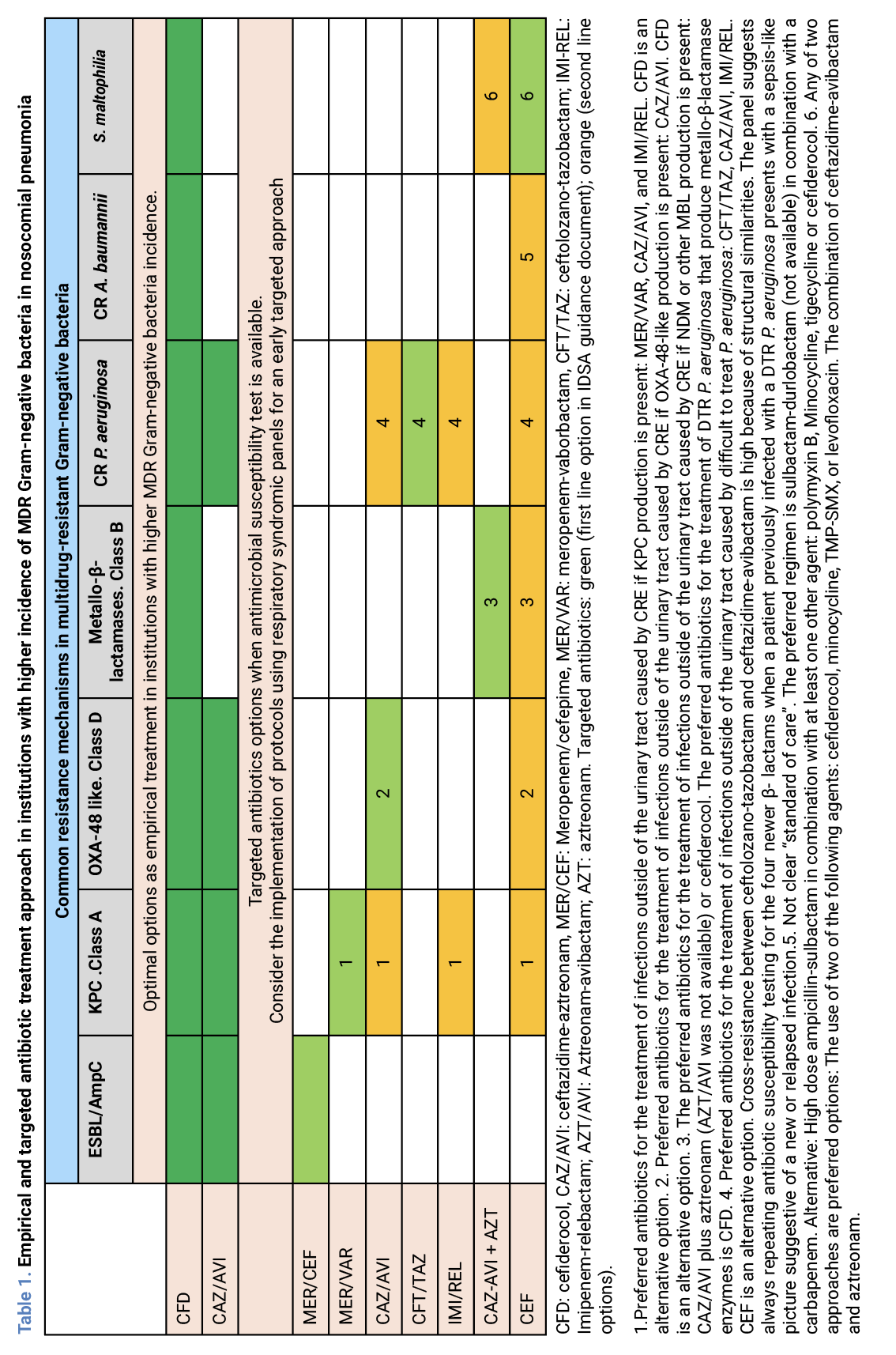
Conclusions
Early appropriate antibiotic therapy in NN represent a major challenge in daily clinical practice in institutions with a higher incidence of MDR bacteria. In this short review, we highlight the most important key factors to consider when choosing antimicrobial therapy. Local epidemiology, the presence of risk factors for NN caused by MDR bacteria, and the spectrum of new available antibiotics must be considered. The management of infections caused by MDR bacteria should be approached from a comprehensive institutional perspective and requires a multidisciplinary team to design a prevention strategy, an early microbiological diagnosis, and empirical and targeted treatment based on current evidence and guidelines documents as core functions of an antimicrobial stewardship program. Funding Not external funding. Conflicts of interest The author has conducted consulting work for Viatris, Shionogi and Advanz Pharma, and has served as a speaker for Pfizer, Gilead Sciences, Menarini and Shionogi. Author contributions Writing—review and editing, M.R.-A.References
- Kim BG, Kang M, Lim J, Lee J, Kang D, et al. Comprehensive risk assessment for hospital-acquired pneumonia: sociodemographic, clinical, and hospital environmental factors associated with the incidence of hospital-acquired pneumonia. BMC Pulm Med. 2022 Jan ;22(1):21. Available from: https://doi.org/10.1186/s12890-021-01816-9
- File TM Jr, Ramirez JA. Pulmonary Infections in Adults: Nosocomial Pneumonia. FP Essent. 2025 Mar;550:16-22.
- Motowski H, Ilges D, Hampton N, Kollef MH, Micek ST. Determinants of Mortality for Ventilated Hospital-Acquired Pneumonia and Ventilator-Associated Pneumonia. Crit Care Explor. 2023 Feb;5(3):e0867. Available from: https://doi.org/10.1097/CCE.0000000000000867
- Martin-Loeches I, Reyes LF, Nseir S, Ranzani O, et al; European Network for ICU-Related Respiratory Infections (ENIRRIs) European Respiratory Society-Clinical Research Collaboration Investigators. European Network for ICU-Related Respiratory Infections (ENIRRIs): a multinational, prospective, cohort study of nosocomial LRTI. Intensive Care Med. 2023 Oct;49(10):1212-1222. Available from: https://doi.org/10.1007/s00134-023-07210-9
- Zaragoza R, Vidal-Cortés P, Aguilar G, Borges M, Diaz E, et al. Update of the treatment of nosocomial pneumonia in the ICU. Crit Care. 2020 Jun;24(1):383. Available from: https://doi.org/10.1186/s13054-020-03091-2
- Almyroudi MP, Chang A, Andrianopoulos I, Papathanakos G, Mehta R, Paramythiotou E, Koulenti D. Novel Antibiotics for Gram-Negative Nosocomial Pneumonia. Antibiotics (Basel). 2024 Jul;1(7):629. Available from: https://doi.org/10.3390/antibiotics13070629
- Estudio EPINE-EPPS nº34: 2024. Prevalencia de infecciones (relacionadas con la asistencia sanitaria y comunitarias) y uso de antimicrobianos en hospitales de agudos. Sociedad Española de medicina preventiva, salud pública e higiene. Available from: https://epine.es/api/documento-publico/2024%20EPINE%20Informe%20España.pdf/reports-esp. [Consulted: 14 July 2025].
- Sastre-Femenia MÀ, Fernández-Muñoz A, Gomis-Font MA, Taltavull B, López-Causapé C, et al; GEMARA-SEIMC/CIBERINFEC Pseudomonas study Group. Pseudomonas aeruginosa antibiotic susceptibility profiles, genomic epidemiology and resistance mechanisms: a nation-wide five-year time lapse analysis. Lancet Reg Health Eur. 2023 Sep;34:100736. Available from: https://doi.org/10.1016/j.lanepe.2023.100736
- Informe ENVIN-HELICS 2021. Estudio nacional de vigilancia de in fección nosocomial en servicios de medicina intensiva. Grupo de trabajo de enfermedades infecciosas y sepsis. Sociedad española de medicina intensiva crítica y unidades coronarias (SEMICYUC). Available from: https://hws.vhebron.net/envin-helics/Help/Informe%20ENVIN-UCI%202024.pdf. [Consulted: 20 July 2025]
- Gracia-Ahufinger I, López-González L, Vasallo FJ, Galar A, Siller M, et al. The CARBA-MAP study: national mapping of carbapenemases in Spain (2014-2018). Front Microbiol. 2023 Sep;14:1247804. Available from: https://doi.org/10.3389/fmicb.2023.1247804
- Carbonell N, Oltra MR, Clari MÁ. Stenotrophomonas maltophilia: The Landscape in Critically Ill Patients and Optimising Management Approaches. Antibiotics (Basel). 2024 Jun;13(7):577. Available from: https://doi.org/10.3390/antibiotics13070577
- Bassetti M, Vena A, Castaldo N, Giacobbe DR, Peghin M, et al. Clinical evidence supporting cefiderol for serious Acinetobacter baumannii infections. Curr Opin Infect Dis. 2022 Dec;35(6):545-551. Available from: https://doi.org/10.1097/QCO.0000000000000880
- Torres A, Niederman MS, Chastre J, Ewig S, Fernandez-Vandellos P, et al. International ERS/ESICM/ESCMID/ALAT guidelines for the management of hospital-acquired pneumonia and ventilator-associated pneumonia: Guidelines for the management of hospital-acquired pneumonia (HAP)/ventilator-associated pneumonia (VAP) of the European Respiratory Society (ERS), European Society of Intensive Care Medicine (ESICM), European Society of Clinical Microbiology and Infectious Diseases (ESCMID) and Asociación Latinoamericana del Tórax (ALAT). Eur Respir J. 2017 Sep;50(3):1700582. Available from: https://doi.org/10.1183/13993003.00582-2017. 434
- Assefa M. Multi-drug resistant gram-negative bacterial pneumonia: etiology, risk factors, and drug resistance patterns. Pneumonia (Nathan). 2022 May;14(1):4. Available from: https://doi.org/10.1186/s41479-022-00096-z
- Fernández-Martínez NF, Cárcel-Fernández S, De la Fuente-Martos C, Ruiz-Montero R, Guzmán-Herrador BR, León-López R, et al. Risk Factors for Multidrug-Resistant Gram-Negative Bacteria Carriage upon Admission to the Intensive Care Unit. Int J Environ Res Public Health. 2022 Jan;19(3):1039. Available from: https://doi.org/10.3390/ijerph19031039
- Montravers P, Bassetti M. The ideal patient profile for new beta-lactam/beta-lactamase inhibitors. Curr Opin Infect Dis. 2018 Dec;31(6):587-593. Available from: https://doi.org/10.1097/QCO.0000000000000490
- Woodhouse EW, Alsoubani M, Roach DJ, Flynn DB, LaValley M, et al. Infection Risk Associated With Colonization by Multidrug-Resistant Gram-Negative Bacteria: An Umbrella Review and Meta-analysis. Open Forum Infect Dis. 2025 Jul;12(7):ofaf365. Available from: https://doi.org/10.1093/ofid/ofaf365
- Sim JK, Min KH, Yoo KH, Jeon K, Chang Y, et al ; Korean HAP/VAP Study Group. Impact of Multidrug-Resistant Bacterial Colonization on Clinical Characteristics, Antibiotic Treatment, and Clinical Outcomes of Hospital-Acquired Pneumonia. Lung. 2025 Jan;203(1):17. Available from: https://doi.org/ 10.1007/s00408-024-00762-7
- McConville TH, Sullivan SB, Gomez-Simmonds A, Whittier S, Uhlemann AC. Carbapenem-resistant Enterobacteriaceae colonization (CRE) and subsequent risk of infection and 90-day mortality in critically ill patients, an observational study. PLoS One. 2017 Oct;12(10):e0186195. Available from: https://doi.org/10.1371/journal.pone.0186195
- Rodríguez-Baño J, Gutiérrez-Gutiérrez B, Machuca I, Pascual A. Treatment of Infections Caused by Extended-Spectrum-Beta-Lactamase-, AmpC-, and Carbapenemase-Producing Enterobacteriaceae. Clin Microbiol Rev. 2018 Feb;31(2):e00079-17. Available from: https://doi.org/10.1128/CMR.00079-17
- Pasquau-Liaño J, Sadyrbaeva-Dolgova S, Sequera-Arquellada S, García-Vallecillos C, Hidalgo-Tenorio C. Timing in antibiotic therapy: when and how to start, de-escalate and stop antibiotic therapy. Proposals from a stablished antimicrobial stewardship program. Rev Esp Quimioter. 2022 Oct;35 Suppl 3(Suppl 3):102-107. Available from: https://doi.org/10.37201/req/s03.22.2022
- Roger C, Koulenti D, Novy E, Roberts J, Dahyot-Fizelier C. Optimization of antimicrobial therapy in critically ill patients. What clinicians and searchers must know. Anaesth Crit Care Pain Med. 2025 May;101561. Available from: https://doi.org/10.1016/j.accpm.2025.101561
- Karaiskos I, Galani I, Daikos GL, Giamarellou H. Breaking Through Resistance: A Comparative Review of New Beta-Lactamase Inhibitors (Avibactam, Vaborbactam, Relebactam) Against Multidrug-Resistant Superbugs. Antibiotics (Basel). 2025 May;14(5):528. Available from: https://doi.org/10.3390/antibiotics14050528
- Candel FJ, Salavert M, Estella A, Ferrer M, Ferrer R, et al. Ten Issues to Update in Nosocomial or Hospital-Acquired Pneumonia: An Expert Review. J Clin Med. 2023 Oct;12(20):6526. Available from: https://doi.org/10.3390/jcm12206526.
- Tamma PD, Heil EL, Justo JA, Mathers AJ, Satlin MJ, Bonomo RA. Infectious Diseases Society of America 2024 guidance on the treatment of antimicrobial-resistant Gram-negative infections. Clin Infect Dis. 2024 Aug 7:ciae403. Available from: https://doi.org/10.1093/cid/ciae403
- Domingues S, Lima T, Saavedra MJ, Da Silva GJ. An Overview of Cefiderocol’s Therapeutic Potential and Underlying Resistance Mechanisms. Life (Basel). 2023 Jun;13(7):1427. Available from: https://doi.org/10.3390/life13071427
- Karakonstantis S, Rousaki M, Vassilopoulou L, Kritsotakis EI. Global prevalence of cefiderocol non-susceptibility in Enterobacterales, Pseudomonas aeruginosa, Acinetobacter baumannii, and Stenotrophomonas maltophilia: a systematic review and meta-analysis. Clin Microbiol Infect. 2024 Feb;30(2):178-188. Available from: https://doi.org/10.1016/j.cmi.2023.08.029
- Torre-Cisneros J, Almirante B, Martos CF, Rascado P, Lletí MS, et al. Effectiveness and safety of cefiderocol treatment in patients with Gram-negative bacterial infections in Spain in the early access programme: results of the PERSEUS study. Eur J Clin Microbiol Infect Dis. 2025 Jun;44(6):1375-1390. Available from: https://doi.org/10.1007/s10096-025-05108-6
- Gatti M, Cosentino F, Giannella M, Viale P, Pea F. Clinical efficacy of cefiderocol-based regimens in patients with carbapenem-resistant Acinetobacter baumannii infections: a systematic review with meta-analysis. Int J Antimi- crob Agents 2024;63:107047. Available from: https://doi.org/10.1016/j.ijantimicag.2023.107047
- Gatti M, Cosentino F, Giannella M, Viale P, Pea F. In reply to the Letter to the Editor regarding “Clinical efficacy of cefiderocol-based regimens in patients with carbapenem-resistant Acinetobacter baumannii infections: A systematic review with meta-analysis”. Int J Antimicrob Agents. 2024 Jun;63(6):107168. Available from: https://doi.org/10.1016/j.ijantimicag.2024.107168
- Gill K, Takamichi B, Cooper A. Clinical efficacy of cefiderocol-based regimens in patients with carbapenem-resistant Acinetobacter baumannii infections: New data from CREDIBLE-CR with an updated meta-analysis. Int J Antimicrob Agents. 2024 Jun;63(6):107167. Available from: https://doi.org/10.1016/j.ijantimicag.2024.107167
- Matesanz M, Mensa J. Ceftazidime-avibactam. Rev Esp Quimioter. 2021 Sep;34 Suppl 1(Suppl1):38-40. Available from: https://doi.org/10.37201/req/s01.11.2021
- Sanz Herrero F. Ceftazidime-avibactam. Rev Esp Quimioter. 2022 Apr;35 Suppl 1(Suppl 1):40-42. Available from: https://doi.org/10.37201/req/s01.09.2022
- Shields RK, Horcajada JP, Kamat S, Irani PM,Tawadrous M, Welte T. Ceftazidime-Avibactam in the Treatment of Patients with Bacteremia or Nosocomial Pneumonia: A Systematic Review and Meta-analysis. Infect Dis Ther. 2024 Jul;13(7):1639-1664. Available from: https://doi.org/10.1007/s40121-024-00999
- Shields RK, Abbo LM, Ackley R, Aitken SL, Albrecht B, et al; PRECEDENT Network. Effectiveness of ceftazidime-avibactam versus ceftolozane-tazobactam for multidrug-resistant Pseudomonas aeruginosa infections in the USA (CACTUS): a multicentre, retrospective, observational study. Lancet Infect Dis. 2025 May;25(5):574-584. Available from: https://doi.org/10.1016/S1473-3099(24)00648-0
- Shah S, Kline EG, Haidar G, Squires KM, Pogue JM, et al. Rates of Resistance to Ceftazidime-Avibactam and Ceftolozane-Tazobactam Among Patients Treated for Multidrug-Resistant Pseudomonas aeruginosa Bacteremia or Pneumonia. Clin Infect Dis. 2025 Feb;80(1):24-28. Available from: https://doi.org/10.1093/cid/ciae332
- Novelli A, Del Giacomo P, Rossolini GM, Tumbarello M. Meropenem/vaborbactam: a next generation β-lactam β-lactamase inhibitor combination. Expert Rev Anti Infect Ther. 2020 Jul;18(7):643-655. Available from: https://doi.org/10.1080/14787210.2020.1756775
- Wunderink RG, Giamarellos-Bourboulis EJ, Rahav G, Mathers AJ, Bassetti M, et al. Effect and Safety ofb Meropenem-Vaborbactam versus Best-Available Therapy in Patients with Carbapenem-Resistant Enterobacteriaceae Infections: The TANGO II Randomized Clinical Trial. Infect Dis Ther. 2018 Dec;7(4):439-455. Available from: https://doi.org/10.1007/s40121-018-0214-1
- Ackley R, Roshdy D, Meredith J, Minor S, Anderson WE, Capraro GA, Polk C. Meropenem-Vaborbactam versus Ceftazidime-Avibactam for Treatment of Carbapenem- Resistant Enterobacteriaceae Infections. Antimicrob Agents Chemother. 2020 Apr;64(5):e02313-19. Available from: https://doi.org/10.1128/AAC.02313-19
- Tumbarello M, Raffaelli F, Giannella M, De Pascale G, Cascio A, et al. Outcomes and Predictors of Mortality in Patients With KPC-Kp Infections Treated With Meropenem Vaborbactam: An Observational Multicenter Study. Open Forum Infect Dis. 2024 May;11(6):ofae273. Available from: https://doi.org/ 10.1093/ofid/ofae273
- Martin-Loeches I, Bruno CJ, DeRyke CA. Perspectives on the use of ceftolozane/tazobactam: a review of clinical trial data and real-world evidence. Future Microbiol. 2024;19(6):465-480. Available from: https://doi.org/10.2217/fmb-2023-0197
- Timsit JF, Huntington JA, Wunderink RG, Shime N, Kollef MH, Kivistik Ü, Nováček M, Réa-Neto Á, Martin-Loeches I, Yu B, Jensen EH, Butterton JR, Wolf DJ, Rhee EG, Bruno CJ. Ceftolozane/tazobactam versus meropenem in patients with ventilated hospital-acquired bacterial pneumonia: subset analysis of the ASPECT-NP randomized, controlled phase 3 trial. Crit Care. 2021 Aug;25(1):290. Available from: https://doi.org/10.1186/s13054-021-03694-3
- Bergas A, Albasanz-Puig A, Fernández-Cruz A, Machado M, Novo A, et al. Real-Life Use of Ceftolozane/Tazobactam for the Treatment of Bloodstream Infection Due to Pseudomonas aeruginosa in Neutropenic Hematologic Patients: a Matched Control Study (ZENITH Study). Microbiol Spectr. 2022 Jun;10(3):e0229221. Available from: https://doi.org/10.1128/spectrum.02292-21
- Caniff KE, Rebold N, Xhemali X, Tran N, Eubank TA, et al. Real-World Applications of Imipenem-Cilastatin-Relebactam: Insights From a Multicenter Observational Cohort Study. Open Forum Infect Dis. 2025 Feb;12(4):ofaf112. Available from: https://doi.org/10.1093/ofid/ofaf112
- Sangiorgio G, Calvo M, Stefani S. Aztreonam and avibactam combination therapy for metallo-β-lactamase-producing gram-negative bacteria: A Narrative Review. Clin Microbiol Infect. 2025 Jun;31(6):971-978. Available from: https://doi.org/10.1016/j.cmi.2024.11.006
- Daikos GL, Cisneros JM, Carmeli Y, Wang M, Leong CL, et al. Aztreonam-avibactam for the treatment of serious infections caused by metallo-β-lactamase-producing Gram-negative pathogens: a Phase 3 randomized trial (ASSEMBLE). JAC Antimicrob Resist. 2025 Jul;7(4):dlaf131. Available from: https://doi.org/10.1093/jacamr/dlaf131
- Hidalgo-Tenorio C, Bou G, Oliver A, Rodríguez-Aguirregabiria M, Salavert M, Martínez-Martínez L. The Challenge of Treating Infections Caused by Metallo-β-Lactamase-Producing Gram-Negative Bacteria: A Narrative Review. Drugs. 2024 Dec;84(12):1519-1539. Available from: https://doi.org/10.1007/s40265-024-02102-8
- Falcone M, Giordano C, Leonildi A, Galfo V, Lepore A,et al. Clinical Features and Outcomes of Infections Caused by Metallo-β-Lactamase-Producing Enterobacterales: A 3-Year Prospective Study From an Endemic Area. Clin Infect Dis. 2024 May;78(5):1111-1119. Available from: https://doi.org/10.1093/cid/ciad725
- Carmeli Y, Cisneros JM, Paul M, Chow J, Daikos GL. On the optimal treatment of Metallo-Beta-Lactamase-producing Enterobacterales infections using aztreonam and avibactam. Clin Infect Dis. 2025 May 12:ciaf240. Available from: https://doi.org/10.1093/cid/ciaf240
- Tamma PD, Lodise TP, Mojica MF, Perez F, Bonomo RA. Revisiting REVISIT: The Case for Ceftazidime/avibactam Plus Aztreonam. Clin Infect Dis. 2025 May:ciaf239. Available from: https://doi.org/10.1093/cid/ciaf239
Explore
Articles
Volumes
About the journal
Most read
Recomendaciones para la prevención y el tratamiento de las infecciones respiratorias en adultos mayores institucionalizados
Revista Española de Quimioterapia
Acute infectious gastroenteritis in childhood: the role of rapid multiplex molecular syndromic panels in diagnosis and clinical management
Revista Española de Quimioterapia
Características epidemiológicas de pacientes con aislamientos de Enterobacterales productores de carbapenemasas-NDM en un hospital de alta complejidad
Revista Española de Quimioterapia
Review on the management of intra-abdominal candidiasis
Revista Española de Quimioterapia
Neoscytalidium dimidiatum: a rare locally acquired deep cutaneous infection in a renal transplant recipient
Revista Española de Quimioterapia