Review
Volume 38; Suppl. 1
17 min
Therapeutic optimization against bacteria carrying metalloenzymes: the battle for class B
Manuel Pina-Sánchez1 , Marta Rua1,2 , Francisco Javier Candel3 , José Luis del Pozo1,2,4,*
1Department of Clinical Microbiology, Clínica Universidad de Navarra, Pamplona, Spain
2Instituto de Investigación Sanitaria de Navarra (IdiSNA), Pamplona, Spain
3 Clinical Microbiology and Infectious Diseases. IdISSC & IML Health Research Institutes. Hospital Clínico Universitario San Carlos, Madrid. Spain
4Infectious Diseases Division, Clínica Universidad de Navarra, Pamplona, Spain
https://doi.org/10.37201/req/s01.08.2025
Receipt Date:
03/09/2025
Acceptance Date:
02/09/2025
Publication Date:
23/10/2025
How to cite
Pina-Sánchez M, Rua M, Candel FJ, del Pozo JL. Therapeutic optimization against bacteria carrying metalloenzymes: The battle for class B. Rev Esp Quimioter. 2025; 38(Suppl. 1): 51-58. Available from: https://doi.org/10.37201/req/s01.08.2025
Metrics
736
Views
183
Downloads
Share
Share
Abstract (EN)
The spread of metallo-β-lactamases (MBL)-producing Gram-negative bacilli represents a global health challenge, associated with increased mortality rates. The prevalence of MBL-producing isolates, particularly of New Delhi metallo-β-lactamase (NDM) subclass, is increasing globally. The optimal antibiotic for infections depends on the species and MBL subclass produced.
Currently, the antimicrobial cornerstones against these pathogens are aztreonam/avibactam and cefiderocol. Successful therapy requires the early and adequate initiation of antibiotic treatment, optimisation of its pharmacokinetics/pharmacodynamics, and appropriate control of the infection source.
Keywords (EN):
Aztreonam/avibactam
Carbapenem resistance
Gram-negative bacteria
MBL inhibitors
Metallo-β-lactamase
Cefiderocol
Introduction
β-lactam antibiotics are the cornerstone of antimicrobial chemotherapy [1], with international guidelines recommending them as first-line therapy for severe infections [2,3]. This recommendation is based on their rapid bactericidal action, broad-spectrum activity, favourable pharmacokinetic/pharmacodynamic (PK/PD) properties, flexibility in tailoring spectrum coverage in accordance with antimicrobial stewardship objectives, and superior safety and tolerability compared to other antibiotic classes [2,3]. Consequently, antimicrobial resistance to β-lactams poses a major public health challenge worldwide [1]. Metallo-β-lactamases (MBLs) rank among the most alarming mechanisms of β-lactam resistance. The scarce antibiotic options for treating MBL-producing bacteria complicate infection management and contribute to increased morbidity and mortality rates. In fact, the 30-day mortality rate for bloodstream infections caused by MBL-producing Enterobacterales has been reported to be 36.4%, compared to 13.7% for carbapenem-susceptible Gram-negative bacteria [4]. Aztreonam (ATM), used alone or combined with avibactam, and cefiderocol (FDC) are the only commercially available β-lactams effective against MBL-producing Gram-negative bacteria. However, the efficacy of these treatments varies according to the MBL subtype, coexisting resistance mechanisms and the bacterial species. This review aims to provide an updated overview of MBL-mediated resistance mechanisms, the current epidemiological landscape, and therapeutic strategies for infections caused by MBL-producing Gram-negative bacilli.Mechanism of resistance
MBLs are zinc-dependent metalloenzymes classified as Ambler class B (functional group 3) β-lactamases. Unlike serine-β-lactamases (Ambler classes A, C, and D), MBLs employ a different hydrolytic mechanism to break the β-lactam ring, which is mediated by one or two Zn²⁺ ions at their catalytic centre. MBLs are versatile β-lactamases, with a broad spectrum of hydrolytic activity, including penicillins, cephalosporins, and carbapenems. Carbapenemase activity is consistent across all known MBL variants. Class B β-lactamases are a structurally heterogeneous group and are therefore subdivided into three subclasses: B1, B2, and B3. B1 enzymes include the most clinically relevant MBL types: New Delhi metallo-β-lactamase (NDM), Verona integron-encoded metallo-β-lactamase (VIM), and imipenemase (IMP) [5]. MBL’s structural variability coupled with their shallow active site, which limits inhibitors interactions, are the reasons why the resistance conferred by these enzymes cannot be currently countered [6]. ATM is the only commercially available β-lactam consisting of a single four-membered β-lactam ring. This confers the molecule a distinct geometry and flexibility. However, the key feature to avoid MBL hydrolysis is the N-sulfonic acid side chain at the β-lactam nitrogen (Figure 1). The sulfonate oxygen atoms bind directly to the Zn²⁺ ions in the MBL active site, shifting the β-lactam carbonyl away from the catalytic center and thereby preventing the hydrolysis of the β-lactam ring [5].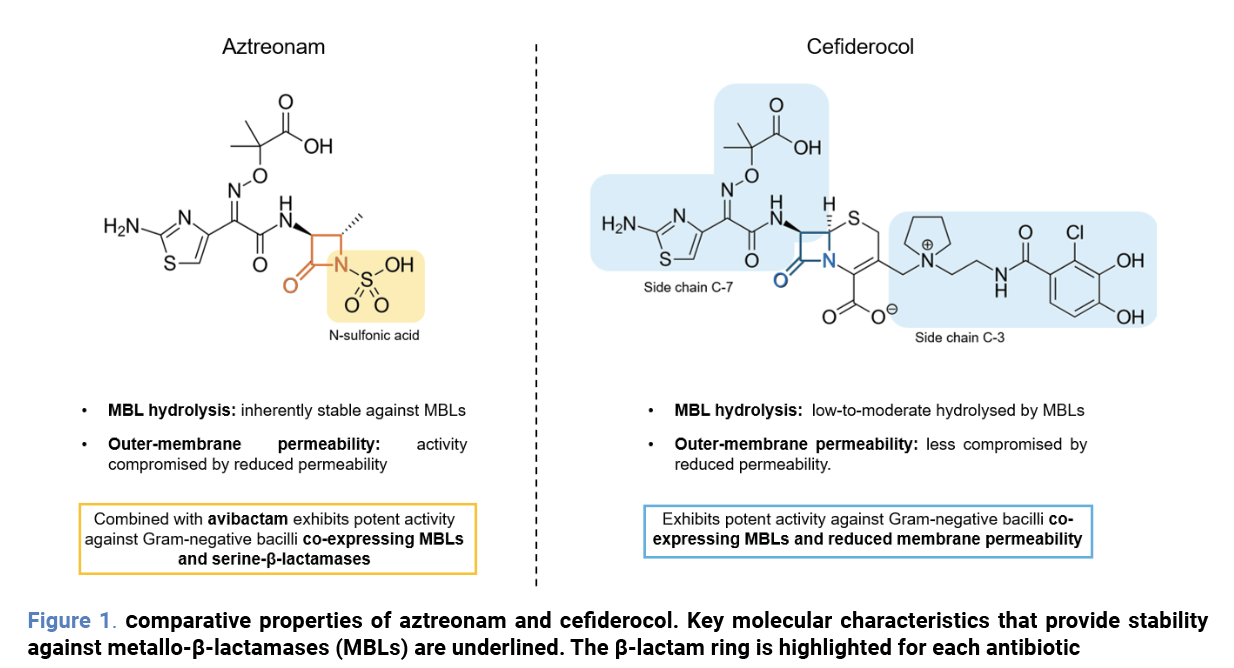 The key feature of FDC is its cephalosporin-siderophore nature. Unlike other β-lactams, FDC enters the bacterial periplasm via both the active iron transport system and the traditional porin-mediated pathway [7]. This dual entry allows FDC to overcome the resistance mechanisms that reduce outer membrane permeability (i.e., efflux pumps overexpression or loss of porin channels). The configuration of the side chains at C-7 and, especially, at C-3, confers high stability against MBL hydrolysis (Figure 1). FDC hydrolysis by MBL is lower than that of other β-lactams; however, NDM-variants hydrolyze FDC more efficiently than VIM-2 and IMP-1 [8].
Epidemiology
Globally, IMP, VIM, and NDM exhibit the widest geographic distribution. This is mainly attributed to the rapid variant emergence, the ease of transfer of their encoding genes, and the ubiquity of MBL-producing bacteria in hospital settings and environmental reservoirs [1,9]. Surveillance through the Antimicrobial Testing Leadership and Surveillance (ATLAS) program shows that the prevalence of MBLs among carbapenem-nonsusceptible Enterobacterales increased from 20.5% in 2012-2017 to 36.7% in 2018-2019. The highest burdens were detected in the Asia-Pacific (59.4%) and Africa-Middle East (49.0%) regions [10,11]. Since its first detection in 2008, NDM has spread faster and broader than other MBLs, becoming the leading type in Enterobacterales globally. Even in Europe, NDM has recently outpaced VIM, although VIM remain significant [12]. The European countries with the highest burdens of MBL-producing Enterobacterales are Greece, Russia, Turkey, and Italy [13]. Regarding P. aeruginosa, VIM is the dominant MBL both globally and in Europe. However, there are certain regional exceptions: IMP prevalence is higher in Japan and South Korea, while São Paulo metallo-β-lactamase (SPM) dominates in Brazil [6]. In a European collection of 1077 meropenem‑non‑susceptible P. aeruginosa isolates, 20.6% produced MBL: 198 VIM, 23 IMP, and one NDM. Regional hotspots were identified in Russia (50.0%) and Greece (44.1%) [13]. In Spain, VIM is also the most prevalent MBL harboured by P. aeruginosa. However, it should be noted that in most European regions, P. aeruginosa carbapenem resistance is primarily mediated by mechanisms other than carbapenemases [13,14]. MBL-producing Acinetobacter baumannii isolates remain rare in Europe, with only 1% of meropenem-resistant isolates harbouring MBL, predominantly NDM [13]. The global prevalence and geographic distribution data remain fragmented due to heterogeneous surveillance representation [6]. Despite this, differences in the prevalence of resistance mechanisms are evident, with substantial variability even between hospitals. Consequently, local epidemiological knowledge remains essential for guiding therapeutic strategies.Therapeutic strategies and antimicrobial activity β-lactam alternatives. Amikacin exhibits strong activity against MBL-producing Gram-negative bacilli [15] , and plazomicin is the most potent aminoglycoside against MBL-producing Enterobacterales. The IDSA and ESCMID guidelines regard the use of aminoglycosides as an alternative for treating urinary tract infections caused by carbapenem-resistant Enterobacterales [2,3], although they are not recommended in monotherapy for the treatment of systemic infections due to their association with nephrotoxicity and increased mortality [12].
Although colistin stands as one of the most active antibiotics against MBL-producing Gram-negative bacilli [16], it has severe PK/PD and safety limitations. These include poor lung penetration and narrow therapeutic window. Furthermore, in vitro susceptibility testing is inaccurate and consequently unreliable [12]. Regarding its clinical efficacy, colistin regimens exhibit a higher 30-day mortality rate than those observed with FDC or ceftazidime-avibactam plus aztreonam (CAZ/AVI-ATM) for treating MBL-producing Enterobacterales [17]. For these reasons colistin is considered a last‑resort agent [12,18]. Tigecycline and eravacycline have similar spectra of activity, including MBL‑producing Enterobacterales and carbapenem resistant A. baumannii (but no P. aeruginosa). Although, eravacycline usually displays lower MICs [15]. Their PK/PD profiles yield limited serum and urinary concentrations; therefore both compounds are contraindicated for treating bloodstream and urinary tract infections [3]. There is limited clinical evidence to support their efficacy in treating infections caused by MBL-producing Enterobacterales or A. baumannii, highlighting the need for further studies to validate their efficacy [12]. Fosfomycin displays activity against MBL-producing Enterobacterales [15]. Nevertheless, its limited activity against multidrug-resistant P. aeruginosa and A. baumannii, along the ease of resistance development constrains its clinical use. In clinical practice, these antibiotics are frequently combined, primarily to mitigate antibiotic-related adverse events and enhance potency. Although, the lack of standardized regimens and in vivo data restrict the widespread use of combination therapy. β-lactams active against MBL. ATM is hydrolysed by serine β-lactamases, which are often co-produced by MBL-producing Enterobacterales strains. Therefore, combining ATM with AVI, a potent inhibitor of class A, C, and some D β-lactamases, restores its activity against these isolates. For instance, pooled susceptibility analysis of ATM/AVI for MBL- and NDM-producing Enterobacterales show exceptional rates of 96.9% and 95.6%, respectively [7]. Notably, significant resistance rates (15%) have been documented in NDM-producing Escherichia coli, linked to CMY-42 production and PBP3 alterations [19]. CAZ/AVI-ATM has been shown to reduce the risk of 30-day mortality in patients with bloodstream infections caused by MBL-producing Enterobacterales [17]. Unlike Enterobacterales, the co-production of MBL and serine β-lactamases is uncommon in P. aeruginosa. In this species, other resistance mechanisms limit ATM activity, mainly the overexpression of the MexAB-OprM efflux pump. Since AVI does not counter these mechanisms, the potential of ATM/AVI to treat MBL-producing P. aeruginosa is limited [14], being active against 55.8% of the isolates [7]. Furthermore, clinical data on the efficacy of CAZ/AVI-ATM for treating these infections is scarce [12]. Stenotrophomonas maltophilia surveillance data indicate that ATM/AVI is active against 97.8% of the isolates [20] but not against A. baumannii (Figure 2). Pooled FDC susceptibility analysis for MBL- and NDM-producing Enterobacterales showed rates of 75.1% and 61.2%, respectively; reflecting the consistently higher resistance observed in NDM-producing Enterobacterales. FDC was remarkably active against MBL-producing P. aeruginosa, with a pooled susceptibility rate of 98.2%. This rate drops to 77.1% in the case of NDM producers. Susceptibility rates for S. maltophilia and MBL-producing A. baumannii were 99.6% and 59.1%, respectively, according to EUCAST breakpoints [21] (Figure 2).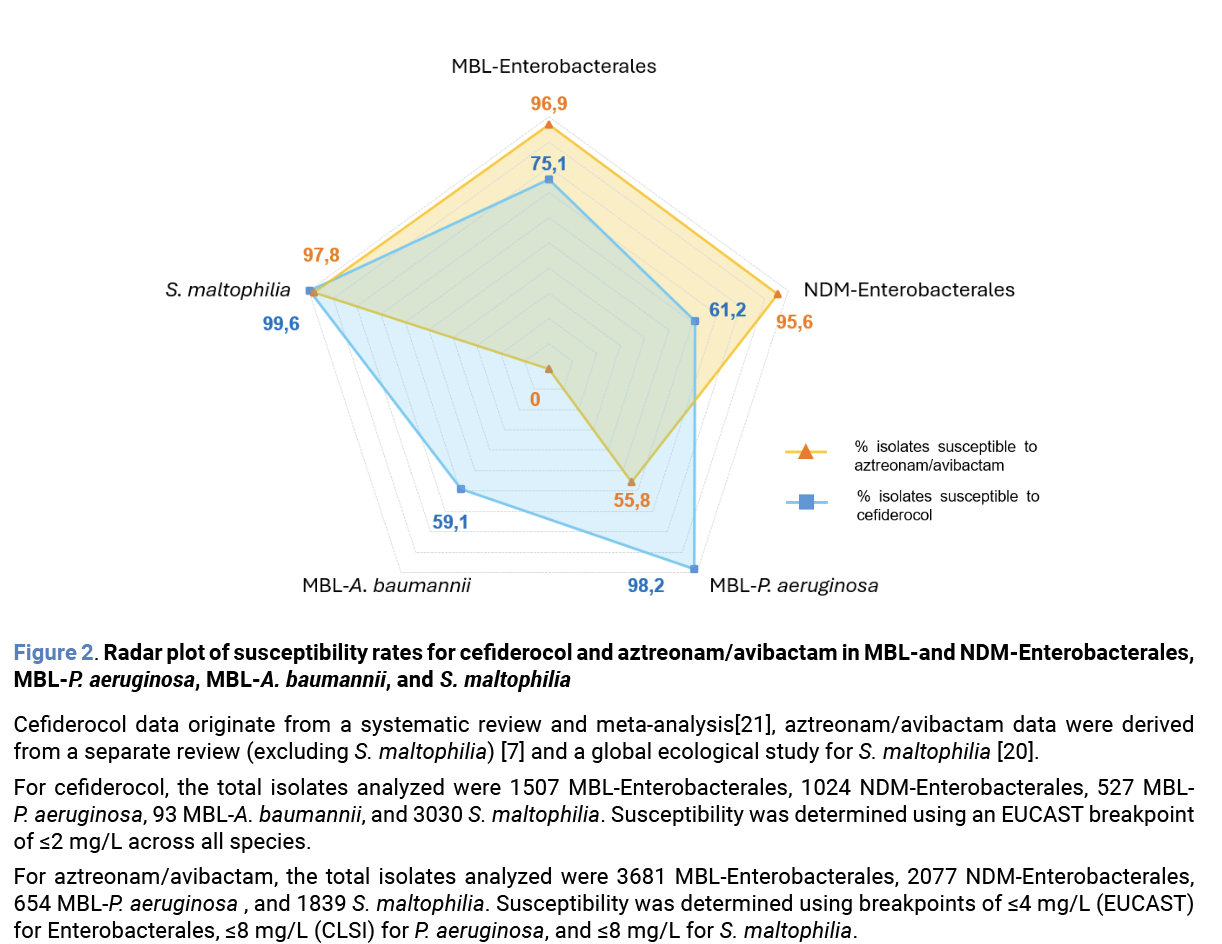 In the CREDIBLE-CR and APEKS-NP studies, FDC demonstrated favourable clinical cure outcomes (70.8% out of 24) for MBL-producing Gram-negative bacilli infections (15 Enterobacterales and 6 P. aeruginosa). However, it should be noted that the number of included patients was limited. [22] The PERSEUS study showed clinical cure rates of 87.7% (64/73) for MBL-producing P. aeruginosa and 70% (14/20) for S. maltophilia infections [23,24].
Resistance to FDC has emerged through different mechanisms, often synergistically. These include the overexpression of β-lactamases with strong cephalosporinase activity (i.e., ESBLs, NDM variants), mutations or inactivation of the iron transport systems and PBP3 mutations. FDC resistance is reported less frequently in P. aeruginosa than in Enterobacterales [18].
In coming antibiotics. Diazabicyclooctanes and boronates are the two new β-lactamase inhibitor classes introduced to clinical practice. Several members of the diazabicyclooctanes have been modified to target PBP2, as seen with zidebactam, nacubactam and durlobactam. Zidebactam protects cefepime from hydrolysis by certain serine β-lactamases, enhances its activity and has standalone antibacterial activity through potent binding to PBP2. Pooled susceptibility rates for cefepime/zidebactam showed 90.9% MBL-producing Enterobacterales MICs ≤4 mg/L and 83.9% of MBL-producing P. aeruginosa MICs ≤8 mg/L [7]. Activity of this compound has been demonstrated even in E. coli isolates resistant to ATM/AVI and in P. aeruginosa with increased efflux activity [25,26].
Taniborbactam, a boronates inhibitor, exhibits broad inhibitor activity, including KPC, OXA-48 and MBL (VIM and most NDM, but not IMP). However, pool susceptibility analysis showed moderate rates: 53.9% of MBL-producing Enterobacterales had MICs ≤4 mg/L and 58.3% of MBL-producing P. aeruginosa had MICs ≤8 mg/L [7]. Xeruborbactam has an even broader spectrum and greater affinity for important carbapenemases including KPC-2, IMP-1, VIM-1, NDM-1, OXA-23 and OXA-48 [12].
Discussion
Managing infections caused by MBL-producing Gram-negative bacilli poses a major public health and therapeutic challenge. From a microbiological perspective, the optimal antibiotic depends on the specific pathogen and its underlying resistance mechanisms. Ideally, antibiotic therapy should be guided by susceptibility testing results [18]. Currently, ATM/AVI and FDC are the cornerstones of antibiotic therapy against these bacteria. ATM/AVI is the recommended first-line treatment for severe infections caused by MBL-producing Enterobacterales [18]. This is supported by both in vitro data and favourable clinical cure rates observed with CAZ/AVI-ATM [7,17]. ATM binds almost exclusively to PBP3, so mutations in this target are strongly associated with ATM/AVI resistance [19]. Furthermore, the ongoing evolution of β-lactamase variants may facilitate escape from AVI inhibition. The emergence and spread of ATM/AVI-resistant strains is a concern; thus, continual surveillance is essential to identify promptly resistance mechanisms and control dissemination. CAZ/AVI-ATM is among the recommended treatment against S. maltophilia according to IDSA guidelines; however, clinical efficacy data remain limited [3]. While ATM/AVI represents a promising option for treating MBL-producing Enterobacterales infections, most clinical data pertain to CAZ/AVI-ATM. Available evidence indicates equipoise between both regimens. This is especially relevant in regions with high rates of MBL-producing Enterobacterales, such as South Asia and Latin America, where CAZ/AVI-ATM is currently available, while ATM/AVI is not. Moreover, emerging data suggest that regimens targeting multiple PBPs may enhance efficacy; although both CAZ and ATM predominantly inhibit PBP3, CAZ also display variable affinity for PBP1a, PBP1b, and PBP2. However, this hypothesis requires further experimental validation [27]. FDC is regarded as a first-line alternative for treating MBL-producing Enterobacterales. However, probably placed behind ATM/AVI due to FDC lower susceptibility rates. FDC has demonstrated great activity and efficacy against MBL-producing P. aeruginosa [21,24], positioning it as the first-line option for these infections [2,18]. This is due to FDC ability to bypass the resistance mechanisms associated with permeability alterations, common in this species, and the fact that most MBL-producing P. aeruginosa harbour MBLs other than NDM [21]. The PERSEUS study showed promising clinical cure rates for S. maltophilia infections treated with FDC, although only 20 patients were included [23]. Current guidelines recommend FDC in combination regimens to treat S. maltophilia. FDC also retains activity against A. baumannii; however, combination therapy is advised for carbapenem-resistant A. baumannii infections due to sparse monotherapy data. [3,18] NDM-mediated resistance is specially concerning given the rising prevalence of this MBL and evolving nature of NDM variants [12]. Thus, continued epidemiological surveillance is imperative. Aminoglycosides, eravacycline, and tigecycline use is reserved for specific clinical scenarios due to PK/PD and safety concerns. These agents, along with colistin and fosfomycin, may be employed in combination regimens when ATM/AVI and FDC prove ineffective [12] (Figure 3).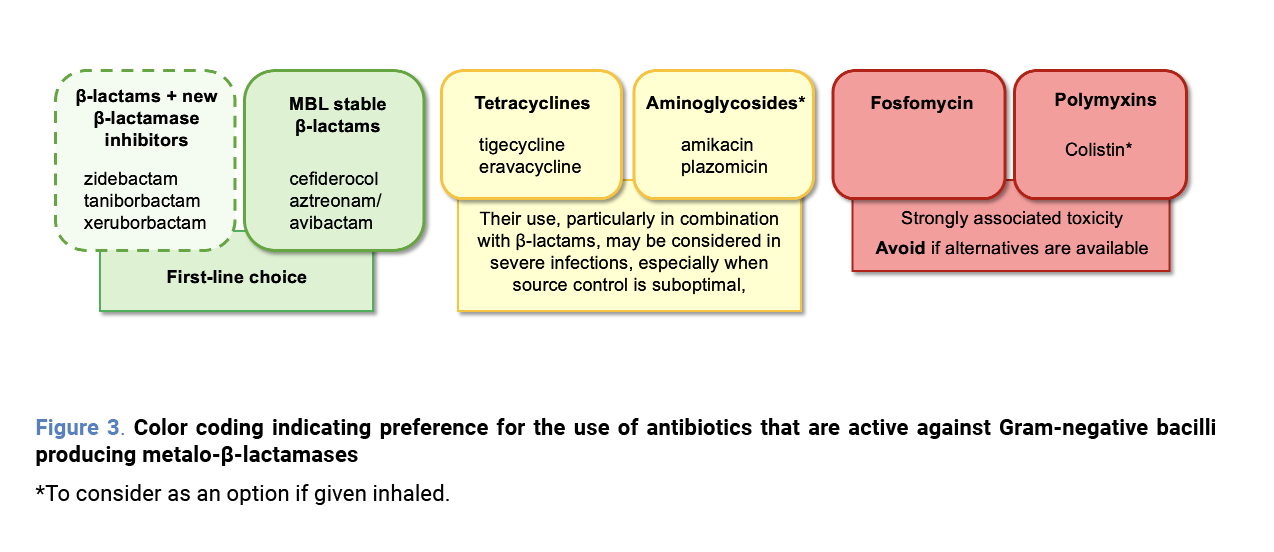 New β-lactamase inhibitors show promise for the future. However, MBL enzymes continue to evolve, generating diverse variants that may increase resistance and facilitate future escape mechanisms against novel antibiotics [5].
Finally, therapeutic success relies on not only microbiological criteria, but also timely antibiotic administration (underscoring the need for precise local epidemiology), effective source control measures, and optimization of PK/PD parameters (i.e., extended or continuous β-lactam infusions, particularly in critically ill patients).
Conclusions
MBL (VIM, IMP and NDM) are increasingly prevalent among Gram-negative-bacilli. These enzymes confer resistance to most β-lactams, including carbapenems, and are unaffected by classical β-lactamase inhibitors. Among the remaining active therapies, CAZ/AVI-ATM and FDC are the preferred options against MBL-producing Enterobacterales. FDC is the first-line antibiotic against MBL-producing P. aeruginosa. CAZ/AVI-ATM may serve as an alternative regime for treating S. maltophilia infections, and combination regimens containing FDC might be considered for S. maltophilia and MBL-producing A. baumannii. Nonetheless, strains resistant to both agents have already been reported, underscoring the need for active surveillance to detect, contain and counter emerging resistance. Aminoglycosides, tigecycline, and eravacycline may be useful in certain clinical scenarios, whereas colistin should be reserved as a last-resort option. Optimizing clinical outcomes requires timely and appropriate antibiotic therapy, effective source control, and PK/PD-based optimization of therapy. Moreover, global surveillance and prospective multicentre trials are essential to anticipate resistance trends and validate novel treatment strategies. Funding None to declare. Conflict of Interest The authors declare no conflict of interest. Author contributions MPS and JLdP.; writing—original draft preparation, MPS and JLdP.; writing—review and editing, All authors. All authors have read and agreed to the published version of the manuscript.References
- Mojica MF, Rossi M-A, Vila AJ, Bonomo RA. The urgent need for metallo-β-lactamase inhibitors: an unattended global threat. Lancet Infect Dis. 2022;22:e28–34. Available from: https://doi.org/10.1016/S1473-3099(20)30868-9
- Paul M, Carrara E, Retamar P, Tängdén T, Bitterman R, Bonomo RA, et al. European Society of Clinical Microbiology and Infectious Diseases (ESCMID) guidelines for the treatment of infections caused by multidrug-resistant Gram-negative bacilli (endorsed by the European Society of Intensive Care Medicine). Clin Microbiol Infect. 2022;28(4):521-47. Available from: https://doi.org/10.1016/j.cmi.2021.11.025
- Tamma PD, Heil EL, Justo JA, Mathers AJ, Satlin MJ, Bonomo RA. Infectious Diseases Society of America 2024 Guidance on the Treatment of Antimicrobial-Resistant Gram-Negative Infections. Clin Infect Dis. 2024. Available from: https://doi.org/10.1093/cid/ciae403
- Falcone M, Tiseo G, Carbonara S, Marino A, Di Caprio G, Carretta A, et al. Mortality Attributable to Bloodstream Infections Caused by Different Carbapenem-Resistant Gram-Negative Bacilli: Results From a Nationwide Study in Italy (ALARICO Network). Clin Infect Dis. 2023;76:2059–69. Available from: https://doi.org/10.1093/cid/ciad100
- Bahr G, González LJ, Vila AJ. Metallo-β-lactamases in the Age of Multidrug Resistance: From Structure and Mechanism to Evolution, Dissemination, and Inhibitor Design. Chem Rev 2021;121:7957–8094. Available from: https://doi.org/10.1021/acs.chemrev.1c00138
- Boyd SE, Livermore DM, Hooper DC, Hope WW. Metallo-β-Lactamases: Structure, Function, Epidemiology, Treatment Options, and the Development Pipeline. Antimicrob Agents Chemother 2020;64. Available from: https://doi.org/10.1128/AAC.00397-20.
- Boattini M, Gaibani P, Comini S, Costa C, Cavallo R, Broccolo F, et al. In vitro activity and resistance mechanisms of novel antimicrobial agents against metallo-β-lactamase producers. Eur J Clin Microbiol Infect Dis. 2025.;44:1041–68. Available from: https://doi.org/10.1007/s10096-025-05080-1
- Vila AJ, Warecki BA, Mojica MF, Tomatis P, Bethel C, Rodriguez M, et al. P-1370. Molecular Bases and Mechanistic Insights of NDM-mediated Resistance to Cefiderocol. Open Forum Infect Dis 2025;12. Available from: https://doi.org/10.1093/ofid/ofae631.1547
- González LJ, Bahr G, Nakashige TG, Nolan EM, Bonomo RA, Vila AJ. Membrane anchoring stabilizes and favors secretion of New Delhi metallo-β-lactamase. Nat Chem Biol 2016;12:516–22. Available from: https://doi.org/10.1038/nchembio.2083
- Estabrook M, Muyldermans A, Sahm D, Pierard D, Stone G, Utt E. Epidemiology of Resistance Determinants Identified in Meropenem-Nonsusceptible Enterobacterales Collected as Part of a Global Surveillance Study, 2018 to 2019. Antimicrob Agents Chemother 2023;67. Available from:https://doi.org/10.1128/aac.01406-22
- Kazmierczak KM, Karlowsky JA, de Jonge BLM, Stone GG, Sahm DF. Epidemiology of Carbapenem Resistance Determinants Identified in Meropenem-Nonsusceptible Enterobacterales Collected as Part of a Global Surveillance Program, 2012 to 2017. Antimicrob Agents Chemother 2021;65. Available from: https://doi.org/10.1128/AAC.02000-20
- Grabein B, Arhin FF, Daikos GL, Moore LSP, Balaji V, Baillon-Plot N. Navigating the Current Treatment Landscape of Metallo-β-Lactamase-Producing Gram-Negative Infections: What are the Limitations? Infect Dis Ther 2024;13:2423–47. Available from: https://doi.org/10.1007/s40121-024-01044-8
- Takemura M, Wise MG, Hackel MA, Sahm DF, Yamano Y. In vitro activity of cefiderocol against MBL-producing Gram-negative bacteria collected in North America and Europe in five consecutive annual multinational SIDERO-WT surveillance studies (2014–2019). J Antimicrob Chemother. 2023;78:2019–27. Available from: https://doi.org/10.1093/jac/dkad200
- Sastre-Femenia MÀ, Fernández-Muñoz A, Gomis-Font MA, Taltavull B, López-Causapé C, Arca-Suárez J, et al. Pseudomonas aeruginosa antibiotic susceptibility profiles, genomic epidemiology and resistance mechanisms: a nation-wide five-year time lapse analysis. Lancet Reg Health Eur. 2023;34:100736. Available from: https://doi.org/10.1016/j.lanepe.2023.100736
- Delgado-Valverde M, Portillo-Calderón I, Recacha E, Pérez-Palacios P, Pascual A. In Vitro Activity of Cefiderocol Compared to Other Antimicrobials against a Collection of Metallo-Beta-Lactamase-Producing Gram-Negative Bacilli from Southern Spain. Microbiol Spectr 2023;11. Available from: https://doi.org/10.1128/spectrum.04936-22
- Longshaw C, Manissero D, Tsuji M, Echols R, Yamano Y. In vitro activity of the siderophore cephalosporin, cefiderocol, against molecularly characterized, carbapenem-non-susceptible Gram-negative bacteria from Europe. JAC Antimicrob Resist 2020;2. Available from: https://doi.org/10.1093/jacamr/dlaa060
- Falcone M, Giordano C, Leonildi A, Galfo V, Lepore A, Suardi LR, et al. Clinical Features and Outcomes of Infections Caused by Metallo-β-Lactamase–Producing Enterobacterales: A 3-Year Prospective Study From an Endemic Area.Clin Infect Dis. 2024;78:1111–9. Available from: https://doi.org/10.1093/cid/ciad725
- Hidalgo-Tenorio C, Bou G, Oliver A, Rodríguez-Aguirregabiria M, Salavert M, Martínez-Martínez L. The Challenge of Treating Infections Caused by Metallo‐β‐Lactamase–Producing Gram-Negative Bacteria: A Narrative Review. Drugs 2024;84:1519–39. Available from: https://doi.org/10.1007/s40265-024-02102-8
- Livermore DM, Mushtaq S, Vickers A, Woodford N. Activity of aztreonam/avibactam against metallo-β-lactamase-producing Enterobacterales from the UK: Impact of penicillin-binding protein-3 inserts and CMY-42 β-lactamase in Escherichia coli. Int J Antimicrob Agents 2023;61:106776. Available from: https://doi.org/10.1016/j.ijantimicag.2023.106776
- Sader HS, Duncan LR, Arends SJR, Carvalhaes CG, Castanheira M. Antimicrobial Activity of Aztreonam-Avibactam and Comparator Agents When Tested against a Large Collection of Contemporary Stenotrophomonas maltophilia Isolates from Medical Centers Worldwide. Antimicrob Agents Chemother 2020;64. Available from: https://doi.org/10.1128/AAC.01433-20.
- Karakonstantis S, Rousaki M, Vassilopoulou L, Kritsotakis EI. Global prevalence of cefiderocol non-susceptibility in Enterobacterales, Pseudomonas aeruginosa, Acinetobacter baumannii, and Stenotrophomonas maltophilia: a systematic review and meta-analysis. Clin Microbiol Infect. 2024;30:178–88. Available from: https://doi.org/10.1016/j.cmi.2023.08.029
- Timsit JF, Paul M, Shields RK, Echols R, Baba T, Yamano Y, et al. Cefiderocol for the Treatment of Infections Due to Metallo-B-lactamase–Producing Pathogens in the CREDIBLE-CR and APEKS-NP Phase 3 Randomized Studies. Clin Infect Dis. 2022;75:1081–4. Available from: https://doi.org/10.1093/cid/ciac078
- Torre-Cisneros J, Ferrer R, Martos CDLF, Sarda J, Gonzalez Calvo AJ, Verardi S, et al. Cefiderocol treatment for patients infected by Stenotrophomonas maltophilia, Burkholderia cepacia complex and Achromobacter spp.: subgroup analysis from the PERSEUS study. Eur J Clin Microbiol Infect Dis. 2025. Available from: https://doi.org/10.1007/s10096-025-05109-5
- Torre-Cisneros J, Almirante B, Martos CDLF, Rascado P, Lletí MS, Sánchez-García M, et al. Effectiveness and safety of cefiderocol treatment in patients with Gram-negative bacterial infections in Spain in the early access programme: results of the PERSEUS study. Eur J Clin Microbiol Infect Dis. 2025. Available from: https://doi.org/10.1007/s10096-025-05108-6
- Mushtaq S, Garello P, Vickers A, Woodford N, Livermore DM. Activity of cefepime/zidebactam (WCK 5222) against ‘problem’ antibiotic-resistant Gram-negative bacteria sent to a national reference laboratory. J Antimicrob Chemother. 2021;76:1511–22. Available from: https://doi.org/10.1093/jac/dkab067
- Le Terrier C, Nordmann P, Sadek M, Poirel L. In vitro activity of cefepime/zidebactam and cefepime/taniborbactam against aztreonam/avibactam-resistant NDM-like-producing Escherichia coli clinical isolates. J Antimicrob Chemother. 2023;78:1191–4. Available from: https://doi.org/10.1093/jac/dkad061
- Tamma PD, Lodise TP, Mojica MF, Perez F, Bonomo RA. Revisiting REVISIT: The Case for Ceftazidime/avibactam Plus Aztreonam. Clin Infect Dis. 2025. Available from: https://doi.org/10.1093/cid/ciaf239
Explore
Articles
Volumes
About the journal
Most read
Recomendaciones para la prevención y el tratamiento de las infecciones respiratorias en adultos mayores institucionalizados
Revista Española de Quimioterapia
Acute infectious gastroenteritis in childhood: the role of rapid multiplex molecular syndromic panels in diagnosis and clinical management
Revista Española de Quimioterapia
Características epidemiológicas de pacientes con aislamientos de Enterobacterales productores de carbapenemasas-NDM en un hospital de alta complejidad
Revista Española de Quimioterapia
Review on the management of intra-abdominal candidiasis
Revista Española de Quimioterapia
Neoscytalidium dimidiatum: a rare locally acquired deep cutaneous infection in a renal transplant recipient
Revista Española de Quimioterapia